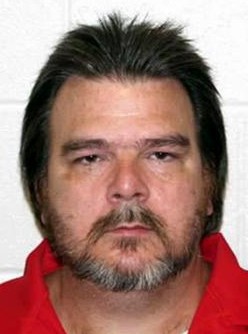




45th murderer executed in U.S. in 2006
1049th murderer executed in U.S. since 1976
1st murderer executed in Mississippi in 2006
8th murderer executed in Mississippi since 1976
(Race/Sex/Age at Murder-Execution) |
Birth |
(Race/Sex/Age at Murder) |
Murder |
Murder |
to Murderer |
Sentence |
||||
|
Bobby Glen Wilcher W / M / 19 - 43 |
Katie Belle Moore W / F / 47 Velma Odell Noblin W / F / 52 |
06-15-94 |
Summary:
Wilcher met Katie Belle Moore and Velma Odell Noblin at a Scott County bar and at closing time persuaded the women to take him home. Under this pretext, he directed the women down a deserted service road in the Bienville National Forest where he robbed and brutally murdered the women by stabbing them a total of 46 times. Thereafter, Wilcher was stopped for speeding by the Forest Police Department between 1:00 and 2:00 a.m. He was alone and was driving victim Noblin's car. The victims' purses and one victim's brassiere were on the back seat. Wilcher was covered in blood; he had a bloody knife in his back pocket that had flesh on the blade. Wilcher explained his condition by telling the policeman that he had cut his thumb while skinning a possum. The officer followed Wilcher to the hospital, where Wilcher's wound was cleaned and covered with a band-aid. Another officer was called to the hospital to observe Wilcher, the knife, the car, the purses, and the brassiere. The officers left the hospital on an emergency call. Wilcher went home. The next morning, he abandoned Noblin's car at an apartment complex. Wilcher also threw the victims' purses and some of the victims' clothing in a ditch. He was arrested later that day. The victims' jewelry was subsequently found in Wilcher's bedroom.
Citations:
Wilcher v. State, 448 So.2d 927 (Miss. 1984) (Direct Appeal - Noblin Victim).
Wilcher v. State, 455 So.2d 727 (Miss. 1984) (Direct Appeal - Moore Victim).
Wilcher v. State, 479 So.2d 710 (Miss. 1985) (PCR).
Wilcher v. State, 635 So.2d 789 (Miss. 1993) (PCR After Remand).
Wilcher v. State, 697 So.2d 1123 (Miss. 1997) (Direct Appeal After Remand).
Wilcher v. State, 863 So.2d 719 (Miss. 2003) (PCR).
Wilcher v. State, 863 So.2d 776 (Miss. 2003) (PCR).
Wilcher v. Hargett, 978 F.2d 872 (5th Cir. Miss. 1992) (Habeas).
Final/Special Meal:
Two dozen jumbo fried shrimp with tarter sauce and ketchup, two large orders of fried onion rings and french
fries, one raw regular onion, six pieces of garlic bread, two cold 32 oz. Cokes, two 32 oz. strawberry milkshakes.
Final Words:
Declined.
Internet Sources:
Mississippi Department of Corrections - Death Row
NEWS RELEASEOctober 18, 2006 Execution of Bobby G. Wilcher
7:00 p.m. News Briefing
Parchman, Miss. - The Mississippi Department of Corrections (MDOC) today conducted the mandated execution of state inmate Bobby Glenn Wilcher. Inmate Wilcher was pronounced dead at 6:42 p.m. at the state penitentiary at Parchman.
MDOC Commissioner Christopher Epps said during a press conference following the execution that the evening marked the close of the Bobby Glenn Wilcher case. It involved 24 years of appeals on death row in the capital murders of Katie Belle Moore and Velma Odell Noblin in Scott County. Epps said, “It is our agency’s role to see that the order of the court is carried out with dignity and decorum. That has been done. Over the course of 24 years, state death row inmate Bobby Glenn Wilcher was afforded his day in court and in the finality, his conviction was upheld all the way to the U.S. Supreme Court. The cause of justice has championed over wrong.”
A“In this final chapter tonight, it is our fervent hope that the families of Ms. Moore and Ms. Noblin may now begin the process of healing. Our prayers go out to you as you continue life’s journey,” said Epps. Epps concluded his comments by commending Deputy Commissioner of Institutions Emmitt Sparkman, MSP Superintendent Kelly and the entire Mississippi State Penitentiary security staff for their professionalism during the process.
Date: October 18, 2006
Contact: Tara Booth
Phone: (601) 359-5701, MSP Media Center (662) 745-6148
Fax: (601) 359-5738
October 18, 2006 Scheduled Execution of Bobby G. Wilcher
4:45 p.m. News Briefing
Parchman, Miss. - The Mississippi Department of Corrections (MDOC) today briefed members of the news media of death row Inmate Bobby G. Wilcher’s activities from 2:00 p.m. to approximately 4:30 p.m., including telephone calls and visits.
Update to Inmate Wilcher’s Collect Telephone Calls
Wednesday, October 18, 2006
Inmate Wilcher made telephone calls today to Lindy Wells (friend) and Cliff Johnson (attorney).
Update to Inmate Wilcher’s Visits
Visitors left Unit 17 at 4:00 p.m.
• Lindy Lou Wells (friend)
• Cliff Johnson (attorney)
• Angela Parnell (paralegal)
• Stan Wilson (spiritual advisor)
Activities of Inmate Wilcher:
Inmate Wilcher ate his last meal at approximately 12:45 p.m. today and took a shower at 4:15
p.m. He has requested no sedative and has chosen not to participate in communion. Inmate
Wilcher remains under observation. As reported earlier, Wilcher is somber and quiet.
October 18, 2006 Scheduled Execution of Bobby G. Wilcher
2:00 p.m. News Briefing
Parchman, Miss. - The Mississippi Department of Corrections (MDOC) will hold three news briefings today related to events surrounding the October 18th scheduled execution of death row Inmate Bobby G. Wilcher, MDOC #34602. The following is an update on Inmate Wilcher’s recent visits and telephone calls, activities, last meal to be served, and the official list of execution witnesses.
Visits with Inmate Bobby G. Wilcher
Tuesday, October 17, 2006 Attorney Cliff Johnson and paralegal Angela ParnellWednesday, October 18, 2006 Allowed visits with attorneys, spiritual advisor and friends from 1:00 p.m. until 4:00 p.m.
Currently visiting with Inmate Bobby G. Wilcher:
• Lindy Lou Wells (friend)
• Cliff Johnson (attorney) 2pm
• Angela Parnell (paralegal) 2pm
Activities of Wilcher
• This morning for breakfast, Inmate Wilcher was offered coffee, biscuits and jelly, milk, sausage, and
boiled eggs. He declined all but the coffee.
• Inmate Wilcher was offered lunch today consisting turkey meat, two slices of bread, english peas, rice,
cheese, two cups of tea, and two oranges. Inmate Wilcher ate two oranges.
• Inmate Wilcher has access to a telephone to place unlimited collect calls to persons on his approved
telephone list. He had access to the phone from 8:00 a.m. to 5:00 p.m. on Tuesday and will have access today,
October 18th, from 8:00 a.m. until 5:00 p.m.
• According to the MDOC correctional officers that are posted outside his cell, Inmate Wilcher is observed
to be in a quiet mood.
Approved Telephone List
Lindy Lou Wells (friend), Sister Patricia Tallent (friend), James H. Wilcher (half-brother), Randy Wilcher
(nephew), Jan Wilcher (spouse of Randy), Cliff Johnson (attorney of record), Angela Parnell (paralegal), Van
Williams (friend), Tomika Harris (friend), Charles Press, Debra Saba-Press (friends), Bill May (friend), Ken
Rose (friend), Camille Evans (friend), Robert Brooks (friend), Kendra Lee-Lindsey (friend), Jane Hicks (friend),
and Iva Nell Wilcher (sister-in-law), Danny Wilcher (brother), Penny Easterling (sister), Craig Trueblood
(spiritual advisor), Joseph Stan Wilson (spiritual advisor).
Wilcher’s Remains
Inmate Wilcher has requested that his body be released to Colonial Funeral Home, Forest, Mississippi.
Last Meal
Inmate Wilcher requested the following as his last meal:
Two dozen jumbo fried shrimp with tarter sauce and ketchup, two large orders of fried onion rings and french
fries, one raw regular onion, six pieces of garlic bread, two 32 oz. cold Cokes, two 32 oz. strawberry milkshakes.
Inmate Wilcher’s Collect Telephone Calls
Tuesday, October 17, 2006
Phone calls were made by Inmate Wilcher to Lindy Wells (friend), Bill May (friend) and Van Williams (friend).
Wednesday, October 18, 2006
Phone calls thus far today made by Inmate Wilcher to Lindy Wells (friend) and Cliff Johnson (attorney).
Execution Witnesses
Attorneys for the condemned Angela Parnell (paralegal) and Cliff Johnson (attorney)
No member of the condemned’s family At Inmate Wilcher’s request.
Two members of each of the victims’ family Noblin Family: Billy Sessions (brother) and Stacey Boyd (granddaughter)
Moore Family: Tommy Moore (son) and Joe Rigby (nephew)
Sheriffs Harold Jones, Scott County Deputy Sheriff and
James Haywood, Sunflower County Sheriff
Governor’s Witness C. Daryl Neely, Policy Advisor
8 Members of the Media Jack Elliot, Jr., Associated Press
Sidney L. Salter, The Clarion-Ledger
Chris Allen Baker, The Scott County Times
Robert H. Smith, The Cleveland News Leader
Melissa Faith Payne, WJTV
Gregory M. Flynn, WAPT
Jason Law, WXVT
Andrea "Andi" Peterson, Miss. News Network
"Executed: Bobby Glen Wilcher: 11 minutes conclude 24-year ordeal," by Jimmie E. Gates. (October 19, 2006)
PARCHMAN — Family members of two Scott County women brutally murdered by Bobby Glen Wilcher hugged corrections officials after Wilcher was executed Wednesday evening at the Mississippi State Penitentiary. It took 24 years for Wilcher's execution to be carried out, but it took only about 11 minutes for him to die by lethal injection for the 1982 slayings of Katie Bell Moore and Velma Odell Noblin. Both mothers were stabbed more than 20 times each.
"He didn't want to be executed. He was acting like the other seven executions I have been involved in," Mississippi Department of Corrections Commissioner Chris Epps said. Wilcher, 43, did not expect another stay, corrections officials said. The U.S. Supreme Court, about 90 minutes before the scheduled 6 p.m. execution, refused to consider his emergency stay request. He was pronounced dead at 6:42 p.m.
In July, Wilcher received a last-minute reprieve from the U.S. Supreme Court after the court said it needed more time to consider the case. He voluntarily gave up his federal appeals in June but later tried to have them reinstated. When asked in the death chamber if he wanted to make a statement, Wilcher said, "I have none." But earlier Wednesday, Wilcher told Epps, "I messed up a good thing, and now I can't do anything about it." Epps said Wilcher made the comment when he asked him about killing the women.
Wilcher killed Moore and Noblin after meeting them at a Forest bar. He persuaded them to drive him home and diverted them down a deserted road where he killed them. Wilcher never apologized for the slayings.
For the families of the victims, there finally is closure. "The families are relieved. It was long overdue," said Moore's nephew, Joe Rigby, who was Scott County's coroner in 1982. He is now the circuit clerk. Wilcher said before his execution that he didn't want a sedative but changed his mind as the time neared. Epps said Wilcher indicated he got only an hour of sleep Tuesday night because he was writing goodbye letters.
Wilcher's attorney, Cliff Johnson, who witnessed the execution, said Wilcher spent his entire adult life in dehumanizing conditions but maintained the capacity to care deeply for other people, to show kindness and to demonstrate forgiveness and understanding. "He was my friend, and I will miss him," Johnson said. About eight anti-death penalty activists gathered on the penitentiary grounds before the execution.
Wilcher was visited Wednesday by Lindy Wells, a Yazoo City woman with whom he had become friendly. Also, Johnson and his paralegal, as well as a spiritual adviser and prison chaplains, visited Wilcher in his cell, which was 19 steps from the execution chamber. Wilcher also made collect calls to Wells before her visit and to others.
Epps said Wilcher explained that it was Wells who got him interested in fighting to have his appeals reinstated. Epps said Wilcher told him Wells was a jury member in one of his trials. He had been tried separately for each slaying. The Clarion-Ledger attempted to contact Wells but was told by a female who answered the telephone late Wednesday after the execution that she wasn't at home.
Wilcher's last meal request was for two dozen shrimp, two large orders of fried onion rings, two orders of fries, one raw onion, six pieces of garlic bread, two cold, 32-ounce Cokes and two strawberry shakes. He wanted to share the food with prison personnel, Epps said. Wilcher had a similar meal request in July.
This time, Wilcher's last meal was served at 12:45 p.m. instead of the traditional 4 p.m. Epps said it was moved for logistical purposes to allow more time for things such as a haircut for Wilcher. "It was better to get it out of the way," Epps said of the earlier time for the meal. Epps said it's a change he probably will continue.
Wilcher's body was released to Colonial Funeral Home in Forest. He requested that his personal items be given to his attorney. At his request, none of Wilcher's family attended his execution. But Wilcher talked Tuesday by telephone to his mother, who is incarcerated in the Central Mississippi Correctional Facility on a drug conviction. His father recently died, Epps said. Epps said if there is any lesson to be learned from Wilcher's case, it is that "crime doesn't pay."
Bobby Glen Wilcher declined breakfast and drank only coffee. He had his last meal at 12:45 p.m. From 1-4 p.m., he visited with attorney Cliff Johnson, friend Lindy Lou Wells, paralegal Angela Parnell and spiritual adviser Stan Wilson. At 4:15 p.m. he took a shower
Final minutes find killer with nothing to say," by Sid Salter. (October 18, 2006)
PARCHMAN — After more than 24 years on death row, Bobby Glen Wilcher simply went to sleep Wednesday evening. The last sight I saw from the execution chamber door was a purple sunset dropping behind the cotton fields on the wide Delta horizon - before the barbiturates and paralyzing agents were pumped into Wilcher's tattooed left arm at 6:31 p.m.
It was in this building - Unit 17, the old death row that is now used only for executions - that I interviewed Wilcher in 1985 and again in 1988. In this decaying old building 18 years ago he told me he stabbed Velma Odell Noblin and Katie Bell Moore on a deserted U.S. Forest Service road on a rainy night in 1982 because "it felt good."
I thought of those words as I watched him dying. But Wilcher said only three words during the final 11 minutes of his life. Offered a chance to make a final statement, he said: "I have none." He never glanced at the victims' family members, who were standing less than five feet from him, behind a glass in a viewing room. Those family members - Stacey Boyd, victim Noblin's granddaughter; Billy Sessions, Noblin's brother; Joe Rigby, Moore's nephew; and Tommy Moore, Moore's son - stood close to the glass, peering intently at Wilcher. Rigby, Boyd and Moore linked arms during the execution while Sessions stood close behind. None of the family witnesses uttered a word during the final minutes of Wilcher's life. When Wilcher was pronounced dead by state Medical Examiner Steven Hayne and Sunflower County Coroner Doug Carr, the four left the room.
Wilcher was strapped to a gurney roughly shaped like a cross with nine wide, tan leather straps. He was dressed in a red prison jumpsuit and white socks. A big man who weighed between 315 and 345 pounds, according to prison officials, Wilcher's long dark hair was clean and combed, his goatee streaked with white. Wilcher was almost perfectly still on the gurney, his eyes closed, throughout most of the execution. His breathing was shallow, and it was clear he had been sedated. The most visible sign of Wilcher's execution was the inexorable turn of his skin from the pasty white of prison life to the pale gray cyanosis of death. Death came at 6:42 p.m.
Mississippi Department of Corrections Commissioner Chris Epps said Wilcher asked for and received a Valium shortly before the execution began, reversing a decision earlier Wednesday to go without one. Rigby was the coroner of Scott County at the time of the murders and the first one to identify the bodies and see the carnage of the multiple stab wounds that claimed their lives.
After the execution, Rigby said: "All I could think about was when I first saw what he'd done to those ladies on the end of that government road. He died such a peaceful death compared to what they endured, to what my aunt endured."
Moore said watching his mother's killer be executed would help him move on with life. "My emotions are better now because it's finally over," Moore said. "We don't have to focus on it all the time. But it just looks to me like he died too peaceful a death compared to the crime he committed."
Leaving the execution chamber, I could not help but remember the wiry, threatening young man I interviewed years ago and the corpulent, middle-aged man on that gurney. The memory and the reality were almost unrecognizable as the same man.
"Convicted Killer Bobby Glen Wilcher Executed." (Oct 18, 2006 07:57 PM EDT)
(AP) Convicted killer Bobby Glen Wilcher was executed by lethal injection Wednesday for the brutal killings of two women in Mississippi in 1982. Wilcher's 6:42 p.m. death at the state penitentiary came two hours after the U.S. Supreme Court declined to intervene as it did on Wilcher's first execution date in July. Corrections Commissioner Chris Epps said Wilcher was in a "quiet mood" throughout the day before being strapped to the death chamber gurney.
"Despite the needless delay caused by the U.S. Supreme Court, justice has finally been rendered for these horrible crimes," Gov. Haley Barbour said in a news release. "The real tragedy in this case is that justice was delayed for more than two decades."
The 43-year-old Wilcher had spent his final hours visiting with his attorney, a spiritual adviser and one friend. "He's not as playful or joyful as he was ... all of that is gone. He's very serious. He feels he will be executed today," Epps said during a mid-afternoon briefing.
Epps said Wilcher on Wednesday asked for a conjugal visit with a woman who had been a juror in one of his trials, but the request was denied. Wilcher and the woman had developed a friendship, Epps said. She was allowed a non-contact visit with Wilcher, along with his attorney Cliff Johnson of Jackson and a paralegal. Wilcher's last meal of shrimp, onion rings, garlic bread, sodas and strawberry milkshakes had been moved to 12:40 p.m. to allow him to spend more time with his visitors, Epps said.
Wilcher was sentenced to death for killing Katie Belle Moore and Velma Odell Noblin in Scott County. After meeting them at a Forest bar, Wilcher persuaded the women to drive him home and diverted them down a deserted road. Their blood-soaked bodies were found sprawled along the muddy banks of the dirt road. Authorities said each woman had been stabbed and slashed more than 20 times.
Wilcher's case has gone through two trials, two re-sentencing hearings and countless appeals, in a legal saga that has spanned more than two decades. He came within minutes of death on July 11 before the Supreme Court ordered a stay. But, the court declined without comment to hear the case on Oct. 2, and his attorney began pushing the case back through the lower courts.
U.S. District Judge Henry Wingate declined stop the execution on Saturday. Wilcher in May had asked Wingate to stop his appeals and go forward with the execution. Wingate granted the request but about a month later Wilcher asked that his appeals be reinstated. Wingate declined, saying he would not allow his court to be held "hostage" by a death row inmate. Wilcher appealed to the 5th U.S. Circuit Court of Appeals, but the court on Tuesday refused to stop the execution. On Wednesday, Johnson asked the U.S. Supreme Court to again intervene. The court declined.
Epps said Wilcher did not request that any of his family members witness the death. His father is deceased and his mother is imprisoned at the Central Mississippi Correctional Facility in Rankin County for drug possession, Epps said. Wilcher's witnesses for the execution were to include his attorney and a paralegal.
Barbour denied Wilcher clemency before the first scheduled execution. After the July execution was halted, Barbour said in a statement that the "only injustice here is that 24 years have already passed since this murderer earned the death penalty." Mississippi's most recent execution was in December, when John B. Nixon Sr. died by lethal injection for the 1985 contract killing of Virginia Tucker of Brandon.
"Death row execution; Convicted killer Wilcher put to death," by Jack Elliott Jr. (AP Posted on Thu, Oct. 19, 2006)
PARCHMAN, Miss. - Convicted killer Bobby Glen Wilcher was executed by lethal injection Wednesday for the brutal killings of two women in Mississippi in 1982, ending a legal saga that stretched over more than two decades. Wilcher's 6:42 p.m. death at the state penitentiary came two hours after the U.S. Supreme Court declined to intervene as it did on Wilcher's first execution date in July. "I have none," Wilcher, 43, said when he was asked if he had any final words.
Wilcher took two deep breaths and then closed his eyes. Dressed in a red prison jumpsuit, the 5-foot-10, 315-pound inmate stared at the ceiling. He did not look in the direction of either viewing room - one that held the families of his victims and the other his attorney, Cliff Johnson, who had visited with Wilcher most of the day. Corrections Commissioner Chris Epps said Wilcher was in a "quiet mood" throughout the day before being strapped to the death chamber gurney. "Despite the needless delay caused by the U.S. Supreme Court, justice has finally been rendered for these horrible crimes," Gov. Haley Barbour said in a news release. "The real tragedy in this case is that justice was delayed for more than two decades."
Wilcher had spent his final hours visiting with his attorney, a spiritual adviser and one friend. "He's not as playful or joyful as he was... all of that is gone. He's very serious. He feels he will be executed today," Epps said during a midafternoon briefing. Epps said Wilcher on Wednesday asked for a conjugal visit with a woman who had been a juror in one of his trials, but the request was denied. Wilcher and the woman had developed a friendship, Epps said. She was allowed a non-contact visit with Wilcher, along with his attorney and a paralegal. Johnson said Wilcher did not ask for a conjugal visit.
"The woman about whom Commissioner Epps spoke is married and is enrolled in seminary studying to be a minister," Johnson said. "She has been a good friend to Bobby during this most difficult time, and any suggestion by Commissioner Epps or anyone else that there was anything inappropriate about their relationship is shameful." Johnson confirmed that the woman was a juror in one of Wilcher's resentencing trials in 1994. He said Wilcher sought a "contact" visit with the woman, which means they could speak in the same room. "This is very different from a conjugal visit, which clearly has sexual connotations," Johnson said. "Commissioner Epps knows the difference."
Wilcher's last meal of shrimp, onion rings, garlic bread, sodas and strawberry milkshakes had been moved to 12:40 p.m. to allow him to spend more time with his visitors, Epps said.
Wilcher was sentenced to death for killing Katie Belle Moore and Velma Odell Noblin in Scott County. After meeting them at a Forest bar, Wilcher persuaded the women to drive him home and diverted them down a deserted road. Their bodies were found sprawled along the banks of the dirt road. Authorities said each woman had been stabbed and slashed more than 20 times.
Wilcher's case has gone through two trials, two resentencing hearings and countless appeals. He came within minutes of death on July 11 before the Supreme Court ordered a stay. But, the court declined without comment to hear the case on Oct. 2, and his attorney began pushing the case back through the lower courts. U.S. District Judge Henry Wingate on Saturday declined to stop the execution. Wilcher in May had asked Wingate to stop his appeals and go forward with the execution. Wingate granted the request, but about a month later Wilcher asked that his appeals be reinstated. Wingate declined, saying he would not allow his court to be held "hostage" by a death row inmate. Wilcher appealed to the 5th U.S. Circuit Court of Appeals, but the court on Tuesday refused to stop the execution. On Wednesday, Johnson asked the U.S. Supreme Court to again intervene. The court declined.
Epps said Wilcher did not request that any of his family members witness the death. His father is deceased and his mother is imprisoned at the Central Mississippi Correctional Facility in Rankin County for drug possession, Epps said. Wilcher's witnesses for the execution were to be his attorney and a paralegal.
Barbour denied Wilcher clemency before the first scheduled execution. After the July execution was halted, Barbour said in a statement that the "only injustice here is that 24 years have already passed since this murderer earned the death penalty."
Mississippi's most recent execution was in December, when John B. Nixon Sr. died by lethal injection for the 1985 contract killing of Virginia Tucker of Brandon.
In 1994, a resentencing trial was held that resulted in Bobby Glenn Wilcher's second death sentence for the 1982 murder and robbery of Katie Belle Moore, 45. The case arises out of the gruesome double murder and robbery of Velma Odell Noblin and Katie Belle Moore. The evidence reflects that Bobby Glenn Wilcher, age nineteen, met his two female victims at a Scott County bar on the night of March 5, 1982. When the bar closed at midnight, Wilcher persuaded the women to take him home. Under this pretext, he directed the women down a deserted service road in the Bienville National Forest--where he robbed and brutally murdered the women by stabbing them a total of forty-six times. Thereafter, Wilcher was stopped for speeding by the Forest Police Department between 1:00 and 2:00 a.m. He was alone and was driving victim Noblin's car. The victims' purses and one victim's brassiere were on the back seat. Wilcher was covered in blood; he had a bloody knife in his back pocket that had flesh on the blade. Wilcher explained his condition by telling the policeman that he had cut his thumb while skinning a possum. The officer followed Wilcher to the hospital, where Wilcher's wound was cleaned and covered with a band-aid. Another officer was called to the hospital to observe Wilcher, the knife, the car, the purses, and the brassiere. The officers left the hospital on an emergency call. Wilcher went home. The next morning, he abandoned Noblin's car at an apartment complex. Wilcher also threw the victims' purses and some of the victims' clothing in a ditch. He was arrested later that day. The victims' jewelry was subsequently found in Wilcher's bedroom.UPDATE: Just 27 minutes after the appointed hour that Bobby Glen Wilcher was scheduled to receive a lethal injection, the U.S. Supreme Court stopped the execution for further review. News of the order was received at 6:27 p.m. Tuesday, 53 minutes after the Supreme Court placed the execution on hold as Wilcher waited in his holding cell next to the execution chamber. Corrections officials said Wilcher would be placed on suicide watch and returned him to his previous residence on Death Row, where he lived for 24 years since the murders of his two victims in 1982. A brief two-paragraph order faxed to the Mississippi State Penitentiary did not specify the court's reason for granting the stay. U.S. Associate Justice Antonin Scalia, who initially received Wilcher's final appeal, referred Wilcher's case to the entire court, which voted 6-3 to grant the stay. Justices Scalia, Samuel Alito and Chief Justice John Roberts voted against the stay. The Associated Press in Washington, D.C., reported moments later that the Supreme Court would review the case later in the fall, the earliest being in October when oral arguments could be heard. If the U.S. Supreme Court allows the execution to proceed, the Mississippi Supreme Court will set a new execution date.
National Coalition to Abolish the Death Penalty
Bobby Wilcher, MS - October 18
Do Not Execute Bobby Wilcher!
Bobby Glen Wilcher, a 44-year-old white man, was convicted of the robbery and double murder of 47-year-old Katie Belle Moore and 52-year-old Velma Odell Noblin on the night of March 5, 1982. Wilcher, 19 years old at the time, met these two women at a bar that night in Scott County, Mississippi. When the bar closed, Moore and Noblin agreed to drive Wilcher home, per his request. While in Noblin’s brown 1978 Datsun, Wilcher diverted the women down a service road, where he stabbed and killed them. Bobby Glen Wilcher was found guilty in two separate trials in 1982.
Although Wilcher was tried twice and in two different counties (even though the crime was one single incident), Judge Marcus D. Gordon presided over both of these trials. While this may be considered standard in some cases, in this case there is reason to believe that Judge Gordon was bias and should have recused himself. First, one of Wilcher’s numerous appeals states that, during a period between Judge Gordon’s resignation and reelection to the bench, he was listed as an attorney representing Sheriff Glenn Warren, who was charged with extortion. Coincidentally, this was the same sheriff whose testimony provided a bulk of the evidence against Wilcher. Disturbingly, the judge deemed none of this information—the extortion charge or the prior professional relationship—admissible in court. Second, Wilcher’s appeals further discredit Judge Gordon by pointing out that the judge was biased, as demonstrated by one-sided contact, judicial comments, and a jury selection process that resulted in a tainted jury. The Supreme Court of Mississippi denied this appeal solely because these issues should have been brought out during trial or through a direct appeal. Although the Supreme Court of Mississippi did not assert that Judge Gordon was in fact biased, the court did claim that Wilcher’s argument that the judge should have recused himself “may have merit.”
Wilcher also appealed in an attempt to demonstrate in effective assistance of counsel, claiming that his lawyers failed to present mitigating psychological evidence of troubled childhood. Although a psychological and psychiatric evaluation by two state doctors determined that Wilcher was not under extreme psychological or emotional duress during the crime, Wilcher’s counsel was not present during this evaluation. Additionally, no cross examination of the two state-appointed professionals was ever conducted, and no testimony from other mental health professionals was ever presented. The Mississippi Supreme Court claims that even if these factors were altered during the course of the trial, Wilcher cannot show that the outcome would have been different.
Wilcher originally dropped his appeals and is “volunteered’ to be executed. Against the advice of his attorneys, Wilcher requested and won a federal court’s approval to dismiss any further appeals on his case. However, he is now starting up the appeals process.
Please write to Gov. Haley Barbour on behalf of Bobby Wilcher!
"24 years: Killer's appeals 'run out'; Convicted murderer scheduled to die by lethal injection at 6 p.m.," by Jimmie E. Gates (October 18, 2006)
Bobby Glen Wilcher will die today by lethal injection for the 24-year-old murder of two Scott County women unless the U.S. Supreme Court, which refused last week to hear the case, intervenes.
On Tuesday, the 5th Circuit U.S. Court of Appeals denied a request to reinstate Wilcher's federal appeals. "I think his appeals have run out," state Attorney General Jim Hood said late Tuesday. "I expect the execution will take place tomorrow at 6 p.m." Wilcher's attorney, Cliff Johnson, said he will file an emergency appeal to the U.S. Supreme Court at 9 a.m. or 9: 30 a.m. today. "We are down to the short road," he said. "We hope there won't be an execution."
Mississippi Department of Corrections Commissioner Chris Epps said he met with Wilcher on Tuesday and he was less jovial and playful than he was in July, when he initially was scheduled to be executed. Epps said Wilcher told him, "I just realized I have something to live for, but it's too late."
The Court of Appeals affirmed U.S. District Court Judge Henry T. Wingate's decision Saturday to deny Wilcher's attempt to reinstate his appeals after he voluntarily waived them in June. "We conclude that petitioner's claims do not merit reinstatement of his petition ... or any other relief before this court," the Court of Appeals' decision reads. Wilcher received a reprieve from death 30 minutes before his scheduled execution July 11, when the U.S. Supreme Court said it needed more time to consider the case on an emergency appeal from Johnson.
Among the issues Johnson raised were whether Wilcher's due process rights were violated because his primary attorney didn't receive adequate notice of the hearing as well as Wilcher's competency to waive his federal appeals since he has a bipolar disorder. But the Supreme Court last week declined to hear an appeal from Wilcher's attorney, leading to a new execution date for Wilcher. On Oct. 9, the state Supreme Court wrote: "After due consideration, this court finds that no impediment exists to setting an execution date."
Epps said two practice executions were conducted Tuesday in preparation for carrying out today's execution. A female friend of Wilcher, Lindy Wells of Yazoo City, will be allowed to visit him today, Epps said. Also, Wilcher's spiritual adviser, MDOC chaplains, Johnson and his paralegal will be visitors.
Wilcher request for his final meal is similar to what he ordered in July. Wilcher said his plan is to share the meal with prison personnel, but Epps said he won't allow that. Wilcher's last meal request is for two dozen shrimp, two orders of fried onion rings and two orders of fries, one raw onion, six pieces of garlic bread, two 32-ounce cold Coke drinks and two strawberry shakes.
Wilcher, 43, was sentenced to death for killing Katie Belle Moore and Velma Odell Noblin in 1982. After meeting them at a Forest bar, Wilcher persuaded the women to drive him home and diverted them down a deserted road. Each woman was stabbed and slashed more than 20 times, according to authorities.
"Granddaughter's lament echoes north to Death Row," by Sid Salter.
As the clock ticks away what are likely the remaining hours and seconds of Bobby Glen Wilcher's life today at the Mississippi State Penitentiary at Parchman, the granddaughter of one of his victims is awaiting closure in the only form that she believes it can come for her and her family. Registered nurse Stacey Boyd, 34, of Forest is the granddaughter of Mrs. Odell Noblin of Forest, who along with Mrs. Katie Bell Moore was on March 6, 1982, lured down a U.S. Forest Service road in Scott County by Wilcher. It was there, Wilcher would later tell me during two chilling interviews on Death Row, that he robbed and stabbed the two women to death and that "it felt good."
The murder was a crime of considerable rage and brutality. Each woman was stabbed more than 20 times. Wilcher left their bodies along a muddy ditch bank in the rain - then drove back to Forest in Mrs. Noblin's brown 1978 Datsun.
Boyd - who was 10 when her "Mamaw" was slain - says of the crime that took her grandmother's life: "As vindictive as it may sound to the bleeding hearts, Bobby Wilcher must die in order for my family to find closure and open a new chapter in our book of life. "On a softer side, our sincere wish is that Wilcher die peacefully in his sleep before the U. S. Supreme Court has a chance to destroy what little faith and trust we have remaining in our justice system. If justice is served when the punishment fits the crime, justice in this case can never be obtained. Let it end."
Boyd remembers her grandmother clearly and fondly. "Mamaw was a small, petite, but feisty soft-spoken lady," said Boyd. "Always eager to assist anyone in need, she never met a stranger. Communication with family and friends was important to her. "At her untimely death, she had 10 children, numerous siblings, and countless nieces, nephews, and grandchildren. The role she was playing at any given time, whether aunt, sister, mom, grandmother, or friend, she poured her heart and soul into it with attentive devotion. "She would have you convinced that you were the most important person in her life and all the world revolved around you. My sister and I spent many days and nights at Mamaw's house. As a child, her home is where I learned peace, love, and harmony," Boyd said.
As Wilcher waits at Parchman, Boyd's lament of pain and loss for her grandmother echoes north from the pine thickets of Scott County to the flat Delta fields surrounding the Parchman prison. Boyd is scheduled to witness Wilcher's execution, along with three other members of the victims' families.
Bobby Thomas of Forest, a retired merchant who was foreman of one of the original two Scott County juries that convicted Wilcher of the murders in 1982, said "there was just no doubt whatsoever" of Wilcher's guilt in the crimes. Thomas also said he has no problems living with the approach of Wilcher's execution as one of those who found him guilty. "Even as a devout Catholic, I find biblical justification for the death penalty and I believe that penalty is justified in this case," said Thomas. "The prosecution made their case. Wilcher has admitted his guilt on numerous occasions and I'm at peace about it."
The Wilcher case is one of only a handful of violent crimes in Scott County over the last three decades that have drawn statewide attention. The case still stirs long conversations in the gas stations, bank lobbies and coffee shops in Forest and the surrounding communities.
Today is not a day of rejoicing for Boyd and the rest of the members of the families of the women Wilcher murdered. Both families have steadfastly expressed their concern for Wilcher's family and acknowledge their pain. Such are small-town relationships. But these Scott County families covet closure. They're searching for a reckoning for the violence on that muddy road long ago. That reckoning appears to be at hand.
Bobby Glen Wilcher was laid to rest in Leake County Thursday after being put to death by lethal injection Wednesday night at Parchman. At the execution, reporters learned about a relationship between Wilcher and a former juror from one of his trials, but the exact nature of their relationship is being disputed.
Lindy Lou Wells was on the jury that sentenced Wilcher to death in 1994, but as time passed the former juror from Yazoo City decided to befriend the convicted killer. "She sought out our office ultimately to find out how to get in contact with Bobby," said Wilcher's attorney Cliff Johnson.
Johnson said it was a spiritual calling that led Wells to support Bobby. She spent time with him just hours before his execution. That's when corrections commissioner Chris Epps made this remark about just how close the two became. "So close that he asked me, could they have a conjugal visit," said Epps.
Johnson says the statement devastated Wells, who is a married grandmother studying to become a minister. He said there was never a formal request for a conjugal visit, only a contact visit. "A contact visit, being in the same room with someone, is very different than a conjugal visit, which clearly means you'll be having sexual relations with someone," Johnson said.
Johnson said Wells is deeply hurt by Epps' remarks, her reputation destroyed as she mourns the death of a close friend. But he said he doesn't believe that was the commissioner's intention and is awaiting a retraction.
"If Chris Epps is the man I think he is, I think he will recognize he made a mistake and apologize, and I think he should," Johnson said. However, contacted by phone, Epps is standing by his remark that Wilcher did request a conjugal visit.
Mississippi Department of Corrections Media Kit (12/14/05)
Contents of Syringes for Lethal Injection
• Anesthetic - Sodium Pentothal – 2.0 Gm.
• Normal Saline – 10-15 cc.
• Pavulon – 50 mgm per 50 cc.
• Potassium chloride – 50 milequiv. per 50 cc.
48 Hours Prior to Execution The condemned inmate shall be transferred to a holding cell adjacent to the execution room.
24 Hours Prior to Execution Institution is placed in emergency/lockdown status.
1030 Hours Day of Execution Designated media center at institution opens.
1500 Hours Day of Execution Inmate’s attorney of record and chaplain allowed to visit.
1600 Hours Day of Execution Inmate is served last meal and allowed to shower.
1630 Hours Day of Execution MDOC clergy allowed to visit upon request of inmate.
1730 Hours Day of Execution Witnesses are transported to Unit 17.
1800 Hours Day of Execution Inmate is escorted from holding cell to execution room.
Witnesses are escorted into observation room.
1900 Hours Day of Execution A post execution briefing is conducted with media
witnesses.
2230 Hours Day of Execution Designated media center at institution is closed.
HISTORY
Since Mississippi joined the Union in 1817, several forms of execution have been used. Hanging was
the first form of execution used in Mississippi. The state continued to execute prisoners sentenced to
die by hanging until October 11, 1940, when Hilton Fortenberry, convicted of capital murder in
Jefferson Davis County, became the first prisoner to be executed in the electric chair. Between 1940
and February 5, 1952, the old oak electric chair was moved from county to county to conduct executions.
During the 12-year span, 75 prisoners were executed for offenses punishable by death.
In 1954, the gas chamber was installed at the Mississippi State Penitentiary, in Parchman, Miss. It replaced the electric chair, which today is on display at the Mississippi Law Enforcement Training Academy. Gearald A. Gallego became the first prisoner to be executed by lethal gas on March 3, 1955. During the course of the next 34 years, 35 death row inmates were executed in the gas chamber. Leo Edwards became the last person to be executed in the gas chamber at the Mississippi State Penitentiary on June 21, 1989.
On July 1, 1984, the Mississippi Legislature partially amended lethal gas as the state’s form of execution in § 99-19-51 of the Mississippi Code. The new amendment provided that individuals who committed capital punishment crimes after the effective date of the new law and who were subsequently sentenced to death thereafter would be executed by lethal injection. On March 18, 1998, the Mississippi Legislature amended the manner of execution by removing the provision lethal gas as a form of execution.
INMATES EXECUTED IN THE MISSISSIPPI GAS CHAMBER
Name Race-Sex Offense Date Executed
Gerald A. Gallego White Male Murder 03-03-55
Allen Donaldson Black Male Armed Robbery 03-04-55
August Lafontaine White Male Murder 04-28-55
John E. Wiggins White Male Murder 06-20-55
Mack C. Lewis Black Male Murder 06-23-55
Walter Johnson Black Male Rape 08-19-55
Murray G. Gilmore White Male Murder 12-09-55
Mose Robinson Black Male Rape 12-16-55
Robert Buchanan Black Male Rape 01-03-56
Edgar Keeler Black Male Murder 01-27-56
O.C. McNair Black Male Murder 02-17-56
James Russell Black Male Murder 04-05-56
Dewey Towsel Black Male Murder 06-22-56
Willie Jones Black Male Murder 07-13-56
Mack Drake Black Male Rape 11-07-56
Henry Jackson Black Male Murder 11-08-56
Minor Sorber White Male Murder 02-08-57
Joe L. Thompson Black Male Murder 11-14-57
William A. Wetzell White Male Murder 01-17-58
J.C. Cameron Black Male Rape 05-28-58
Allen Dean, Jr. Black Male Murder 12-19-58
Nathaniel Young Black Male Rape 11-10-60
William Stokes Black Male Murder 04-21-61
Robert L. Goldsby Black Male Murder 05-31-61
J.W. Simmons Black Male Murder 07-14-61
Howard Cook Black Male Rape 12-19-61
Ellic Lee Black Male Rape 12-20-61
Willie Wilson Black Male Rape 05-11-62
Kenneth Slyter White Male Murder 03-29-63
Willie J. Anderson Black Male Murder 06-14-63
Tim Jackson Black Male Murder 05-01-64
Jimmy Lee Gray White Male Murder 09-02-83
Edward E. Johnson Black Male Murder 05-20-87
Connie Ray Evans Black Male Murder 07-08-87
Leo Edwards Black Male Murder 06-21-89
PRISONERS EXECUTED BY LETHAL INJECTION
Name Race-Sex Offense Date Executed
Tracy A. Hanson White Male Murder 07-17-02
Jessie D. Williams White Male Murder 12-11-02
MISSISSIPPI STATE PENETENTIARY
• The Mississippi State Penitentiary (MSP) is Mississippi’s oldest of the state’s three institutions
and is located on approximately 18,000 acres in Parchman, Miss., in Sunflower County.
• In 1900, the Mississippi Legislature appropriated $80,000 for the purchase of 3,789 acres known
as the Parchman Plantation.
• The Superintendent of the Mississippi State Penitentiary is Lawrence Kelly.
• There are approximately 1,239 employees at MSP.
ABOLISH ARCHIVES (12/14/05)
MISSISSIPPI:
The families of Katie Belle Moore and Velma Odell Noblin are now waiting for the next step in a long legal battle with the killer of the 2 women. The Mississippi Supreme Court ruled last week that Bobby Glen Wilcher was no longer allowed post-conviction appeals. An assistant attorney general said it could be 2 to 7 years before the court will set an execution date.
The Wilcher Case File
The following is a chronological and factual glimpse at Bobby Glen
Wilcher's life, the events that led up to the murder of Katie Belle Moore
and Velma Odell Noblin, and the legal battle that has taken place since
Wilcher's arrest.
BACKGROUND AND YOUTH
*Bobby Glen Wilcher was born on Nov. 15, 1962, in Jackson, the son of
Eugene and Mildred Wilcher.
*Wilcher was 1 of 4 children: Danny, a brother; Ronald, a brother who died
at the age of 6 months; and Penny, a sister.
*The family moved to Scott County while Wilcher was a young boy prior to
his entering grade school.
*From 1969 to 1977, Wilcher attended Lake Attendance Center from grades 1
through 8.
*Wilcher was admitted to Columbia Training School and Oakley Training
School. Records do not reflect dates of time served.
*Convicted of grand larceny in Hinds County on Sept. 19, 1979. Wilcher was
sentenced to 5 years with 3 years suspended. He served one year in the
Mississippi State Penitentiary at Parchman and was released on Oct. 3,
1980.
*Wilcher was married in Smith County on Nov. 7, 1980. He later divorced.
*Wilcher and his wife gave birth to a daughter in 1981.
The murders of Moore and Noblin
*Family members last saw Noblin and Moore on Friday, March 5, 1982, when Noblin picked Moore up from her house. The 2 friends were going to Robert's Drop-In, a popular night spot in Forest.
*According to later testimony, Noblin, Moore and Wilcher are seen leaving Robert's Drop-In together in Noblin's car. According to testimony, Wilcher reportedly asked Moore for a ride home. Moore agreed since she knew Wilcher from her time babysitting him.
*According to a published interview in the Nov. 6, 1985, edition of The Times with former Times Editor Sid Salter, Wilcher says he led the women to the deadend road as if he was giving them directions to his house.
Wilcher says in the interview that he and Noblin "went off a few feet" and got into an argument. Wilcher says it was not until after they were out of the car and in an argument that he drew a knife. Wilcher told Salter he cannot remember what Noblin said to make him angry.
Wilcher, according to the interview, stabbed Noblin one time. Noblin then broke free from Wilcher and began to run. Moore, Wilcher says, came around the car to confront him. "It was just too late to turn back then so I killed her right there," Wilcher said in the interview with Salter.
Wilcher said he then chased after Noblin, who by this time had escaped to a nearby intersection down the road from where the car was parked. "She got up the road and stopped and looked back. When she looked back, I was there," Wilcher told Salter in the interview. Wilcher said Noblin fought with him as he killed her. Wilcher said she tried to beat him away with her shoes.
THE MORNING AFTER
*According to later trial testimony, Wilcher was pulled over for speeding by then Forest Police Officer Henry Williams Jr. at 1:40 a.m. on Saturday, March 6, 1982. Wilcher tells Williams he was speeding because he cut himself and was trying to get to Lackey Hospital. Wilcher asks Williams to follow him to the hospital. Hospital personnel tell Wilcher that he has only a small cut and does not need medical attention.
Williams calls then-Forest Police Officer William Wilkerson to the hospital to help interview Wilcher. Williams reports that he noticed two purses on the seat of the car Wilcher was driving and that Wilcher's clothes are soaked in blood.
Wilcher shows the police officers the knife he used to kill Noblin and Moore but tell them that he cut himself with it while cleaning an opossum. Wilcher is released. According to his interview with Salter, Wilcher said the officers were called to another call and he left after that.
*Later that same morning, Wilcher is arrested by Forest police and charged
with larceny of a pistol.
*Authorities are alerted by the families of Moore and Noblin that the two
women are missing.
*That afternoon, 3 teenagers find the murdered bodies of Moore and Noblin.
They alert the authorities.
*On the afternoon of March 6, 1982, Wilcher is arrested by then Sheriff
Glenn Warren for the murders of Moore and Noblin. He is held without bail.
*On March 8, 1962, jewelry belonging to the slain women is discovered in
Wilcher's parents' home.
THE TRIALS
*In March, 1982, Circuit Judge Marcus Gordon calls a special session of circuit court to hear all matters before the court. This paves the way for Wilcher's trial. If the special session had not been called, it would have been November of that month before the trial would have taken place.
*On July 27, 1982, testimony begins in the trial for Wilcher's murder of Noblin. Wilcher has already plead not guilty.
Wilcher testifies on July 29, 1982, that he did not kill Noblin and that in fact a fourth person was in the car. He said a man by the name of Gene Milton killed the women while Wilcher was passed out in the backseat after drinking and taking drugs at the nightclub. Wilcher testifies he awoke to find Milton standing at the intersection over Noblin's body. Wilcher says he took the knife from Milton and then drives him to a gas station where he let Milton out.
When asked by prosecutors why he had never mentioned Milton prior to his testimony, Wilcher said he was scared of Milton seeking revenge on him. Wilcher later confesses in the Salter interview that Milton was not with him.
*On July 30, 1982, after just an hour of deliberation, a jury finds
Wilcher guilty of capital murder in the slaying of Noblin.
*On July 31, 1982, the jury sentences Wilcher to die by the death chamber.
*On Sept. 13, 1982, testimony begins in Harrison County in the trial
against Wilcher for Moore's murder. He is found guilty and sentenced to
death.
FIRST ROUND OF APPEALS
*Wilcher appealed his conviction to the Mississippi Supreme Court. On March 10, 1984, the Mississippi Supreme Court affirmed the conviction and an execution date of April 11, 1984, was set.
*On March 14, 1984, the state Supreme Court stayed Wilcher's execution to allow him an appeal before the U.S. Supreme Court.
*Barely a year later, on March 4, 1985, the nation's highest court refused to hear Wilcher's appeal, thus allowing the death sentence to stand.
*Wilcher's attorneys filed an appeal to the state Supreme Court on the grounds of ineffective counsel. The appeal was denied on Oct. 30, 1985.
VACATING THE SENTENCE AND RESENTENCING
*In October, 1993, the U.S. Fifth Circuit Court of Appeals vacates the sentencing of Wilcher and 16 other death row inmates in Mississippi on technicalities of wording used by judges in instructions to jurors.
*On March 17, 1994, the Mississippi Supreme Court denies Wilcher a rehearing. This leads to his resentencing in June, 1994. In 2 separate trials, Wilcher is once again sentenced to death for the murders of Moore and Noblin.
*On Oct. 2, 2003, the state Supreme Court rules Wilcher is not warranted any more post-conviction appeals. Legal avenues still exist for Wilcher, meaning his execution could be 2 to 7 years away. (sources: Archives from The Scott County Times, Mississippi Attorney General's Office, Scott County Circuit Court records, Mississippi Attorney General's Office, Smith County Circuit Clerk's Office, Mississippi Department of Corrections, Rankin County Circuit Clerk's Office)
Wilcher v. State, 448 So.2d 927 (Miss. 1984) (Direct Appeal - Noblin Victim).
Defendant was convicted of capital murder in the Circuit Court, Scott County, Marcus D. Gordon, J., and was sentenced to death. Defendant appealed. The Supreme Court, Hawkins, J., held that: (1) confessions and certain tangible evidence resulting therefrom were properly admitted; (2) defendant's confession sustained submission of kidnapping issue to the jury, and evidence other than confession established corpus delicti of the statutory crime of kidnapping; (3) where objection to district attorney's reference to defendant as a “butcher” was properly sustained by circuit judge, there was no abuse of discretion in overruling motion for mistrial; and (4) in view of ambiguity of reference by defense counsel to arguments “that the Defendant is going to present,” trial judge would not be faulted for failing to interpret remarks by defense counsel as request that defendant personally argue his case. The Supreme Court, Prather, J., held that: (5) in sentencing phase, court properly sustained State's objection to defense counsel's description of conditions of gas chamber which counsel had personally viewed as a student; and (6) defense counsel's statement that a juror would have to sign death certificate, if taken literally, was inaccurate, and there was no error in trial judge's sustaining objection to such reference by defense counsel. Affirmed as to guilt and as to sentencing. Dan M. Lee and Robertson, JJ., specially concurred as to guilt phase. Hawkins, J., dissented and filed opinion as to sentence. Dan M. Lee and Robertson, JJ., specially concurred as to sentencing phase.
EN BANC.
Part I, HAWKINS, Justice, for the Court - GUILT PHASE
Bobby Glen Wilcher appeals from his conviction of the Capital Murder of Velma Odell Noblin and sentence of death. We affirm the guilt phase of the trial. We likewise affirm the sentencing phase. The numerous issues raised on this appeal are discussed in order.
FACTS
Two Scott County ladies were brutally murdered on a dead-end rural road in a remote area of Scott County. They were requested by Wilcher to drive him to his parents home from a honky-tonk in Scott County and after he got into the car with them he persuaded them to drive to this area in the pretext of carrying him home.
* * *
BACKGROUND Around 10:00 o'clock in the morning of Saturday, March 6, 1982, Bobby Easterling made an affidavit before Robert G. Wilkerson, a justice court judge of Scott County, charging that Bobby Wilcher did unlawfully “take and carry away 1-.38 cal. Colt with Guard over the Hammer”. Judge Wilkerson then issued a warrant for the arrest of Wilcher on a charge of “Larceny”, and delivered it to Mike Bennett, a deputy sheriff of that county. Bennett had other official duties at the time, and took the warrant to the sheriff's office, notifying the personnel there that “if anybody saw him, to pick him up”. No one else executed the warrant, and later in the day Bennett upon inquiry learned the location of the Gene Wilcher home, and went there and arrested Wilcher around 3:00 p.m. En route to the jail, Wilcher asked Bennett what “larceny was”, and Bennett told him he did not know. When Wilcher was brought to jail, Bennett handed him a copy of the warrant.
Almost simultaneously to their arrival at the jail, two girls and a boy came into the sheriff's office and reported seeing two bodies. Bennett took Wilcher to a cell and went to the location of the bodies.
It so happened in the early morning hours of that March 6, Bobby Wilcher was stopped for speeding by a police officer. He was driving a car belonging to one of the victims. The officer observed two (2) women's purses on the front seat and a black bra on the back seat. Wilcher told the officer that he was hurrying to the hospital for treatment of a cut finger and requested that the officer escort him. Wilcher was covered with blood. The officer followed but radioed another policeman to meet him at the hospital. Upon arrival at the emergency room at 2:00 a.m., Wilcher gave the officers a blood-covered knife. This knife was kept by the hospital security guard until turned over to police the evening of March 6. Wilcher's nicked thumb was treated with a band-aid and he was released. After receiving this information implicating Wilcher, Glen L. Warren, sheriff of that county, and Otis Kelly, a deputy, took Wilcher from the jail to the sheriff's office shortly after 7:00 p.m. that Saturday evening. Wilcher was given the conventional Miranda warnings, which were read to him on a form and signed by him at 7:19 p.m. Wilcher declined to make any statement at the time.
Wilcher requested to see his parents, and the officers took him to the Gene Wilcher home. They stood in another room while Wilcher talked with his parents a short while, and then returned with Wilcher to the sheriff's office. Wilcher was then presented with another Miranda warning which was read to him, and signed by him at 9:14 p.m. He then gave a statement which was written by Sheriff Warren and signed by Wilcher. This statement admitted killing both the victims with a knife.
The sheriff wanted to question him further shortly after 10:00 p.m. that evening. Another Miranda warning was given and Wilcher signed another standard form at 10:22 p.m., but declined to make any further statement. Wilcher was nineteen years of age, married with one child, and separated from his wife. He moved from Louisiana into the home of his parents in the latter part of February, 1982, and had been living there about a week and a half before March 5. The residence was under the control of the father, Gene Wilcher. No rent was charged Wilcher by his father, and he was provided a bedroom occupied only by himself. There was no lock on the bedroom door, however, and other than the fact that only Wilcher slept in the bedroom, there was nothing about the room setting it separate and apart from the Gene Wilcher household.
Gene Wilcher telephoned the sheriff's office on Monday, March 8, for permission to talk with his son. Otis Kelly answered the telephone and while they were waiting for a response to this request, a conversation was had between Kelly and Gene Wilcher. In that conversation it developed that in the house there was some tangible property of importance to the law enforcement officers.FN1
FN1. According to Gene Wilcher, when he telephoned the sheriff's office, Kelly asked him if he had found any jewelry in the house, and Wilcher replied that he had. Kelly then asked Wilcher to bring it to the sheriff's office, and Wilcher replied (according to him) that he wanted nothing to do with it, and for Kelly to come and get it.
According to Kelly, Gene Wilcher telephoned and told him that he needed to come out to the house, there was something Kelly needed to see. Upon the invitation of Gene Wilcher, Kelly and Albert Harkey, a constable of that county, went to the Gene Wilcher home. Gene Wilcher escorted them to the bedroom, pointed to a styrofoam container on the top of a chest-of-drawers, and said, “It's in here.” The officers took the container, and in it were a watch, two rings and a necklace belonging to the murdered victim Velma Odell Noblin. After retrieving this jewelry, Warren and Kelly again attempted to talk with Wilcher that evening in the sheriff's office. At 8:54 p.m. Wilcher was again read the standard Miranda form, which he signed, but he declined to give any further statement to the officers.
On Thursday following, March 11, Warren and Kelly questioned Wilcher again, and again he was given a standard Miranda form beforehand. Upon this occasion, however, the sheriff did not read the form aloud to Wilcher, but Wilcher read it himself and signed it. Following this, he accompanied the officers, and at Wilcher's direction, they drove several miles out into rural Scott County onto a county unpaved road. At a certain point Wilcher pointed to a certain location in a ditch, and the sheriff got out and picked up two purses and a brassiere.
On their way back to the jail, Wilcher again requested permission to visit his mother, and the sheriff took him by the Gene Wilcher home where he had a short visit with his mother. Upon their return to Forest, Wilcher gave a more detailed statement, written down by the sheriff and signed by Wilcher, in which he again admitted the savage murder of these two ladies in order to rob them. According to Wilcher's confession after the ladies consented to drive him home from a night spot in that county, he had tricked them into driving down an isolated road, presumably in search of the location of his father's home. In a remote spot he stabbed them both to death.
COMPETENCY OF CONFESSIONS
Over defense counsel's objection, both statements, as well as the two purses and the brassiere, were introduced into evidence as part of the state's case in chief. Upon this appeal the Defendant challenges the validity of the confessions, and the competency of the physical evidence, claiming his arrest was illegal, and that in obtaining the confessions the officers violated his Sixth Amendment right to counsel, and also that they were not free and voluntary, but resulted from coercion and promise of leniency.
The claim of illegal arrest arises from Miss.Code Ann. § 99-3-7, the pertinent part of which reads: Any law enforcement officer may arrest any person on a misdemeanor charge without having a warrant in his possession when a warrant is in fact outstanding for that person's arrest and the officer has knowledge through official channels that the warrant is outstanding for that person's arrest. In all such cases, the officer making the arrest must inform such person at the time of the arrest the object and cause therefor. If the person arrested so requests, the warrant shall be shown to him as soon as practicable. [Emphasis added] There was a sufficient compliance with the statute under the facts of this case when officer Bennett informed Wilcher he was being arrested for larceny, and gave him a copy of the warrant as soon as they reached the jail. See Boyd v. State, 406 So.2d 824 (Miss.1981); and Torrence v. State, 283 So.2d 595 (Miss.1973).
Wilcher does not contend there was no probable cause for his arrest on the charge of larceny, and the mere fact officer Bennett did not have all the information pertaining to the circumstances resulting in the issuance of the warrant at the time he apprehended Wilcher certainly does not vitiate the legality of his arrest. There is no statutory requirement for an arresting officer under the circumstances of this case to do more than Bennett did in effecting the arrest and subsequent thereto. In this day and age it would place an insuperable burden on arresting officers, when notified by responsible law enforcement agencies that a warrant is outstanding for a particular person, to require the arresting officer to also know the background and circumstances resulting in the warrant. There is no such constitutional or statutory requirement. This is not a case of a person being arrested on some vague suspicion, never told anything, and being held incommunicado for some period of time. Nor is this a case in which an officer either wilfully or through gross ineptitude failed to perform a duty of disclosing the reasons for the arrest.
Probable cause existing, and a lawful warrant having been issued, this Court is not going to adopt some strained view of whether an arresting officer has sufficiently disclosed the reason he is making the arrest when there has been absolutely no prejudice or harm done the accused, in any event. Finally, the arrest in this case was for an offense totally unrelated to the murder charge, as yet unreported when the arrest was made. To address the remaining contention of the invalidity of the evidence, it is necessary to set forth the various witnesses' versions of the circumstances prior to the officers' conduct. The circuit judge conducted a hearing out of the presence of the jury on the validity of the confessions. Officers Warren and Kelly testified the statements were made after complete Miranda warnings were given, there was no threat of any kind made, and no promise of reward or leniency was offered.
Wilcher testified he repeatedly made demand for an attorney, beginning with the first day when he was arrested. This was positively denied by Warren and Kelly. Bennett said he had no recollection of anything being said on the way to the jail except being questioned by Wilcher as to what larceny was, and he did not recall being asked anything about an attorney. Bennett arrested Wilcher upon the warrant for larceny, and had nothing to do with questioning him on the murder charge. Wilcher testified Kelly threatened him by making menacing gestures towards him, likewise specifically denied by Kelly and Warren.
Finally, Wilcher testified the sheriff told him if he would cooperate, he could see his family every Tuesday night. Officer Kelly did recall the sheriff telling Wilcher he could see his parents on Tuesday night if he would cooperate. Even if this remark were given the full import as argued by defense counsel, it hardly amounts to any promise of leniency. It is extremely difficult for us to perceive how such a limited promise could cause Wilcher to confess to such grave crimes, and indeed he makes no contention that he gave the statements as a result of this statement by the sheriff. See: Harrison v. State, 285 So.2d 889 (Miss.1973); Brister v. State, 211 Miss. 365, 51 So.2d 759 (1951). The sheriff's testimony puts the remark in an entirely different perspective. Warren testified Gene Wilcher came to see him following his son's indictment and after all questioning had been concluded, requested that he be permitted to see his son in private. After this conversation with the father, Sheriff Warren testified that on either that day or the day following he talked with Wilcher:
Well, I asked Bobby-I told Bobby that I would-if he would cooperate with me in jail, while he was up there in jail, and behave himself, that I would let him see his mother and daddy during the week at night for two or three weeks, so they could have some time to talk to each other in private, because on Sunday afternoon during visiting hours, and at that time our visiting hours were only one hour, and it was a large crowd of people always in the jail, and there was no place that they could have any privacy at all in the jail. The sheriff's version was not refuted by Gene Wilcher. It also negates the claim that the sheriff's offer to let Wilcher's parents see them privately on non-visiting nights had anything to do with an offer of leniency to secure a confession.
Following the hearing out of the presence of the jury, the trial court ruled the confessions and the tangible objects recovered in the ditch were admissible evidence. It is the function and duty of a trial judge to make a preliminary determination whether a confession was freely given by an accused, and this Court must respect his finding where the evidence is conflicting. See, Harrison v. State, 285 So.2d 889, p. 891 (1973). In this case the weight of the evidence strongly supports the ruling by the circuit judge that the confessions were voluntary and therefore competent evidence. The tangible objects recovered in the ditch as a result of Wilcher's confession were likewise admissible evidence.
* * *
DISTRICT ATTORNEY REFERRING TO DEFENDANT AS A “BUTCHER”
During the guilt phase of the trial, in closing the District Attorney argued: “Was he denied his rights? How can you treat a butcher any better than that?” (Vol. VIII, P. 1432) Objection to this remark was promptly sustained by the circuit judge, who then overruled the motion for a mistrial. Circuit judges are vested with discretion to determine whether a mistrial should be granted for an unnecessary inflammatory statement made by the prosecution in closing argument. We do not find any abuse of discretion in overruling the motion for a mistrial under the facts of this case. There were over twenty (20) wounds on the body of the victim. AFFIRMED AS TO GUILT PHASE. PATTERSON, C.J., WALKER and BROOM, P.JJ., BOWLING, DAN M. LEE, PRATHER and ROBERTSON, JJ., concur. DAN M. LEE and ROBERTSON, JJ., specially concur. ROY NOBLE LEE,FN3 J., not participating.
FN3. The homicide occurred in the home county of Justice Roy Noble Lee who is acquainted with the parties.
ON SENTENCE PHASE
PROPRIETY OF JURY INSTRUCTIONS
Error is assigned on the granting at the conclusion of the sentencing phase Instructions S-1, S-2 and S-5 to the state, and in refusing Instructions D-14, D-15 and D-16 requested by the Defendant.
Chapter 458, Laws 1977 Miss.Code Ann. § 97-3-21, in effect at the time of the commission of the crime and the trial, provides in pertinent part:
The Defendant's first complaint about Instruction S-1 and S-2 is that since the jury in the guilt phase of the trial had already determined beyond a reasonable doubt that he had murdered while committing the crimes of robbery and kidnapping, authorizing the same jury to again consider the same facts in the sentencing phase was placing him on trial twice for the same offense, and violated the double jeopardy proscription of the Fifth Amendment.FN4
* * *
CLOSING ARGUMENT IN THE SENTENCE PHASE
The facts of the first portion of this assignment can best be understood with a recital of the pertinent portion of the argument, as follows:
BY MR. SMITH: (Defense Counsel)
Six years ago when I was a senior in law school, I had a class trip. They carried us over to Parchman. Catch a bus in front of the law school about 7:00 o'clock in the morning, drive through the Delta, and you go over and visit the camps. You go in the front gate. We go through the camps, and one of the places they carried us was the maximum security camp and death row.
Now, we weren't allowed to go in and see the inmates on death row for security reasons, however, we were allowed to go around and view the gas chamber. I want to tell y'all about the gas chamber. (Emphasis added).
BY MR. HUNTER: (District Attorney)
I am going to object to Mr. Smith's argument about the gas chambers, Your Honor. It's not an issue in this case, and it is not in evidence.
BY THE COURT:
Do you propose to argue to the jury the conditions of the chamber you viewed there in Parchman?
BY MR. SMITH:
I beg your pardon?
BY THE COURT:
Do you propose to argue to the jury the details of the gas chamber you viewed there on your Parchman?
BY MR. SMITH:
Some of the details, Your Honor.
BY THE COURT:
Objection sustained.
The first objection sustained by the court dealt with testimony of the conditions of the gas chamber at Parchman which the attorney had personally viewed as a student. The court properly sustained the state's objection to such description as not being supported in the evidence.
The appellant relies upon Gray v. State, 351 So.2d 1342 (Miss.1977) as authority for the admission of facts judicially known to the court, but this reliance upon counsel's observations as a judicially known fact was misplaced. Counsel cannot state facts which are not in evidence, and which the court does not judicially know. Gray v. State, supra. A similar argument was advanced in Johnson v. State, 416 So.2d 383 (Miss.1982). This Court in Johnson stated:
Defense counsel should not be unduly restrained in his closing argument at the punishment stage because this stage of the trial is for the purpose of determining whether a defendant will live or die. We reaffirm our previous holdings that counsel may draw upon literature, history, science, religion and philosophy for material for his argument; however, we refrain from deciding whether argument is limited to mere facts in evidence adduced at this stage of the trial.
The scope of appellant's argument in the case sub judice clearly exceeded the legitimate field of closing argument···· (416 So.2d at 392).
We hold that this attempted argument exceeded the legitimate field of closing argument. The sustaining of the objection was not reversible error.
The defense argument continues:
BY MR. SMITH:
The State of Mississippi has placed a terrible burden on you people. A terrible burden. Right now, I want each of you to look down at your hands. Right now. This very minute. Each of you. Look down at your hands. Hold your hands open and look down at them, just like this (indicating). The State of Mississippi wants to put blood on those hands.
BY MR. SMITH:
I object to that statement, Your Honor, and ask that the jury be instructed to disregard it.
BY THE COURT:
I will not sustain your objection at this time. I will let him continue.
Of course, you will have the right to renew your objection. You may proceed.
BY MR. SMITH:
One of the Scriptures that I am familiar with involves the death of Jesus Christ. After Pontius Pilate condemned Jesus to die, he went out and washed his hands of the matter. He washed his hands. How much good do you think that handwashing did? How much good do you think Pilate received from washing his hands? Soap and water didn't cleanse that. It was symbolic, but there was no cleansing.
There is no way that you can ever get over what the State of Mississippi is asking you to do to this man here today. No way. The State of Mississippi is asking you to take a human life.
BY MR. HUNTER:
Object to that statement and ask that the jury be instructed to disregard it.
BY THE COURT:
Over-ruled.
BY MR. SMITH:
They have a man who is hired to come and execute the sentence, if you will, of the jury. This man is paid by the State of Mississippi to execute the sentence, and yet, I still don't think this man has the blood on his hands of another man. The burden is right here, right now. It is placed squarely on the shoulders of you people here in front of me. One of you is going to have to sign the verdict. One of you is going to have to sign his name to this man's death certificate. I don't know which one it is. (Emphasis added)
BY MR. HUNTER:
I object to that and ask the jury to be instructed to disregard it.
BY THE COURT:
I am going to let this jury be escorted to the jury room.
WHEREUPON, THE JURY WAS RETURNED FROM THE COURTROOM, AND THE FOLLOWING PROCEEDINGS WERE HAD OUT OF THE PRESENCE OF THE JURY:
BY THE COURT:
I am aware of my responsibility in this case. My responsibility is to rule fairly upon the evidence, to instruct the jury on the law to the very best of my ability. It is a position that I do not enjoy in a case of this type, to be called upon to rule on matters of fact and matters of law, when the ultimate decision could result in death.
I am also very mindful of the fact that at this stage of the trial of this case, that this Defendant is presenting a matter to the jury that based upon their decision, he could suffer death.
Therefore, the attorneys who argue the case, for a person charged with a crime such as this, is given more leeway to make that argument in the interest of his client.
In the trial of this case, as well as all cases, the State is entitled to a fair trial, as well as the Defendant. Under our law, if the State should make an error, of if this Court should make an error in its ruling, then there is a new trial, but the law also is that a Defendant can say and do anything under the sun, and there is no such thing as reversible error. He can walk up here and slap the Judge, shoot the Sheriff, run out the door, and there is no reversible error. Walk up there and spit in the face of the jury, and there is no reversible error.
But, still and all, we have rules of law, and one rule of law is that you cannot abuse the jurors.
I am ever mindful also, of a case that was recently decided by the Mississippi Supreme Court from your county, Leake County, that I tried. All Judges of the Supreme Court affirmed that conviction, except there was one dissenting Judge, who felt that in the argument of this stage of the trial, the attorneys could say anything that they wanted to.
However, I do not believe that it is in a sense of fairness to the people, and even of this Defendant, to accuse-which the law requires. The law requires whoever returns the death penalty, for someone to sign that verdict. We didn't write the law. The Legislature wrote the law, and it is a requirement. Someone has got to sign it. Someone has got to be designated, not by this Court, but chosen from among themselves, to sign that.
I certainly don't think it is fair to tell them they are signing a death certificate.
Therefore, I sustain that objection, and I am informing you not to say it again. You say it again, and you will suffer the wrath of this Court. (Emphasis added).
Now, bring in the jury.
I want to say this, while we are out of the presence of these jurors. These jurors didn't volunteer to come here. They were commanded by a summons to be here and appear, and when they stood at that rail, they qualified themselves as being law abiding citizens, that they had never committed a crime.
Bring in the jury.
WHEREUPON, THE JURY WAS RETURNED TO THE JURY BOX, AND THE FOLLOWING PROCEEDINGS WERE HAD IN THE PRESENCE OF THE JURY:
BY THE COURT:
For the purpose of announcement to this jury, the last objection that was made was sustained.
The trial judge sustained an objection to the defense counsel's reference to a juror signing the death certificate of the defendant if a death sentence were returned. The court's ruling on the objection came after the jury was excused, and the judge explained that he viewed the argument as a violation of the rule of law that jurors could not be abused.
The statement that a juror would have to sign a death certificate, if taken literally, is inaccurate. That statement is not a fact. It is possible to construe the statement as a figure of speech. But since this Court is uncertain as to whether the statement was intended to be construed literally or figuratively, a juror may also have been in doubt. No error is seen here in this ruling.
The trial court excused the jury from the courtroom during the defense counsel's oral argument before ruling on the objection to the statement about the death certificate. This action is assigned as error but defense counsel did not contemporaneously object at trial. Additionally, appellant does not support his argument with any authority in his brief.
We hold that since no objection was made at trial to the judge contemporaneously with the occurrence, it is barred from consideration by the appellate court. A trial judge will not be put in error in appellate review by an occurrence not addressed to him as erroneous at trial. Ponder v. State, 335 So.2d 885 (Miss.1976), Ratliff v. State, 313 So.2d 386, 388 (Miss.1975), Pittman v. State, 297 So.2d 888 (Miss.1974), Myers v. State, 268 So.2d 353 (Miss.1972), Sanders v. State, 260 So.2d 466 (Miss.1972).
However, notwithstanding the failure to object at trial, we find no error. During the course of a trial, a trial judge excuses a jury at any time the court considers the admissibility of evidence. The judge by such action may better understand an objection or an argument for admissibility. The jury is not excused during oral argument as a usual rule, but this court can see no error in such action when the propriety of oral argument is raised as here.
We have reviewed the record and compared the death sentence with all decisions of this Court beginning with Jackson v. State, 337 So.2d 1242 (Miss.1976), involving the death penalty. We conclude the death penalty for Bobby Glen Wilcher is not disproportionate, wanton or freakish when compared to other capital cases, their facts, these facts and the defendant. We are of the opinion from the evidence and the comparison, that the death penalty imposed by the jury is not excessive in relation to the aggravating and mitigating circumstances presented to it. (See appendix “A” attached)
We find no reversible error in the sentence phase.
The judgment of the lower court is affirmed and Wednesday, April 11, 1984, is set as the date for execution of the sentence and infliction of the death penalty in the manner provided by law.
AFFIRMED AS TO SENTENCE PHASE:
PATTERSON, C.J., WALKER and BROOM, P. JJ., BOWLING, DAN M. LEE, PRATHER and ROBERTSON, JJ., concur.
DAN M. LEE and ROBERTSON, JJ., specially concur.
HAWKINS, J., dissents as to sentence.
RAY NOBLE LEE,FN8 J., takes no part.
Wilcher v. State, 455 So.2d 727 (Miss. 1984) (Direct Appeal - Moore Victim).
Defendant was convicted in the Circuit Court, Harrison County, Marcus D. Gordon, J., of capital murder and he appealed. The Supreme Court, Dan M. Lee, J., held that: (1) fact that defendant was previously tried for capital murder of another victim based on same underlying felonies did not bar instant prosecution under the double jeopardy clause; (2) trial court did not err in permitting prosecutor to ask prospective jurors whether they were conscientiously opposed to capital punishment, since juror who answered affirmatively was not removed for cause; (3) trial court did not err in refusing to grant defendant's requested instruction on charge of accessory after the fact; (4) instructions during sentencing phase did not improperly shift burden of proof to defendant; (5) trial court did not err in refusing defendant's instruction requiring jury to presume that if defendant was sentenced to life imprisonment, he would spend rest of his life in prison; and (6) although trial court was without authority to enter supplemental judgment explaining statement made in previous judgment, such judgment was surplusage which had no practical effect upon verdict or sentence and therefore did not require reversal.
Affirmed.
Hawkins, J., filed dissenting opinion.
Robertson, J., concurred in part and dissented in part.
EN BANC.
On March 11, 1982 the appellant, Bobby Glen Wilcher, was indicted for the capital murders of Velma Odell Noblin and Katie Bell Moore. The indictments charged that he murdered these two ladies while he was robbing or attempting to rob Velma Odell Noblin and while he was engaged in the crime of kidnapping her and Katie Bell Moore. He was tried separately for these murders, though they arose from a single incident. This appeal stems from a capital murder conviction for the killing of Katie Bell Moore. Wilcher has previously been tried for the capital murder of Velma Odell Noblin. He was found guilty of that charge and sentenced to death. That conviction and sentence have been affirmed by this Court in Wilcher v. State, 448 So.2d 927 (Miss.1984). The petition for rehearing in that cause has been denied. In the instant appeal Wilcher assigns the following errors:
FACTS
It would serve no purpose to detail the violent manner in which Wilcher claimed his victims lives. For purposes of this appeal it is sufficient to state that Wilcher met Mrs. Noblin and Ms. Moore in a Scott County bar. When the bar closed for the evening he persuaded them to give him a ride home during which he guided them to a deserted forest service road in the Bienville National Forest where he stabbed them to death.
* * *
DOUBLE JEOPARDY
In the case of Ashe v. Swenson, 397 U.S. 436, 90 S.Ct. 1189, 25 L.Ed.2d 469 (1970), the United States Supreme Court addressed the issue of double jeopardy. The Court there held that the doctrine of collateral estoppel was embodied in the guarantee against double jeopardy and that once an issue of ultimate fact has been determined by valid and final judgment that issue cannot again be litigated between the parties in any future lawsuit. In Ashe, the defendant was accused of robbing several members of a poker game. He was first tried for the robbery of one poker player and was found not guilty. Following that verdict the state shored up the holes in its case and indicted him for the robbery of a second poker player whose money was taken in the same holdup. This time Ashe was found guilty. The United States Supreme Court reversed his conviction and held that the verdict of not guilty in the first trial decided the ultimate fact that Ashe had not been involved in the robbery. The Court specifically held that question: “Is not whether he could have received a total of six punishments if he had been convicted in a single trial of robbing six victims. It is simply whether, after a jury determined by its verdict that the petitioner was not one of the robbers, the state could constitutionally hale him before a new jury to litigate that issue again.” 397 U.S. U.S at 446, 90 S.Ct. at 1189, 25 L.Ed.2d at 477. In a concurring opinion authored by Justice Brennan, it was noted that “collateral estoppel would not prevent multiple prosecutions when the first trial ends in a verdict of guilty.” Footnote 13 to Justice Brennan's concurrence. 397 U.S. at 459, 90 S.Ct. at 1202, 25 L.Ed.2d at 484. From a reading of the Ashe decision, it is clear that the proscription against double jeopardy was intended to prevent abuse of the criminal process in the form of multiple or vexatious prosecutions for a single offense. The Ashe court held that the double jeopardy proscription was applicable for the charges which arose from a single transaction.
In Maycock v. Reed, 328 So.2d 349 (Miss.1976), this Court affirmed the denial of a writ of habeas corpus where the appellant asserted that his four convictions were the result of a single transaction. In that case, Maycock was indicted four times for the following crimes: (1) the September 9, 1973 sale of marijuana to Dempsey Newman. (2) The September 9, 1973 sale of marijuana to James K. Anthony. (3) The September 9, 1973 sale of 150 tablets of LSD to Dempsey Newman. (4) The September 9, 1973 sale of 50 tablets of LSD to James K. Anthony. In addressing the question of whether these offenses constituted a single transaction as they occurred at one time, we held:
We find no merit in appellant's contention that the circuit court was in error in failing to hold that the “one transaction rule” applies. It is contended that the four indictments for separate crimes grew out of the same facts and circumstances. At the most all that the proof in the record shows on this issue is that there were four separate transactions on the same occasion, which of course, does not come within the one transaction rule announced in Laughter v. State, 241 So.2d 641 (Miss.1970). We pointed out in Wolf v. State, 281 So.2d 445 (Miss.1973) that an accused may not be prosecuted for two offenses when both arise out of the same transaction, where one is necessarily incident to the other. But where, as here, the same transaction gives rise to separate and distinct offenses, prosecution for one will not bar prosecution for the other.
328 So.2d at 352.
In the instant case Wilcher was not being retried for a crime which grew out of the same transaction. The murder of Ms. Moore was distinct from the murder of Mrs. Noblin. The fact that the underlying felonies were the same is simply part of the circumstance of each separate murder. It is a factor which the legislature has determined distinguishes a simple murder from one of those exceptional cases in which the defendant should be put to death. Certainly those underlying felonies were matters which the state was required to prove in order to obtain a capital murder conviction; however, they constituted only a portion of the two distinct crimes. The state was also required to prove the ultimate fact that the murder then under trial occurred during the course of those felonies. Of course, had the first jury determined that Wilcher was not guilty of the underlying felonies the state may logically have been barred from prosecuting that claim in the second trial. That was not the case here. As pointed out in Justice Brennan's concurrence in Ashe v. Swenson, supra, a verdict of guilty does not bar a trial for a separate distinct crime.
Wilcher's next argument regarding being subjected to double jeopardy is that by the use of the same aggravating circumstances in the second trial as those used in the first, his death sentence is excessive or disproportionate. This argument makes little sense. What could be more proportionate than a death sentence which is returned under an identical fact situation to another. They are exactly proportionate. Also, we have compared this case to those death sentences that we have affirmed since Bell v. State, 360 So.2d 1206 (Miss.1978) and find that Wilcher's sentence of death is not disportionate to those cases. See Appendix A.
* * *
REFUSAL TO ALLOW WILCHER TO CROSS-EXAMINE HIS FATHER DURING A HEARING OUT OF THE PRESENCE OF THE JURY ON THE ADMISSIBILITY OF THE FRUITS OF THE SEARCH
During a hearing out of the presence of the jury on the admissibility of the jewelry found in Wilcher's bedroom, his father, Gene Wilcher, was called to the stand. Following an examination of the senior Wilcher by the district attorney, the defense counsel requested permission to approach the bench and an off the record conversation was had. Following that the trial judge entered into the record a statement explaining that he had denied Wilcher's request to personally cross-examine his father during this hearing. Wilcher now complains that it was a violation of the Mississippi Constitution of 1890, Article 3, Section 26, to refuse him the right to cross-examine his father.
This Court has spoken on the precise question involved here, i.e., the right to cross-examine a witness under Article 3, Section 26 of Mississippi Constitution of 1890, when the party is represented by counsel. In Jerry Lynn Young v. State, 425 So.2d 1022 (Miss.1983), we held that a trial court is free to exercise its power to prescribe the manner in which the business of the court is conducted and that Article 3, Section 26 of the Mississippi Constitution of 1890 does not grant to a defendant the absolute right to conduct a cross-examination where that defendant is also represented by counsel. Therefore, there is no merit to this assignment of error.
* * *
THE SUPPLEMENTAL JUDGMENT
In Dunavant Enterprises v. Ford, 294 So.2d 788 (Miss.1974). This Court held that once a final decree is entered and an appeal is perfected the trial court no longer has jurisdiction over the cause. In the instant case, the trial court entered an order granting appeal on September 16, 1982. On the same day Wilcher filed an affidavit of poverty to avoid having to post an appellate bond. Therefore, under the holding in Dunavant Enterprises, the trial court was without authority to enter the supplemental judgment and that judgment is of no effect. Regardless, the supplemental judgment was pure surplusage and has no practical effect upon the verdict or sentence in this case and therefore does not require that we reverse.
Based on all of the foregoing, we hereby affirm Bobby Glen Wilcher's conviction of capital murder of Katie Moore and likewise affirm the sentence of death imposed upon him for the commission of that crime.
AFFIRMED.
PATTERSON, C.J., WALKER, P.J., and PRATHER, J., concur.
ROBERTSON, J., concurs in part and dissents in part.
HAWKINS, J., dissents.
ROY NOBLE LEE, P.J., and BOWLING and SULLIVAN, JJ., not participating.
Wilcher v. State, 479 So.2d 710 (Miss. 1985) (PCR).
Defendant, who had been convicted of two counts of capital murder in the Circuit Court, Scott County, Marcus D. Gordon, J., applied for leave to file consolidated motion to vacate, or set aside, judgment and sentences. The Supreme Court, Prather, J., held that defendant failed to establish that he was prejudiced by trial counsel's alleged failure to adequately investigate and present mitigating evidence and to preserve issues at trial and on appeal, and thus failed to establish that he was denied effective assistance of counsel.
Application denied.
ON APPLICATION FOR LEAVE TO FILE CONSOLIDATED MOTION TO VACATE, OR SET ASIDE, JUDGMENT AND SENTENCE
PRATHER, Justice, for the Court:
The petitioner now has made an application for post conviction relief with this Court by consolidating motion on both convictions pursuant to Mississippi Code Annotated section 99-39-1 et seq. and assigns the following as grounds:
A. Petitioner was denied the effective assistance of counsel at his capital trials;
B. The trial of the petitioner without psychological/psychiatric assistance for his defense violated the petitioner's rights pursuant to the Eighth and Fourteenth Amendments to the United States Constitution;
C. The trial court erred in admitting into evidence tangible property recovered from the defendant's home without a warrant, in violation of his Fourth and Fourteenth Amendments to the United States Constitution and Article III Section 23 of the Mississippi Constitution;
D. The trial court erred in admitting into evidence the involuntary coerced confessions of the defendant made without benefit of counsel in violation of the Fifth, Sixth, and Fourteenth Amendments to the United States Constitution and Article III Section 26 of the Mississippi Constitution;
E. The trial court erred in instructing the jury on the capital murder in the commission of robbery or kidnapping aggravating circumstance;
F. The finding by the jury of the “especially heinous, atrocious and cruel” aggravating circumstance violated the Eighth and Fourteenth Amendments to the United States Constitution;
G. The statute and instruction at the sentencing phase shifted the burden of proof to the petitioner and contained no standards for weighing, in violation of the eighth and fourteenth amendments to the United States Constitution;
H. The misconduct during argument by the prosecutor violated petitioner's right to a fundamentally fair trial and a non-arbitrary sentencing proceeding pursuant to the Mississippi Constitution and the United States Constitution;
I. The death qualification of the jury denied petitioner an impartial jury from a cross-section of the community in violation of the Sixth, Eighth and Fourteenth Amendments to the United States Constitution and Article III, Section 26 of the Mississippi Constitution;
J. The trial court's denial of petitioner's motion for a change of venue unconstitutionally abridged his right to trial by an impartial jury, in violation of the Sixth and Fourteenth Amendments to the United States Constitution and Article III Section 26 of the Mississippi Constitution;
K. The preclusion by the trial judge of consideration by the jury of mitigating factors violated the petitioner's Sixth, Eighth and Fourteenth Amendments to the United States Constitution;
L. The petitioner was unconstitutionally subjected to double jeopardy for the underlying*712 felonies of kidnapping and robbery in violation of the Fifth and Fourteenth Amendments to the United States Constitution and Article III Section 22 of the Mississippi Constitution; and
M. Refusal of the trial court to instruct the jury on the offense of accessory after the fact violated the petitioner's rights.
On automatic appeals to this Court, the petitioner raised all of the same issues asserted on this post-conviction request, except Issues A and B. The petitioner admits that Issue C through Issue H were assigned as error on direct appeal and decided adversely to his position. Therefore, regarding Issues C, D, E, F, G, H, I, J, K, L and M, this Court holds that all enumerated questions were raised and addressed on the first appeal, or on the second appeal, or on both appeals. Therefore, these issues cannot be relitigated here as the issue is res judicata. Callahan v. State, 426 So.2d 801 (Miss.1983), Leatherwood v. State, 473 So.2d 964 (Miss.1985). Where the issue was not raised on direct appeal, or not raised at the trial court, the claims are procedurally barred and not subject to further review by this Court. Leatherwood, supra. For an additional basis, these claims not previously asserted are waived. Miss.Code Ann. § 99-39-1 et seq., Leatherwood, supra.
The remaining viable issues for consideration on this application relate to the petitioner's claim that he was denied effective assistance of counsel. The right of an accused to counsel is secured by our Constitution. Art. 3, Sec. 26, Miss.Const.
A similar federal right is also guaranteed to persons charged in criminal prosecutions and is applied in state proceedings. U.S. Const. Am. VI and Am. XIV. The right to counsel includes the right to effective counsel as most recently interpreted in Strickland v. Washington, 466 U.S. 668, 104 S.Ct. 2052, 80 L.Ed.2d 674 (1984). The Strickland standard of effective assistance of counsel has been adopted by this Court in Stringer v. State, 454 So.2d 468 (Miss.1984) and applied in Leatherwood, supra ; Thames v. State, 454 So.2d 486 (Miss.1984); In Re Hill, 460 So.2d 792 (Miss.1984); Ward v. State, 461 So.2d 724 (Miss.1984) and Lambert v. State, 462 So.2d 308 (Miss.1984). The Strickland guidelines are stated thusly:
A convicted defendant's claim that counsel's assistance was so defective as to require reversal of a conviction or death sentence has two components. First, the defendant must show that counsel's performance was deficient. This requires showing that counsel made errors so serious that counsel was not functioning as the “counsel” guaranteed the defendant by the Sixth Amendment. Second, the defendant must show that the deficient performance prejudiced the defense. This requires showing that counsel's errors were so serious as to deprive the defendant of a fair trial, a trial whose result is reliable. Unless a defendant makes both showings, it cannot be said that the conviction or death sentence resulted from a breakdown in the adversary process that renders the result unreliable····
These basic duties neither exhaustively define the obligations of counsel nor form a checklist for judicial evaluation of attorney performance. In any case presenting an ineffectiveness claim, the performance inquiry must be whether counsel's assistance was reasonable considering all the circumstances···· No particular set of detailed rules for counsel's conduct can satisfactorily take account of the variety of circumstances faced by defense counsel or the range of legitimate decisions regarding how best to represent a criminal defendant. Any such set of rules would interfere with the constitutionally protected independence of counsel and restrict the wide latitude counsel must have in making tactical decisions.
Summarizing this application's charges on ineffective assistance of counsel, the following charges are made:
After carefully studying the record in these cases, this Court concludes that none of the issues raised by appellant concerning the representation he received at trial and on appeal have any merit, applying the standards set forth in Strickland v. Washington, 466 U.S. 668, 104 S.Ct. 2052, 80 L.Ed.2d 674 (1984). Appellant has failed to show, as required by Strickland, supra, that his attorneys were not functioning as counsel guaranteed to the defendant by the Mississippi Constitution, and Sixth and Fourteenth Amendments to the federal constitution. Nor has he shown that if there was deficient performance, that it prejudiced him in any way. There has to be a showing of both, because ‘[u]nless a defendant makes both showings, it cannot be said that the conviction or death sentence resulted from a breakdown in the adversary process that renders the result unreliable.” 104 S.Ct. at 2064. This Court holds that the appellant was not denied effective assistance of counsel.
APPLICATION FOR LEAVE TO FILE CONSOLIDATED MOTION TO VACATE, OR SET ASIDE, JUDGMENT AND SENTENCE DENIED.
PATTERSON, C.J., WALKER, P.J., and HAWKINS, DAN M. LEE, ROBERTSON, SULLIVAN and ANDERSON, JJ., concur.
ROY NOBLE LEE, P.J., not participating.
Wilcher v. State, 635 So.2d 789 (Miss. 1993) (PCR After Remand).
Following affirmance of murder convictions and death sentences, 448 So.2d 927 and 455 So.2d 727, and denial of application for leave to file consolidated motion to vacate or set aside judgment and sentences, 479 So.2d 710, petition was filed for writ of habeas corpus. The United States District Court for the Southern District of Mississippi, Henry T. Wingate, J., denied petition. The Court of Appeals, Patrick E. Higginbotham, Circuit Judge, 978 F.2d 872, vacated and remanded in part and affirmed in part. On motion and application for leave to file motion to vacate death sentence, the Supreme Court, Prather, P.J., held that it could not engage in either reweighing or harmless error analysis after aggravating circumstance that “offense was especially heinous, atrocious or cruel” was found to be unconstitutionally vague by federal court in habeas corpus proceeding.
Motion for leave to file post-conviction petition granted; motion to vacate death sentence granted.
McRae, J., filed a concurring opinion joined by Hawkins, C.J., and Sullivan and Banks, JJ.
Smith J., filed a dissenting opinion joined by Roberts J.
Dan M. Lee, P.J., concurred in part and dissented with separate opinion.
Wilcher v. State, 697 So.2d 1123 (Miss. 1997) (Direct Appeal After Remand).
Following affirmance of murder convictions and death sentences, 448 So.2d 927 and 455 So.2d 727, and denial of application for leave to file consolidated motion to vacate or set aside judgment and sentences, 479 So.2d 710, petition was filed for writ of habeas corpus. The United States District Court for the Southern District of Mississippi, Henry T. Wingate, J., denied petition. The Court of Appeals, Patrick E. Higginbotham, Circuit Judge, 978 F.2d 872, vacated and remanded in part and affirmed in part. On motion and application for leave to file motion to vacate death sentence, the Supreme Court, 635 So.2d 789, granted motion. The Circuit Court, Scott County, Marcus D. Gordon, J., imposed death sentence. Defendant appealed. The Supreme Court, Prather, P.J., held that: (1) Supreme Court's determination on prior direct appeal that defendant's incriminating statements were admissible was res judicata; (2) defendant's Sixth Amendment right to counsel was not violated; (3) admission of testimony of psychologist to rebut defendant's presentation of mitigating evidence tending to show that he was extremely emotionally disturbed at time of murders did not violate defendant's Sixth Amendment right to counsel; (4) exclusion of sheriff's extortion conviction when trial court allowed now deceased sheriff's prior testimony to be read in resentencing trial was not an abuse of discretion; (5) jury was not improperly required to weigh same facts twice against mitigating evidence, in violation of double jeopardy clause; (6) state was not required to prove that murder was committed in furtherance of both underlying felonies to obtain conviction for felony murder; and (7) sentence of death was neither excessive nor disproportionate.
Affirmed.
Sullivan, P.J., filed a dissenting opinion in which MacRae, J., joined.
Banks, J., filed a dissenting opinion in which Sullivan, P.J., joined.
PRATHER, Presiding Justice, for the Court:
Thereafter, Wilcher was stopped for speeding by the Forest Police Department between 1:00 and 2:00 a.m. He was alone and was driving victim Noblin's car. The victims' purses and one victim's brassiere were on the back seat. Wilcher was covered in blood; he had a bloody knife in his back pocket that had flesh on the blade. Wilcher explained his condition by telling the policeman that he had cut his thumb while skinning a possum. The officer followed Wilcher to the hospital, where Wilcher's wound was cleaned and covered with a band-aid. Another officer was called to the hospital to observe Wilcher, the knife, the car, the purses, and the brassiere.
The officers left the hospital on an emergency call. Wilcher went home. The next morning, he abandoned Noblin's car at an apartment complex. Wilcher also threw the victims' purses and some of the victims' clothing in a ditch. He was arrested later that day. The victims' jewelry was subsequently found in Wilcher's bedroom.
STATEMENT OF THE CASE
Wilcher's subsequent motions for post-conviction relief in these cases were denied. Wilcher v. State, 479 So.2d 710 (Miss.1985) (hereinafter Wilcher III ). Thereafter, Wilcher filed for a writ of habeas corpus from the federal district court; this petition was denied. On appeal, the Fifth Circuit held that the death sentences were improper, because the juries were erroneously given an impermissibly vague “especially heinous, atrocious, or cruel” instruction-which instruction had previously been found unconstitutional in Clemons v. Mississippi, 494 U.S. 738, 110 S.Ct. 1441, 108 L.Ed.2d 725 (1990). Wilcher v. Hargett, 978 F.2d 872 (5th Cir.1992) (hereinafter Wilcher IV ), cert. denied, Wilcher v. Hargett, 510 U.S. 829, 114 S.Ct. 96, 126 L.Ed.2d 63 (1993). The cases were remanded to this Court for reconsideration.
In October, 1993, this Court vacated the death sentences in the cases of both victims and remanded the cases to the Scott County Circuit Court for new sentencing hearings. See Wilcher v. State, 635 So.2d 789 (Miss.1993) (hereinafter Wilcher V ). The appeal sub judice arises from Wilcher's resentencing trial for the capital murder of Katie Belle Moore, which was held in Harrison County in July, 1994, upon Wilcher's motion for change of venue. A jury, once again, sentenced Wilcher to death for Moore's murder. Wilcher's motion for a new trial, or alternatively, for judgment notwithstanding the verdict (JNOV) was denied. Wilcher appeals, in forma pauperis, and raises the following issues for consideration by this Court:
I. WHETHER THE TRIAL COURT ERRED IN THE ADMISSION OF WILCHER'S STATEMENTS TO SHERIFF WARREN?
II. WHETHER THE STATEMENT ALLEGEDLY MADE BY WILCHER TO A JOURNALIST SHOULD HAVE BEEN SUPPRESSED?
III. WHETHER THE TRIAL COURT ERRED IN ADMITTING PSYCHOLOGICAL EXPERT TESTIMONY?
IV. WHETHER THE TRIAL COURT ERRED BY REFUSING TO ALLOW CROSS-EXAMINATION OF SHERIFF WARREN ON HIS EXTORTION CONVICTION?
V. WHETHER THE TRIAL COURT ERRED IN EXCLUDING MITIGATING EVIDENCE?
A. The Evidence of the Harshness of a Life Sentence.
B. The Testimony of Wilcher's Family Members.
VI. WHETHER THE TRIAL COURT ERRED BY DENYING WILCHER'S MOTION TO CONSOLIDATE?
VII. WHETHER THE TRIAL COURT ERRED BY SENTENCING WILCHER BASED ON THE SAME CONDUCT USED TO CONDEMN HIM IN THE COMPANION CASE?
VIII. WHETHER THE TRIAL COURT ERRED BY REQUIRING THAT JURORS MAKE A UNANIMOUS DECISION?
IX. WHETHER THE TRIAL COURT ERRED BY SUBMITTING THE UNDERLYING FELONIES AS AGGRAVATING CIRCUMSTANCES AND SUBMITTING THE “ROBBERY” AND “KIDNAPPING” CHARGES AS TWO SEPARATE AGGRAVATING FACTORS?
X. WHETHER THE PROSECUTORS' CLOSING ARGUMENT CONSTITUTED REVERSIBLE ERROR?
A. The “Heinous, Atrocious, and Cruel” Comments.
B. The “Send a Message” Comment.
This Court finds that the legal issues raised by Wilcher are without merit. For this reason, this Court must also make a determination on the following issue:
XI. WHETHER THE DEATH SENTENCED IMPOSED IN THIS CASE WAS PROPORTIONATE?
Having considered the crime and the defendant, this Court holds that the death sentence imposed in this case was neither disproportionate nor excessive. The judgment of the trial court sentencing Wilcher to death is affirmed.
* * *
V. WHETHER THE TRIAL COURT ERRED IN EXCLUDING MITIGATING EVIDENCE?
Wilcher next argues that the trial court erred by excluding: a) photographs of Parchman and the testimony of a former prison superintendent to demonstrate the harshness of a life sentence, and b) testimony of Wilcher's family on whether they wished for Wilcher's life to be spared. Wilcher contends that the exclusion of this mitigating evidence violated the Eighth Amendment, which requires that a sentencing jury be allowed to consider all mitigating evidence. Where the sentencer is not permitted to consider all mitigating evidence, there is a risk of “erroneous imposition of the death sentence” and the case will be remanded for resentencing. Mills v. Maryland, 486 U.S. 367, 375, 108 S.Ct. 1860, 1866, 100 L.Ed.2d 384 (1988) (quoting Eddings v. Oklahoma, 455 U.S. 104, 117, 102 S.Ct. 869, 878, 71 L.Ed.2d 1 (1982)). The United States Supreme Court has held:
Under our decisions, it is not relevant whether the barrier to the sentencer's consideration of all mitigating evidence is interposed by statute, by the sentencing court, or by an evidentiary ruling.
Mills, 486 U.S. at 375, 108 S.Ct. at 1865-66 (citations omitted).
The line of cases cited by Wilcher provides that a sentencer may not be “precluded from considering, as a mitigating factor, any aspect of the defendant's character or record and any of the circumstances of the offense that the defendant proffers as a basis for a sentence less than death.” Eddings v. Oklahoma, 455 U.S. 104, 110, 102 S.Ct. 869, 874, 71 L.Ed.2d 1 (1982) (citing Lockett v. Ohio, 438 U.S. 586, 604, 98 S.Ct. 2954, 2964-65, 57 L.Ed.2d 973, (1978) (plurality)). The reasoning behind this is that the defendant is entitled to “individualized consideration” of his character, his record and his crime. See Minnick v. State, 551 So.2d 77, 96 (Miss.1989), overruled on other grounds, Willie v. State, 585 So.2d 660, 681 (Miss.1991).
The State argues that the evidence excluded by the trial court was not relevant to mitigation, because the evidence did not pertain to Wilcher's character or record or the circumstances of the offense. Indeed, the rule expressed in Eddings “does not limit the trial court's power to exclude from the sentencing phase as irrelevant, evidence not bearing on the defendant's character or prior record, or the circumstances of the offense.” Cole v. State, 525 So.2d 365, 371 (Miss.1987). “[I]t is clear that the evidence must be relevant to one or more of those factors.” Minnick, 551 So.2d at 96.
A. The Evidence on the Harshness of a Life Sentence.
Wilcher contends that the trial court erred in excluding evidence regarding the harshness of a life sentence. Specifically, Wilcher offered pictures of Parchman and testimony from a former prison superintendent. The harshness of a life sentence in Parchman in no way relates to Wilcher's character, his record, or the circumstances of the crime. Therefore, it was properly excluded. See Minnick, 551 So.2d at 96; Cole, 525 So.2d at 371. See also Hansen v. State, 592 So.2d 114, 147 (Miss.1991) (no reversible error where trial judge excluded opinion testimony on defendant's adaptability to prison life); Lockett v. State, 517 So.2d 1317, 1334 (Miss.1987) (no reversible error where prosecutor commented in closing arguments on mercifulness of lethal injection and defendant was not allowed to counter with evidence of “mental and physical agonies” of life on death row).
B. The Testimony of Wilcher's Family Members.
Wilcher also argues that the trial was fundamentally unfair because the trial judge allowed the family of the victim, but not that of the defendant, to give their subjective impressions about the effect of the crime and the alternatives for punishment on them.
The victim impact testimony to which Wilcher apparently refers was given by victim Moore's daughter, Lisa Moore Warren. Warren testified that, at the time of her mother's death, she was eighteen, her older brother was twenty-one, and they had two younger sisters, ages five and nine. Warren also testified as follows:
Q. [BY THE DISTRICT ATTORNEY:] What effect did your mother's death and the manner in which it occurred have on your family?
A. My brother and I immediately had to start raising my two little sisters, and to be eighteen and all of a sudden become a mother overnight, when you have lost your mother, unless you have been through it, you just don't understand. The girls would have nightmares at night, and there was no way that I could help them, because they wouldn't ever see their mother again, and neither would me or my brother. We just had to take one day at a time and try to get over some of the pain, but you never get over it. (Witness crying).
Warren further stated that she had a six-year-old daughter, born after her mother died at age forty-five.
Wilcher contends that, in view of this testimony by victim Moore's daughter, the trial court erred in excluding testimony from his sister and his mother regarding their feelings on whether his life should be spared. However, the record reflects that, although Wilcher's family testified extensively, neither Wilcher's sister nor his mother were ever asked whether they felt Wilcher's life should be spared. Thus, Wilcher's argument that his family was precluded from giving testimony on whether his life should be spared is spurious. Furthermore, even if Wilcher's representation of the record were true, his argument on this point would still be without merit.
Victim impact evidence, if relevant, is admissible in the sentencing stage. Davis v. State, 684 So.2d 643, 661 (Miss.1996) (citing Payne v. Tennessee, 501 U.S. 808, 111 S.Ct. 2597, 115 L.Ed.2d 720 (1991); Jenkins v. State, 607 So.2d 1171, 1183 (Miss.1992)). This Court has held that evidence about the characteristics of the victim is relevant to the crime charged: “The evidence offered was proper and necessary to a development of the case and true characteristics of the victim and could not serve in any way to incite the jury.” Jenkins, 607 So.2d at 1183 (evidence that victim was a mother, that she was a wife of four years, that she was shy and did not like to wear dresses because they exposed her legs was relevant). Therefore, the evidence about victim Moore's family was properly admitted. Furthermore, the United States Supreme Court has acknowledged that a State “may legitimately conclude that evidence about the impact of the murder on the victim's family is relevant to the jury's decision as to whether or not the death penalty should be imposed.” Payne, 501 U.S. at 827, 111 S.Ct. at 2609. In this case, Bobby Glen Wilcher killed Katie Belle Moore by stabbing her fifteen times. The jury was entitled to know exactly who Katie Belle Moore was and what impact her death had. This information was relevant to the circumstances of the crime. Therefore, the admission of the victim's family's testimony was proper.
Furthermore, the trial court did not err in excluding testimony from Wilcher's family in order to show the impact that the defendant's death would have on their lives. This Court has specifically held that such testimony is not relevant to the defendant's character, record, or the circumstances of the offense and that the exclusion of such evidence is proper. Simon v. State, 688 So.2d 791 (Miss.1995) (citing Turner v. State, 573 So.2d 657, 667 (Miss.1990)). Thus, Wilcher's argument on this point is without merit.
* * *
IX. WHETHER THE TRIAL COURT ERRED BY SUBMITTING THE UNDERLYING FELONIES AS AGGRAVATING CIRCUMSTANCES AND SUBMITTING THE “ROBBERY” AND “KIDNAPPING” CHARGES AS TWO SEPARATE AGGRAVATING FACTORS?
Instruction S-1B was given over defense objections. With regard to aggravating factors, Instruction S-1B provided as follows:
Consider only the following elements of aggravation in determining whether the death penalty should be imposed:
(1) whether the Defendant was previously convicted of a felony involving the use or threat of violence to the person;
(2) whether the capital offense was committed while the Defendant was engaged in the commission of robbery;
(3) whether the capital offense was committed while the Defendant was engaged in the commission of or an attempt to commit the crime of kidnapping···
You must unanimously find, beyond a reasonable doubt, that one or more of the preceding aggravating circumstances exists in this case to return the death penalty. If none of these aggravating circumstances are found to exist, the death penalty may not be imposed···
Wilcher argues that this instruction was flawed in three ways.
A. Failure to Require a Finding of Both Underlying Felonies.
Wilcher contends that the trial court erred by instructing the jury that it could find either underlying felony (robbery or kidnapping). The jury found beyond a reasonable doubt that the murder was committed during the course of a robbery, but did not find that the murder was committed during the course of a kidnapping. Wilcher bases his argument that the State had to prove both underlying felonies on the indictment, which charged that he:
did willfully, unlawfully, feloniously, without the authority of law, and of his malice aforethought, kill and murder Velma Odell Noblin, a human being, while he, the said Bobby Glen Wilcher, was engaged then and there in the commission of the crime of robbery or an attempt to commit the crime of robbery of the said Velma Odell Noblin, and while he, the said Bobby Glen Wilcher, was engaged then and there in the commission of the crime of kidnapping of Kattie [sic] Belle Moore and the said Velma Odell Noblin, human beings, contrary to and in violation of Mississippi Code of 1972 Annotated, Section 97-3-19(2)(e), as amended.
Wilcher contends that, because the indictment charged him with murder during the course of kidnapping and robbery, the State was required to prove that the offense was committed in furtherance of both underlying felonies. In support of this argument, he cites Fisher v. State, 481 So.2d 203 (Miss.1985). In Fisher, the State undertook to prove two underlying felonies: rape and robbery. Fisher is distinguishable from the case at hand because the Fisher jury (at the State's request) was instructed that it had to find both aggravators beyond a reasonable doubt. Therefore, for purposes of review, this Court had to determine that the evidence supported both underlying felonies-in order to determine that an underlying felony had been proven. Fisher v. State, 481 So.2d 203, 212-214 (Miss.1985) (“Here, for some reasons not apparent, the State took on the burden of proving two underlying felonies.”).
In the case sub judice, the jury was given the option of finding either that the murder occurred during the course of a robbery or a kidnapping. They found beyond a reasonable doubt that the murder was committed during the course of a robbery. This is supported by Wilcher's own statements to the police and Sid Salter and by the fact that he took the victims' purses, jewelry, and car. This is sufficient to meet the statutory definition of capital murder. See Miss.Code Ann. § 97-3-19 (defining capital murder as murder by a person engaged in the commission or the attempt to commit robbery or several other felonies). See also Fisher, 481 So.2d at 212. Wilcher's argument, therefore, is without merit.
B. The Use of the Underlying Felony as an Aggravator.
Wilcher also argues that the use of the underlying felony as an aggravating circumstance violates the Eighth Amendment in that it does not “genuinely narrow” the class of death-eligible defendants. Wilcher did not raise this issue at trial, and therefore, is procedurally barred from doing so on appeal. Walker v. State, 671 So.2d 581, 612 (Miss.1995) (citing Foster v. State, 639 So.2d 1263, 1270 (Miss.1994); Cole v. State, 525 So.2d at 365, 369 (Miss.1987)). Furthermore, even if the issue were not procedurally barred, this Court has repeatedly rejected the argument raised by Wilcher:
The use of the underlying felony ··· as an aggravator during sentencing has been consistently upheld in capital cases. This Court has stated:
The argument is the familiar “stacking” argument that the state can elevate murder to felony murder and then, using the same circumstances can elevate the crime to capital murder with two aggravating circumstances. As pointed out in Lockett v. State, 517 So.2d 1317, 1337 (Miss.1987), this Court has consistently rejected this argument.
Minnick v. State, 551 So.2d at 96-97. The United States Supreme Court has confirmed that this practice does not render a death sentence unconstitutional. Lowenfield v. Phelps, 484 U.S. 231, 108 S.Ct. 546, 98 L.Ed.2d 568 (1988). See also, Ladner v. State, 584 So.2d 743, 763 (Miss.1991).
This issue is without merit.
Walker, 671 So.2d at 612.
C. The Underlying Felony Aggravator and Proportionality.
Wilcher's final argument on this point is that the felony murder aggravator is disproportionate within the meaning of the Eighth Amendment. Specifically, Wilcher argues that unintentional felony murder is punishable by death, while premeditated murder, standing alone, is not.
Our precedents make clear that a State's capital sentencing scheme must ··· genuinely narrow the class of defendants eligible for the death penalty. When the purpose of a statutory aggravating circumstance is to enable the sentencer to distinguish those who deserve capital punishment from those who do not, the circumstance must provide a principled basis for doing so. If the sentencer fairly could conclude that an aggravating circumstance applies to every defendant eligible for the death penalty, the circumstance is constitutionally infirm.
Blue v. State, 674 So.2d 1184, 1216 (Miss.1996) (quoting Arave v. Creech, 507 U.S. 463, 474, 113 S.Ct. 1534, 1542, 123 L.Ed.2d 188 (1993)) (emphasis in original).
Not every defendant eligible for the death penalty will have committed murder while in the course of robbery or kidnapping or the other statutorily enumerated felonies. See Miss.Code Ann. § 97-3-19. Therefore, the felony murder aggravator genuinely narrows the class of defendants eligible for the death penalty. Furthermore, “[t]he legislature has a very great latitude in prescribing and fixing punishment for crime.” Smith v. State, 419 So.2d 563, 567 (Miss.1982), overruled on other grounds, Willie v. State, 585 So.2d 660, 681 (Miss.1991).
Moreover, the aggravating factor for murder committed during the course of a robbery is constitutional. See Lowenfield v. Phelps, 484 U.S. 231, 108 S.Ct. 546, 98 L.Ed.2d 568 (1988). See also Lockett v. State, 614 So.2d 888, 897 (Miss.1992) (“This Court has previously determined that Mississippi's capital sentencing scheme, as a whole, is constitutional.”). For these reasons, Wilcher's argument fails.
X. WHETHER THE PROSECUTORS' CLOSING ARGUMENT CONSTITUTED REVERSIBLE ERROR?
The “heinous, atrocious, and cruel” aggravator was not submitted to the jury in the case sub judice. Wilcher argues that the trial court erroneously allowed the prosecutor to comment on this aggravator in closing argument. The record reflects, however, that the district attorney was merely restating the testimony of the doctor who performed the autopsy. That is, the district attorney was properly commenting on the evidence in this case. Wilcher's argument therefore, is without merit. See Williams v. State, 595 So.2d 1299, 1309 (Miss.1992).
B. The “Send a Message” Comment.
Wilcher contends that the following comment by the district attorney during closing arguments constituted reversible error:
Ladies and gentlemen, capital murder with robbery as one of the underlying circumstances, or aggravating circumstances, is one of the worst cruelest crimes there is, because a person who kills someone in the course of a robbery is saying to that person, in effect, “Your money or your property is worth more to me than your life is, and if it's necessary, or maybe just for meanness or maybe because it feels good, I will kill you, too.”
The death penalty will send a message to that kind of person-
BY [DEFENSE COUNSEL]: If Your Honor, please, I will object to that. That has been condemned in Williams vs. State.
BY THE COURT: I am going to sustain the objection.
BY [DEFENSE COUNSEL]: And, move for a mistrial.
BY THE COURT: Overruled.
This Court has cautioned prosecutors against using “send a message” language in closing arguments. See Williams v. State, 522 So.2d 201, 209 (Miss.1988). The trial judge properly sustained the defense's objection to this language. Moreover, such language does not require reversal in the case sub judice. See Chase v. State, 645 So.2d 829, 854 (Miss.1994); Carleton v. State, 425 So.2d 1036, 1039 (Miss.1983). See also Hunter v. State, 684 So.2d 625, 637 (Miss.1996).
XI. WHETHER THE DEATH SENTENCE IMPOSED IN THIS CASE WAS PROPORTIONATE?
Having given individualized consideration to the defendant and the crime sub judice, this Court concludes that there is nothing about this defendant or this crime that would make the death penalty excessive or disproportionate in this case. See Appendix A; Blue v. State, 674 So.2d 1184, 1234-35 (Miss.1996) (death sentence proportionate where defendant abused drugs and alcohol at an early age, came from dysfunctional family, and had no positive role models at home); Foster v. State, 639 So.2d 1263, 1304 (Miss.1994) (death sentence proportionate where young defendant was mentally impaired); Lanier v. State, 533 So.2d 473, 492 (Miss.1988) (death sentence was proportionate where defendant had been institutionalized twice for alcoholism and drug abuse) Neal v. State, 451 So.2d 743, 761 (Miss.1984) (death sentence affirmed where defendant had been institutionalized at young age, had learning and family difficulties, and was not loved or supervised at home). See also Cabello v. State, 471 So.2d 332, 350 (Miss.1985) (death sentence was proportionate where defendant strangled and robbed victim); Evans v. State, 422 So.2d 737, 739 (Miss.1982) (death sentence was proportionate where defendant robbed and shot victim); Booker v. State, 449 So.2d 209, 222 (Miss.1984) (death penalty was proportionate where defendant shot and robbed victim). Therefore, the death sentence in this case is neither disproportionate nor excessive.
CONCLUSION
The arguments raised by Wilcher in this appeal are without merit. In addition, this Court, pursuant to Miss.Code Ann. § 99-19-105 (Supp.1996), has reviewed this case to determine whether the sentence imposed here is excessive or disproportionate to the penalty imposed in similar cases decided since Jackson v. State, 337 So.2d 1242 (Miss.1976). This Court finds that, considering the crime and the defendant, the death sentence imposed upon this defendant is not excessive or disproportionate. For these reasons, the trial court's judgment and sentence of death by lethal injection is affirmed.
CONVICTION OF CAPITAL MURDER AND SENTENCE OF DEATH BY LETHAL INJECTION AFFIRMED. THIS SENTENCE SHALL BE CONSECUTIVE TO THE SENTENCE IMPOSED BY THE CIRCUIT COURT OF RANKIN COUNTY IN CAUSE NUMBER 94-DP-00760-SCT. EXECUTION DATE TO BE SET WITHIN SIXTY DAYS OF FINAL DISPOSITION OF THIS CASE PURSUANT TO MISS.CODE ANN. § 99-19-105(7)(1972) AND M.R.A.P. 41(a).
DAN LEE, C.J., and PITTMAN, JAMES L. ROBERTS, Jr., SMITH and MILLS, JJ., concur.
SULLIVAN, P.J., dissents with separate written opinion joined by McRAE, J.
BANKS, J., dissents with separate written opinion joined by SULLIVAN, P.J.
Wilcher v. State, 863 So.2d 719 (Miss. 2003) (PCR).
Following the affirmance of his capital murder convictions and death sentences in separate trials, 448 So.2d 927 and 455 So.2d 727, denial of motion for post-conviction relief, 479 So.2d 710, federal habeas relief regarding the sentences, 978 F.2d 872, and vacation of the death sentences, 635 So.2d 789, defendant was resentenced, after a jury trial in the Circuit Court, Scott County, Marcus D. Gordon, J., to death, and the death sentences were affirmed, 697 So.2d 1087 and 697 So.2d 1123. Defendant applied for leave to seek post-conviction relief. The Supreme Court, Easley, J., held that: (1) trial court judge's failure to recuse was not prejudicial; (2) proffered impeachment evidence was properly excluded; (3) trial counsel was not ineffective regarding cross-examination of prosecution's mental health expert; (4) trial counsel was not ineffective regarding admission of statements from defendant's interview with journalist; (5) defendant was not prejudiced by counsel's allegedly deficient performance in obtaining change of venue; (6) defendant did not establish judicial bias; (7) counsel was not ineffective as to peremptory challenges; and (8) Sixth Amendment right to jury composed of fair cross-section of community did not prohibit dismissal for cause of jurors opposed to death penalty.
Applications denied.
Graves, J., dissented.
EASLEY, Justice, for the Court.
STATEMENT OF THE CASE
¶ 2. This Court affirmed both capital murder convictions and sentences of death. Wilcher v. State, 448 So.2d 927 (Miss.1984) FN1 and Wilcher v. State, 455 So.2d 727 (Miss.1984) FN2. The U.S. Supreme Court denied certiorari on October 1, 1984. Wilcher v. Mississippi, 469 U.S. 873, 105 S.Ct. 231, 83 L.Ed.2d 160 (1984). Wilcher's subsequent motions for post-conviction relief in these consolidated cases were denied on initial review. Wilcher v. State, 479 So.2d 710 (Miss.1985). The U.S. Supreme Court denied certiorari on March 31, 1986. Wilcher v. Mississippi, 475 U.S. 1098, 106 S.Ct. 1501, 89 L.Ed.2d 901 (1986).
FN1. Direct appeal from capital murder conviction for the murder of Noblin. Trial held in Scott County.
FN2. Direct appeal from capital murder conviction for the murder of Moore. Trial held in Harrison County.
¶ 3. Wilcher then filed two separate petitions for writ of habeas corpus in the U.S. District Court for the Southern District of Mississippi. Wilcher v. Cabana, No. J86-0313 and Wilcher v. Cabana, No. J86-0311 (S.D.Miss.). The district court consolidated the petitions on November 26, 1986, and denied habeas relief on June 19, 1990. Wilcher filed a notice of appeal and an application for certificate of probable cause, and the certificate was granted on September 24, 1990.
¶ 4. The U.S. Court of Appeals for the Fifth Circuit held that the sentences should be vacated unless this Court reviewed the sentences under Clemons v. Mississippi, 494 U.S. 738, 110 S.Ct. 1441, 108 L.Ed.2d 725 (1990), because the use of the undefined “especially heinous” aggravating factor during the sentencing phases. The Fifth Circuit denied relief on all other claims raised by Wilcher. Wilcher v. Hargett, 978 F.2d 872 (5th Cir.), rehearing en banc denied, 981 F.2d 1254 (5th Cir.1992). Wilcher filed a petition for writ of certiorari with the U.S. Supreme Court challenging the Fifth Circuit's affirmance of the district court and the petition was denied on October 4, 1993. Wilcher v. Hargett, 510 U.S. 829, 114 S.Ct. 96, 126 L.Ed.2d 63 (1993).
¶ 5. This Court vacated both of Wilcher's death sentences and remanded for new sentencing proceedings. Wilcher v. State, 635 So.2d 789 (Miss.1993). Wilcher was sentenced to death on June 23, 1994, in Rankin County, after a change of venue, for the capital murder of Noblin. Wilcher was also sentenced to death on July 21, 1994, in Harrison County, after a change of venue, for the capital murder of Moore. Circuit Court Judge Gordon presided over both sentencing trials. Both sentences were affirmed by this Court on appeal. Wilcher v. State, 697 So.2d 1087 (Miss.1997) ( Wilcher I ) FN3; and Wilcher v. State, 697 So.2d 1123 (Miss.1997) ( Wilcher II ) FN4, respectively. The U.S. Supreme Court denied certiorari on January 12, 1998. Wilcher v. Mississippi, 522 U.S. 1053, 118 S.Ct. 705, 139 L.Ed.2d 647, and rehearing, 522 U.S. 1154, 118 S.Ct. 1181, 140 L.Ed.2d 188 (1998).
FN3. Direct appeal after being re-sentenced to death for the murder of Noblin in Rankin County.
FN4. Direct appeal after being re-sentenced to death for the murder of Moore in Harrison County.
¶ 6. Pursuant to the Mississippi Uniform Post-Conviction Collateral Relief Act, Miss.Code Ann. §§ 99-39-1 to -29 (Rev.2000 & Supp.2003), Wilcher now files his post-conviction application for leave of this Court to proceed in the trial court regarding his capital murder conviction and death sentence for the murder of Moore. We deny the application.
FACTS
¶ 7. This Court's opinion on Wilcher's appeal contains the following facts:
This capital murder case is presently before this Court on direct appeal from a 1994 resentencing trial that resulted in Bobby Glenn Wilcher's second death sentence for the 1982 murder and robbery of Katie Belle Moore, age forty-five. The case arises out of the gruesome double murder and robbery of Velma Odell Noblin and Katie Belle Moore. The evidence reflects that Bobby Glenn Wilcher, age nineteen, met his two female victims at a Scott County bar on the night of March 5, 1982. When the bar closed at midnight, Wilcher persuaded the women to take him home. Under this pretext, he directed the women down a deserted service road in the Bienville National Forest-where he robbed and brutally murdered the women by stabbing them a total of forty-six times.
Thereafter, Wilcher was stopped for speeding by the Forest Police Department between 1:00 and 2:00 a.m. He was alone and was driving victim Noblin's car. The victims' purses and one victim's brassiere were on the back seat. Wilcher was covered in blood; he had a bloody knife in his back pocket that had flesh on the blade. Wilcher explained his condition by telling the policeman that he had cut his thumb while skinning a possum. The officer followed Wilcher to the hospital, where Wilcher's wound was cleaned and covered with a band-aid. Another officer was called to the hospital to observe Wilcher, the knife, the car, the purses, and the brassiere.
The officers left the hospital on an emergency call. Wilcher went home. The next morning, he abandoned Noblin's car at an apartment complex. Wilcher also threw the victims' purses and some of the victims' clothing in a ditch. He was arrested later that day. The victims' jewelry was subsequently found in Wilcher's bedroom.
Wilcher II, 697 So.2d at 1126.
ISSUES
A. WHETHER WILCHER'S CONSTITUTIONAL RIGHTS TO CONFRONT A KEY WITNESS AND HIS RIGHT TO A FAIR AND IMPARTIAL HEARING AND DUE PROCESS UNDER THE SIXTH, EIGHTH AND FOURTEENTH AMENDMENTS AND UNDER THE MISSISSIPPI CONSTITUTION WERE VIOLATED BY THE TRIAL COURT'S REFUSAL TO ALLOW CROSS-EXAMINATION OF SHERIFF WARREN ON HIS CONVICTION FOR EXTORTION.
B. WHETHER WILCHER WAS DEPRIVED OF EFFECTIVE ASSISTANCE OF COUNSEL IN THE RESENTENCING TRIAL IN VIOLATION OF HIS RIGHT TO COMPETENT COUNSEL UNDER THE SIXTH AND FOURTEENTH AMENDMENTS OF THE CONSTITUTION AND LAWS OF THE STATE OF MISSISSIPPI, AND HIS RIGHT TO HAVE EVIDENCE PRESENTED TO THE JURY UNDER THE EIGHTH AND FOURTEENTH AMENDMENTS.
C. WHETHER THE STATE'S INVOCATION OF HIGHER BIBLICAL LAW VIOLATES WILCHER'S RIGHTS UNDER THE EIGHTH AND FOURTEENTH AMENDMENTS, AND UNDER ARTICLE 3, SECTION 14 OF THE MISSISSIPPI CONSTITUTION AND DEFENSE COUNSEL WERE INEFFECTIVE FOR FAILING TO RAISE THIS ISSUE AT TRIAL.
D. WHETHER THE TRIAL COURT IMPROPERLY EXCUSED POTENTIAL JURORS IN VIOLATION OF THE SIXTH AND FOURTEENTH AMENDMENTS AND DEFENSE COUNSEL WERE INEFFECTIVE FOR FAILING TO RAISE THIS AT TRIAL AND ON DIRECT APPEAL.
E. WHETHER WILCHER WAS DEPRIVED OF HIS RIGHT TO A FAIR AND IMPARTIAL JURY UNDER THE SIXTH AND FOURTEENTH AMENDMENTS, AND UNDER ARTICLE 3, SECTIONS 14 AND 26 OF THE MISSISSIPPI CONSTITUTION BY JURORS' FAILURE TO REVEAL AUTOMATIC DEATH PENALTY TENDENCIES; DEFENSE COUNSEL WAS INEFFECTIVE FOR FAILING TO OBJECT TO THE STATE'S UNCONSTITUTIONAL ARGUMENT.
F. WHETHER WILCHER'S FEDERAL AND STATE CONSTITUTIONAL RIGHTS TO BE TRIED BY A FAIR AND IMPARTIAL JURY WERE VIOLATED BY THE JURY'S RELIANCE ON MATTERS NOT PRESENTED IN EVIDENCE.
G. WHETHER PROSECUTION'S USE OF SENTENCING INSTRUCTIONS S-1, S-2, AND S-4 WAS UNCONSTITUTIONAL AND DEFENSE COUNSEL WERE INEFFECTIVE FOR FAILING TO RAISE THIS AT TRIAL AND ON DIRECT APPEAL.
H. WHETHER WILCHER'S FIFTH, EIGHTH AND/OR FOURTEENTH AMENDMENT RIGHTS HAVE BEEN VIOLATED BY THE LENGTH OF TIME ON MISSISSIPPI'S DEATH ROW AND THE MANY EXECUTION DATES THAT HAVE BEEN SET.
I. WHETHER THE ACCUMULATION OF ERROR IN THIS CASE REQUIRES THAT THE DEATH SENTENCE BE SET ASIDE.
* * *
CONCLUSION
¶ 220. For these reasons, we deny all of Wilcher's applications for leave to seek post-conviction relief.
PITTMAN, C.J., McRAE AND SMITH, P.JJ., WALLER, COBB AND CARLSON, JJ., CONCUR. GRAVES, J., DISSENTS WITHOUT SEPARATE WRITTEN OPINION. DIAZ, J., NOT PARTICIPATING.
Wilcher v. State, 863 So.2d 776 (Miss. 2003) (PCR).
Following final appellate affirmance of his convictions on two counts of capital murder, and of sentence of death imposed in each case, 697 So.2d 1087 and 697 So.2d 1123, petitioner sought post-conviction relief with respect to one conviction and sentence. The Supreme Court, Easley, J., held that: (1) admission of prior testimony of witness deceased at time of retrial of penalty phase was not abuse of discretion; (2) trial judge was not required to recuse; (3) refusal to allow petitioner to impeach prior testimony of deceased witness was not reversible error; (4) all claims raised or capable of being raised at trial or on direct appeal were procedurally barred; (5) petitioner received effective assistance of counsel at all phases of trial; (6) defendant's guilt of capital murder, robbery, and kidnapping was not subject to collateral attack; (7) unsworn juror statements were insufficient to support post-conviction claims; (8) excusal of jurors for cause was proper; and (9) giving of jury instructions indicating petitioner's convictions of predicate crimes for aggravating factors did not deprive petitioner of his right to jury trial on aggravating factors.
Petition denied.
Graves, J., dissented.
EASLEY, Justice, for the Court.
¶ 1. On March 11, 1982, Bobby Glen Wilcher (Wilcher) was indicted in the Circuit Court of Scott County, Mississippi, for the capital murders of Velma Odell Noblin (Noblin) and Katie Belle Moore (Moore). The indictment charged that Wilcher murdered these two women while attempting to rob Noblin and while he was engaged in the kidnaping of both women. Although these murders arose from a single incident, Wilcher was tried separately for these murders in Scott County in 1982. Circuit Judge Marcus D. Gordon was the trial judge in both cases. Wilcher was found guilty and sentenced to death pursuant to jury verdict in both cases in 1982.
¶ 2. This Court affirmed both capital murder convictions and sentences of death. Wilcher v. State, 448 So.2d 927 (Miss.1984) FN1 and Wilcher v. State, 455 So.2d 727 (Miss.1984) FN2. The U.S. Supreme Court denied certiorari on October 1, 1984. Wilcher v. Mississippi, 469 U.S. 873, 105 S.Ct. 231, 83 L.Ed.2d 160 (1984). Wilcher's subsequent motions for post-conviction relief in these consolidated cases were denied on initial review. Wilcher v. State, 479 So.2d 710 (Miss.1985). The U.S. Supreme Court denied certiorari on March 31, 1986. Wilcher v. Mississippi, 475 U.S. 1098, 106 S.Ct. 1501, 89 L.Ed.2d 901 (1986).
FN1. Appeal from capital murder conviction for the murder of Noblin. Trial held in Scott County.
FN2. Appeal from capital murder conviction for the murder of Moore. Trial held in Harrison County.
¶ 3. Wilcher then filed two separate petitions for writ of habeas corpus in the U.S. District Court for the Southern District of Mississippi. Wilcher v. Cabana, No. J86-0313 and Wilcher v. Cabana, No. J86-0311 (S.D.Miss.). The district court consolidated the petitions on November 26, 1986, and denied habeas relief on June 19, 1990. Wilcher filed a notice of appeal and an application for certificate of probable cause, and the certificate was granted on September 24, 1990.
¶ 4. The U.S. Court of Appeals for the Fifth Circuit held that the sentences should be vacated unless this Court reviewed the sentences under Clemons v. Mississippi, 494 U.S. 738, 110 S.Ct. 1441, 108 L.Ed.2d 725, (1990), because the use of the undefined “especially heinous” aggravating factor during the sentencing phases. The Fifth Circuit denied relief on all other claims raised by Wilcher. Wilcher v. Hargett, 978 F.2d 872 (5th Cir.), rehearing en banc denied, 981 F.2d 1254 (5th Cir.1992). Wilcher filed a petition for writ of certiorari with the U.S. Supreme Court challenging the Fifth Circuit's affirmance of the district court and the petition was denied on October 4, 1993. Wilcher v. Hargett, 510 U.S. 829, 114 S.Ct. 96, 126 L.Ed.2d 63 (1993).
¶ 5. This Court vacated both of Wilcher's death sentences and remanded for new sentencing proceeding. Wilcher v. State, 635 So.2d 789 (Miss.1993)(consolidated). Wilcher was sentenced to death on June 23, 1994, in Rankin County, after a change of venue, for the capital murder of Noblin. Wilcher was also sentenced to death on July 21, 1994, in Harrison County, after a change of venue, for the capital murder of Moore. Circuit Judge Gordon presided at both sentencing trials. Both sentences were affirmed by this Court on appeal. Wilcher v. State, 697 So.2d 1087 (Miss.1997) ( Wilcher I ) FN3; and Wilcher v. State, 697 So.2d 1123 (Miss.1997) ( Wilcher II ) FN4, respectively. The U.S. Supreme Court denied certiorari on January 12, 1998. Wilcher v. Mississippi, 522 U.S. 1053, 118 S.Ct. 705, 139 L.Ed.2d 647, and rehearing 522 U.S. 1154, 118 S.Ct. 1181, 140 L.Ed.2d 188 (1998).
FN3. Direct appeal after being resentenced to death for the murder of Noblin in Rankin County.
FN4. Direct appeal after being resentenced to death for the murder of Moore in Harrison County.
¶ 6. Pursuant to the Mississippi Uniform Post-Conviction Collateral Relief Act, Miss.Code Ann. § § 99-39-1 to -29 (Rev.2000 & Supp.2003), Wilcher now files his post-conviction application for leave of this Court to proceed in the trial court regarding his capital murder conviction and death sentence for the death of Noblin. This Court denies the application.
FACTS
¶ 7. This Court's opinion on Wilcher's appeal contains the following facts:
This capital murder case is presently before this Court on direct appeal from a 1994 resentencing trial that resulted in Bobby Glenn Wilcher's second death sentence for the 1982 murder and robbery of Velma Odell Noblin, a fifty-two-year-old mother of six children.
The case arises out of the gruesome double murder and robbery of Velma Odell Noblin and Katie Belle Moore. The evidence reflects that Bobby Glenn Wilcher, age nineteen, met his two female victims at a Scott County bar on the night of March 5, 1982. When the bar closed at midnight, Wilcher persuaded the women to take him home. Under this pretext, he directed them down a deserted service road in the Bienville National Forest-where he robbed and brutally murdered the women by stabbing them a total of forty-six times.
Thereafter, Wilcher was stopped for speeding by the Forest Police Department between 1:00 and 2:00 a.m. He was alone and was driving victim Noblin's car. The victims' purses and one victim's brassiere were on the back seat. Wilcher was covered in blood; he had a bloody knife in his back pocket that had flesh on the blade. Wilcher explained his condition by telling the policeman that he had cut his thumb while skinning a possum. The officer followed Wilcher to the hospital, where Wilcher's wound was cleaned and covered with a band-aid. Another officer was called to the hospital to observe Wilcher, the knife, the car, the purses, and the brassiere.
The officers left the hospital on an emergency call. Wilcher went home. The next morning, he abandoned Noblin's car at an apartment complex. Wilcher also threw the victims' purses and the brassiere in a ditch. He was arrested later that day. The victims' jewelry was subsequently found in Wilcher's bedroom.
Wilcher I, 697 So.2d at 1091-92.
ISSUES
A. WHETHER WILCHER'S CONSTITUTIONAL RIGHTS TO CONFRONT A KEY WITNESS AND HIS RIGHT TO A FAIR AND IMPARTIAL HEARING AND DUE PROCESS UNDER THE SIXTH, EIGHTH AND FOURTEENTH AMENDMENTS AND UNDER THE MISSISSIPPI CONSTITUTION WERE VIOLATED BY THE TRIAL COURT'S REFUSAL TO ALLOW CROSS-EXAMINATION OF SHERIFF WARREN ON HIS CONVICTION FOR EXTORTION.
B. WHETHER WILCHER WAS DEPRIVED OF EFFECTIVE ASSISTANCE OF COUNSEL IN THE RE-SENTENCING TRIAL IN VIOLATION OF HIS RIGHT TO COMPETENT COUNSEL UNDER THE SIXTH AND FOURTEENTH AMENDMENTS OF THE CONSTITUTION AND LAWS OF THE STATE OF MISSISSIPPI, AND HIS RIGHT TO HAVE EVIDENCE PRESENTED TO THE JURY UNDER THE EIGHTH AND FOURTEENTH AMENDMENTS.
C. WHETHER TRIAL COUNSEL IMPROPERLY EXCUSED POTENTIAL JURORS IN VIOLATION OF THE SIXTH AND FOURTEENTH AMENDMENTS.
D. WHETHER WILCHER WAS DEPRIVED OF HIS RIGHT TO A FAIR AND IMPARTIAL JURY UNDER THE SIXTH AND FOURTEENTH AMENDMENTS, AND UNDER ARTICLE 3, SECTIONS 14 AND 26 OF THE MISSISSIPPI CONSTITUTION BY JURORS' FAILURE TO REVEAL AUTOMATIC DEATH PENALTY TENDENCIES; DEFENSE COUNSEL WERE INEFFECTIVE IN FAILING TO OBJECT TO THE STATE'S UNCONSTITUTIONAL ARGUMENT.
E. WHETHER WILCHER WAS DENIED THE IMPARTIAL JURY AFFORDED HIM UNDER THE SIXTH AND FOURTEENTH AMENDMENTS, AND UNDER ARTICLE 3, SECTIONS 14 AND 26 OF THE MISSISSIPPI CONSTITUTION BY THE COURT'S DENIAL OF HIS MOTION FOR INDIVIDUAL SEQUESTERED VOIR DIRE.
F-1. WHETHER PROSECUTION'S USE OF SENTENCING INSTRUCTIONS S-1, S-2, AND S-4 WAS UNCONSTITUTIONAL AND DEFENSE COUNSEL WERE INEFFECTIVE FOR FAILING TO RAISE THIS AT TRIAL AND ON DIRECT APPEAL.
F-2. WHETHER WILCHER'S FIFTH, EIGHTH AND/OR FOURTEENTH AMENDMENT RIGHTS HAVE BEEN VIOLATED BY THE LENGTH OF TIME ON MISSISSIPPI'S DEATH ROW AND THE MANY EXECUTION DATES THAT HAVE BEEN SET.
G. WHETHER WILCHER'S RIGHT TO TRIAL BY A FAIR AND IMPARTIAL JURY UNDER THE FEDERAL AND STATE CONSTITUTIONS WAS VIOLATED TO HIS PREJUDICE BY DEPUTIES' CONTACT WITH JURORS.
H. WHETHER WILCHER'S FEDERAL AND STATE CONSTITUTIONAL RIGHTS TO A FAIR AND IMPARTIAL JURY WERE DENIED BY THE JURY'S PREMATURE DELIBERATIONS.
* * *
CONCLUSION
¶ 219. For these reasons, we deny all of Wilcher's applications for leave to seek post-conviction relief.
PITTMAN, C.J., McRAE AND SMITH, P.JJ., WALLER, COBB AND CARLSON, JJ., CONCUR. GRAVES, J., DISSENTS WITHOUT SEPARATE WRITTEN OPINION. DIAZ, J., NOT PARTICIPATING.
Wilcher v. Hargett, 978 F.2d 872 (5th Cir. Miss. 1992) (Habeas).
Following affirmance of murder convictions and death sentences, 448 So.2d 927 and 455 So.2d 727, and denial of application for leave to file consolidated motion to vacate, or set aside, judgment and sentences, 479 So.2d 710, petition for writ of habeas corpus was filed. The United States District Court for the Southern District of Mississippi, at Jackson, Henry T. Wingate, J., denied petition. Petitioner appealed. The Court of Appeals, Patrick E. Higginbotham, Circuit Judge, held that: (1) taking of second statement from petitioner after appointment of counsel did not violate Sixth Amendment; (2) petitioner was not procedurally barred from federal habeas corpus review of his claim that aggravating circumstance found by jury was unconstitutionally vague; and (3) aggravating circumstance that offense was “especially heinous, atrocious or cruel” was unconstitutionally vague.
Vacated and remanded in part, affirmed in part.
PATRICK E. HIGGINBOTHAM, Circuit Judge:
On March 5, 1982, Wilcher met two acquaintances, Velma Odell Noblin and Katie Bell Moore in a Scott County bar. When the bar closed, Wilcher convinced the two women to give him a ride home. Wilcher then gave them directions leading to a deserted area in Bienville National Forest. He stabbed Noblin and Moore to death, left their bodies, and took their jewelry and their car.
Wilcher had cut his finger during the murder and went to the hospital for treatment of his wound. En route, he was stopped for speeding. The officer saw two purses on the front seat and a black bra on the back seat. Wilcher was covered in blood. He told the officer he was hurrying to the hospital to get his finger treated and asked for an escort. The officer followed Wilcher to the hospital, arriving at 2:00 a.m. At the hospital, Wilcher gave the officer a blood-covered knife. Wilcher's thumb was treated and he was released.
Later that day, Wilcher was arrested on an unrelated larceny charge. Soon thereafter, Noblin and Moore's bodies were discovered on the service road in the national forest. After learning about Wilcher's hospital visit of the night before, Sheriff Glen L. Warren and Deputy Otis Kelly gave Wilcher a standard Miranda warning and questioned him. Wilcher declined to make any statement.
Wilcher asked the Sheriff to see his parents. The officers took him to his father's home and allowed him to talk to his parents in a separate room. Wilcher was returned to the sheriff's office and given Miranda warnings. At 9:14 p.m. on March 7, 1982, Wilcher signed the waiver of his Miranda rights and gave a statement which was reduced to writing. Wilcher signed this statement which admitted killing both Noblin and Moore with a knife.
On March 8, Wilcher's father, Gene Wilcher, invited officers to his home and escorted them to his son's bedroom and pointed out a styrofoam container on top of a chest. The container held a watch, two rings, and a necklace later determined to belong to Velma Noblin. On March 11, Wilcher directed Sheriff Warren and a deputy to an unpaved road in rural Scott County and pointed out the location of the two purses and the black bra that had been in the car when he was stopped for speeding.
On the way back to the jail that day, Wilcher requested that he be allowed to speak with his mother. The sheriff took him to the Wilcher home where he was allowed to visit with his mother for a while. After this visit, upon his return to jail, Wilcher gave a more detailed statement again admitting that he killed Noblin and Moore in order to rob them. This statement was more detailed than the first statement. He tricked them into driving down a deserted road and then stabbed them to death so that he could take their jewelry.
At approximately the same time as Wilcher was giving this statement, Wilcher was being indicted by the Scott County grand jury for both murders. The district court found that Wilcher signed the waiver form before giving this statement at 12:52 p.m. and the statement was completed and signed by Wilcher at 2:05 p.m. At about 1:30 that same afternoon, the Scott County Circuit Judge appointed counsel for Wilcher. Wilcher was unaware that he had been appointed counsel until after he had signed the second statement.
Wilcher was indicted on March 11, 1982 for the capital murders of Katie Moore and Velma Odell Noblin. He was tried separately for the two murders. The first trial, held in Scott County, Mississippi, for the murder of Velma Noblin led to a conviction of capital murder and a sentence of death on July 31, 1982. The sentencing jury found the following aggravating circumstances:
1. The capital offense was committed while the defendant was engaged in the commission of or an attempt to commit the crime of robbery or kidnapping.
2. The capital offense was especially heinous, atrocious, or cruel.
In accordance with Mississippi's capital sentencing procedure, the jury found that these aggravating circumstances outweighed any mitigating circumstances.
On direct appeal to the Mississippi Supreme Court, Wilcher raised eleven claims.
The Mississippi Supreme Court affirmed the conviction and sentence on February 15, 1984. This opinion was modified and Wilcher's petition for rehearing was denied on April 25, 1984. Wilcher v. State, 448 So.2d 927 (Miss.1984).
Wilcher filed a petition for writ of certiorari raising the issues of the trial court's refusal to allow defense counsel to describe the gas chamber and otherwise emphasize the gravity of the jury's decision; whether there was sufficient evidence to permit the jury to find an aggravating factor of kidnapping; whether the Mississippi statutory aggravating factor of murder that is “especially heinous, atrocious or cruel” is unconstitutionally vague; and whether the Mississippi death penalty statute impermissibly places the burden on the defendant to prove there are sufficient mitigating factors to overcome the aggravating factors. Wilcher v. Mississippi, 469 U.S. 873, 105 S.Ct. 231, 83 L.Ed.2d 160 (1984).
Wilcher's trial for the capital murder of Katie Moore was moved to Harrison County, Mississippi. The jury returned a verdict of guilty and a sentence of death, finding the same aggravating circumstances as were found in the Noblin trial: murder during the commission of or attempt to commit robbery or kidnapping and an offense that was especially heinous, atrocious or cruel.
On direct appeal to the Mississippi Supreme Court, Wilcher again raised eleven challenges to his second conviction and sentence.
The Mississippi Supreme Court affirmed Wilcher's second conviction and death sentence on July 11, 1984. Wilcher v. State, 455 So.2d 727 (Miss.1984), cert. denied, Wilcher v. Mississippi, 470 U.S. 1034, 105 S.Ct. 1411, 84 L.Ed.2d 794 (1985).
Wilcher filed two Motions to Vacate or Set Aside Judgment and Sentence in the Mississippi Supreme Court in accordance with the Mississippi Uniform Post Conviction Collateral Relief Act. The two motions, raising 18 grounds for relief, were consolidated. The Mississippi Supreme Court denied the requested relief. Wilcher v. State, 479 So.2d 710 (Miss.1985), cert. denied, 475 U.S. 1098, 106 S.Ct. 1501, 89 L.Ed.2d 901 (1986).
Wilcher filed petitions for writ of habeas corpus in the United States District Court for the Southern District of Mississippi challenging both his convictions and sentences. The district court consolidated these petitions and denied relief on June 19, 1990. Wilcher filed notice of appeal and application for certificate of probable cause. The certificate of probable cause was granted on September 24, 1990.
Wilcher asserts that the jury instructions impermissibly created a risk that a non-unanimous jury could find an aggravating circumstance. The jury found that “the capital offense was committed while the defendant was engaged in the commission of or an attempt to commit the crime of robbery or kidnapping.” Wilcher argues that by using “robbery or kidnapping” in the disjunctive, a jury could return a finding of this circumstance with less than twelve jurors agreeing that he was committing a robbery and less than twelve agreeing on kidnapping.
The district court found this claim procedurally barred because it was not objected to at trial or raised on direct appeal. We have found in previous cases that “the [Mississippi] Supreme Court regularly applies the contemporaneous objection rule to the cases before it.” Hill v. Black, 887 F.2d 513, 516 (5th Cir.1989). The record does not reflect any objection in the trial court to the use of the disjunctive “kidnapping or robbery” instruction. We are barred from the merits of this claim.
Wilcher asserts that one of the aggravating circumstances found by the jury in both his trials, that the offense was “especially heinous, atrocious or cruel,” is unconstitutionally vague as held by the Supreme Court in Clemons v. Mississippi, 494 U.S. 738, 110 S.Ct. 1441, 108 L.Ed.2d 725 (1990). The district court held that Wilcher could not rely upon the rule in Clemons on collateral review because it was a new constitutional rule under Teague v. Lane, 489 U.S. 288, 109 S.Ct. 1060, 103 L.Ed.2d 334 (1989). The district court did not have the benefit of the Supreme Court's decision in Stringer v. Black, 503 U.S. 222, 112 S.Ct. 1130, 117 L.Ed.2d 367 (1992) which held that Clemons was not new under Teague.
Mississippi asserts that Wilcher's Clemons claim is procedurally barred because it was not raised on direct appeal. On direct appeal in the Noblin conviction, Wilcher challenged the sufficiency of the evidence to support an instruction on the “especially heinous” aggravating circumstance. On direct appeal in the Moore conviction, Wilcher did not challenge the “especially heinous” instruction.
Wilcher did challenge the sufficiency of the evidence supporting the “especially heinous” instruction on collateral review in the state courts in which both the convictions and sentences were consolidated. The Mississippi Supreme Court's dispatch of the claim was brief. This claim was labelled claim F in the court's opinion. The court held
regarding Issues C, D, E, F, G, H, I, J, K, L and M, this Court holds that all enumerated questions were raised and addressed on the first appeal, or on the second appeal, or on both appeals. Therefore, these issues cannot be relitigated here as the issue is res judicata. Where the issue was not raised on direct appeal, or not raised at the trial court, the claims are procedurally barred and not subject to further review by this Court. 479 So.2d 710, 712 (Miss.1985) (citations omitted).
Wilcher asserts that the state court did not make a “plain statement” that review of his claim was procedurally barred under Harris v. Reed, 489 U.S. 255, 109 S.Ct. 1038, 103 L.Ed.2d 308 (1989). Wilcher asserts that even if the Mississippi Supreme Court held his Clemons claim procedurally barred, the bar is not an adequate ground to preclude federal relief because it has not been consistently enforced.
A state procedural ground to bar consideration of an issue is not adequate unless it is “strictly or regularly followed.” Johnson v. Mississippi, 486 U.S. 578, 587, 108 S.Ct. 1981, 1987, 100 L.Ed.2d 575 (1988). We have found a time window during which the Mississippi Supreme Court did not strictly or regularly assert a procedural bar to claims not raised on direct appeal. Wheat v. Thigpen, 793 F.2d 621 (5th Cir.1986); Reddix v. Thigpen, 805 F.2d 506, 510 (5th Cir.1986); Smith v. Black, 904 F.2d 950, 971 (5th Cir.1990). The Mississippi Supreme Court announced this procedural bar in 1983, but we found in Wheat that in 1985 that court considered a claim in a collateral proceeding that had not been raised on direct appeal. 793 F.2d at 626, citing Caldwell v. State, 481 So.2d 850 (Miss.1985).
Wilcher's direct appeals were both decided in 1984. The Mississippi Supreme Court decided his collateral review on October 30, 1985, before Caldwell was decided in December 1985. We are not persuaded that Wilcher's Clemons claim is procedurally barred from federal habeas corpus review.
[12] The instruction on the “especially heinous, atrocious, or cruel” aggravating circumstance given at Wilcher's sentencing proceeding is indistinguishable from that found unconstitutional in Clemons. See also Wiley v. Puckett, 969 F.2d 86 (5th Cir.1992). We therefore conclude that one of the aggravating circumstances used in imposing Wilcher's sentence was unconstitutionally vague. We vacate the dismissal of Wilcher's petition for habeas corpus and remand to the district court with instructions to issue the writ unless the State of Mississippi initiates in a reasonable time proceedings in state courts appropriate under Clemons. In all other respects, the judgment of the district court dismissing the petition is affirmed. See Wiley v. Puckett, 969 F.2d 86 (5th Cir.1992).
(2) After hearing all the evidence, the jury shall deliberate on the following matters:
(a) Whether sufficient aggravating circumstances exist as enumerated in the subsection (5) of this section;
(b) Whether sufficient mitigating circumstances exist as enumerated in subsection (6) of this section, which outweigh the aggravating circumstances found to exist; and
(c) Based on these considerations, whether the defendant should be sentenced to life imprisonment or death.
(3) For the jury to impose a sentence of death, it must unanimously find in writing the following:
(a) That sufficient aggravating circumstances exist as enumerated in subsection (5) of this section; and
(b) That there are insufficient mitigating circumstances, as enumerated in subsection (6), to outweigh the aggravating circumstances.
(5) Aggravating circumstances shall be limited to the following:
* * *
(d) The capital offense was committed while the defendant was engaged, or was an accomplice, in the commission of, or an attempt to commit ··· any robbery, ··· kidnapping, ···
* * *
(h) The capital offense was especially heinous, atrocious or cruel.
(6) Mitigating circumstances shall be the following:
(a) The defendant has no significant history of prior criminal activity.
(b) The offense was committed while the defendant was under the influence of extreme mental or emotional disturbance.
(c) The victim was a participant in the defendant's conduct or consented to the act.
(d) The defendant was an accomplice in the capital offense commited by another person and his participation was relatively minor.
(e) The defendant acted under extreme duress or under the substantial domination of another person.
(f) The capacity of the defendant to appreciate the criminality of his conduct or to conform his conduct to the requirements of law was substantially impaired.
(g) The age of the defendant at the time of the crime.
Section 3. The statutory instructions as determined by the trial judge to be warranted by the evidence shall be given in the charge and in writing to the jury for its deliberation. The jury, if its verdict be a unanimous recommendation of death, shall designate in writing, signed by the foreman of the jury, the statutory aggravating circumstance or circumstances which it unanimously found beyond a reasonable doubt. Unless at least one (1) of the statutory aggravating circumstances enumerated in this act is so found or if it is found that any such aggravating circumstance is overcome by the finding of one or more mitigating circumstances, the death penalty shall not be imposed. If the jury cannot, within a reasonable time, agree as to punishment, the judge shall dismiss the jury and impose a sentence of imprisonment for life.
Appellant assigns two errors from the closing argument portion of the sentence phase:
(1) The trial court erred in sustaining certain objections during oral argument; and
(2) In excusing the jury during oral argument of appellant's counsel.
DAN M. LEE, Justice, for the Court:
1. The Trial Court erred in not sustaining Appellant's plea of former or double jeopardy.
2. The Trial Court erred in overruling the Appellant's motions for continuance.
3. The Trial Court erred in allowing the death qualification voir dire question.
4. The Trial Court erred in refusing to allow the defendant to cross examine Gene Wilcher, when called as a witness for the State.
5. The Trial Court erred in admitting into evidence the watch, rings and necklace of Velma Odell Noblin for the reason that they were the fruits of an illegal search.
6. The Trial Court erred in admitting into evidence, over objection of counsel, Appellant's oral and written statements and the fruits thereof.
7. The Trial Court erred in granting Instruction S-1 and S-7 and erred in refusing Instruction D-2 during the guilt phase.
8. The Trial Court erred in refusing Instructions D-17 and D-37 during the guilt phase.
9. The Trial Court erred in refusing Instructions D-43 and D-44 during the guilt phase.
10. The Trial Court erred in granting Instructions S-1, and S-2, and in refusing D-15, during the sentencing phase.
11. The Trial Court erred in refusing Instruction D-11 during the sentencing phase.
12. The Trial Court erred in entering its supplemental judgment of September 23, 1982.
This is the first of Wilcher's assignments of error which is not disposed of by our holding in the first Wilcher appeal.
Wilcher's argument asserting that he has been subjected to double jeopardy involves two separate assertions which are not well distinguished within his brief. The first is that the state should be barred by the proscription against double jeopardy from using the same underlying felonies to constitute capital murder in both cases. As will be recalled, both indictments charged Wilcher with murder while in the course of robbing Velma Odell Noblin and kidnapping Mrs. Noblin and Ms. Moore. Therefore, under both indictments all three underlying felonies are required to be proven. Wilcher contends that by having found him guilty of the three underlying felonies in his trial for the murder of Mrs. Noblin, he may not again be prosecuted for those underlying felonies in his trial for the murder of Ms. Moore.
Following the sentencing of Wilcher and before the defense's motion for a new trial, the trial judge stated into the record that he would like to make an additional ruling concerning the sentence he had just imposed:
“It will be considered in addition to the ruling of the court.” The judge then ruled: “It is the sentence of this court that the sentence now imposed upon you be consecutive to the sentence or sentences imposed in the Scott County case.” That occurred on September 15, 1982, the final day of trial. On September 16, Wilcher's attorney filed a petition for appeal. On September 23, the trial judge entered what was styled “Supplement Judgment.” In that supplemental ruling the trial judge attempted to explain his previous ruling concerning Wilcher's sentence. The ruling held that should Wilcher's first death sentence be somehow reduced to life imprisonment that it was the intention of the court that the more severe penalty be carried out.
Bobby Glen Wilcher, the petitioner in this post-conviction relief request, has filed an application for leave to file a consolidated motion to vacate, or set aside, judgment and sentences in his two capital murder convictions. Wilcher v. State, 448 So.2d 927 (Miss.1984) and Wilcher v. State, 455 So.2d 727 (Miss.1984).
The facts set forth in the two above opinions reveal the kidnapping and subsequent brutal murder of two women in Scott County, Mississippi. Wilcher was convicted for capital murder of both women, and his appeal to this Court on each case was affirmed. Wilcher sought and was denied writs of certiorari by the United States Supreme Court on each conviction. (As to the first conviction, cert. denied on October 1, 1984, Wilcher v. Mississippi, 469U.S. 873, 105 S.Ct. 231, 83 L.Ed.2d 160. As to the second conviction of capital murder cert. denied on March 4, 1985. Wilcher v. Mississippi, 469 U.S. ----, 105 S.Ct. 1411, 84 L.Ed.2d 794).
1. Trial counsel's failure to conduct an investigation for mitigating evidence.
2. Trial counsel's failure to present a case for mitigation.
3. Trial counsel's failure to investigate and present mitigating psychological evidence.
4. Trial counsel's failure to preserve issues at trial and on appeal.
This capital murder case is presently before this Court on direct appeal from a 1994 resentencing trial that resulted in Bobby Glenn Wilcher's second death sentence for the 1982 murder and robbery of Katie Belle Moore, age forty-five. The case arises out of the gruesome double murder and robbery of Velma Odell Noblin and Katie Belle Moore. The evidence reflects that Bobby Glenn Wilcher, age nineteen, met his two female victims at a Scott County bar on the night of March 5, 1982. When the bar closed at midnight, Wilcher persuaded the women to take him home. Under this pretext, he directed the women down a deserted service road in the Bienville National Forest-where he robbed and brutally murdered the women by stabbing them a total of forty-six times.
Wilcher was indicted March 11, 1982, in the Scott County Circuit Court for the capital murders of Velma Odell Noblin and Katie Belle Moore. He was tried separately for each murder, and was convicted and sentenced to death in both cases. In 1984, this Court affirmed both judgments of conviction for capital murder and both sentences of death. See Wilcher v. State, 448 So.2d 927 (Miss.1984) (as to capital murder of Noblin) (hereinafter Wilcher I ), cert denied, Wilcher v. Mississippi, 469 U.S. 873, 105 S.Ct. 231, 83 L.Ed.2d 160 (1984); Wilcher v. State, 455 So.2d 727 (Miss.1984) (as to capital murder of Moore) (hereinafter Wilcher II ).
Wilcher next argues that the prosecutors' comments on two topics during closing arguments constituted reversible error:
A. The “Heinous, Atrocious, and Cruel” Comments.
Miss.Code Ann. § 99-19-105 (Supp.1996) requires that, before a death sentence can be upheld, this Court must determine whether the sentence imposed was excessive or disproportionate to the penalty imposed in similar cases decided since Jackson v. State, 337 So.2d 1242 (Miss.1976). This comparison is made from cases in which the death sentence was imposed and was reviewed on appeal by this Court. In making this individualized comparison, this Court considers the crime and the defendant. Cabello v. State, 471 So.2d 332, 350 (Miss.1985).
¶ 1. On March 11, 1982, Bobby Glen Wilcher (Wilcher) was indicted in the Circuit Court of Scott County, Mississippi, for the capital murders of Velma Odell Noblin (Noblin) and Katie Belle Moore (Moore). The indictment charged that Wilcher murdered these two women while attempting to rob Noblin and while he was engaged in the kidnaping of both women. Although these murders arose from a single incident, Wilcher was tried separately for these murders in Scott County in 1982. Circuit Court Judge Marcus D. Gordon was the trial judge in both cases. Wilcher was found guilty and sentenced to death pursuant to jury verdict in both cases in 1982.
¶ 221. APPLICATIONS FOR LEAVE TO SEEK POST CONVICTION RELIEF, DENIED.
STATEMENT OF THE CASE
¶ 220. APPLICATIONS FOR LEAVE TO SEEK POST-CONVICTION RELIEF, DENIED.
Bobby Glen Wilcher appeals denial of his petition for writ of habeas corpus, challenging both his conviction and his death sentence. He asserts that his conviction was obtained in violation of his Fifth and Sixth Amendment rights and that his death sentence was imposed in violation of the Eighth Amendment. We affirm the district court's denial of Wilcher's petition on all claims except his claim that the jury relied on an unconstitutionally vague aggravating factor. We vacate the dismissal of the habeas petition as to this claim and remand to the district court with instructions to issue the writ unless the State of Mississippi initiates appropriate proceedings within a reasonable time as set forth in Clemons v. Mississippi, 494 U.S. 738, 110 S.Ct. 1441, 108 L.Ed.2d 725 (1990).