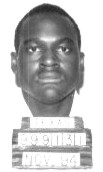
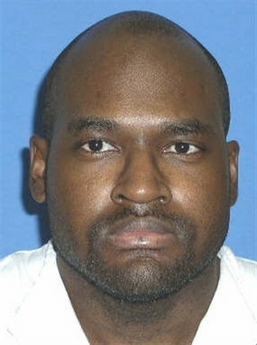

26th murderer executed in U.S. in 2006
1030th murderer executed in U.S. since 1976
14th murderer executed in Texas in 2006
369th murderer executed in Texas since 1976
(Race/Sex/Age at Murder-Execution) |
Birth |
(Race/Sex/Age at Murder) |
Murder |
Murder |
to Murderer |
Sentence |
||||
|
Sean Derrick O'Brien B / M / 18 - 31 |
Jennifer Ertman W / F / 14 Elizabeth Pena W / F / 16 |
Summary:
O'Brien was one of six members of a fledgling street gang drinking beer after initiating a new gang member. Elizabeth Pena, 16, and Jennifer Ertman, 14, were walking home from a friend's house, taking a shortcut along some railroad tracks when they stumbled upon the group. Evidence showed the girls were gang raped for more than an hour, then were kicked and beaten before being strangled. A red nylon belt was pulled so tight around Jennifer Ertman's neck that the belt snapped. The belt was later recovered from O'Brien's home. The bodies of the two teenage girls were found four days after they failed to return from a friend's house. When the bodies were discovered, they were decomposing and mummifying in 100-degree heat. O'Brien, who confessed to police, was one of six gang members convicted in the case and the first to be executed. The ninth-grade dropout, who had previous arrests for shoplifting a pistol, assault and auto theft, also was a suspect in a murder six months before the girls were killed but never was charged. Evidence put him at a Houston park where the body of Patricia Lopez, 27, was found. A beer can carrying his fingerprints was found under the remains of the woman. She had been raped, eviscerated and had her throat cut.
Two of the gang members, Efrain Perez and Raul Villarreal, had their death sentences commuted to life in prison when the Supreme Court last year barred executions for those who were 17 at the time of their crimes. Peter Cantu, described by authorities as ringleader of the gang, remains on death row without an execution date. Jose Medellin, who was condemned and who O'Brien said was at one end of the belt being pulled around Ertman's neck as he yanked on the other, had his case returned to the state courts under an order from President Bush. Medellin is among some 50 Mexican-born offenders who argue that under international law they should have been allowed assistance from the Mexican Consulate before trial. A sixth person convicted, Medellin's brother, Vernancio, was 14 at the time and received a 40-year prison term.
Citations:
Final Meal:
Declined.
Final Words:
"I am sorry. I have always been sorry," O'Brien said, holding his head up and looking straight at relatives of his victims. "It is the worst mistake that I ever made in my whole life. Not because I am here but because of what I did and I hurt a lot of people, you and my family." He repeated again and again that he was sorry.
Internet Sources:
Texas Department of Criminal Justice - Executed Offenders (Derrick O'Brien)
Inmate: O'Brien, Sean Derrick
Date of Birth: 4/5/75
TDCJ#: 999131
Date Received: 11/18/94
Education: 9 years
Occupation: laborer
Date of Offense: 6/24/93
County of Conviction: Harris
Race: Black
Gender: Male
Hair Color: Black
Eye Color: Brown
Height: 5 ft 08 in
Weight: 177
Texas Department of Criminal Justice
Texas Attorney General Media Advisory
MEDIA ADVISORY - Wednesday, July 5, 2006 - Derrick Sean O'brien Scheduled For ExecutionAUSTIN – Texas Attorney General Greg Abbott offers the following information about Derrick Sean O’Brien, who is scheduled to be executed after 6 p.m. Tuesday, July 11, 2006. On September 9, 1997, Derrick Sean O’Brien was sentenced to die for the June 1993 capital murder of Houston teenager Jennifer Ertman. A summary of the evidence presented at trial follows.
FACTS OF THE CRIME
On the night of June 24, 1993, O’Brien participated in the gang initiation of Raul Omar Villareal. Four other gang members, Peter Cantu, Roman Sandoval, Joe Medellin, and Efrain Perez, were present at the initiation, as were Frank Sandoval and Vernancio Medellin, brothers of two of the gang members. The initiation consisted of Villareal fighting each of the other gang members for several minutes. Following this ritual, the gang members drank beer.
At about 11:30 p.m., 14-year old Jennifer Ertman and 16 year old Elizabeth Pena ran across the gang initiation as they were returning home. The girls were raped and strangled. O’Brien and other gang members later boasted that they gang raped both girls. Autopsies revealed that both girls died of trauma to the neck consistent with strangulation. The girls’ bodies were found on June 28, 1993. They were close to each other, and were both in an advanced state of decomposition.
O’Brien was arrested on June 29, 1993, as were Peter Cantu, Efrain Perez, Jose and Vernancio Medellin, and Raul Villareal. When police knocked on O’Brien’s door and announced their presence, O’Brien attempted to run out the back door. He was arrested by officers waiting in back. After he was advised of his rights and informed he was under arrest for capital murder, O’Brien told police that he gave his belt to Joe Medellin, who used it to strangle one of the girls. At Medellin’s instruction, O’Brien grabbed one end of the belt and helped strangle the victim. They pulled so hard that one end of the belt broke off. O’Brien consented to a search of his apartment, and the police found the belt.
PROCEDURAL HISTORY
February 4, 1994 -- O’Brien was indicted by a Harris County grand jury for the capital murder of Jennifer Ertman.
April 7, 1994 -- O’Brien was found guilty by a jury of capital murder.
April 9, 1994 -- Following a separate punishment hearing, O’Brien was sentenced to death.
May 15, 1996 -- The Texas Court of Criminal Appeals affirmed O’Brien’s conviction and sentence.
January 21, 1997 -- The U.S. Supreme Court denied O’Brien’s petition for writ of certiorari.
August 23, 2001 -- O’Brien filed an application for writ of habeas corpus in the state trial court.
February 6, 2002 -- The Court of Criminal Appeals denied O’Brien’s application for writ of habeas corpus.
May 16, 2002 -- O’Brien filed a federal petition for writ of habeas corpus in a U.S. district court.
January 14, 2005 -- The federal district court dismissed O’Brien’s federal habeas petition and denied a certificate of appealibility.
May 9, 2005 -- O’Brien requested permission to appeal from the 5th U.S. Circuit Court of Appeals.
December 27, 2005 -- The Fifth Circuit Court denied O’Brien’ request to appeal the district court’s denial of his federal habeas petition.
March 25, 2006 -- O’Brien petitioned the U.S. Supreme Court for a writ of certiorari. This petition is currently pending.
April 26, 2006 -- O’Brien asked the Supreme Court for a stay of execution.
June 5, 2006 -- The Supreme Court declined to hear the case.
PRIOR CRIMINAL HISTORY
O’Brien had three prior arrests before committing this capital murder. He was arrested for shoplifting a pellet pistol, simple assault, and for stealing a car.
"Girls' killer apologizes before execution," by Michael Graczyk. (Associated Press July 11, 2006, 8:48PM)
HUNTSVILLE — Condemned murderer Derrick Sean O'Brien apologized profusely before being executed this evening for the torture, rape and strangling of two teenage Houston girls 13 years ago. "I am sorry. I have always been sorry," O'Brien said, holding his head up and looking straight at relatives of his victims. "It is the worst mistake that I ever made in my whole life. Not because I am here but because of what I did and I hurt a lot of people, you and my family." He repeated again and again that he was sorry. O'Brien was pronounced dead at 6:19 p.m., seven minutes after the lethal drugs began.
O'Brien was one of six members of a fledgling street gang arrested in the slayings of Elizabeth Pena, 16, and Jennifer Ertman, 14. Their bodies were found four days after they failed to return from a friend's house. The girls had been attacked as they took a shortcut along some railroad tracks and stumbled on the group drinking beer after initiating a new gang member.
Ertman's father and Pena's parents were among the witnesses to the lethal injection, the 14th this year in Texas, the nation's most active death penalty state. "It's been a long time coming," Adolfo Pena, who lost his daughter in the attack, said after watching the execution. "I wish we could have done all six at once. "We finally, finally got some justice for Elizabeth and Jennifer. You don't know how that feels to have some justice for my daughter, for the stuff that she had to go through."
Pena, who wore a T-shirt with the photos of the two slain girls beneath his shirt, said O'Brien's apology from the death chamber gurney "didn't mean much to me." "It doesn't bring my daughter back, but it's just a little bit late for that, don't you think?" he said.
O'Brien, 31, was spared a trip to the death house May 15 when his lawyers won a reprieve from the Texas Court of Criminal Appeals the day before he was to be executed. Days later, however, the same court lifted its order, clearing the way for today's execution.
The prisoner's attorneys asked the U.S. Supreme Court to stop the execution so justices could review his case. They argued there's no legal procedure allowing condemned Texas prisoners to raise challenges that drugs used in lethal injections "will cause O'Brien to endure unnecessary, excessive, and excruciating pain during the course of this execution." About 20 minutes before O'Brien was scheduled to die, the high court rejected his appeal.
Evidence showed the girls were gang raped for more than an hour, then were kicked and beaten before being strangled. A red nylon belt was pulled so tight around Jennifer Ertman's neck that the belt snapped. When the bodies were discovered, they were decomposing and mummifying in 100-degree heat. A smiling O'Brien, then 18, was seen on a videotape of the crowd that gathered as investigators worked the scene of the grisly discovery. A tip from the brother of one of the gang members led police to the arrests in the killings that shocked even crime-hardened Houston.
"I'm no fan of the death penalty, but that guy brought it on himself," said Steve Baldassano, who prosecuted O'Brien. "It was horrible."
O'Brien, who confessed to police, was one of six gang members convicted in the case and the first to be executed. The ninth-grade dropout, who had previous arrests for shoplifting a pistol, assault and auto theft, also was a suspect in a murder six months before the girls were killed but never was charged. Evidence put him at a Houston park where the body of Patricia Lopez, 27, was found. A beer can carrying his fingerprints was found under the remains of the woman. She had been raped, eviscerated and had her throat cut.
Two of the gang members, Efrain Perez and Raul Villarreal, had their death sentences commuted to life in prison when the Supreme Court last year barred executions for those who were 17 at the time of their crimes. Peter Cantu, described by authorities as ringleader of the gang, remains on death row without an execution date. Jose Medellin, who was condemned and who O'Brien said was at one end of the belt being pulled around Ertman's neck as he yanked on the other, had his case returned to the state courts under an order from President Bush. Medellin is among some 50 Mexican-born offenders who argue that under international law they should have been allowed assistance from the Mexican Consulate before trial. A sixth person convicted, Medellin's brother, Vernancio, was 14 at the time and received a 40-year prison term.
On the Web:
Texas Department of Criminal Justice execution schedule http://www.tdcj.state.tx.us/stat/scheduledexecutions.htm
Derrick Sean O'Brien http://www.ccadp.org/derrickobrien.htm
Jennifer Ertman, Elizabeth Pena http://www.murdervictims.com/Voices/jeneliz.html
"Texas executes man for rape, murder of two teens." (Tue Jul 11, 2006 8:13pm ET)
HUNTSVILLE, Texas (Reuters) - A Texas man was put to death by lethal injection on Tuesday for his part in the 1993 gang-rape and murder of two Houston teenagers. Derrick O'Brien, 31, was condemned for raping and killing Jennifer Ertman, 14, and Elizabeth Pena, 16, in a Houston park on June 24, 1993.
Prosecutors said O'Brien was one of six gang members who raped Ertman and Pena for over an hour in a Houston park before strangling them. The girls were taking a shortcut home through the park when they were attacked. O'Brien told police he helped strangle Ertman with his belt, which snapped from the strain put on it during the murder.
O'Brien's execution was delayed in May after his lawyers claimed lethal injection violates the U.S. Constitution's ban on cruel or unusual punishment. The claim was rejected by a Texas appeals court.
While strapped to a gurney in the death chamber on Tuesday, O'Brien apologized to Ertman's and Pena's families. "I am sorry," he said. "I have always been sorry. It is the worst mistake that I ever made in my whole life. Not because I am here, but because of what I did, and I hurt a lot of people -- you and my family. I am sorry. I have always been sorry."
O'Brien was the 14th person executed in Texas this year and the 369th put to death since the state resumed capital punishment in 1982, six years after the U.S. Supreme Court lifted a national death penalty ban. Both totals lead the nation.
O'Brien did not request a final meal.
Jennifer Ertman and Elizabeth Pena were 14 and 16 years old, respectively. They were friends who attended the same high school in Houston, Texas, Waltrip High School. On June 24, 1993, the girls spent the day together and then died together. They were last seen by friends about 11:15 at night, when they left a friend's apartment to head home, to beat summer curfew at 11:30. They knew they would be late if they took the normal path home, down W. 34th Street to T.C. Jester, both busy streets. They also knew they would have to pass a sexually-oriented business on that route and so decided to take a well-known shortcut down a railroad track and through a city park to Elizabeth's neighborhood.
The next morning, the girls parents began to frantically look for them, paging them on their pagers, calling their friends to see if they knew where they were, to no avail. The families filed missing persons reports with the Houston Police Department and continued to look for the girls on their own. The Ertmans and Penas gathered friends and neighbors to help them pass out a huge stack of fliers with the girls' pictures all over the Houston area, even giving them to newspaper vendors on the roadside.
Four days after the girls disappeared, a person identifying himself as 'Gonzalez' called the Crimestoppers Tips number. He told the call taker that the missing girls' bodies could be found near T.C. Jester Park at White Oak bayou. The police were sent to the scene and searched the park without finding anything. The police helicopter was flying over the park and this apparently prompted Mr. 'Gonzalez' to make a 911 call, directing the search to move to the other side of the bayou. When the police followed this suggestion, they found the badly decaying bodies of Jenny and Elizabeth. Jennifer Ertman's dad, Randy Ertman, was about to give an interview regarding the missing girls to a local television reporter when the call came over a cameraman's police scanner that two bodies had been found. Randy commandeered the news van and went to the scene that was now bustling with police activity. Randy Ertman appeared on the local news that evening, screaming at the police officers who were struggling to hold him back, "Does she have blond hair?Does she have blond hair?!!?" Fortunately, they did manage to keep Randy from entering the woods and seeing his daughter's brutalized body and that of her friend Elizabeth. The bodies were very badly decomposed, even for four days in Houston's brutal summer heat and humidity, particularly in the head, neck and genital areas. The medical examiner later testified that this is how she could be sure as to the horrible brutality of the rapes, beatings and murders.
The break in solving the case came from, of course, the 911 call. It was traced to the home of the brother of one of the men later sentenced to death for these murders. When the police questioned 'Gonzalez', he said that he had made the original call at his 16 year-old wife's urging. She felt sorry for the families and wanted them to be able to put their daughters' bodies to rest. 'Gonzalez' said that his brother was one of the six people involved in killing the girls, and gave police the names of all but one, the new recruit, whom he did not know. His knowledge of the crimes came from the killers themselves, most of whom came to his home after the murders, bragging and swapping the jewelry they had stolen from the girls.
While Jenny and Elizabeth were living the last few hours of their lives, Peter Cantu, Efrain Perez, Derrick Sean O'Brien, Joe Medellin and Joe's 14 year old brother were initiating a new member, Raul Villareal, into their gang, known as the Black and Whites. Raul was an acquaintance of Efrain and was not known to the other gang members. They had spent the evening drinking beer and then "jumping in" Raul. This means that the new member was required to fight every member of the gang until he passed out and then he would be accepted as a member. Testimony showed that Raul lasted through three of the members before briefly losing consciousness. The gang continued drinking and 'shooting the breeze' for some time and then decided to leave. Two brothers who had been with them but testified that they were not in the gang left first and passed Jenny and Elizabeth, who were unknowingly walking towards their deaths.
When Peter Cantu saw Jenny and Elizabeth, he thought it was a man and a woman and told the other gang members that he wanted to jump him and beat him up. He was frustrated that he had been the one who was unable to fight Raul. The gang members ran and grabbed Elizabeth and pulled her down the incline, off of the tracks. Testimony showed that Jenny had gotten free and could have run away but returned to Elizabeth when she cried out for Jenny to help her. For the next hour or so, these beautiful, innocent young girls were subjected to the most brutal gang rapes that most of the investigating officers had ever encountered. The confessions of the gang members that were used at trial indicated that there was never less than 2 men on each of the girls at any one time and that the girls were repeatedly raped orally, anally and vaginally for the entire hour. One of the gang members later said during the brag session that by the time he got to one of the girls, "she was loose and sloppy." One of the boys boasted of having 'virgin blood' on him. The 14-year-old juvenile later testified that he had gone back and forth between his brother and Peter Cantu since they were the only ones there that he really knew and kept urging them to leave. He said he was told repeatedly by Peter Cantu to "get some". He raped Jennifer and was later sentenced to 40 years for aggravated sexual assault, which was the maximum sentence for a juvenile.
When the rapes finally ended, the horror was not over. The gang members took Jenny and Elizabeth from the clearing into a wooded area, leaving the juvenile behind, saying he was "too little to watch". Jenny was strangled with the belt of Sean O'Brien, with two murderers pulling, one on each side, until the belt broke. Part of the belt was left at the murder scene, the rest was found in O'Brien's home. After the belt broke, the killers used her own shoelaces to finish their job. Medellin later complained that "the bitch wouldn't die" and that it would have been "easier with a gun". Elizabeth was also strangled with her shoelaces, after crying and begging the gang members not to kill them; bargaining, offering to give them her phone number so they could get together again.
The medical examiner testified that Elizabeth's two front teeth were knocked out of her brutalized mouth before she died and that two of Jennifer's ribs were broken after she had died. Testimony showed that the girls' bodies were kicked and their necks were stomped on after the strangulations in order to "make sure that they were really dead." The juvenile, Venancio Medellin, pled guilty to his charge and his sentence was reviewed when he turned 18, at which time he was sent to serve the remainder of the sentence in prison. The five killers were tried for capital murder in Harris County, Texas, convicted and sentenced to death. See US 5th Circuit Court summary of this case.
UPDATE: The Texas Court of Criminal Appeals issued a stay 27 hours before Sean O'Brien's scheduled execution in order to consider his appeal regarding the constitutionality of lethal injection. Two days later, the same court reversed itself and lifted the stay, however the death warrant had expired and the process of setting a new execution date will begin again.
Texas Execution Information Center by David Carson.
Derrick Sean O'Brien, 31, was executed by lethal injection on 11 July 2006 in Huntsville, Texas for the rape and murder of two teenage girls.
Elizabeth Pena, 16, and Jennifer Ertman, 14, spent the evening of 24 June 1993, at the swimming pool of a friend's apartment complex in Houston. As their midnight curfew approached, they debated the fastest route to Pena's home. They decided to follow the railroad tracks through a city park.
That same evening, eight young men were in the park participating in a gang initiation ritual. Raul Villareal, 17, was being initiated into the Black and White gang. The other gang members present were O'Brien, Peter Cantu, and Jose Medellin - all 18 - Efrain Perez, 17, and Roman Sandoval. Frank Sandoval and Vernancio Medellin, brothers of two of the gang members, were also present. The initiation consisted of Villareal fighting each of the other gang members for several minutes. Following this ritual, they drank beer.
At about 11:30 p.m., the two girls walked by. As they passed, Jose Medellin grabbed Pena and dragged her down a hill. She screamed for help. Ertman tried to help Pena, but Medellin grabbed her and dragged her down the hill as well. The boys then raped both girls for more than an hour before beating and strangling them. Their bodies, which were left in the woods, were discovered four days later, decomposing rapidly in the sweltering Houston summer heat.
News crews came out to cover the story of two bodies being discovered in a Houston park. O'Brien was caught on videotape in the crowd that gathered at the scene of the discovery. He was smiling. He and the other suspects were arrested after police received a tip from a brother of one of the gang members.
At his arrest, O'Brien confessed that he and the other gang members raped both of the girls. He also confessed that he and Jose Medellin strangled Ertman. They wrapped his red nylon belt around her neck, then he pulled at one end while Medellin pulled at the other, until the belt snapped in two. The belt was found in a search of O'Brien's apartment.
The medical examiner testified that, in addition to both girls being raped and strangled, Ertman had three fractured ribs, and Pena had one tooth that was fractured and several that were missing, indicating that she had been punched or kicked in the mouth. O'Brien had previously been arrested for shoplifting, assault, and stealing a car. A Houston police officer testified that, about three months before the murder, he witnessed O'Brien and Cantu punch, kick and drag a man at a fast food restaurant. Gregory Ristivo testified that he and O'Brien stole between 25 and 50 cars together, and that O'Brien also assaulted people to steal their shoes. Ristivo also testified that O'Brien and Cantu would start fights with random people.
O'Brien's mother and grandfather also testified against him at his punishment hearing, describing him as "cruel" and "intentionally harsh." O'Brien was also suspected in the murder of Patricia Lopez, who was found stabbed to death in a Houston park on 4 January 1993. Jose Martin Medellin, the brother of Jose and Vernancio Medellin, testified that Cantu told him that O'Brien killed Lopez. O'Brien was present when Cantu made this statement, and agreed with it. O'Brien was also connected to the crime by fingerprints found on beer bottles found at the scene.
A jury convicted O'Brien of the capital murder of Jennifer Ertman in April 1994 and sentenced him to death. The Texas Court of Criminal Appeals affirmed the conviction and sentence in May 1996. All of his subsequent appeals in state and federal court were denied.
Four of the other assailants that night were also convicted of capital murder and sentenced to death. Peter Cantu and Jose Medellin remain on death row. Raul Omar Villareal and Efrain Perez had their sentences commuted to life in June 2005 because they were 17 at the time of the crime. A sixth assailant, Vernancio Medellin, who was 14 at the time, was convicted of aggravated sexual assault and sentenced to 40 years in prison. He remains in custody as of this writing. No information was available on the disposition or status of Roman or Frank Sandoval.
The Pena and Ertman families were instrumental in getting Texas law changed so that victims' relatives are allowed to make statements at a trial's conclusion and to witness the execution of their loved ones' killers. According to Andy Kahan, crime victims advocate for Houston Mayor Bill White, 75 percent of victims' families elect to witness executions.
In September 2002, O'Brien wrote a statement advocating the abolition of the death penalty, which was posted an anti-death-penalty web site. O'Brien wrote, "I wonder how many children could be saved or kept living, who would otherwise die, with the monies, states use to kill men and women on death row ... We bear the responsibility of showing our children how to be human and if we can't then our world will continue to suffer for it. Life is a miracle and therefore precious each time one is taken before its time, the world loses something special." O'Brien did not address his crime in the statement. He refused media requests for interviews.
O'Brien's lawyer filed an unsuccessful last-chance appeal to the U.S. Supreme Court, alleging that the drugs used in lethal injection "will cause O'Brien to endure unnecessary, excessive, and excruciating pain during the course of this execution." The court rejected this appeal at about 5:40 p.m., twenty minutes before the execution was scheduled to begin.
"I am sorry. I have always been sorry," O'Brien said in his last statement. "It is the worst mistake that I ever made in my whole life." The lethal injection was then started. He was pronounced dead at 6:19 p.m.
Adolfo Pena, Elizabeth's father, watched O'Brien die. When asked if he witnessed any "excruciating pain," Pena answered, "I didn't see any suffering ... he just closed his eyes and went to sleep." "I wish to God my daughter could have died like that."
National Coalition to Abolish the Death Penalty
Derrick O'Brien, TX - July 11
Do Not Execute Derrick O'Brien!
Derrick Sean O’Brien was convicted of capital murder and sentenced to death for the 1993 rape and murder of two teenage girls, Jennifer Entman, 14, and Elizabeth Pena, 16, in Houston. On the night of June 24, Entman and Pena were walking home from a friend’s house when O’Brien, along with five others, attacked the two high school sophomores. According to court documents, the attack was part of a gang initiation. The bodies of the two girls remained undiscovered until police received an anonymous tip from the brother of one of O’Brien’s accomplices four days after the attack. O’Brien was arrested at his home the following day. O’Brien’s trial began on April 4, 1994 and he was found guilty of capital murder only two days later. On April 9, 1994, O’Brien was sentenced to death.
Although there is no question as to O’Brien’s guilt, there are circumstances surrounding the punishment phase of O’Brien’s trial that do warrant closer consideration. For one, O’Brien’s defense counsel presented only one witness. In the punishment phase of a death penalty trial a jury is asked to weigh mitigating factors, such as certain aspects of a defendant’s character or background, including moral culpability, as a basis for a sentence less than death. The one witness brought to testify on O’Brien’s behalf was a records custodian employed by the Harris County Jail who testified that there were no disciplinary actions taken against O’Brien during his time at the jail. O’Brien’s counsel also choose not to call several witnesses to discuss O’Brien’s mental health. These witnesses would have attested that O’Brien experienced child abuse and that O’Brien was diagnosed with an “anti-social disorder.” The combination of the defense not calling the above witnesses allowed O’Brien to argue in his appeal that counsel was ineffective and that mitigating factors were not taken into account.
The ability of the jury to properly weigh mitigating factors against the potential sentence of death is further called into question by the fact that the prosecutor repeatedly told the jury that there must be a connection between the mitigating evidence and the crime. Contrary to the prosecutor’s statements otherwise, the Supreme Court has set a “low threshold of mitigating circumstances.” Therefore, both the fact that O’Brien was 18 at the time of the crime, as well as evidence regarding his good behavior while in jail, are relevant mitigating factors. Such comments were made by the both during jury selection, as well as during the prosecutor’s closing arguments. During closing arguments the prosecutor stated:
Then you move on to [Special Issue] No. 3, then you look at the Charge. And it tells you to ask yourself if there's anything mitigating. And we talked about what does mitigating mean.... What, if anything, is mitigating about him that you heard? The only thing that I can possibly think of is that the guy's learning disabled in arithmetic, he can't add... It doesn't take a rocket scientist to figure out if you can't add that doesn't give you the right to go out and kill ... other people. So there's not anything at all that you heard from any witness that is mitigating.
Thus, the proper procedural instructions given to the jury by the judge regarding mitigating evidence were negated by the prosecutor’s comments. In other words, it is likely that the jury, believing the prosecutor’s statement that there must be a connection between the mitigating evidence and the crime, did not properly weigh the mitigating evidence that they were presented with and ultimately decided upon a sentence that they would not have otherwise.
In December of 2005 the U.S. Fifth Circuit Court of Appeals denied O’Brien’s request for a certificate of appealability despite the evidence presented in support of the issues outlined above. There is no way to say for sure that a different jury, one that had been spared the prosecutor’s commentary, would not have decided upon a different fate for O’Brien.
On May 15th of 2006, Derrick O’Brien was granted a temporary stay of execution in response to a last minute writ of habeas corpus. O’Brien argued that the three chemical combination used by Texas to carry out executions may "unnecessarily create a risk that O’Brien will suffer excruciating excessive pain during the administration of his lethal injection." In a similar case in Florida, Clarence Hill was granted a stay of execution on the same grounds.
Two days later on May 17th O’Brien’s stay of execution was lifted. The main argument for lifting the stay was that O’Brien brought forth no scientific or factual evidence showing that the chemicals used in a lethal injection cause any pain. Judge’s Holcomb and Price, in a dissenting opinion, stated that they believed the stay of execution was originally made to give the court time to rule on this appeal, but that the decision to lift the stay was rushed. Neither judge makes a statement about whether or not the method of lethal injection in Texas violates the eighth amendment; however they do express an interest in seeing the matter resolved in an actual hearing where O’Brien would be able to present such evidence. Derrick Sean O’Brien should not be executed without being able to present all of the above evidence in court, including mitigating and scientific evidence.
"Rapist/Murderer Scheduled to Die Tonight." (7/11/06) Derrick O'Brien, the former gang member who at the age of 18 killed two young Houston girls, is scheduled to die tonight after his reprieve, issued May 15th by the Texas Court of Criminal Appeals, was recinded. O Brian and several friends, members of a gang, gang-raped and strangled Jennifer Ertman and her friend Elizabeth Pena in 1993. The girls were killed after they took a shortcut home one night and stumbled upon some teenagers drinking beer after intiating a new gang member, says KHOU. Fingerprint evidence, and a tip from a brother of one of the gang members, led police to O'Brien, one of 6 gang members convicted for the slaying. (He had also been a suspect in another murder, though he was never charged).
Several of the convicted killers are on death row: two others have had their death sentences commuted to life in prison because they were only seventeen at the time of the crime. One of the convicted killers is a major plaintiff in a suit that claims Mexican nationals accused of crimes in Texas have been convicted unlawfully because they were not alllowed access to help from the Mexican Consulate.
O'Brien himself was one of the Texas inmates claiming that lethal injection constitutes cruel and unusual punishment. Though the claim led to a temporary stay of execution, he has now exhausted his appeals and will likely be executed as scheduled tonight, making him the first to die for this crime and the fourteenth to be executed in Texas this year.
Candian Coalition to Abolish the Death Penalty (Inmate Homepage)
Derrick O'Brien writes on the Abolition movement:
Sept. 2002 -
As you know, the current fight against the death penalty is growing, but is it taking the right direction ? Lots of people support the d/p, especially now with 9/11, but most are not educated on the negatives of death row other than the innocence issue and the execution of mentally retarded ending. To be blunt, most Americans are concerned with money more than anything else; capitalism rules here. I believe that if the general public knew that millions are spent (per inmate) on the death penalty from trial to executions, there would be an outcry.
If it can be shown that these monies could be better spent on the betterment of communities and comprehensive programs that head off crime, I believe many people would come around. The wrongness of the d/p is being shown solely from a moralistic standpoint but is this effective here where morals have deteriorated to a large extent ? We are geared up to go and raze Iraq to the ground (again) because of one man. The public supports it but in doing so also supports the killing of hundreds of people who have absolutely no control over there. If the majority of Americans don't really care about the killing of hundreds of people then how can they care for us on death row ?
No, morals aren't the way to approach the struggle, financially is. If we had people out saying that they don't want millions of their tax dollars going for a useless system every year. I'll bet the politicians'll reach then. We have to show that its cheaper and more effective to house an offender for life than to execute. The extra money can be used for better law enforcement, better educational programs, community centers, etc. On average, about 4 million dollars is spent per inmate on death row from trial to execution; there are close to 500 inmates here in Texas alone. Nationwide this is a lot of money spent for no other reason than retribution. There are a whole array of beneficial programs that can be actualized with the money used for capital defense and prosecution; lets say children's healthcare for instance.
I wonder how many children could be saved or kept living, who would otherwise die, with the monies, states use to kill men and women on death row. Isn't it a worthwhile thing to explore ? I believe that it is. How many much needed operations and treatments could be given that are now too costly by some ? How many people who need specialized treatment would receive it? It is a shame that it comes down to money versus morals and what's right, but with revenge and vengeance being so much a staple of American society now, the struggle has to take on a new dimension.
Education is the key, and if we can show how many people can benefit from the abolition of the death penalty I believe many would support it although not for the right reasons. Imagine how a person whose wife, child, parent is sick would feel to know that with just half of what their state spends on death row inmate they (or he) could get the very best of treatment for a loved one. This could be a reality if people would just see with their hearts. On a deeper level though, it is incumbent that we all develop a genuine respect for all forms of life if systems like the death penalty are to become obsolete. As it stands, our nations youth (and future) are losing this inherent humanity because of our own lack of it. It all comes down to us, the adults, to show the way to a world where a persons sole wish is for the happiness of the next. We bear the responsibility of showing our children how to be human and if we can't then our world will continue to suffer for it. Life is a miracle and therefore precious each time one is taken before its time , the world loses something special. All of this may sound strange coming from me, a death row inmate, but if I never strove to change even knowing my wrongs, I couldn't call myself human. ....
Derrick Sean O'Brien 999131
3872 FM 350 South
Livingston Texas 77351 USA
Derrick's Original Pen Pal Request to the CCADP:
Hello my name is Sean, and I'm writing...because I'm very interested in receiving a friend. I look forward to you hearing from you soon, and till I do I remain sincerely yours,
On June 24, 1993 while walking home, Elizabeth Pena (16) and Jennifer Ertman (15) were kidnapped, brutally beat and raped, and then strangeled to death by a gang known as the Black and Whites. Peter Cantu, Raul Villareal, Efrain Perez, Jose Medellin, and Sean Derrick O’Brien were all convicted and sentenced to die for their participation in these two little girls’ deaths.
Tomorrow —nearly 13 years after the crimes were committed — Sean Derrick O’Brien will be the first person involved to be executed by the State of Texas. 13 years to carry out the sentence of a man who confessed to using his own belt to strangle one of the girls to death after he raped her. Sickening. He should have been drug behind the courthouse and shot in the head within second of uttering that confession.
NOTE — Villareal and Perez have since had their sentences commuted to life after the Supreme Court of the United States ruled that the execution of killers who were under 18 when they committed their crimes was no longer constitutional. Perez and Villareal were both 17 at the time they killed these two little girls.
Another One of Jennifer Ertman’s Killers Trying to Avoid the Death Penalty
On March 1, the Supreme Court of the United States (SCOTUS) ruled that the Constitution forbids the execution of killers who were under 18 when they committed their crimes. Unbelievably, Monsieurs Kennedy, Breyer, Souter, and Stevens, and Madame Bader Ginsburg based their decisions on International opinion. With that ruling, pieces-of-shit like Efrain Perez and Raul Villarreal will not face the death sentence that they deserve.
You remember these two fine young men, right? They were responsible for the deaths of Jennifer Ertman (14) and Elizabeth Pena (16). Each girl was repeatedly raped by Villarreal and his fellow gang members, and then strangled to death. Villarreal later bragged that he stepped on the neck of Jennifer Ertman in an effort to strangle her because the “bitch wouldn’t die” after being strangled with a belt.
Well, today, one of Villareal’s ‘fellow gang members’—Jose Medellin—who helped to rape and murder those two young girls, is looking to have his death sentence commuted, too. Not because of his innocence. Nobody, not even Medellin, claims he’s innocent of the crimes he’s sitting on death row for. Medellin’s biggest mistake was not being under the age of 18 when he committed rape and murder. But now he’s also appealing to International law to avoid the death penalty:
WASHINGTON — The Supreme Court, confronting a case that tests the effect of international law in domestic death penalty cases, showed little interest Monday in deciding whether the U.S. government can deny foreign suspects access to legal help from their consulates. Jose Medellin came to our country illegally and raped and murdered our children. I don’t give a damn what country he’s from—he should be put to death by our country in accordance with our laws…International law be damned.
"Killer's death date up again; Execution set for Tuesday in '93 rape, slaying of 2 teens at park," by Allan Turner and Rosanna Ruiz. (July 10, 2006, 2:42PM)
It wasn't news to anyone that Derrick Sean O'Brien was bad news. He fought often at school, once breaking a kid's jaw. Lots of times he was drunk. Sometimes he carried a knife. He was full of bluster about his prowess as a car thief. But it was in 1993 that O'Brien hit rock bottom. In January of that year, O'Brien later admitted, he murdered and tried to rape Patricia Lopez, a 27-year-old mother of two young children, in Melrose Park. And on June 24, 1993, he took part in the brutal gang rapes and murders of Jennifer Ertman, 14, and Elizabeth Peña, 16, after the girls stumbled into a drunken midnight gang initiation rite in T.C. Jester Park. Tuesday, O'Brien, 31, is scheduled to be executed for his role in that crime.
The death date is the killer's second this year. In May, O'Brien received a brief stay as judges considered his claim that death by injection is cruel and unusual punishment. O'Brien's attorney, Catherine Burnett, an associate dean at the South Texas College of Law, filed a new appeal on his behalf with the U.S. Supreme Court. "I hope the son of a bitch rots in hell," Ertman's father, Randy, said last week. "He deserves it." "It doesn't make me happy," Peña's father, Adolfo, said in a recent interview. "But this is the punishment he was given, and it's justifiable. ... I kind of feel numb in a way, knowing that I've been waiting so long for this day to come. ... I've been looking forward to this for a long time."
The murders of Ertman and Peña rocked the city in a way that few deaths could. The Waltrip High School students, balanced at that awkward point between childhood and young womanhood, spent the hours before their deaths at a poolside party at a northwest Houston apartment complex. As their midnight curfew approached, they debated the best way to Peña's home. Their normal route would have taken half an hour, but they chose a well-known shortcut down the railroad tracks through the park.
Minutes after the girls left the party, they were intercepted by O'Brien and five other members of the loose-knit gang, who had just concluded a track-side initiation rite. The girls were pulled from the tracks, raped and strangled. Court testimony revealed that O'Brien grunted with exertion as he tightened a belt around Ertman's neck. Then, after stomping on the girls' throats, the killers divided the victims' belongings.
O'Brien was at the crime scene four days later when police, alerted to the bodies' location by the brother of a gang member, began their investigation. Unobtrusively, the killer stood among spectators who gathered in the park. Ertman's father also was in the crowd. Days later, O'Brien was arrested. He will be the first of the convicted gang members to be put to death.
Others facing execution are Peter Anthony Cantu, described as the gang's leader, and Jose Ernesto Medellin, both 31. Death sentences for two others — Efrain Perez and Raul Omar Villarreal — were commuted to life in prison when the U.S. Supreme Court ruled that those who were minors when they committed murders could not be executed. The sixth gang member, Venacio Medellin, who was 14 at the time of the murders and testified against the others, received a 40-year sentence.
"Don't say time makes things better," Peña's father said. "It never goes away. It's never going to go away. The hurt is still the same. I still find myself crying just out of the blue."
MurderVictims.Com (Elizabeth Pena and Jennifer Ertman)
The Murders of Jennifer Ertman and Elizabeth Pena
What happened...
Jennifer Ertman and Elizabeth Pena were 14 and 16 years old, respectively. They were friends who attended the same high school in Houston, Texas, Waltrip High School. On June 24, 1993, the girls spent the day together....and then died together.
They were last seen by friends about 11:15 at night, when they left a friend's apartment to head home, to beat summer curfew at 11:30. They knew they would be late if they took the normal path home, down W. 34th Street to T.C. Jester, both busy streets. They also knew they would have to pass a sexually-oriented business on that route and so decided to take a well-known shortcut down a railroad track and through a city park to Elizabeth's neighborhood.
The next morning, the girls parents began to frantically look for them, paging them on their pagers, calling their friends to see if they knew where they were, to no avail. The families filed missing persons reports with the Houston Police Department and continued to look for the girls on their own. The Ertmans and Penas gathered friends and neighbors to help them pass out a huge stack of fliers with the girls' pictures all over the Houston area, even giving them to newspaper vendors on the roadside.
Four days after the girls disappeared, a person identifying himself as 'Gonzalez' called the Crimestoppers Tips number. He told the call taker that the missing girls' bodies could be found near T.C. Jester Park at White Oak bayou. The police were sent to the scene and searched the park without finding anything. The police helicopter was flying over the park and this apparently prompted Mr. 'Gonzalez' to make a 911 call, directing the search to move to the other side of the bayou. When the police followed this suggestion, they found the badly decaying bodies of Jenny and Elizabeth.
Jennifer Ertman's dad, Randy Ertman, was about to give an interview regarding the missing girls to a local television reporter when the call came over a cameraman's police scanner that two bodies had been found. Randy commandeered the news van and went to the scene that was now bustling with police activity. My first knowledge of the death of Jennifer was seeing Randy, on the news that evening, screaming at the police officers who were struggling to hold him back, "Does she have blond hair?? DOES SHE HAVE BLOND HAIR?!!?"
Fortunately, they did manage to keep Randy from entering the woods and seeing his daughter's brutalized body and that of her friend Elizabeth, but they were unable to escape that fate themselves. I saw hardened, lifelong cops get tears in their eyes when talking about the scene more than a year later. The bodies were very badly decomposed, even for four days in Houston's brutal summer heat and humidity, particularly in the head, neck and genital areas. The medical examiner later testified that this is how she could be sure as to the horrible brutality of the rapes, beatings and murders.
The break in solving the case came from, of course, the 911 call. It was traced to the home of the brother of one of the men later sentenced to death for these murders. When the police questioned 'Gonzalez', he said that he had made the original call at his 16 year-old wife's urging. She felt sorry for the families and wanted them to be able to put their daughters' bodies to rest. 'Gonzalez' said that his brother was one of the six people involved in killing the girls, and gave police the names of all but one, the new recruit, whom he did not know.
His knowledge of the crimes came from the killers themselves, most of whom came to his home after the murders, bragging and swapping the jewelry they had stolen from the girls.
While Jenny and Elizabeth were living the last few hours of their lives, Peter Cantu, Efrain Perez, Derrick Sean O'Brien, Joe Medellin and Joe's 14 year old brother were initiating a new member, Raul Villareal, into their gang, known as the Black and Whites. Raul was an acquaintance of Efrain and was not known to the other gang members. They had spent the evening drinking beer and then "jumping in" Raul. This means that the new member was required to fight every member of the gang until he passed out and then he would be accepted as a member. Testimony showed that Raul lasted through three of the members before briefly losing consciousness.
The gang continued drinking and 'shooting the breeze' for some time and then decided to leave. Two brothers who had been with them but testified that they were not in the gang left first and passed Jenny and Elizabeth, who were unknowingly walking towards their deaths. When Peter Cantu saw Jenny and Elizabeth, he thought it was a man and a woman and told the other gang members that he wanted to jump him and beat him up. He was frustrated that he had been the one who was unable to fight Raul.
The gang members ran and grabbed Elizabeth and pulled her down the incline, off of the tracks. Testimony showed that Jenny had gotten free and could have run away but returned to Elizabeth when she cried out for Jenny to help her. For the next hour or so, these beautiful, innocent young girls were subjected to the most brutal gang rapes that most of the investigating officers had ever encountered. The confessions of the gang members that were used at trial indicated that there was never less than 2 men on each of the girls at any one time and that the girls were repeatedly raped orally, anally and vaginally for the entire hour. One of the gang members later said during the brag session that by the time he got to one of the girls, "she was loose and sloppy." One of the boys boasted of having 'virgin blood' on him.
The 14-year-old juvenile later testified that he had gone back and forth between his brother and Peter Cantu since they were the only ones there that he really knew and kept urging them to leave. He said he was told repeatedly by Peter Cantu to "get some". He raped Jennifer and was later sentenced to 40 years for aggravated sexual assault, which was the maximum sentence for a juvenile.
When the rapes finally ended, the horror was not over. The gang members took Jenny and Elizabeth from the clearing into a wooded area, leaving the juvenile behind, saying he was "too little to watch". Jenny was strangled with the belt of Sean O'Brien, with two murderers pulling, one on each side, until the belt broke. Part of the belt was left at the murder scene, the rest was found in O'Brien's home. After the belt broke, the killers used her own shoelaces to finish their job. Medellin later complained that "the bitch wouldn't die" and that it would have been "easier with a gun". Elizabeth was also strangled with her shoelaces, after crying and begging the gang members not to kill them; bargaining, offering to give them her phone number so they could get together again.
The medical examiner testified that Elizabeth's two front teeth were knocked out of her brutalized mouth before she died and that two of Jennifer's ribs were broken after she had died. Testimony showed that the girls' bodies were kicked and their necks were stomped on after the strangulations in order to "make sure that they were really dead." The juvenile pled guilty to his charge and his sentence will be reviewed when he turns 18, at which time he could be released. The other five were tried for capital murder in Harris County, Texas, convicted and sentenced to death. I attended all five trials with the Ertmans and know too well the awful things that they and the Penas had to hear and see in the course of seeing Justice served for their girls.
Two VERY important things in the criminal justice system have changed as a result of these murders. After the trial of Peter Cantu, Judge Bill Harmon allowed the family members to address the convicted. This had not previously been done in Texas courts and now is done as a matter of routine.
The other change came from the Texas Department of Corrections which instituted a new policy allowing victims' families the choice and right to view the execution of their perpetrators. I had an ever-swaying opinion on the death penalty before this happened to people I know, before I watched the justice system at work firsthand. I have now come to believe that there are some crimes so heinous, so unconscionable that there can be no other appropriate punishment than the death penalty.
This is why I joined Justice For All. Charlene Hall
Update - 1996
Vinnie Medellin was sentenced at age 14 to forty years in the Texas Department of Corrections for the crime of aggravated sexual assault upon Jennifer Ertman, to which he pled guilty. As a juvenile, he was remanded to the custody of the Texas Youth Commission where he would remain until age eighteen. He testified at all of the other trials except for that of his brother, Jose Medellin. He refused to answer any questions at his brother's trial and was held in contempt of court and sentenced to six months in county jail, to be served at the end of his current sentence.
On September 26, 1996, after three years in the custody of the TYC, a hearing was held to determine the future of the juvenile. Three outcomes were possible; he could have been released on parole, a possibility which was never even discussed; he could have been returned to TYC custody until he reached the age of 21 at which time another hearing would have been held; or he could have been sent to TDC to serve the remainder of his sentence as an adult.
The recommendation of TYC was that he continue treatment at TYC until age 21. He was said to be an excellent inmate and did not have behavior problems and participated in all required therapies. On the other hand, his counselors reported that he still seemed to show no remorse for his part in the crimes and also did not take responsibility for his part.
The courtroom was filled with supporters of the girls' families, most of whom did not know them before the murders and who have become friends through Justice For All or Parents of Murdered Children. There was testimony about the details of the crime from a detective who was present at the murder scene and participated in the investigation and arrests. A therapist from TYC testified as to Vinnie's stay at TYC and the reports of various counselors and therapists. Vinnie's father testified as to his good behavior before this incident.
Randy Ertman took the witness stand to tell the court about his daughter, Jennifer. When asked what Jenny's hobbies were, he elicited bittersweet smiles in the courtroom when he responded, "Shopping!" Randy told the judge that he was living through the worst possible thing that could happen to a family and implored the judge to send Vinnie to TDC and to not make the families repeat this process in three years.
Vinnie took the stand and was asked about his past behavior, his grades at school and how he happened to be with his brother on this night. He read a letter that he had written, telling the parents of the victims that he was sorry for their losses and warning other teenagers away from gangs, saying that he had gone with this gang for one hour and had ruined his life forever.
Judge Pat Shelton did not take a recess to ponder his decision. He said that he agreed with Mr. Ertman, that this is the nightmare of nightmares for a parent. He said that he also agreed with Vinnie Medellin that gangs were destructive but that "you have to mean what you say when you are walking out the front door of your house, not just when you are walking in the door of the courtroom."
He also said "I'm not sure that your future parole officer has even been BORN yet and I'm not sure that you deserve for him to have even been born yet." He rejected the report from the TYC as "psycho-babble" and transferred custody of Venancio Medellin to the Texas Department of Corrections.
Charlene Hall
Update
I just wanted to let visitors know what is going on with the killers' appeals. Two of the murderers had an execution date set for June 2004, on and the day after the 11th anniversary of the murders. The two were Efrain Perez and Raul Villarreal. They both received a stay because of an appeal that was to be heard before the US Supreme Court regarding a case from Missouri that challenged the execution of any murderer who was under the age of 18 at the time of the crime. Both of these killers were not yet 18 when they brutally attacked and killed the girls. Villarreal turned 18 in three months, and Perez turned 18 five months after the murders.
The arguments in this case were heard in the fall of 2004 and the decision was handed down a few months later; no more death penalties for "juvenile" murderers. This will result in these two killers, plus dozens more across the country, being removed from death row and given life sentences instead. In this case, it is life without the possibility of parole for 35 years because that was the alternative to a death sentence in a capital case at the time of the murders. They will certainly never be released from prison, but they should have been executed.
The only consolation is that they will no longer have the protection they now have on death row - they will be in the general population of the prison system and most regular prisoners do not like people who rape and murder children. They might have gotten a reprieve but it may be much worse in the end, a true case of be careful what you wish for...
Additionally, a third killer out of the five who were put on death row for this crime had an appeal pending before the US Supreme Court. In this instance, Joe Medellin claims that he should get a new trial because he is a Mexican national and should have been allowed to contact the Mexican consulate for legal assistance. However, he had lived in the US since he was six years old and had gone to elementary, middle and high school here. The Supreme Court heard arguments in the case in spring of 2005 and sent the case back to the state court for a hearing.
News articles about these murders
(if you want to read them in chronological order,start at the bottom of the page)
Mon 07/10/2006
Killer's death date up again / Execution set for Tuesday in '93 rape, slaying of 2 teens at park
It wasn't news to anyone that Derrick Sean O'Brien was bad news. He fought often at school, once breaking a kid's jaw. Lots of times he was drunk. Sometimes he carried a knife. He was full of bluster about his prowess as a car thief. But it was in 1993 that O'Brien hit rock bottom. In January of that year, O'Brien later admitted, he murdered and tried to rape Patricia Lopez, a 27-year-old mother of two young children, in Melrose Park. And on June 24, 1993, he took part in the brutal gang rapes and murders of Jennifer Ertman, 14, and Elizabeth Peña, 16, after the girls stumbled into a drunken midnight gang initiation rite in T.C. Jester Park. Tuesday, O'Brien, 31, is scheduled to be executed for his role in that crime.
The death date is the killer's second this year. In May, O'Brien received a brief stay as judges considered his claim that death by injection is cruel and unusual punishment. O'Brien's attorney, Catherine Burnett, an associate dean at the South Texas College of Law, filed a new appeal on his behalf with the U.S. Supreme Court. "I hope the son of a bitch rots in hell," Ertman's father, Randy, said last week. "He deserves it." "It doesn't make me happy," Peña's father, Adolfo, said in a recent interview. "But this is the punishment he was given, and it's justifiable. ... I kind of feel numb in a way, knowing that I've been waiting so long for this day to come. ... I've been looking forward to this for a long time."
The murders of Ertman and Peña rocked the city in a way that few deaths could. The Waltrip High School students, balanced at that awkward point between childhood and young womanhood, spent the hours before their deaths at a poolside party at a northwest Houston apartment complex. As their midnight curfew approached, they debated the best way to Peña's home. Their normal route would have taken half an hour, but they chose a well-known shortcut down the railroad tracks through the park. Minutes after the girls left the party, they were intercepted by O'Brien and five other members of the loose-knit gang, who had just concluded a track-side initiation rite. The girls were pulled from the tracks, raped and strangled. Court testimony revealed that O'Brien grunted with exertion as he tightened a belt around Ertman's neck. Then, after stomping on the girls' throats, the killers divided the victims' belongings.
O'Brien was at the crime scene four days later when police, alerted to the bodies' location by the brother of a gang member, began their investigation. Unobtrusively, the killer stood among spectators who gathered in the park. Ertman's father also was in the crowd. Days later, O'Brien was arrested. He will be the first of the convicted gang members to be put to death. Others facing execution are Peter Anthony Cantu, described as the gang's leader, and Jose Ernesto Medellin, both 31. Death sentences for two others - Efrain Perez and Raul Omar Villarreal - were commuted to life in prison when the U.S. Supreme Court ruled that those who were minors when they committed murders could not be executed. The sixth gang member, Venacio Medellin, who was 14 at the time of the murders and testified against the others, received a 40-year sentence.
"Don't say time makes things better," Peña's father said. "It never goes away. It's never going to go away. The hurt is still the same. I still find myself crying just out of the blue."
Thu 06/29/2006
High court axes foreigners' plea / Denial of suspects' claims of consular rights violations could affect Texas case
In a ruling that could have implications for a Houston death row case, the U.S. Supreme Court on Wednesday ruled against foreign suspects who want to suppress statements they gave to police during interrogations when they were not informed of their right to contact consulate officials from their home countries. The court ruled 6-3 that Mexican Moises Sanchez-Llamas' and Honduran Mario Bustillo's rights under the Vienna Convention were not violated because the treaty's consulate-notification provision does not apply to searches or interrogations.
Those cases originated in Oregon and Virginia, respectively. But the court's ruling could affect a Texas death-penalty case as well. Mexican national Jose Ernesto Medellin raised the same issue of Vienna Convention violations in his appeals. Medellin was one of six defendants convicted in the 1993 rape and murder of Jennifer Ertman, 14, and Elizabeth Peña, 16, in a northwest Houston park. "The court could have used Jose's case a long time ago to hand down the same ruling they handed down today," Medellin's attorney, Michael B. Charlton, said from his office in El Prado, N.M. "That pretty much ends Vienna Convention claims on confession claims but not on the other issues," he added. Medellin's case is under review by the Texas Court of Criminal Appeals after President Bush's edict last year for courts in Texas and other states to review his and 50 others involving foreign nationals who raised consular violation claims. But the court's decision does not relate to Bush's order.
In the majority opinion, Chief Justice John Roberts specified that Article 36 of the Vienna Convention "secures only a right of foreign nationals to have their consulate "informed" of their arrest or detention - not to have their consulate intervene, or to have law enforcement authorities cease their investigation pending any such notice or intervention." Under the convention, ratified by the United States in 1969, when a national of one country is detained by authorities in another country, authorities must notify the consular offices of the foreigner's home country when requested. Roberts also wrote that a detained foreign national, "like everyone else in our country, enjoys under our system the protections of the Due Process Clause." He set aside, however, the matter of whether police must advise defendants of their legal options. Roberts was careful to stipulate that the ruling "in no way disparages the importance of the Vienna Convention."
In a dissenting opinion, Justice Stephen Breyer wrote that the decision runs afoul of the treaty's interpretation "not only with the treaty's language and history, but also with the (International Court of Justice's) interpretation of the same treaty provision." Justices John Paul Stevens and David Souter joined in the dissent. Breyer wrote that the ruling may weaken respect abroad for the rights of foreign nationals and diminishes the treaty's proviso that foreign nationals are deserving of fair treatment throughout the world. A spokesman for the Texas Attorney General's Office, which is handling the Court of Criminal Appeals case involving Medellin, declined to comment about the potential impact of the court's ruling.
Thu 05/25/2006
Ertman, Peña murderer set to die on July 11 / Appeals court had granted, then reversed, a stay for teens' killer
A man whose execution for the murders of two teenage girls was blocked recently has been rescheduled for the death chamber on July 11. State District Judge Jan Krocker set the new execution date for Derrick Sean O'Brien, one of six gang members convicted in the 1993 slayings of Waltrip High School sophomores Jennifer Ertman and Elizabeth Peña. O'Brien, 31, originally was set to die on May 16, but the Texas Court of Criminal Appeals granted a stay of execution. The appeals court reversed course the next day, voting 5-4 to lift the stay and dismiss O'Brien's claim that Texas' lethal-injection procedure would violate his Eighth Amendment protection against cruel and unusual punishment. O'Brien would be the first of Ertman's and Peña's killers to die. Four others also were condemned, but two later saw their sentences commuted to life in prison after the U.S. Supreme Court banned the execution of those who were juveniles when they committed murder. Another gang member, who was 14 at the time of the attack, received a 40-year sentence. Ertman, 14, and Peña, 16, were walking home through a wooded area in northwest Houston on the night of June 24, 1993, when they were gang-raped and tortured, then strangled and stomped. Their bodies were found four days later.
Thu 05/18/2006
Ertman, Peña killer again faces execution / Case reversed; another inmate who challenged lethal injection is put to death
In a reversal with life-or-death consequences, the Texas Court of Criminal Appeals on Wednesday lifted the stay of execution it granted earlier this week for Derrick Sean O'Brien of Houston, who likely will be rescheduled for lethal injection for his role in the notorious slaying of two teenage girls in 1993. "See, we're back on the ride again, riding up and down," said Melissa Peña, mother of one of the girls who was gang-raped, tortured and strangled. "At least this is some good news. Maybe things will swing back our way."
The appeals court also denied a claim by another death row inmate, Jermaine Herron, who was then put to death in Huntsville for killing a South Texas mother and son nine years ago. Both men had argued that the state's use of a three-drug cocktail would cause pain and therefore violate their constitutional protection against cruel and unusual punishment. After the court issued its stay for O'Brien on Monday, his attorney and legal experts wondered whether the move signaled the court's willingness to wait for the U.S. Supreme Court to decide the issue over lethal injections raised in a Florida case now before it. Herron's attorneys filed a similar claim late Tuesday. In a 5-4 ruling Wednesday, the Texas court rescinded the stay it had issued for O'Brien and dismissed his claim that the state's lethal injection procedure would violate his Eighth Amendment rights. At issue, in this and a growing number of claims around the country, is whether an anesthetic administered as part of the lethal-injection cocktail can fail, and whether the dying inmate's agony is masked by a second drug that paralyzes the muscles. The U.S. Supreme Court has so far declined to address the constitutional question directly. But in a Florida case argued last month, Hill v. McDonough, the justices pondered a related procedural issue.
In an opinion issued Wednesday concurring with the majority vote, Texas Court of Criminal Appeals Judge Cathy Cochran explained that the court postponed O'Brien's execution to look more closely at the procedural issues as well as the merits of O'Brien's claim. She wrote that O'Brien failed to do more than speculate about the "problems or mistakes that "might" occur." She wrote further that he has not provided evidence that the three-drug protocol used during executions "is subject to any realistic risk of unnecessary pain or suffering." On Monday, Cochran had voted with five other judges to grant O'Brien a postponement. In a dissenting opinion Wednesday, Judge Tom Price wrote that the question before the court was not whether O'Brien's appeal proved an Eighth Amendment violation. It was the court's job, he wrote, to determine whether the appeal was appropriately filed as a state habeas corpus petition. "It is manifestly unfair, in my estimation, to fault the applicant for a failure of proof without first affording him an opportunity to present evidence at a hearing or through one of the other mechanisms that the statute allows for presentation of evidence," Price wrote. Rob Owen, a University of Texas law school adjunct professor and death penalty expert, agreed with Price, saying that the court skirted the procedural question. "It sounds like Price is criticizing the court saying it has gone around that question and gone straight to the underlying constitutional question," Owen said. "He's saying they're putting the cart before the horse."
Roe Wilson, a Harris County prosecutor, said she will file a request for a state district court to reschedule O'Brien's execution. She said she had not received the order Wednesday afternoon and would not comment further. A new execution date could be set within 30 days.
The reversal was the latest twist in a case that has already seen two death sentences commuted to life. O'Brien and four other gang members were sentenced to death for the June 24, 1993, deaths of Waltrip High School sophomores Jennifer Ertman, 14, and Elizabeth Peña, 16. Another gang member, a juvenile, received a 40-year sentence. Last year, two gang members were spared from the death chamber after the Supreme Court ruled those who kill when they are younger than 18 should not be put to death.
Randy Ertman, father of Jennifer Ertman, said he is frustrated that the waiting process now starts anew. "It's just nerve-racking," he said. "I don't know what the hell to think anymore." Andy Kahan, Mayor Bill White's crime victims advocate, said the court relented because the judges concluded "it would be foolhardy to put a halt to justice." "It's a bleeping roller coaster ride," Kahan said. "Everything that can possibly happen on these cases has. ... The (families) have been belted around so much this week by the system."
Tue 05/16/2006
Murderer of Ertman, Peña given a stay of execution / Families irate that his claim has put his death on hold
An appeals court on Monday postponed the execution of Derrick Sean O'Brien for the vicious gang rape and murder of two teenage girls in Houston in 1993, enraging the victims' parents and extending the debate over how condemned inmates are put to death. The Texas Court of Criminal Appeals issued the order Monday afternoon, in response to an appeal filed last week challenging the injection process as unconstitutionally cruel. The ruling marked the third time that an execution has been scheduled - then postponed - in connection with the June 24, 1993, slayings of Jennifer Ertman, 14, and Elizabeth Peña, 16, as the girls took a shortcut home through T.C. Jester Park. "We were all ready for this to happen," fumed Adolph Peña, who had planned to witness the execution tonight in Huntsville with his wife, Melissa. "You talk about cruel? ... We've been waiting 13 years for this son of a bitch to be executed. It's time for him to be executed."
O'Brien was "emotional" when he heard about the court's ruling, said his attorney, Catherine Burnett, who spoke to him by telephone at death row in Livingston. Monday's stay comes at a time when condemned inmates around the country increasingly are challenging the injection method as unconstitutionally "cruel and unusual punishment." Lethal injection has long been used in 37 of the 38 states that have the death penalty because it is considered more humane than shooting, hanging or electrocution. But defense attorneys have recently cited new medical information that they say shows the inmates may suffer excruciating pain because they are sometimes conscious when the lethal drug takes effect. The inmates are unable to indicate they are in pain because of a paralyzing agent that is part of the three-drug combination used in such executions, the attorneys say.
O'Brien's scheduled execution is the ninth this year to be postponed to consider such claims. The U.S. Supreme Court has so far declined to address the constitutional question directly. But in a Florida case argued last month, Hill v. McDonough, the justices pondered a related procedural issue. By July, the high court will decide whether Clarence Hill, who was convicted in the 1982 murder of a police officer, can get a last-minute hearing to challenge the execution method. That likely influenced the state court, O'Brien's attorney said. "I think the Court of Criminal Appeals is taking the prudential view not to rush this issue when it's pending before the Supreme Court," said Burnett, who also is an associate dean of the South Texas College of Law. O'Brien - who admitted to but was never tried for killing a 27-year-old woman months before the Ertman and Peña slayings - also has a separate appeal pending before the Supreme Court.
Despite the court's ruling Monday, a spokesman for the Attorney General's office denied there is a de facto moratorium on executions in Texas. Another execution is scheduled for Wednesday; 14 more are set through October. Harris County Assistant District Attorney Roe Wilson said she was surprised by the stay for O'Brien and suggested the Texas court may be awaiting movement from the high court on the issue. "We have had some (death penalty cases) where that has been a claim, and those executions have gone through," Wilson said. "So it's very surprising."
It also dealt another frustrating blow to the families of the victims. Last year, two other men convicted in the Ertman-Peña case had their death sentences commuted to life in prison after the Supreme Court determined that people could not be executed for crimes committed when they were minors. O'Brien, who was 18 at the time of the crime, would have been the first of the killers to die; two others remain on death row, while a sixth man, who was 14 at the time, is serving a 40-year sentence.
Ertman's father, Randy Ertman, on Monday called the Texas appellate judges "spineless" and thanked "the people of Houston for their thoughts, concerns, overwhelming support and prayers over the past week, actually over the last 13 years." "And that's about it," he added. "There's nothing else I can say that's printable. ... We'll get over it, like everything else. It's just another bump in the road of the justice system." Ertman, who also had planned to view the execution, said he no longer intends to. "I'm not going to view any executions now. I'm not going to allow them to beat me again," he said. "I feel like I've gone a round with Muhammad Ali. I'm not going to view it. There's no sense to it."
Sun 05/14/2006
ERTMAN-PE-A CASE / As the first execution nears, the effects of two girls' slayings linger in both court procedures and their survivors' lives / Murders still felt across city
Catching up with friends after a family vacation in Florida, Elizabeth Peña beamed as she showed off the stuff she'd bought with her 16th birthday money: a new pager, some new underclothes. As the summer evening waned, Jennifer Ertman, another Waltrip High School sophomore, checked her Goofy wristwatch and saw that it was pushing midnight. She and Peña would break their curfews if they didn't get home in a hurry. The girls debated how to get to Peña's Oak Forest home in northwest Houston. One route would take half an hour; a well-known shortcut along the railroad tracks through T.C. Jester Park would save about 10 minutes. The shorter route instead led the girls into the hands of six teenage gang members who had just finished an initiation ritual. For an hour, the six raped and tortured the girls before strangling them - stomping on their necks for good measure. Their bodies were discovered four days later, horrifying a city that shrugs off hundreds of homicides each year. The Ertman-Peña case captivated a generation of Houstonians the way the Dean Corll-Elmer Wayne Henley multiple murders had an earlier one.
On Tuesday, the first of Ertman and Peña's killers is set to die by injection. "I've waited 13 years to view an execution," said Ertman's father, Randy Ertman, who will witness the act thanks to a policy change prompted by the case. "In the grand scheme, it may not mean a whole hell of a lot. But Derrick Sean O'Brien will never kill again." Barring court intervention or a last-minute reprieve, O'Brien, a ninth-grade dropout who last month turned 31, will be the ninth killer to die in Texas' death chamber this year. He turned down requests to be interviewed for this article. But in affidavits that appellate attorneys have filed in an effort to save O'Brien's life, relatives said his behavioral problems began in school, after he claimed a teacher made sexual advances toward him. Administrators sided with the teacher, and O'Brien was transferred to an alternative school. During his trial, other evidence was presented about O'Brien's violent past, which included another murder months before the girls' slayings. The five other gang members involved, most of whom are in their early 30s, remain in state prisons. The former gang leader, Peter Anthony Cantu, 30, and Jose Medellin, 31, are on death row, but their execution dates have not been set. Two others who were sentenced to death had their sentences commuted to life in prison last year after the U.S. Supreme Court determined that it was cruel to execute those who were juveniles when they killed. Raul Villarreal and Efrain Perez, now both 30, were months away from turning 18 when they participated in the gang rapes and murders. Venacio Medellin, 14 at the time of the crime, testified against the others and is serving a 40-year sentence.
In the years since, as the killers became adults behind bars, Adolph and Melissa Peña became grandparents. They said they were "saved" by their two other children, who gave them a reason to wake each morning, though their son, Michael, remains bitter. The Peñas, like Randy Ertman, plan to witness O'Brien's execution. For years, Randy Ertman sought escape through alcohol, but he now remains sober for the sake of his wife, Sandy. The couple, who have no other children, now live a quiet life tending to their garden at their small, two-story lakefront home in Somerville. By the time Villarreal and Perez were scheduled to die - on the 11-year anniversary of the crime - the Supreme Court already had begun considering the juvenile-killer issue and the executions were postponed. The ruling that followed was hard on the girls' parents. But they cling to the expectation that, at least, the state will dispatch three of the killers.
On the moonless night of June 24, 1993, members of a little-known gang had gathered near a patch of woods along White Oak Bayou near West 34th. Villarreal, who was 17, had trash-talked his way into being "jumped into" the gang. It was time to prove himself. The gang members - Cantu, O'Brien, Perez, brothers Roman and Frank Sandoval, Medellin and his brother Venacio - took turns pummeling the inductee. Then, they all downed beer and talked about what it meant to be in a gang. The Sandovals, heading home, passed two girls along the railroad tracks. A moment later they heard: "What's y'all's name?" The brothers watched as Jose Medellin grabbed Elizabeth and threw her to the ground. She screamed for help. Jennifer broke away but returned and was grabbed by Cantu and O'Brien. The girls cried and struggled while the gang members repeatedly sexually assaulted them. At times, two would assault one girl. Afterward, according to court records, Cantu flatly told Jose Medellin, "We're going to have to kill them."
The girls pleaded for their lives, but the gang members took them into a clearing beneath a canopy of trees. O'Brien and Villarreal forced Jennifer to her knees and looped O'Brien's belt around her neck. Jennifer clawed at the belt and struggled to breathe. O'Brien grunted as both pulled on the belt so hard it snapped. Jose Medellin, Perez and Cantu killed Elizabeth in a similar manner. They then stomped on the girls' throats to make sure both were dead. Later that night, the gang members divided up money and Jennifer's jewelry. Cantu handed Venacio Medellin her Goofy watch. The girls' clothes, including Elizabeth's new undergarments, were strewn among empty beer cans. When Jennifer did not return home that night, her parents began to frantically page her. After the Peñas returned from work the next day, they realized that their daughter, too, was missing. They figured that if she and Jennifer had simply fallen asleep at their friend's apartment on West 34th, she would have called. The parents called police and began papering the neighborhood with fliers. An anonymous tipster, later revealed as Cantu's brother, led police to the site where the bodies had been left. Ramon Zaragoza, a Houston police homicide investigator, was struck by the grotesque condition of the girls' bodies. Decomposition had claimed their facial features. Jennifer had three fractured ribs, and Elizabeth had several missing teeth. Zaragoza encountered Jennifer's father at the park. "Does she have blond hair?" Randy Ertman screamed as he was being restrained by police. Zaragoza, now retired, told Ertman that investigators would need dental records to identify the bodies. "I think that gave him an idea of what the situation was," he said. When O'Brien was arrested a day later, he told officers he had been expecting them. The other killers also were arrested.
Randy Ertman will be inside the death house in Huntsville on Tuesday because of a simple request he made during the trials. His inquiry ultimately led to policy changes granting victims' relatives the chance to witness executions. The case also established what has become accepted court procedure that allows victims to address defendants. "This case set a lot of precedents," said Andy Kahan, the mayor's victims rights advocate. " ... and it has enhanced victims' rights in the state." Catherine G. Burnett, O'Brien's appellate attorney, said it did something more. "This case has become part of the collective consciousness of the city of Houston," she said. "It's definitely part of that ethos."
The Ertmans and Peñas all will be in Huntsville on Tuesday, though Sandy Ertman has decided not to watch the execution. None plans to celebrate. "I kind of feel numb in a way knowing that I've been waiting so long for this day to come," said Peña, who lives in Hockley with his wife. His wife added, "I don't want anyone to think we are happy. This will not be a happy day for us. It's going to be a difficult day for us." The Peñas' other children, Michael and Rachel, were 12 and 5, respectively, when their sister was murdered. "I don't think it affected Rachel like it did her brother," Adolph Peña said. "Michael is still really, really angry about the deaths." Peña often wonders what he could have done differently that day, whether he failed to keep his daughter safe. He warned her that her beauty might attract unsavory characters. "You have to be careful. You can't trust just anybody," he told her. "At your age, as pretty as you are, you can't trust anyone you don't know." The girls knew, their parents said, they could always call home, and they always had money for cab fare. Why they chose to walk home is a mystery. Jennifer, who had played on a basketball team but decided it wasn't for her, had just started dabbling with makeup, her mother said. Elizabeth was known to wear distinctive red lipstick that contrasted with her fair skin. Both girls were well-liked at Waltrip. Anne-Marie Franz, a former physical education teacher, said she was close to both. After their deaths, she organized the planting of a crape myrtle and the erection of a memorial plaque on campus. Jennifer was a girl "who walked the line without getting in trouble, but knew where the magic line was," said Franz, now a teacher in Austin. "She didn't want to cross it or get in trouble at home." Elizabeth, she said, was a social butterfly who loved to talk to her friends. After their murders, many of the girls' friends found it difficult to even walk the same halls as they had, Franz said. Some transferred or dropped out. "The events that took place that day changed our lives," former student Carrie McCleary wrote in an e-mail to the Chronicle. "Tears come to my eyes as I sit here and remember all of the details. I remember that day as the day that ended our innocence." Mike Maddux, another student, wrote that Waltrip became "a very large family after that."
Before his trial, O'Brien's mother, Ella Jones, and his stepgrandfather described O'Brien as "cruel and intentionally harsh," according to court records. Neither testified because his defense attorneys concluded both would be more helpful to the prosecution. "What the hell went wrong with this guy?" asked Harris County Assistant District Attorney Steve Baldassano, who prosecuted O'Brien. "How bad could it be in his head that he could walk around and do this stuff? I'm not a huge fan of the death penalty, but this is the kind of guy I think it's for. It fits the crime." During his trial, one of his teachers testified that a "very aggressive" O'Brien fought with other students and often had to be restrained. She witnessed him break another student's jaw. A school bus driver said O'Brien was often drunk, sometimes carried a knife and often spoke of stealing cars. Testimony of an assault at a fast-food restaurant was presented. Jurors also were told during the punishment phase of his trial that he was a model inmate while at the Harris County Jail. But appellate attorney Burnett said that wasn't enough. "The question at punishment is whether there is anything in this person's life that warrants a finding of life rather than death," said Burnett, also an associate dean of the South Texas College of Law. "I don't think the jury got to make that decision fairly because they didn't get anything else." Acknowledging that the crime was "devastating," Burnett said O'Brien was not what she expected. "The portrait the jury saw was that of a terrifying monster," she said. "The man I know does not seem to be the defendant in this case."
From his prison cell four years ago, O'Brien posted a lengthy Internet essay about the costliness of capital punishment and reflected on the value of life. "Life is a miracle and therefore precious. Each time one is taken before its time the world loses something special," O'Brien wrote. "All of this may sound strange coming from me, a death row inmate, but if I never strove to change even knowing my wrongs, I couldn't call myself human."
Baldassano noted that after O'Brien's arrest, he confessed that he was behind another slaying months before the Ertman and Peña murders. On Jan. 4, 1993, police found the partially nude body of Patricia Lopez, a 27-year-old mother of two, in Melrose Park. Empty beer cans, cigarettes and a broken belt were found nearby. O'Brien attempted to rape Lopez, then he killed her. She was stabbed in the abdomen, neck and back. Now, life for Jennifer and Elizabeth's parents revolves around simple pleasures: fishing and gardening for the Ertmans; caring for grandchildren for the Peñas. The grief remains. "It's never going to go away. The hurt is still the same," Peña said. "I still find myself crying just out of the blue." Today, Elizabeth would likely revel in her role as an aunt. She probably would be married herself with children, her parents muse. Jennifer's parents simply say that if she were alive today, their only daughter would be happy.
And, if O'Brien had chosen a different path, his attorney asks, where would he be today? "I wonder when I'm meeting and talking with him how his life could've been different," Burnett said, "how all of our lives could've been different."
GANG VICTIMS
Lives cut short: Jennifer Ertman and Elizabeth Peña, both Waltrip High School sophomores, were raped and murdered in the summer of 1993 by members of the Black and White Gang. One member, Derrick Sean O'Brien, will be executed Tuesday.
THE AFTERMATH
Jennifer Ertman and Elizabeth Peña were attacked, gang-raped and strangled as they walked through T.C. Jester Park on June 24, 1993. Six gang members were convicted and punished for the murders:
Derrick Sean O'Brien is set to be the first person executed in the case. O'Brien, now 31, also admitted to the Jan. 4, 1993, strangulation murder of Patricia Lopez, a mother of two.
Jose Ernesto Medellin, a Mexican native who was raised in Houston, is also on death row. He is appealing on the grounds that he was denied access to a Mexican consulate official during his arrest.
Efrain Perez, 17 at the time of the crime, also had his death sentence commuted by the Supreme Court ruling.
Venacio Medellin, who was 14 at the time of the rapes and murders, received a 40-year sentence and testified against the others. A parole hearing will be conducted in the coming weeks.
Raul Omar Villarreal was 17 when he was inducted into the Black and White Gang. His death sentence was commuted to life in prison when the Supreme Court ruled last year that juvenile killers could not be executed.
Peter Anthony Cantu was considered the ringleader of the gang. He was also condemned, but no execution date is set.
Thu 03/30/2006
Justices skeptical consul calls would change verdicts / Foreigners want new trials because they were never told they could contact consulates
WASHINGTON - Lawyers for two foreign nationals found guilty of violent crimes tried to convince the Supreme Court on Wednesday that those convictions should be thrown out, because the men were not told they could contact their consulates before talking to police. But the justices appeared skeptical that the oversight would justify suppressing the evidence that led to the guilty verdicts. The two cases, which are being considered together by the high court, were brought by Mario Bustillo, a Honduran convicted of killing a Virginia teenager with a baseball bat in 1999, and Moises Sanchez-Llamas, a Mexican found guilty of attempted murder in the shooting of an Oregon police officer in 1997.
Lawyers for both men said the Vienna Convention, a treaty signed by the United States in 1969, required American officials to contact the embassies of foreign nationals "without delay." It is not enough for arrested foreigners to be told they can remain silent, hire a lawyer or have a lawyer appointed, the Miranda rights extended to Sanchez-Llamas, said his attorney, Peter Gartlan. "Foreign nationals have a fourth option" - to immediately contact their consulate, Gartlan said. Failure to observe that right, he said, should compel prosecutors to throw out all evidence obtained by police from interrogations.
The high court justices on Wednesday did not appear to buy the argument of the convicted men's attorneys. Justice Antonin Scalia said the Vienna Convention set up a mechanism for one country to protest the actions of another country toward its citizens, not establish a set of individual rights for foreign nationals. He also noted that no other country has interpreted the treaty as requiring evidence obtained before consular notification to be suppressed. "It is implausible that we signed a treaty that requires us to suppress (evidence from interrogations), but it lets other countries do what they like," Scalia said. Justice Stephen Breyer said he was inclined to accept that the men's rights under the treaty had been violated. But he said he doubted that suppressing evidence obtained by police was the proper remedy.
The court is expected to rule on the cases before July. The decision could have an impact on thousands of foreigners in U.S. jails and prisons. In Texas, 10,205 inmates claimed to be citizens of a foreign country at the end of 2005, according to the state's Department of Corrections. Medellin is one of 17 Mexicans on Texas' death row.
The Vienna Convention, signed by 168 countries, established the ground rules under which countries must treat the citizens of other nations that signed it. But Gregory Garre, U.S. deputy solicitor general who argued Wednesday in support of the states of Virginia and Oregon, said the treaty set up ways for governments to address violations through diplomatic channels. It did not give Americans overseas or foreigners in the United States individual rights not granted the citizens of those countries, he said. Several justices suggested that police need to make a better effort to let foreigners know they have the right to contact their country's officials. "It's not like rocket science. Give the advice. End of case," said Justice Anthony Kennedy.
BACKGROUND
In Texas: The cases before the Supreme Court echoed the claim last year by Texas death row inmate Jose Medellin, who sought to have his conviction in the 1993 murders of two Houston teenagers - Jennifer Ertman, 14, and Elizabeth Peña, 16 - overturned because Mexican authorities were not contacted. The high court appeal was dismissed after President Bush told Texas to give Medellin another hearing to comply with international law. The hearing has not yet been held.
Thu 12/29/2005
Killer in Ertman-Peña case loses appeal
Convicted killer Derrick Sean O'Brien, one of five gang members condemned for the savage rape-slayings of two teenage Houston girls more than a dozen years ago, has lost an appeal before the 5th U.S. Circuit Court of Appeals. O'Brien, now 30, was 18 in June 1993 when he and five companions attacked Jennifer Ertman, 14, and Elizabeth Peña, 16, both high school sophomores who were walking home at night after visiting a friend. In the ruling released Tuesday, a three-member panel of the New Orleans-based court denied O'Brien's request for a certificate of appealability, which is needed before he can appeal a federal district court's January denial of his case.
TUE 05/24/2005
Death row case returns to Texas / Supreme Court says state must review conviction of Mexican killer
WASHINGTON - The fate of a Mexican on Texas' death row for killing two Houston teenagers more than a decade ago is back in the hands of state courts following the U.S. Supreme Court's denial of his appeal Monday. The conviction of Jose Medellin, one of five gang members sentenced to die for raping and killing Jennifer Ertman and Elizabeth Peña in 1993, remains in question because Medellin was not advised of his right to get help from Mexican consular officials before his trial.
In a 5-4 decision, the court ruled that Texas must reconsider the case as directed by President Bush in February. Bush instructed Texas and other states where similar appeals are pending to give Mexican defendants new hearings to comply with international law. Medellin already has filed an appeal with state district court in Houston based on Bush's order.
In its unsigned opinion, the high court reserved the right to reconsider Medellin's case based on the state's decision. Justice Sandra Day O'Connor said in a dissenting opinion that the court was avoiding a central issue. "It seems to me unsound to avoid questions of national importance when they are bound to recur," she wrote. "Noncompliance with our treaty obligations is especially worrisome in capital cases."
The decision puts the merits of the appeal on hold, "but it does it in a way that certainly leaves open the opportunity for a change in sentence perhaps, or better compliance with the Vienna conventions," said Richard Dieter, executive director of the Washington-based Death Penalty Information Center, which opposes capital punishment. Under international law, Medellin and 50 other Mexicans on death row in the United States, 16 of them in Texas, should have been able to seek help from their consulates when preparing their defense, Mexican officials argued. They said they learned of Medellin's sentence when he wrote to them from death row.
The International Court of Justice in The Hague agreed with Mexico last year, ruling that the United States violated the 1963 Vienna Convention by failing to inform Mexican nationals of their right to confer with their consulates. That's when Bush stepped in and ordered states to reconsider the cases. The administration maintained that the Vienna accord and international law had no legal binding in U.S. courts but said the president had the right to decide whether to comply with international conventions in the interests of American foreign policy. His intervention in the death row cases was widely viewed as designed to improve strained relations with Mexico. Days after issuing his memorandum, Bush withdrew the United States from the part of the treaty that gives the World Court the final say in international disputes. Bush can give executive orders to states, but it's unclear whether he can do the same with courts. That's a question the Texas court will address in the Medellin case, Dieter said.
When Ted Cruz, solicitor general for the Texas Attorney General's office, argued the case before the Supreme Court in March, he said Medellin failed to show that the outcome of his case would have been different had the Mexican consulate been notified of his arrest. In earlier appeals, attorneys for the state said his conviction should be upheld because he did not ask for consular help during his initial trials. Donald Donovan, Medellin's attorney, said Monday's Supreme Court ruling clears the way for his client to exercise his rights in Texas. "We are confident that the Texas courts will agree with the president that the United States must comply with the treaty commitments made by its elected representatives, especially when the United States itself depends on that treaty for the safety of Americans working and traveling abroad," he said.
Medellin admitted that he and several other gang members abducted the two girls when they were walking home in the dark, then raped and strangled them.
TUE 03/29/2005
Reviews give hope to Mexicans on death row / Possible violation of right to local consular notification may lighten sentences
On a sultry summer night in 1993, Jose Medellin and a loose band of friends entered the ranks of local infamy by committing one of the worst crimes in the city's collective memory. Half-drunk, stoked by an evening of fighting and trash talking, the group abducted two girls walking home in the dark and raped them repeatedly before finally strangling and stomping them to death. "This crime was every parent's nightmare," Medellin's prosecutor, Terry Wilson, said at the trial during closing arguments. "That nightmare has a face, and there he is." The jury wasted little time in sentencing Medellin to die, one of five death sentences handed down for the brutality visited upon Jennifer Ertman and Elizabeth Peña.
Eleven years later, Medellin's attorneys are hoping to convince a judge that if he had the benefit of a better trial counsel and more money for an investigation, the jury might have settled on a different punishment. It may be a hard sell, but at least they are going to get a hearing, something that did not look likely until earlier this month when President Bush ordered that the convictions of Medellin and 50 other Mexican nationals on American death rows be reviewed by a court because their rights to have local Mexican consuls notified after arrest - a right guaranteed by an international treaty - were violated.
Bush said he felt that the United States' full participation in the Vienna Convention on Consular Rights required him to uphold a ruling by the International Court of Justice that the 51 Mexicans are entitled to individual judicial review. Ten days later, in a move to prevent the issue from coming up again, the administration decided to withdraw from the optional provision of the convention that allowed the world court to have a final say on cases brought to it.
Though it may be a moot point now, the state of Texas on Monday challenged Medellin's right to have additional access to federal courts because of the international court. In U.S. Supreme Court arguments scheduled before Bush agreed to comply with the ruling, the state contended there is no valid constitutional claim for federal courts to consider. It also disputed the authority of President Bush to order state courts to do anything. For Mexico, just getting Bush to order the hearings was a long-anticipated victory. A staunch opponent of the death penalty, the Mexican government now helps pay for the legal defense of its citizens charged with capital murder in the United States. That can make a difference in result, especially in Texas, where the quality of capital defense has been inconsistent.
"The government of Mexico would be finding first-class lawyers," said Mike Charlton, one of Medellin's appellate lawyers. "That's a huge advantage over your average court-appointed lawyer." Whether the unusual hearing will prove of real benefit to Medellin is questionable, at best.Barring surprising revelations, it might be an uphill battle to convince a judge that a better lawyer would have led a Houston jury to a different conclusion - assuming that is the standard that will be applied. If his attorneys are required to prove only that the performance of Medellin's trial counsel was poor enough to harm his case, that might be another matter. "Nobody knows what the standards are going to be, or much anything else yet, because there are still so many questions," Charlton said. "But the sad fact is that the guy who tried the case didn't do jack. He didn't do anything to help his client. He called one witness. He did not talk to any members of his family."
In at least a few cases, the chance to be heard anew offers real hope. Attorneys for Cesar Fierro, for instance, relish the opportunity to get back into court to challenge a conviction that has been troubled almost from the beginning. Fierro, 49, was convicted in the February 1979 shooting death of an El Paso taxi driver. He insists officers coerced him into a confession by telling him his parents were in jail and they would remain there until he admitted to the crime.
A district judge in 1994 recommended a new trial for Fierro. The prosecutor in the case later said he would have moved to dismiss the indictment had he known of the circumstances of the confession and if he could not have uncovered significant evidence to corroborate it. Appellate courts, however, have so far provided no relief. "He has a very compelling consular assistance claim - his parents were in essence abducted and held and threatened with torture," said Mark Warren, a legal analyst who specializes in consular rights. "Had he been advised of his consular rights, one thing that would have happened was Mexican officials would've secured his parents' release from custody." Francisco Molina Ruiz, former attorney general of the state of Chihuahua, has submitted a sworn statement that his office would have intervened with police had it been notified and ordered the release of Fierro's parents.
The international court stopped short, however, of suggesting there should be a new outcome in Fierro's case or any other, said Richard Dieter, executive director of the Death Penalty Information Center. "It may be the minority of cases where there is even an argument to be made," Dieter said. "It may be in some cases there would be a little more mitigating evidence to be presented. Each case will have to make it on its merits that (consular assistance) would have made a difference. In some cases there could be an entirely new sentencing trial, or perhaps a new guilt trial, though the prosecutors are already required to prove guilt beyond a reasonable doubt." At the moment, no one knows the precise procedure to be followed in the hearings. Some might occur in state courts, some in federal. The issues that these judges may take into account will not be as limited as in a normal appeal, in part because the rules that prohibit consideration of an issue not raised at the original trial - the rules of so-called procedural default - will not be enforced. The only real issue to be resolved is whether the lack of consular assistance, and whatever that implies, likely affected the outcome of the trial.
THE ECHOES OF A MURDER CASE
The 1993 murders of Jennifer Ertman and Elizabeth Peña shocked the city of Houston as no other crime has in recent memory. The criminal proceedings against their six assailants have made legal headlines as well. Five of the defendants were certified as adults and each received a death sentence - at the time the most for a single crime in the modern era. Other legal issues in which they have been involved include:
Victim impact: Texas law was changed during the 1980s to give crime victims or their families the right to make a statement at the end of a trial. The Ertman/Peña prosecutions, however, marked the first time a judge permitted it in a high-profile case.
Juvenile killers: The U.S. Supreme Court's decision earlier this year to ban the death penalty for juvenile offenders took two of the Ertman/Peña killers off death row. Efrain Perez and Raul Villarreal were 17 at the time of the slayings. Their capital murder convictions stand, and they will serve life sentences.
Consular access: President Bush's decision to order the judicial review of the cases of 51 Mexican citizens on death row in the United States was brought about in part through the efforts of attorneys for Jose Medellin, one of the Ertman/Peña killers. Bush's order enforces the ruling of the International Court of Justice, which said the lack of consular notification could have compromised the defense of the 51 defendants.
TUE 03/29/2005
Houston killer `had his day,' U.S. Supreme Court told / Lawyers argue Mexican's guilt in 2 girls' murders should be upheld
WASHINGTON - The conviction of a Mexican national for the infamous killing of two Houston girls should be upheld even though he was not advised of his right to help from his country's consulate, a lawyer for the state of Texas told the U.S. Supreme Court Monday. In the dispute over the domestic application of international law, Texas contends the case of Jose Medellin, who was sentenced to death in 1994, should not be reconsidered because he failed to raise the consular advice issue during his state court trials. "It is time for the Supreme Court to rule that Mr. Medellin has had his day in court," said R. Ted Cruz, solicitor general for the Texas Attorney General's office. Medellin "had no constitutional claims," he added.
Medellin's attorneys have seized on the International Court of Justice's ruling that U.S. courts must review Medellin's sentence and that of 50 other foreign nationals in nine states on death row. The ruling was based on the 1963 Vienna Convention, signed by the United States, which requires consular access for people detained in a foreign country. Donald Donovan, Medellin's attorney, told the justices that an international treaty signed by the president and ratified by Congress is legally binding on the courts.
Medellin's case was bolstered by a directive from President Bush, who has asked that state courts review the 51 death penalty cases, he said. After agreeing to comply with the international body's decision, the White House notified the United Nations that it was dropping out of the provision of the treaty that allows the court to referee disputes. The Bush administration also weighed in separately in the Medellin case, with the Justice Department asking the Supreme Court to let the Texas courts decide how to handle the matter. Michael Dreeben, U.S. deputy solicitor general, told the court that a ruling favoring Medellin could hamstring the president if he wanted to reject a finding by the international court. Medellin was one of five boys and men involved in the 1993 rape and murder of Jennifer Ertman, 14, and Elizabeth Peña, 16, who were attacked while on their way home.
The justices appeared divided Monday on whether they should rule now or wait until the state courts to decide. Chief Justice William Rehnquist said that it seemed "topsy-turvy" that the legitimacy of an international treaty should be decided in a state court rather than the Supreme Court. But Justice John Paul Stevens said that by deferring to the state courts, the high court could sidestep some thorny issues. "Isn't it true that the Texas proceedings could make this moot?" Stevens asked. Donovan argued that if the Supreme Court dismisses the case, state courts might take that as a sign that they do not need to act. Sandra Babcock, counsel for Mexico, said the case's outcome is important for Americans who may find themselves unfairly arrested by local authorities in foreign countries and need the help of U.S. officials.
Medellin's attorneys have also filed a challenge with the state district court in Houston. Cruz said the state will fight Bush's order to reconsider the case of Medellin and 14 other foreign nationals on death row in Texas. The president overstepped his authority by ordering the courts to automatically review all of the sentences without considering the merits of each case, he said.
Peña's father, Adolph, who traveled from Houston, was present for Monday's Supreme Court proceedings with his wife, Melissa, and 17-year-old daughter, Rachel. With all the legal wrangling, the crime against his daughter was being overlooked, Adolph Peña said. "Those scumbags have been in there (prison) long enough," he said. "It is time for them to be executed." Peña also expressed anger at Bush for intervening in the case, saying the president was acting for political reasons. The issue of Mexican nationals on death row in the United States has been a source of friction between the White House and the Mexican government. The high court agreed to take up the case after the 5th U.S. Circuit Court of Appeals in New Orleans ruled Medellin was not entitled to federal court relief because he had not objected during his trial to the fact that the Mexican consulate was not notified.
WED 03/09/2005
BUSH ORDERS HEARINGS FOR MEXICAN NATIONALS / The directive in death row cases sparks challenge from Texas officials
In a move that could spawn a fight over presidential powers, the Bush administration has ordered Texas and other states to conduct hearings for 51 Mexican nationals on death row who claim their rights were violated when local consulates were not notified of their arrests. The directive came after years of criticism from foreign governments and an adverse decision last year by the International Court of Justice, which decreed that U.S. courts should provide "effective review" of each case to determine whether the lack of consular assistance could have affected the outcome. "It's historic. It's a first," said Mark Warren, an international legal analyst who specializes in consular rights. "Whether it will end up providing the rule of decision, as judges like to say, remains to be seen. It is a remarkable development and a very important step toward satisfactory resolution to this issue. But the final chapter has yet to be written."
The Vienna Convention on Consular Relations, ratified by the U.S. Senate in 1969, provides that "consular officers shall have the right to visit a national of the sending State who is in prison, custody or detention; to converse and correspond with him; and to arrange for his legal representation." The Mexican government has complained loudly for years that these rights are often ignored by U.S. authorities. Legal experts were uncertain precisely how the courts in eight states holding the 51 inmates would comply with the executive order, or whether all would even try. Texas Attorney General Greg Abbott immediately challenged the right of President Bush to tell Texas courts what to do. "We respectfully believe the executive determination exceeds the constitutional bounds for federal authority," Abbott said in a prepared statement. His comment echoed Gov. Rick Perry's rejection last year of the international court's opinion. Perry said the court had no jurisdiction over the state's criminal justice system.
Bush's order covers 15 of the 16 Mexican nationals on death row in Texas. Only admitted serial killer Angel Resendiz, convicted of one murder in Houston and implicated in a dozen others in five states, failed to join the case. Houston lawyer Danalynn Recer, who represents Mexican nationals in capital murder cases on behalf of the Mexican government, said Bush's order was significant because it recognizes the importance of U.S. courts complying with established international rights. "When any foreign national is not notified of their right to contact their consulate, they're being denied their government's assistance," Recer said.
Bush's order comes weeks before the U.S. Supreme Court is scheduled to hear arguments in the case of Jose Medellin, who was sentenced to death along with four others for the 1993 murders of Houston teenagers Jennifer Ertman and Elizabeth Peña. Medellin, who was born in Mexico but lived most of his life in Houston, has asked the high court to order a new hearing based the violation of his consular rights under the Vienna Convention. "Medellin has the best chance for a new trial he has ever had," said Mike Charlton, one of his attorneys, who claims that better legal representation paid for by the Mexican government could have made a difference during the sentencing portion of his trial. Abbott said Medellin's conviction has been given ample review and he is not entitled to another one based on the decision of the international court. "Medellin voluntarily confessed to the brutal gang rape and murder of two teenage girls," Abbott said. "He was convicted after a fair trial, applying U.S. and Texas law. The state of Texas believes no international court supersedes the laws of Texas or the laws of the United States."
As a matter of law, the Bush administration agreed with Abbott's assertion. In a brief filed in connection with Medellin's case by the U.S. solicitor general, the administration said neither the Vienna accord nor the international court ruling was legally binding on U.S. courts. However, it also claimed the president had an absolute right to decide, on the basis of foreign policy interests, if and how the U.S. would comply with its international obligations. "The president, the nation's representative in foreign affairs, has determined that the United States will comply with the ICJ decision," the brief states. "Compliance serves to protect the interests of U.S. citizens abroad, promote the effective conduct of foreign relations, and underscores the United States' commitment in the international community to the rule of law. That presidential determination, like an executive agreement, has independent legal force and effect, and contrary state rules must give way under the Supremacy Clause."
Death penalty expert Dudley Sharp said that, barring a similar directive by the U.S. Supreme Court, the state courts likely will decide that their previous reviews have been adequate. "The states are already handling it the way the solicitor general put it in his brief," Sharp said.
WED 03/09/2005
Mexico cheers U.S. decision on Texas inmates
WASHINGTON - Mexico welcomed the Bush administration's decision to allow Mexican citizens on Texas' death row to have their sentences reviewed. The reception in the president's home state, in contrast, was varied. The development came in the Supreme Court case of Jose Medellin, one of five alleged gang members sentenced to die for the Houston killing of Jennifer Ertman and Elizabeth Peña in 1993. Texas Attorney General Greg Abbott said the Bush administration's decision intruded on the state's legal authority. But he did not immediately decide whether to appeal.
U.S. Sen. John Cornyn, a Republican and frequent Bush backer, said last week that "Texas is simply trying to enforce its laws; Medellin has been given access to an attorney, a right to a fair trial, and all of the appeals and habeas corpus rights our system affords." But on Tuesday the senator had no quarrel with the Bush decision, because the American president, not the international court, was passing judgment, Cornyn spokesman Don Stewart said Tuesday. The administration's call for new hearings in state or federal courts, depending on where the cases were originally tried, goes forward unless Texas decides to contest the order in court.
Richard Stoll, a Rice University political science professor, said Bush's decision showed a proper willingness to buck Texas Republicans now that he has broader responsibilities. "There is a certain amount of irony in the president siding against Texas in this case, but when he changed jobs he changed his perspective." he said.
Mexican officials cheered.
"It is very important that the Mexican government express its satisfaction and its recognition of this determination by the United States' executive power, which without a doubt will have an important effect on the cases of our compatriots," said Arturo Dager, legal representative to Mexico's foreign ministry.
THU 03/03/2005
Ruling is a `relief,' but inmates not celebrating / Harris County killers spared by Supreme Court action ponder new sentences
LIVINGSTON - Locked away on Texas' death row for more than a decade, Raul Villarreal knew the meaning of good days and bad. The good days came when appeals were filed to free him from the death sentence he received for the 1993 rape and murder of two teenage Houston girls; the bad, when those appeals met rejection. The worst day came not long ago when the U.S. Supreme Court turned down his most recent appeal, thereby clearing the way for him to be put to death. The best came Tuesday when the same court ruled the execution of murderers who were minors when they committed their crimes is unconstitutional.
On Wednesday, Villarreal, 29, still was struggling to digest the meaning of the ruling, which has spared him and 27 other Texas death row inmates from the executioner's needle. Eleven of those inmates are from Harris County. "In a way," he said after a thoughtful sigh, "it's a big relief. But I didn't act like I was celebrating. It's bittersweet. There are still a lot of guys left behind facing execution."
Villarreal, who was 17 when he and a group of other youths fatally attacked Jennifer Ertman, 14, and Elizabeth Peña, 16, said he has spent recent days coming to grips with the probability that he would be executed. The high court had stayed his scheduled June 24 execution pending a decision in the case resolved Tuesday. "My main worries concerned my family," he said of his mother, Louisa Villarreal, and his four siblings. "They're the ones who would be left behind. I tried to take things one day at a time. I've worked at accepting my responsibilities for the actions that brought me here. It's helped me accept my fate."
Similar thoughts of life, death and the long prison sentences they now likely will have to serve have occupied other Harris County killers spared by the ruling. Johnnie Bernal, 28, who claims he is innocent of the August 1994 killing of Lee Dilley at a Houston ice house, has been on death row since July 1995. He thinks Tuesday's ruling is "a step in the right direction." Villarreal and Bernal were caught up in a spike in juvenile crime in the late 1980s and early 1990s that resulted in an unprecedented number of young offenders on death row. And because those crimes were concentrated in gang-heavy urban centers, the bulk of those offenders were minorities. Of the 28 "juvenile" offenders on Texas' death row, 21 were black, Hispanic or Asian; nine of 13 such offenders executed since 1982 were minorities.
Perry wants cases reviewed
In the wake of Tuesday's ruling, Gov. Rick Perry has directed the Texas Board of Pardons and Paroles to review the 28 cases and recommend appropriate action. It is likely that many will receive life sentences, requiring that they serve 40 years in prison before becoming eligible for consideration for parole. Bernal has appeals pending and is optimistic he ultimately will be cleared of the crime and freed from prison. But he acknowledged that a long sentence would be daunting. "Watching your loved ones passing away and not being able to be there would be heartbreaking," he said. A long prison sentence would also be a continuation of a near-decade behind bars that he said has been filled with remorse. "Every time I pray, I include the Dilley family," he said. "A life's been lost, lives have been destroyed and crushed. Every year I've been in here the depth of my feeling for his family has grown." Life on death row, he said, has not been easy. "I've seen friends almost every other day going to their last Mass," Bernal said. "I've been around. All you could do is prepare yourself mentally and spiritually. ... The more I've thought of the thing, the more at peace with God I've become. I'm not afraid, but I feel sorrow."
"They treat you like you are already dead," added Robert Acuna, 19, who has been on death row about six months for the 2003 killing of his Baytown neighbors, James Carroll, 75, and his wife, Joyce, 74. "They are as life-draining as they legally can be. They keep you out of society. There is no contact visitation, no watching the news on TV, no contact with other inmates. They don't go by names, you have a number. They make you feel unimportant." Acuna said his trial and incarceration often have seemed unreal. "I've seen all this stuff on TV," he said. "But then I realize there's no TV screen." Only when Tyler murderer Donald Aldrich was executed shortly after Acuna's arrival last fall did the young killer recognize the seriousness of his situation. "They took him away and I knew I wasn't going to see him again," Acuna said. Acuna, too, insisted he is innocent, and expressed confidence he will be cleared. "Forty years in prison is a long time," he said. "But if I'm alive, I can't complain."
Hoping to help others
Acuna and Bernal said they would like to work to end the death penalty. "I can't see myself in prison just wasting time," Villarreal said of his expected future. "I would like to use my experience to help others. Maybe in a youth program or something." Villarreal said he is deeply remorseful for his crime, and he is aware that the Supreme Court ruling sparing his life angers his victims' families. "If the shoe were on the other foot," he said. "If my children were dead ... I would feel the same way."
WED 03/02/2005
THE SUPREME COURT RULING / Families of victims attempt to come to grips with ruling. They voice their concern that the killers someday may be set free
Janet Green was teaching her sixth-grade class in Conroe when her husband called with news about Tuesday's high court decision. A hush came over the classroom as her expression darkened. Green said she remained composed and only began to cry hours later when she spoke publicly about the court's decision that spares the life of her son's killer, Michael Lopez. "I've been a teacher for 30 years and I've never had a kid that did not know right from wrong," Green said.
Lopez was convicted of capital murder in the Sept. 29, 1998, slaying of 25-year-old Michael Eakin, a Harris County deputy constable who had pulled him over for speeding. Lopez, who was just 7 months shy of his 18th birthday, jumped out of his car and ran into a field, followed by Eakin. The pair struggled before Eakin was shot twice at close range.
Another family outraged During a news conference with other crime victims' relatives, Janet and Bill Green said they are concerned Lopez may be released one day. "We don't want these guys on our streets to kill other sons and daughters," Bill Green said. The Supreme Court decision outraged Adolph and Melissa Peña. The couple's daughter Elizabeth Peña, 16, and her friend Jennifer Ertman, 14, took a shortcut home June 24, 1993, and unwittingly walked into a drunken gang initiation in northwest Houston. The Waltrip High School sophomores' badly mauled bodies were found four days later. "We're shocked and appalled our judicial system can let this happen," Melissa Peña said Tuesday. Her husband added, "They will be able to get out in 40 years - it's just not right. Where would the justice be for the girls?" The couple, like the Greens, had intended to witness the executions of their daughters' killers. "Hell yeah, I was gonna be there," Adolph Peña said. Now the couple said they will have to make sure that Efrain Perez and Raul Villarreal, who were both 17 at the time of the murders, get life without parole. In all, six young men were convicted in the crime.
Others praise decision
Perez and Villarreal, both now 29, were convicted for the abduction, rape and murder of the girls. Three other defendants received the death penalty. The sixth, who was 14 at the time, was sentenced to prison. While those families struggled with Tuesday's decision, Villarreal's mother, Louisa, said she considers the high court's decision a "miracle." "I'm so happy that the Supreme Court has removed the death penalty," the mother of five said, choking back tears. "This is a miracle. I'm happy like never before. This is the best good news in all my life." Villarreal said she last visited her son in prison Saturday, and "he and me and a lot of other people" prayed for a favorable ruling from the high court. She said she has no illusions about her son's guilt in the crime. "I will tell you," she said, "I think he was in the wrong place with the wrong boys at the wrong hour. He was very nice, and he still is very nice. I don't know what happened on that horrible day."
WED 03/02/2005
THE SUPREME COURT RULING / JUVENILES SPARED FROM DEATH ROW / IN TEXAS / A `vicious generation' spawned push to condemn
Juvenile offenders were infrequent arrivals to Texas' death row until the 1990s, when escalating juvenile violence and a new breed of young killer prompted a severe reaction from the criminal justice system. Only four Texas juvenile offenders were executed for crimes committed in the 1970s. Ditto for the 1980s, though one inmate from that decade remains on death row.
The turbulent 1990s saw a different story. An explosion of juvenile crime, including a huge increase in juvenile homicides, brought the gloves off. Most juvenile offenders currently on Texas' death row - 25 of 28 - committed their crimes in that decade. Half of the total occurred from 1994-99. In this case, Texas mirrored a national trend. Across the country, 76 juveniles were given death sentences during the last half of the 1990s. That's almost as many as the previous 12 years. Typically, getting a death sentence for a juvenile offender has been harder than for an adult, not only because of age but because of a more limited criminal record. That changed in the last decade.
Experts think the impact of publicity about juvenile crime made its way to the courthouse. Not only were there more cases to consider, but people had been shocked by news reports of gang violence, crack wars, drive-bys, school shootings and youths everywhere with guns. "You had local news pounding on the issue, so presumably the jury came in sort of primed to accept the message that the juvenile crime rate is a problem," said Victor Streib, a law professor at Ohio Northern University and an expert on the juvenile death penalty. "The arguments in court were no different than they ever were, but the public awareness of juvenile violence was."
Robert Blecker, a New York law professor who researched the wave of juvenile killers firsthand, thinks they were a frightening aberration that had never been seen in society or the criminal justice system. Blecker spent more than 2,000 hours interviewing young offenders in a Virginia prison that served Washington, D.C., one of the early venues in the outbreak of juvenile violence. He said the death sentences that ensued from their murders were understandable when details of the crimes are explored.
"It was an incomparably vicious generation, so it doesn't surprise me there were these death penalties," said Blecker, who teaches at New York Law School. "There was a depraved indifference to human life that I think has peaked. There reached a point where it got so out of control that even the older street criminals recognized themselves that they wanted something better for their younger brothers. The older kids were now reining in the younger kids."
Dianne Clements, head of the Houston-based victims rights group Justice for All, said she was disappointed that the court would treat juvenile offenders with a broad brush instead of letting their crimes be considered individually. "I was hoping the majority of justices would give credence to the types of murders that these 16- and 17-year-olds commit," she said, "and understand how important it is to impose the type of penalties states permit and (let) juries decide, instead of turning their backs on innocent victims and families."
No state will be more affected by Tuesday's ruling than Texas, which leads the nation by far in sentencing juvenile offenders to death, even though state law permits only 17-year-olds to be considered. Texas' 28 juvenile offenders on death row is double that of Alabama, the only other state in double digits. Alabama, which allows 16-year-olds to receive death sentences, has never executed any of its juvenile offenders. Texas has executed 13. No other state has more than five juveniles on death row. For those familiar with Texas' willingness to use capital punishment, such numbers are hardly surprising. Its 338 executions since the resumption of capital punishment in 1977 - more than a third of all those carried out in the United States - have earned it worldwide distinction.
Many are not sad to see that distinction end, at least with respect to juveniles. "Up until today, I think there were six nations in the world that executed people for crimes they committed as children - including China, Saudi Arabia, Republic of Congo and Iran," said Jim Marcus, director of the Texas Defender Service, which handles the appeals of a number of Texas death row inmates. "So it's about time that the United States conformed to the criminal justice standards of the Western Hemisphere."
For the families of victims, however, the argument for standards pales beside their pain and outrage. "They were certified as adults, they should be executed like adults," said Adolph Peña, whose daughter Elizabeth and her friend Jennifer Ertman were murdered in 1993 by a gang of teenagers that included three juveniles. "Let those guys up in D.C. worry about whether they knew what they were doing. I know my 16-year-old knew what they were doing."
The reasons behind the rise in juvenile homicides in the early '90s - the reaction to which may be indirectly responsible for Tuesday's court ruling - will be debated by social scientists for years. Blecker said several factors played a role. The first was a widely observed phenomenon: the flight of the minority middle class from communities that had previously been segregated. When the merchants and dentists and postal workers left, the only people with money were those involved in crime. Of greater influence, he said, was an epidemic of abuse of crack and marijuana soaked in PCP. The drug culture seized control of a sizable segment of youth.
Its assumptions - kill or be killed, no one makes it past 21, live entirely for the moment - went hand in hand with violence. The drugs themselves left the teens feeling both invulnerable and paranoid, a lethal combination. As the epidemic waned, the killings dropped. And so did death sentences. There have been only 22 in the last five years and only two in Texas. Streib, however, said only some of that decrease should be attributed to fewer killings. In recent years, he said, the practice of executing juvenile offenders has become less palatable for society. Death penalty opponents have campaigned steadily against it, increasing their effort after the Supreme Court banned execution of the mentally retarded in 2002. "The (death) sentencing rate is much, much lower than the (juvenile) homicide rate," Streib said. "There has been a lot of campaigning against the juvenile death penalty. It's sort of out of favor politically now. And whether they face the death penalty depends on what the local prosecutor wants to do."
WED 03/02/2005
THE SUPREME COURT RULING / Juvenile offenders on death row from Harris County
Efrain Perez
Born: Nov. 19, 1975
Raul Villarreal
Born: Sept. 25, 1975
Their offense: June 24, 1993
Of all the juvenile offenders on Texas' death row, two who will never provoke sympathy are Perez and Villarreal, who were involved in the abduction, rape and murder of Jennifer Ertman and Elizabeth Peña in Houston's most notorious crime of the 1990s. The two girls were taking a shortcut home along some railroad tracks near T.C. Jester late at night when they were set upon by a group of young men who had been drinking and fighting as part of a gang initiation. The violence that ensued shocked a city normally numb to crime news.
Unwittingly, Villarreal set the chain of events in motion when he ran into Perez, an old friend whose car had broken down outside the convenience store where Villarreal was playing a video game. The two began to chat and eventually went together to the house of one of Perez's friends, Joe Medellin. An afternoon of loose banter and trash talking among those three and others led to Villarreal's initiation into a loose gang. The initiation session, which mostly involved beer drinking and Villarreal's fighting the gang members, was about to break up when the girls, who had been enjoying a pool party at a nearby apartment complex, crossed their path near a train trestle.
For logistical reasons, the five adults charged with the crime were tried simultaneously. All received the death penalty. Villarreal had no criminal record. Perez did. Neither was the instigator of the assault, but both participated fully, both in the rapes and murders. Each had received an execution date in 2004 (on the anniversary of the murders), set aside when the Supreme Court said it would consider the issue of juvenile offenders. A juvenile who was involved in the assault received a 40-year sentence.
SAT 12/11/04
High court considers rights of convicted foreigners
Killer on Texas death row says his case violated international agreements
WASHINGTON - The U.S. Supreme Court stepped into an international controversy over the legal rights of foreigners Friday, agreeing to hear the appeal of a Mexican national sent to Texas' death row for the gang rape and murder of two Houston teenagers. The high court will hear arguments next spring in the case of Jose Medellin, one of five gang members condemned in the deaths of 14-year-old Jennifer Ertman and 16-year-old Elizabeth Pena. The girls were raped, sodomized and strangled with a belt and their shoelaces on their way home one night in 1993. At issue is whether lower federal courts should have allowed Medellin to appeal his conviction and sentence on the grounds that his rights under international treaties were violated. Under the treaties, his lawyers argue, the Mexican government should have been told of Medellin's arrest and given a chance to help defend their countryman. In reviewing the case, the Supreme Court will enter a larger debate that strained relations between the United States and Mexico and could affect the treatment of U.S. citizens accused of crimes while traveling or living abroad. A decision, expected by July, could determine the fate of more than 50 Mexicans on death row in the United States, including 16 in Texas. Friday's announcement comes eight months after the International Court of Justice at The Hague, the United Nations' highest court to resolve disputes, ruled that U.S. officials should review the convictions and sentences of 51 Mexicans on death row. It said the United States had violated the Mexicans' rights under the 1963 Vienna Convention by failing to inform their government of their arrests and trials. Attorneys for the state of Texas had argued in lower courts that it was too late for Medellin to appeal because he did not object at his trial. But Sandra Babcock, who represents Mexico, said in court papers that if Mexico had been told about Medellin's trial, the country would have made sure he had a good lawyer and enough money to hire investigators and expert witnesses. Medellin's case has widespread support outside the United States. Dozens of countries, the European Union, former diplomats, international law experts and legal and human rights groups have weighed in on Medellin's side. "The Hague said the United States had breached the treaty and the remedy is an opportunity to review the convictions and sentences," said Lori Damrosch, a Columbia law professor who filed a supporting brief on behalf of a group of international law experts. "The International Court of Justice is binding on the United States as a whole and therefore is biding on all courts in the U.S., and the Supreme Court has the responsibility to clarify its previous rulings so lower courts know what to do." Medellin's lawyer, Donald Donovan of New York, could not be reached Friday for comment. The Texas Attorney General's Office, which will argue for the state before the high court, released a statement Friday saying: "These crimes were committed in Texas, the cases were tried in Texas courts and the defendants sentenced by Texas juries. We will continue to enforce Texas state law." Andy Kahan, director of the Mayor's Crime Victims Assistance Office in Houston, said the court's decision to hear Medellin's appeal came as a blow to the victims' families, who have waited years for the executions of their daughters' killers. "I continue to be shocked and amazed by the actions of a system that is supposed to protect our victims and their families, but seems to go out of its way to protect brutal, violent, remorseless killers," he said. "No ruling will ever bring back these two young girls, but the families are hopeful the court will see through this attempt to circumvent the justice these two families so richly deserve." Former U.S. diplomats and others told the justices that following the Hague's order also would set a good example if it cares about the rights of its own citizens in other countries. About 6,000 Americans arrested or detained each year in other countries need consular help to understand foreign legal systems, the diplomats said. Last year, the high court refused to consider the case of Osbaldo Torres, another Mexican national on Oklahoma's death row whose case was similar to Medellin's. But Justices John Paul Stevens and Stephen Breyer said they had misgivings. Because Oklahoma's governor commuted Torres' sentence to life after the ruling at The Hague, Medellin's case becomes the first to make it to the Supreme Court since the World Court ruled in April. Mexican President Vicente Fox canceled a meeting with President Bush at his Crawford ranch in August 2002 after the state of Texas refused to grant clemency to Mexican Javier Suarez, who was on death row. Fox still raised the touchy issue when he finally visited Crawford 19 months later. The fate of two other killers of Pena and Ertman - Efrain Perez and Raul Omar Villarreal - also could be determined by the high court this term when it decides in a Missouri case whether 16- and 17-year-old killers are too young for the death penalty. "It's like it's never going to end," Melissa Pena said Friday of the long vigil she and husband Adolph Pena have kept over their daughter's killers. "I'm just kind of shocked." Melissa Pena said the Supreme Court case will be "just another hurdle for us to jump through." It would have been nice, she said, if her daughter had been given 10 years to argue for her life. "Where were her appeals?" she said.
WED 10/13/04
Fate of state's youngest killers in justices' hands
28 murderers on Texas' death row will live or die by court's ruling in Missouri case
WASHINGTON - The murders are brutal and hideous. The murderers are 16 or 17. And the question before the U.S. Supreme Court today in a case from Missouri is whether, like mentally retarded killers, young killers should be spared execution under the Constitution's ban against "cruel and unusual punishment." Awaiting the justices' ruling, expected by next summer, are 28 killers on Texas' death row who were 17 at the time of their crimes and will live or die by the decision, and the families and friends of their victims, many of whom insist the ultimate punishment must be carried out. "It would have been fine with me if they had gotten life without parole, but we're in Texas here, and they get execution," said Houstonian Adolph Peña, whose 16-year-old daughter, Elizabeth, and her 14-year-old friend Jennifer Ertman were gang-raped, sodomized, and strangled with a belt and their shoelaces on their way home one night in 1993. One of the rapists was 14 and was sentenced to prison. The girls' five killers - two of whom were 17 at the time - were sentenced to death. Efrain Perez, who admitted raping and strangling Elizabeth Peña, and Raul Omar Villarreal, who bragged that he stepped on Ertman 's neck when she didn't die fast enough, are now 28 and 29, respectively. Their executions were scheduled back-to-back for June, but were put on hold pending the Supreme Court's decision. "They knew exactly what they did to my daughter," Peña said as he prepared to travel to Washington to hear today's arguments in the Missouri case. "I think of that every day, and I say, `Hey, they are going to die, too.' But I wish my daughter could have been put to death like that, with lethal injection. . . . Any man, in my book, would stand up and take what he's got coming." The problem, say those opposed to executions for the nation's youngest death row inmates, is that the murderers weren't adults when they committed their crimes, but adolescents still developing. They plan to argue today that young killers, like many mentally retarded killers, know right from wrong. But their brains are immature, making them biologically incapable, in many cases, of controlling their impulses and thinking through the consequences of their behavior, and are therefore less blameworthy than adults who commit the same crimes. "Adolescents engage in harmful, aggressive, stupid behavior - but it passes" when they grow up, said Dr. David Fassler, a child psychiatrist who opposes the death penalty for those under 18 because of new research indicating the brain is still developing in teenagers. That doesn't mean they shouldn't be held accountable for their crimes, Fassler said. They should be punished severely, he said, but they should be spared the needle. "Junk science mumbo-jumbo," counters Dianne Clements, president of Justice For All, a pro-death-penalty group in Houston that filed a "friend-of-the-court" brief supporting Missouri. "The five murderers that killed Jenny and Elizabeth just didn't know what they were doing when they raped them and strangled them? That's outrageous. That is just a pathetic argument and those scientists, or those anti-death-penalty doctors, should be ashamed." The high court last reviewed the issue of executing juveniles in a Kentucky case in 1989. At that time, the justices OK'd executions for killers as young as 16. Under Texas law, killers as young as 17 may be executed. In a 6-3 ruling in a 2002 case, Atkins v. Virginia, the justices said 31 states that once allowed executions of the mentally retarded indicated a significant change of heart and became opponents of the practice. Today, the court considers the case of Christopher Simmons, who was 17 when he and a young accomplice broke into the Fenton, Mo., home of a woman in 1993, bound her with electrical tape, drove her to a railroad bridge and pushed her off, leaving her to drown. After the court's decision in Atkins, a Missouri court used the high court's reasoning on the mentally retarded case to overturn Simmons' death sentence because of his youth. The death penalty supporters on the bench are Chief Justice William Rehnquist and Justices Antonin Scalia and Clarence Thomas. Four justices - John Paul Stevens, Ruth Bader Ginsburg, Stephen Breyer and David Souter - have written in court papers that the practice of executing juveniles is "a relic of the past" and a "shameful practice." Justice Sandra Day O'Connor and Justice Anthony Kennedy both voted against the death penalty with regard to mentally retarded killers.
TEEN KILLERS
Capital murderers who were 17 or older at the time of their crimes can be executed in Texas. Since 1982, the state has executed 12 such killers. 28 now on Texas death row.
SAT 03/13/04
Two inmates on Texas death row given reprieves
Expected ruling on juvenile crimes affects two other Harris County cases
CORRECTION: Because of an editing error, this story misstated the number of Texas death row inmates who committed their crimes when they were younger than 18 and whose executions are scheduled. Although the U.S. Supreme Court recently stayed the execution of Edward Capetillo and Harris County prosecutors say they will ask judges to withdraw the execution dates for Raul Villareal and Efrain Perez, a fourth inmate, Mauro Barraza, is still scheduled to die on June 29. Correction published 3/16/04.
The U.S. Supreme Court's order to postpone the lethal injection of a Harris County man who committed murder when he was 17 has spurred local prosecutors to back away from the scheduled executions of two other inmates with similar cases. The three Harris County killers who were scheduled to die this year will get a reprieve until after the Supreme Court considers whether the death penalty is constitutional for juvenile crimes. They were the only inmates in the nation with scheduled executions for murders committed when they were younger than 18 (SEE CORRECTION). The high court last week stayed the execution of Edward Capetillo, who was scheduled to die on March 30 for a 1995 robbery and double murder. His attorney had urged the court to put off the execution until it hears a Missouri case in October. In the wake of Capetillo's successful appeal, Harris County prosecutors say they will ask judges to cancel the execution dates for Raul Omar Villarreal and Efrain Perez, who were set to die on June 24 and 25, respectively. Both men were 17 when they raped, kicked, stomped and strangled Jennifer Ertman and Elizabeth Pena in northwest Houston as the two high school students walked home one summer night in 1993. "We will wait and, obviously, see what the U.S. Supreme Court does," Assistant District Attorney Jane Scott, who is handling Perez's appeal, said Friday. "If we took any other action, we would be pursuing an execution that we know would probably eventually be stayed." District Attorney Chuck Rosenthal said in January that he intended to pursue the executions on this year's calendar despite the Supreme Court's plan to consider the Missouri case, in which a death sentence was overturned because the defendant was 17 at the time of the murder. The prosecutors' new position came as a surprise to some in Houston. "The general policy of the DA here is to force the lawyers representing the death row inmates to do everything possible to obtain relief, whether temporary or permanent," said David Dow, a professor at the University of Houston Law Center who also represents condemned inmates. But others outside of Texas said the prosecutors have little choice. "The writing is clearly on the wall: The Supreme Court is going to grant stays in these cases until it has heard the issue at hand," said Richard Dieter, director of the Death Penalty Information Center in Washington, D.C. "That is, whether they can execute juvenile offenders." Harris County prosecutors may be showing some deference to the nation's highest court, which has heard numerous capital appeals from Texas in recent years, Dieter said. "You don't want to be in defiance of the Supreme Court," he said. "When a signal is sent, it's good to take the hint and not have to be shouted at." Prosecutors had opposed the initial request for a stay in January from Capetillo's attorney, Elizabeth DeRieux of Longview, and state District Judge William Harmon ordered that Capetillo be executed as scheduled. DeRieux then went to the high court, and Justice Antonin Scalia signed the order staying the execution last week. Capetillo, now 26, was 17 when he and two other teens killed Matt Vickers, 19, and Kimberley Williamson, 20, during a robbery at a Champions Park home in January 1995. The Supreme Court has repeatedly found the death penalty to be constitutional, but has imposed limits on its use. It ended capital punishment for rapists in 1977 and for those judged insane in 1986. Two years ago, the court barred executions of people with mental retardation. The justices look at "evolving standards of decency that mark a maturing society" to determine what punishments are too extreme, according to a 1958 ruling. The Texas attorney general's office maintains that the question of whether a death sentence is appropriate for a crime committed by someone under age 18 should be decided by juries on a case-by-case basis. A sweeping ban on executions in all such cases is beyond the Supreme Court's authority, according to Texas' state attorneys, who handle death row appeals in federal court. "It is the job of the courts to identify `evolving standards of decency,' not to create them by judicial fiat," Assistant Attorney General Margaret Schmucker wrote in a Supreme Court brief opposing Capetillo's stay.
OTHER TEEN KILLERS
Harris County prosecutors say they will ask judges to cancel the execution dates for Raul Omar Villarreal and Efrain Perez. The two Houston inmates were scheduled to be executed on June 24 and 25, respectively. Both men were 17 when they raped and murdered two teenage girls - Jennifer Ertman and Elizabeth Pena - in northwest Houston in 1993.
SUN 02/29/04
High court to revisit age in executions
Debate pits scientific data against horror of crimes
Convicted killer Raul Villarreal groped for words to explain the inexplicable: how a kid who had never been in serious trouble with the law could take part in murders so horrible they shocked a city all but numb to crime reports. He mentioned the mob mentality that overwhelmed the group of young men after a night of drinking and fighting. But he had no real answer for why he participated in the rape and murder of two high school girls, seemingly aware that anything he could say would sound like an excuse. "I look back on all that and carry a lot of guilt," Villarreal said behind the sheet of Plexiglas that separates inmate and visitor on Texas' death row. "It's one of the things I struggle with when I think about whether I deserve to be here. I know these are the consequences of decisions I made. I just don't think I was mature enough to make a wise decision, especially under the pressure of what was going down at the time." Immaturity is a subject close to the heart of any parent of a teenager; in the next few months, it will become fodder for the U.S. Supreme Court. For the first time since 1989, when it set 16 as the minimum age for the death penalty, the high court will wrestle with whether inmates who committed crimes while 16 or 17 should be executed. The argument will pit believers in retributive justice and the deterrent effect of executions against child welfare experts and scientists specializing in human brain development. Villarreal, who is scheduled to die June 24, was 17 when he and five others raped, kicked, stomped and strangled Jennifer Ertman and Elizabeth Pena as they made their way home in northwest Houston on a summer night in 1993. A young 17, he says. He had never spent much time on his own, held down a steady job or had a serious girlfriend. He never really thought about the future. The justices will be inundated with medical research suggesting that offenders such as Villarreal deserve lenience, no matter how serious the crimes committed. Much as advocates claimed that mental retardation should reduce criminal culpability, those who oppose executing juvenile offenders will argue there is an emerging scientific consensus that even 16- and 17-year-olds are not the emotional or intellectual equivalent of adults. "The reason we ought to abandon the juvenile death penalty is not because I am a bleeding-heart liberal - I'm not," said Laurence Steinberg, a Temple University psychologist who specializes in adolescent development and juvenile justice. "It's because the science says it's a bad practice." Steinberg cites repeated psychological testing he has done of young people regarding impulse control, thinking ahead and understanding the consequences of what they are doing. Performance keeps improving into early adulthood, he said. It does not plateau in adolescence. Over the last two decades, researchers at Harvard Medical School, the National Institute of Mental Health and other institutions have used magnetic resonance imaging to chart the development of different regions of the human brain. One of the most surprising discoveries was that the frontal lobe undergoes significant change in the years 12 to 22. Because that part of the brain has great bearing on judgment and control of impulses and aggression, there is an important connection to criminal behavior in teens. Adolescents may look mature, but often they are making decisions and evaluating consequences using different parts of the brain - those associated with emotions - than adults in the same circumstances, researchers have learned. "Understanding of context, possibilities, future consequences of what they are about to do is not there," said Ruben Gur, chief of the Brain Behavior Laboratory at the University of Pennsylvania Medical Center. "If you talk to them later, they can understand it. But the information gets there a little bit too late, and the consequences can be devastating." Gur attributes the lapses in part to the uncompleted process of myelineation, in which fat tissue, often referred to as white matter, grows around the pathways that conduct the exchange of information between different parts of the brain. This insulation is essential for proper functioning of the brain's circuitry. A related process called pruning also continues during adolescence to clear away unused brain cells and connections. When that is done, the brain works more efficiently. Gur said the research is at odds with current law or any likely revision of it. "Scientifically, if you want to make a line in the sand, 21 or 22 would be more reasonable than 18," he said. "And 18 is more reasonable than 16, certainly. For the average person, that maturation process is complete between 21 and 22. That would be the biological definition of adulthood in the brain." The matter of executing juvenile offenders landed in the Supreme Court's lap when the Missouri high court overturned the death sentence of Christopher Simmons in August. The Missouri justices concluded that condemning those 16 and 17 is no longer in keeping with prevailing opinion or common practice, employing similar logic to that used by the Supreme Court two years ago when it banned execution of the mentally retarded. Missouri prosecutors appealed, and the Supreme Court was all but forced to decide whether the state court's use of the so-called Atkins rationale, the one it used in the mental retardation ruling, is correct. Fewer than 80 juvenile offenders are among the 3 ,500 inhabitants of the nation's death rows. But 26 of those are in Texas, which leads all states in juvenile offenders executed with 13. The small number of inmates affected is used by both sides as ammunition. Those who argue against executing them say banning the practice would do nothing to undermine the purported benefits of capital punishment because few would notice. Proponents, however, say that because the cases are so few and the interest of justice so profound it is reasonable to allow juries to consider a defendant's maturity on a case-by-case basis. "I know 17-year-olds who are more mature in every way than some 25-year-olds," said Dudley Sharp, a policy analyst for Justice For All, a Houston-based victims rights organization. "It should be up to the jury to decide whether the individual is fully culpable for the crime they have committed." True, Steinberg countered, but when dealing with an irrevocable act such as execution, it is better to err on the side of caution. "I'm not saying 18 is a magic number," Steinberg said. "Under the law, at some point, we just pick an age above which we say we don't care if you're immature - you're old enough. Of course, there is going to be variability on either side of the line. We live with it. "But if we have to pick our best guess where to draw the line, it seems to me that if we are going to say a person who is 16 is not mature enough to see an R-rated movie, sign a lease or buy a car, I don't see how we can say he is mature to be held to the adult level of criminal responsibility." Villarreal had no hope for reprieve until the Supreme Court decided to review the Simmons case. He has expressed remorse for his role in the Ertman and Pena murders, but he knows that only a landmark ruling can save his life. "It was an impulse, a reaction in the moment," Villarreal said. "When you are young, there are things that don't cross your mind. My whole situation has made me change my way of thinking and change who I am. I was a different person. I've experienced a little bit of life now, even in here."
CASES IN THE STATE
Texas law allows the death penalty to be used on anyone who committed a crime when they were 17 or older. The state leads the nation with 28 juvenile offenders on death row. Five of those recently have been given execution dates, though one, Anzel Jones, received a stay last week by the U.S. Supreme Court. Mauro Barraza (Tarrant County): In 1989, he broke into the Haltom City home of 73-year-old Vilorie Nelson. He hit the woman in the head with garden shears, cut her throat and stomped on her chest. His robbery netted costume jewelry and a carton of cigarettes. Edward Capitello (Harris County): In 1996, he led three others in the robbery and murders of Matt Vickers and Kimberly Williamson in a Champions Park home. A third victim, Grant Barnett, was shot but escaped. Anzel Jones (Grayson County): In 1995, Jones broke into the Paris home of Sherry Kay Jones and her mother, Edith Jones. The women offered him $125. He took the money, then stabbed both before setting the house on fire. The older woman lived. Efrain Perez and Raul Villarreal (Harris County): In 1993, both were part of a group of six young men that abducted, raped and murdered Waltrip High School sophomores Jennifer Ertman and Elizabeth Pena. The group had been drinking and fighting in a northside park when the pair was spotted walking along railroad tracks nearby. Five of the six attackers received the death penalty. The sixth was ineligible because he was too young.
TUE 01/27/04
High court will rule on under-18 killers
Capital cases from Harris County could be affected
The decision echoed loudest in Houston. The U.S. Supreme Court said Monday it will consider whether to ban as "cruel and unusual punishment" the execution of murderers who were younger than 18 when the crimes took place. The move stems from a Missouri case, and the court is expected to settle the issue sometime after October. But in the entire nation, experts said, only three such killers are scheduled for execution on specific dates. All are from Harris County. Efrain Perez and Raul Omar Villareal (SEE CORRECTION) are set for lethal injection in June for their role in the notorious 1993 gang-ritual rape and murder of teenagers Jennifer Ertman and Elizabeth Pena. Edward B. Capetillo is scheduled to die March 30 for a 1995 slaying. Most likely, those executions will be postponed until the top court rules, legal experts said. Twenty-three other Texas inmates await execution, without set dates yet, for crimes they committed as 17-year-olds. Texas limits execution to those 17 or older, while some other states also make 16-year-olds eligible for capital punishment. Outside of Texas, about 50 other U.S. inmates await execution for crimes committed at 16 or 17. Of the 22 such youthful killers executed across the country since 1973, 13 were put to death in Texas, according to Ohio Northern University law professor Victor L. Streib. But in Texas, which leads the nation in executions, only 4 percent of the inmates put to death were classified as juvenile murderers. Predictably, death penalty opponents hailed the court's decision to re-open the constitutional issue of proper punishment for teen killers while victims' advocates shook their heads. David Atwood of the Texas Coalition to Abolish the Death Penalty said 17-year-olds are not able to take responsibility for their crimes the way adults can, and therefore should be exempt from the death penalty. "Teenagers do things that are spontaneous, without thinking," he said in Houston, being sure to add that the organization does not try to minimize the horror of the crimes. Randy Ertman , father of 14-year-old murder victim Jennifer Ertman , said killers should be judged by their acts rather than their age, and that the court's re-opening of the issue is unneeded. "After our daughters were kidnapped, robbed, raped, sodomized and murdered, I am disappointed in the (national) criminal justice system," Ertman said. "But I am very happy with the way the system works in Texas, and I thank the people of Texas for standing behind us." Texas victims advocates pointed out that juries are allowed to consider a killer's age when deciding whether the punishment should be life in prison or death. Supreme Court justices vote in secret on whether to accept a case, and at least four of the nine must say yes for a case to be heard on appeal. In 2003, four justices wrote that it is shameful to execute juveniles. "The practice of executing such offenders is a relic of the past and is inconsistent with evolving standards of decency in a civilized society," Justice John Paul Stevens said. He was joined by David H. Souter, Ruth Bader Ginsburg and Stephen Breyer. The statement came a few months after the court ruled 6-3 to ban as unconstitutional the execution of the mentally retarded. The appeal from Missouri stems from the case of Christopher Simmons, who was 17 when he and a young accomplice broke into the Fenton, Mo., home of a woman in 1993. They bound her with electrical tape and pushed her off a railroad bridge to drown. Simmons told teenage friends that they would avoid punishment because of their young ages, prosecutors said. A Missouri court overturned Simmons' death sentence, adopting Supreme Court thinking on its ban on executing the mentally retarded. Missouri and Texas are among 21 states that allow the execution of convicts under 18. It is banned for capital crimes prosecuted in federal courts. The Texas attorney general's office would not comment on why it has not joined the legal arguments in the Simmons case in support of the death penalty for 17-year-olds. Nor would it comment on the Texas cases that could be affected. In Harris County, Assistant District Attorney Roe Wilson said prosecutors will review the local cases to see if they should ask that the execution dates be postponed. If the Supreme Court preserves the death penalty for young killers, a postponed execution could be carried out more quickly than if the original date was halted by Supreme Court order, Wilson explained. The execution of Napolean Beazley in May 2002 drew internal criticism of Texas for allowing such punishment. He was 17 when he committed a 1994 murder in Tyler. Lawyer Walter Long, who unsuccessfully asked for Beazley's punishment to be blocked, said it is fascinating that the Supreme Court will decide on the clashing approaches to the law in Texas and Missouri. "Two different states, two different results," he said of the Beazley and Simmons cases. Now that Beazley is dead, he said, the Supreme Court action "is ironic, I guess." Dianne Clements of Houston, president of Justice for All, took a different view as someone who favors the death penalty option for the worst young offenders. She said that if the Supreme Court bans the punishment, it will be saying it doesn't care about victims' survivors. "If the ultimate outcome is that defendants who are 17 are not eligible to be executed, then we have taken an entire process and completely dismantled it," she said.
TRIO FROM COUNTY AWAIT EXECUTIONER
Three inmates from Harris County are the only ones in the nation with execution dates set for crimes they committed while 17, according to experts. Edward Brian Capetillo, 26, former laborer born in Harris County; March 30 execution date. Convicted in 1996 as one of five men who killed two young Houston adults in their home after the victims refused to buy a gun and a scale. Efrain Perez, 28, former painter born in Cameron County; June 23 execution date. Convicted in 1994 as one of six young men who committed the rape and murder of Jennifer Ertman and Elizabeth Pena in Houston. Admitted raping and strangling Pena. Raul Omar Villareal, 28, former carpenter born in Harris County; June 24 execution date. Convicted in 1994 in the Ertman-Pena murders. Bragged that he stepped on Ertman's neck.
TUE 12/09/03
Second execution is set for deadly anniversary
Two teens raped, killed in 1993
Back-to-back executions next summer will mark the anniversary of the 1993 gang-ritual rape and murder of two Houston girls. Efrain Perez, 28, on Monday was the second man scheduled for lethal injection for his role in the killings of 14-year-old Jennifer Ertman and 16-year-old Elizabeth Pena. The girls were walking home through a wooded area on June 24, 1993, when they were sexually assaulted, beaten and strangled. State District Judge Jim Wallace set Perez's execution for June 23, 2004. He chose the date in part because, last month, another judge set the execution of Raul Omar Villarreal for the following day to coincide with the 11th anniversary of the killings. Wallace said he was thinking of the victims' families when he set Perez's execution. "I wanted to put the two days together so the families, if they are there, would not have to make two separate trips," Wallace said. Five men were convicted in the crime that shocked the city and sparked a change in the way Texas' criminal justice system deals with victims' families. Perez maintained his innocence Monday when he appeared in court in a prison-issue orange jumpsuit. "I never killed nobody," he said. "And if I did, after all the things that I've been through . . . I would tell you that I did, and I'd even apologize for it. But I didn't." Perez has exhausted nearly all of his appeal options but still has a standing request for a hearing before the U.S. Supreme Court. Perez's attorney, Kevin Dunn, was unavailable for comment. Randy Ertman , whose daughter was killed in the gang attack, said he plans to attend the executions and hopes that another of the five men, Jose Medellin, also can be scheduled for execution next summer. "I like this," Ertman said. "We've got to get the other one on (June) 25th and we're set." Medellin, who was 18 at the time of the murders, is expected to be sentenced in 2005. The remaining two men convicted of capital murder in the girls' deaths, Peter Cantu and Derrick O'Brien, both also 18 at the time, are expected to be executed in 2006. The death chamber in Huntsville can accommodate more than one execution in a day, said Michelle Lyons, spokeswoman for the Texas Department of Criminal Justice. But prison officials discourage scheduling more than one per day because of the logistics, such as providing a last meal and visits by relatives and the chaplain, said Harris County Assistant District Attorney Jane Scott. Pena and Ertman were high school sophomores walking home late at night near White Oak Bayou and T.C. Jester Park, on the northwest side, when they happened upon the group of young gang members engaged in a violent initiation. The girls' bodies were found four days later. The gang members were arrested after police received a tip. It was a landmark case for victims' rights advocates. Cantu's trial was one of the first in which a judge permitted a victim's relative to speak directly to a convicted murderer. Although criticized at the time, the practice is common today. The state also had prohibited victims' family members from viewing executions, but that policy has also been changed.
MON 11/17/03
Victim's dad, death penalty foe in heated debate
PERHAPS DAVID ATWOOD picked a touchy time to debate the death penalty with Randy Ertman. Atwood, of the Texas Coalition to Abolish the Death Penalty, was hanging out on the eighth floor of the Harris County Criminal Justice Center last week, right after a judge set an execution date for one of the men who raped and killed Ertman 's daughter. "You're not proving anything with the death penalty," Atwood told Ertman. "You're just repeating what was done to your daughter." "I think he's a piece of crap who deserves to die," Ertman told Atwood, referring to his daughter's killer, Raul Villarreal. Ertman was on his way out of the courtroom, where he had just saluted Judge Mike Anderson for setting Villarreal's execution date for June 24, the 11th anniversary of the rape and murder of Ertman's 14-year-old daughter, Jennifer, and her 16-year-old friend, Elizabeth Pena. "The death penalty's not good for anybody," Atwood told Ertman, a painter. "Well, it's good for me," Ertman said, looming over Atwood. "It's vengeance," Atwood said. "I'm not into vengeance," Ertman said. "You are, too, into vengeance," Atwood insisted. "If you've got something to say to me, you want to say it outside?" Ertman asked. The exchange was broken up by bystanders and the two parted without further incident. "We also care very much for the victims of crime and their family," Atwood explained afterward. "But sometimes they are so angry, they will totally reject any type of concern that we might have."
WED 11/12/03
Judge schedules execution for murders of 2 teen girls
Date to be on anniversary of deaths
A judge Tuesday announced the first execution date to be set in the brutal 1993 murders of two teenage girls, Jennifer Ertman and Elizabeth Pena, who stumbled onto a gang initiation while walking home. Raul Omar Villarreal is to die on June 24 - the 11th anniversary of his victims' deaths. "You committed a crime against two young girls and against the entire community on the 24th of June," state District Judge Mike Anderson told Villarreal, who stood before the bench in handcuffs and an orange jail jumpsuit. Because his crime had made the girls' families and friends "dread the coming of June 24," Anderson said, "I am setting that date for your execution. That may give you some idea how they feel about that date." Asked if he had anything to say, Villarreal replied, "No sir." Jennifer's father, Randy Ertman, tossed Anderson a salute. Ertman, 14, and Pena, 16, both high school sophomores, were taking a shortcut home from a party when they happened upon Villarreal and five other young men, ages 14 through 18, near railroad tracks in a wooded area of northwest Houston. The girls were sexually assaulted, beaten and strangled with a belt and a shoelace. Their bodies were found four days later. A Crime Stoppers tip led to the arrests. he case was a landmark for families of crime victims. Largely through the efforts of Randy Ertman, the parents won the right to make statements in court to their daughters' murderers, and to witness the executions. Both are now common practice for most courts. Outside the courtroom, Ertman said he and his wife, Sandy, will attend Villarreal's execution in Huntsville. Elizabeth's parents, Adolph and Melissa Pena, said they will be there, too. "It seems kind of fair for him to go down the same day our daughters did," Randy Ertman said. "He's going down a lot easier, but I think it's pretty good for the judge to do that. "This is why we have a death penalty. He deserves to be executed, and now he's going to be," Ertman said. After waiting 10 years, he said, "six months ain't nothing." Adolph Pena agreed. "It's been a long time coming, but I feel good," he said. "I've been looking forward to this a long, long time." Ertman, a house painter, now lives with his wife at Lake Somerville. Pena, who does drywall work, and his wife live near Hockley. Villarreal's mother, Luisa, choked back tears and declined to comment. But Dave Atwood, of the Texas Coalition to Abolish the Death Penalty, said, "Every time we have an execution, we create another set of victims. Luisa and her family are now the other set of victims . . . It just keeps this cycle of vengeance and violence going." Villarreal's attorney, John Wynne, said he will appeal to the U.S. Supreme Court on grounds that his client, now 28, was a 17-year-old juvenile at the time of the murders. But Wynne said the high court in 1989 held that it is constitutional to execute defendants who were juveniles when they committed their crimes. Crime victims advocate Andy Kahan said execution dates are expected to be set for 2005 for defendants Efrain Perez and Jose Medellin, who were 17 and 18, respectively, at the time of the killings, and in 2006 for Peter Cantu and Derrick O'Brien, both 18 at the time. Another juvenile, Venancio "Vinny" Medellin, who was 14, is serving a 40-year sentence as a juvenile.
OTHER DEFENDANTS
Possible execution dates for others in the case:
2005 for Efrain Perez, Jose Medellin
2006 for Peter Cantu, Derrick O'Brien
Venancio "Vinny" Medellin is serving a 40-year sentence.
WED 06/25/03
TEENAGERS' LEGACY / Double murders changed Texas law
Adolph and Melissa Pena rarely have to wait long for another reminder of what might have been. In their home they have photos of a smiling, teenage girl with long, curly hair cascading over her shoulders. And then there are the occasional visitors, whose presence revives happy thoughts of that girl, and painful memories of a life cut short. "Friends of hers still come over to see us," Adolph Pena said. "Some of them have babies now." The Penas' daughter, Elizabeth, was 16 when she and a friend took a shortcut home from a party 10 years ago and unwittingly walked into a drunken gang initiation in northwest Houston. Their badly mauled bodies were found four days later, leading to a real-life horror story that hit the city, and even the nation, like a kick in the gut. The vicious murders of Pena and 14-year-old Jennifer Ertman led to major changes in how the criminal justice system deals with crime victims and their families. It also gave momentum to the victims' rights movement. Five men remain on death row and another is serving a prison sentence for their roles in the murders. "I'd like to have been a grandpa, but those sons of bitches took that away from me," Adolph Pena said this week. The two girls, sophomores at Waltrip High School, were walking home on the night of June 24, 1993, when they took a shortcut down a trail near White Oak Bayou and T.C. Jester Park. hey walked into the midst of the Black and White Gang, a small, violent group of teens who were initiating 17-year-old Raul Omar Villarreal. To join the gang, Villareal had to fight members Derrick Sean O'Brien, Peter Anthony Cantu and Jose Ernesto Medellin, all 18, and Efrain Perez, 17. Medellin had brought his brother, Venancio "Vinnie" Medellin, 14. The group had been drinking heavily when the girls walked up, police said. Ertman and Pena were subjected to every kind of sexual assault, police said, before being beaten, kicked, stomped and strangled with a belt and a shoelace. The deaths were the 250th and 251st homicides in a year that totaled 497, but the police and prosecutors who worked on the case will never forget them, said Harris County Assistant District Attorney Kelly Siegler. "They were horrible," she said. "Those pictures - all of us were seasoned prosecutors, and they were the worst any of us had ever seen." The adult defendants were convicted and sentenced to death. Vinnie Medellin received a life sentence. A major precedent was set at the end of Cantu's trial, when state District Judge Bill Harmon allowed Ertman's father, Randy, to address the convicted murderer. His blistering comments shocked many onlookers and outraged a few. Harmon was castigated by fellow judges and newspaper editorials for allowing the display. But while few people knew it, victim impact statements were allowed by the Crime Victims' Bill of Rights, which the Legislature adopted in the late 1980s. "It was the law at the time," Harmon said recently. "I wish I could say I was smart enough to know that . . . It just seemed like the right thing to do." Harmon said he believed the parents deserved the right to speak after conducting themselves with dignity through days of gruesome testimony. He made the same offer to Adolph Pena, who declined in Cantu's case but later made statements after other trials. Andy Kahan, director of the Houston Victims' Assistance Center, hailed Harmon's decision as the start of a statewide trend. Kahan recalls that, after Harmon told Ertman he could address the killer, one of the deputies in the courtroom told Kahan that they would give Ertman a few minutes and, "If he comes over the rail, we'll give him a few more." Ertman declined to be interviewed for this article, except to praise Kahan as "a good man." Adolph Pena said the statements he made in court helped, but true closure won't come until he sees his daughter's killers executed. "Unless I'm dead, I'll definitely be there to see them die," he said. "It just seems to go on forever," he said, noting that no execution dates have been set. "I met a woman in Parents of Murdered Children who waited 20 years. God forbid it takes that long." Another change that resulted from the Ertman-Pena case was the decision to allow victims' relatives to witness executions. Randy Ertman expressed such a desire after Cantu's trial, but Kahan said he found that victims' families, along with prison inmates, were prohibited from viewing executions. With help from the then-fledgling group Justice for All, Kahan said, two sponsors were found for a bill that would change that. It died without coming to a full vote, however. Kahan, the Ertmans and the Penas then went to the Texas Board of Criminal Justice, which voted unanimously to change the policy. Today, Kahan said, about 75 percent of executions are viewed by victims' families. "The Ertman-Pena legacy will live on in this state," he said.
PRECEDENTS SET
Victim impact statements: Although a 1980s state law allowed the statements, few people knew about the provision until state District Judge Bill Harmon allowed Randy Ertman to address killer Peter Cantu after Cantu's conviction. Victims' relatives witnessing executions: Ertman and Adolph Pena expressed a desire to witness the executions of their daughters' killers. Victims' rights advocates helped to get the prison system's policy changed, and now most executions are viewed by victims' families.
FRI 07/02/99
Killer stabs guard with metal spear
Investigation of incident under way
Efrain Perez, a young Houston killer once described by a prosecutor as "a predatory animal," stabbed a death-row guard with a homemade spear, a prison official said Thursday. The guard, identified as Curt Jarry, 30, was hospitalized. Jarry was walking past Perez's cell at the Ellis Unit near Huntsville around 7 p.m. Wednesday when he was stabbed in the left forearm by a piece of sharpened flat metal attached to a full-length broom handle, according to prison officials. They said Perez, 23, thrust the spear through a hole torn in the wire mesh across the front of his cell. Jarry was taken to the prison medical unit and later transferred by ambulance to Huntsville Memorial Hospital. Texas Department of Criminal Justice spokesman Glen Castlebury said the officer underwent surgery Thursday to repair nerve damage to the arm. Castlebury said an internal affairs investigation is under way to determine how Perez obtained the metal piece used to fashion the blade of the spear, how long it had been in his cell and if it had been overlooked during inspections. The attack by Perez occurred in the same unit where seven inmates staged a daring escape attempt by using a hacksaw to cut their way out of a recreation yard last November. One of them, Martin Gurule, made it outside the prison but was found dead a week later floating in a creek not far away. Last Sunday a convicted murderer from Dallas escaped from the Estelle high-security prison, located not far from the Ellis Unit. That inmate, Clifford Jones, 33, slipped his hand out of handcuffs and shoved a guard away. He was captured two days later. Perez was 18 years old when he was convicted, along with four other Houston men, of murdering two teen-age girls in a gang initiation ritual in 1993. The girls, Jennifer Ertman, 14, and Elizabeth Pena, 16, were walking home near T.C. Jester and West 34th Street when they came upon Perez and the others, who were drinking and beating a new gang member as part of his initiation. The girls were raped, strangled, kicked and stomped to death. Arguing for the death penalty at Perez's trial, prosecutor Marie Munier told the jury he was "a predatory animal and Houston and Harris County was his roaming ground." Life in prison, she said, would not declaw him. "Just because you put him in a cage doesn't make him any less a predator," she said. "You stick your hand in a lion's cage and he's going to try to scratch it."
SUN 06/28/98
FIVE YEARS LATER
For families of young murder victims, living getting a bit easier
THE fifth anniversary of his daughter's vicious murder mostly means one thing to Randy Ertman - he is five years closer to watching her killers die. On June 25, 1993, his daughter, Jennifer, 14, and her friend, Elizabeth Pena, 16, were sexually assaulted, beaten and strangled by a gang they happened upon as they hurried home from a party. The girls, both high school sophomores, were strangled with a belt and a shoelace after stumbling upon the gang's initiation ceremony. Now, five years later, the Ertmans and the Penas say day-to-day living is finally getting a bit easier. The sadness is far from gone, but it's not all-consuming anymore. Anniversaries of their deaths always bring up the old emotions. For Ertman, 46, it's still rage. "I'm five years closer to seeing those pieces of dog dung die," he said, while putting his cigarette butt into his third drained beer bottle of the afternoon. "I'd pull the switch in a New York minute." The anger, however, stays dormant in his mind until people ask about his girl, his only child. He said the madness doesn't burn inside like it once did. These days Ertman and his wife, Sandy, 55, worry about more mundane things, like finding the day's good fishing spots and keeping pesky deer away from their fledgling tomato plants. They laugh and have fun together again. He works as a painter and they live on three-quarters of an acre in the peaceful country in Lyons, miles and miles away from their Heights-area neighborhood where there are constant reminders. There's the bayou where the teens had the misfortune of taking a shortcut across railroad tracks as a gang was finishing its initiation "ceremony" - the beating of an inductee. The girls' partially decomposed bodies were found near White Oak Bayou and T.C. Jester Park four days later. Since then the Ertmans and Melissa and Adolph Pena have tried to survive the grief of losing a child in one of the city's most vicious crimes. The families endured the graphic testimony in five separate capital murder trials, where all five were sentenced to die. Another defendant, a juvenile, is serving 40 years. Over and over again they listened to the confessions, which detailed the hour-long torture of the girls. Now the families can think of the girls differently, as the happy-go-lucky, innocent girls they were when they were alive. Others will join the families in remembering the girls in a short memorial service at 6 p.m. today near the benches on the south side of T.C Jester Park. Victims rights volunteers organized the memorial with the parents blessings, however, Sandy Ertman said she will not be there. She said it is too painful. Hardly a person who read or heard about the crime has forgotten the details. There is still disbelief that six young men could be so vicious - egging each other on like a pack of wolves. Prosecutors, police officers and victims rights activists - who are regularly exposed to gruesome crimes - say their lives still are affected by the murders. The Ertmans, who moved into a small, yellow, country home near Somerville four months ago, do not talk much about the murders anymore. They can relax with a short walk to a pond, and an even shorter walk to the shaded porch. "We are not escaping," said Sandy Ertman. "We just changed our lives." In the old house, there was a photographic shrine to Jennifer. In the new house, there are two pictures on display. Neighbors don't know about the killings unless they notice Randy Ertman's tattoo shrine to his daughter on his arms. On one arm is a rising sun with Jennifer's name and birth date. On the other is the Grim Reaper with the date of her death. Living in the country has offered them a hideaway from the anger and bitterness that simmered as they sat through the trials. "I was getting eaten up with rage and revenge," said Randy Ertman. "I was tired of death." But he never tires of talking about the death of the perpetrators, expected to be executed in the next five years. He is obsessed with their deaths. He plans to quit smoking this year so he can live long enough to witness each one of them receive the lethal injection. Ertman even visited death row to get a feel for the killers' new home. While touring it, he spotted Efrain Perez, one of the defendants, in the day room. Perez charged at Ertman - they were separated by plastic shield and bars - and began cursing him in Spanish. Soon after the murders, Ertman said, he gave serious thought to having the defendants killed. He said he was consumed with anger. And that rage combined with about 20-30 beers a day made for a very "crazy" man, he said. He said he is much mellower now, but still drinks about eight beers a day. Sandy Ertman also hit bottom after the murders and during the trials. She took Valium to help calm her and soon became addicted. She was hospitalized and needed four months at home to break her habit. Now she's content to learn how to can fruit, and has started learning how to bake bread. With money they had saved for Jennifer's college education and money they made from selling their Houston home they paid for the land near Lake Somerville. The couple built the little yellow house that has been a haven for them. They are enjoying their marriage and the outdoors. Life is renewed. They return to Houston every two weeks only to visit their daughter's grave. They no longer go to victim rights meetings; the focus on death and crime was not helping them heal, they said. Being away from constant talk about crime has done wonders for them, they said. The only group Sandy Ertman belongs to is her neighborhood ladies club. The Penas also are considering moving to the country. They want to shield their 10-year-old daughter from the crime in Houston, and Melissa Pena, 40, wants to own a horse. The past five years have brought the same exhausting sorrow for them. But unlike the Ertmans, the Penas still live in the same house, near the park where their daughter was killed. At least now, Melissa Pena said, they think of happy things about Elizabeth, not just about her death. The family, however, is not the same. There are problems at home that have gotten worse over the past five years. The couple's 18-year-old son has had serious problems since his sister's death, and has not learned to cope with the tragedy, Melissa Pena said. "From age 13 to 18 for him has been a living hell," she said. Adolph Pena, 42, a drywall contractor, said he now has an appreciation for more of the little things in life. The other day he witnessed a heated argument between a friend and his son over a fishing lure. He said he thought to himself, if they only realized how silly they were. As the June 25 date approaches each year, the Penas say they brace themselves for an onslaught of emotions. At the beginning of the month, the sadness creeps in and then it builds as the day gets closer. Elizabeth would have been 21 on Father's Day. The Penas also have backed off their involvement in victims rights groups because their efforts seemed fruitless. Now they volunteer with the Houston Livestock Show and Rodeo, helping children. Even those who were not related to the girls get a familiar lump in their throats this time of year. Prosecutor Kelly Siegler said she is still affected by the case, though she has had numerous murder trials. Siegler, who prosecuted Raul Villareal, 18, said the murder scene was the worst she has seen in her career. Siegler said back then she wasn't sure about seeking the death penalty for young first offenders, like Villareal. "That was my fourth death penalty case. I used to think if they were young we ought to cut them some slack," she said. "Youth doesn't bother me anymore. It made me a little harder." She said Houstonians also have not forgotten the girls, or the horrific nature of the crime. In every capital case, she asks potential jurors if they could sentence someone to die. Each time, there is at least one person who uses the Ertman-Pena case as an example of why they could. Houston police Sgt. Ray Zaragoza was an investigator on the case, and he also thinks about the case regularly. He said he will never forget the murder scene, and what the girls looked like after four days in the woods. He said he can still picture their partially decomposed bodies, and the injuries they sustained. Zaragoza, who now works as an investigator for the district attorney's office, took vacation time to watch the trials when he was not testifying. Victim rights volunteers say the murders changed the city, in tangible and subtle ways. Justice for All was just starting to draw members when the girls were murdered. That crime was the last straw for people, and the group began to grow, said Dianne Clements, president. "It was so unbelievable," she said. "Because of the absolute innocence of these two girls. "Everybody looked at Jennifer and Elizabeth and said this could have been my daughter, my sister, or my friend." She said that crime motivated people to join the group, which now has 2,000 members and is influential, successfully lobbying legislators. In the aftermath of the murders there were also a few policy changes. After the final trial, Ertman asked the mayor's crime liaison, Andy Kahan, if he could watch the executions. At that point, only family members of the inmates watched. With Ertman and Kahan's advocacy, the Legislature passed a law making it possible for the victim's family to watch executions. Since the law changed in 1996, 75 percent of the families have opted to watch, Kahan said. Also, Ertman was the first family member of a victim to address defendants face to face in court after sentencing. The policy had existed, but judges had not allowed it. Now the practice is common. The Ertmans and Penas know this memorial service will unleash their grief again, but they also know they have come a long way. "It sounds kind of trite to say," Melissa Pena said, "but life does go on."
LETTERS TO THE EDITOR
McVeigh's death penalty is just
Viewpoints letters of June 14 from David Atwood and Jimmy Dunne say the taking of life is uncivilized. We looked at some pictures in court that were uncivilized. The six pieces of garbage that murdered Jenny our daughter and her friend, Elizabeth Pena, are where they belong. Our focus is their death, Atwood. They had counseling, alternative schooling and more chances than our daughters were given. To Dunne: The death of five pieces of scum is nothing to be ashamed of - they shamed themselves. Do you know what they did to our daughters? On killing scum, Texas is doing all mothers and fathers a favor. Also, to all anti-death penalty people, get a life, if you can. Our daughters don't have that option anymore. Randy and Sandra Ertman, Houston
THU 03/20/97
Punishment affirmed
The last of 5 young gang members sent to death row for the rapes and murders of 2 teenage girls in Houston 3 1/2 years ago had his death sentence upheld Wednesday by the Texas Court of Criminal Appeals. Jose Medellin has been on death row since September 1994 for the slayings of Jennifer Ertman, 14, and Elizabeth Pena, 16.
THU 01/30/97
Appeals court affirms 2 murder convictions
The Texas Court of Criminal Appeals on Wednesday affirmed the capital murder convictions of serial killer Kenneth Allen McDuff and gang leader Peter Anthony Cantu. It was the second time this month the court has affirmed a capital conviction against McDuff, 50. Last week, it refused to overturn his death sentence in the 1991 kidnap-murder of Austin accountant Coleen Reed. On Wednesday, the court affirmed McDuff's conviction in the 1992 kidnap-murder of pregnant Waco convenience store clerk Melissa Northrup. He was tried in Harris County on a change of venue. McDuff, currently dying of untreatable cirrhosis and hepatitis, was on death row for a 1966 triple killing in a Fort Worth suburb when, because of a U.S. Supreme Court ruling, his sentence was commuted to life. He remained imprisoned until 1989 and, after being paroled, went on another killing binge. Various law enforcement agencies believe that McDuff, after being released from prison, murdered as many as a dozen Waco-area women while he was a student at Texas State Technical Institute in Waco. In the Cantu case, the appeals court, in an opinion written by Judge Steve Mansfield, brushed aside each of the 45 points of error challenging his capital conviction in the 1993 murders of Elizabeth Pena, 16, and Jennifer Ertman, 14. Only the capital conviction of Cantu's co-defendant, Jose Medellin, remains unresolved at the state appellate court. Earlier, the court affirmed the convictions of Derrick Sean O'Brien, Raul Villarreal and Efrain Perez. Cantu and the "Black and Whites" gang he led were initiating Villarreal as a member one night, forcing him to fight each of them in turn in a clearing off T.C. Jester. Soon after they finished, the two girls approached on nearby railroad tracks, taking a shortcut home. Jose Medellin ran up and grabbed Pena, who screamed for help. Ertman might have escaped, but she, too, was caught when she ran back to help her friend. Both girls were dragged into a wooded area, sexually assaulted, tortured and killed. The appellate decision notes that Cantu, wearing steel-toed boots, kicked out several of Pena's teeth and stood on Ertman's throat until she quit moving. Afterward, the gang went to see Cantu's brother and sister-in-law. At his trial, the couple told how the gang members gleefully described how they had raped and killed the girls. All five were sentenced to death. Attorney Robert Morrow, who represented Cantu at trial and on appeal, said it was the most difficult of the many capital cases he has handled. The appeal made no effort to show Cantu did not commit capital murder, but focused largely on the issue of his "future dangerousness," one of the key questions Texas jurors must decide before returning a death penalty. "On the facts, it's an overwhelming proposition to try and convince a jury that they shouldn't give somebody the death penalty on a case this bad," Morrow said. He said he will now appeal the case in federal court.
WED 01/22/97
Verdict upheld in murders of two teen girls
The U.S. Supreme Court on Tuesday upheld the capital murder conviction of Derrick Sean O'Brien, one of five teens sent to death row in the rape-murders of two northwest Houston girls during a gang initiation. He was 19 on June 24, 1993, when Jennifer Ertman, 14, and her friend Elizabeth Pena, 16, stumbled onto a late-night drinking party and gang initiation at a railroad trestle near 34th Street and T.C. Jester. The girls were raped, strangled, beaten and stomped, their bodies left to be found four days later. Prosecutor Steve Baldassano said Monday that O'Brien's role was especially aggravated, since others present testified that he raped the girls, then handed over his belt to help strangle them, pulling on one end to choke the life out of Ertman. O'Brien, 21, also could be seen in a photo taken before his arrest, smiling in an onlooking crowd as police searched the crime scene, Baldassano said. Baldassano said an execution date is usually set by the trial judge. That was state District Judge Bob Burdette, who has since been succeeded by state District Judge Jan Krocker.
THU 11/28/96
Appeals court upholds conviction in gang rape-slaying of two teens
The Texas Court of Criminal Appeals has upheld the conviction of one of five youths condemned to die for killing two teen-age girls during a gang initiation in 1993. Judges affirmed the 1994 capital murder conviction of Raul Omar Villarreal in the rape-murders of Elizabeth Pena, 16, and Jennifer Ertman, 14, in a clearing near T.C. Jester and 34th Street. The panel previously affirmed the convictions of Jose Medellin, Peter Cantu, Derrick Sean O'Brien and Efrain Perez. All five cases are being appealed to federal courts. Testimony showed the girls were hurrying home to meet a parental curfew on the night of June 24, 1993. They were walking along railroad tracks in the darkness when they happened onto the initiation of Villarreal, then 17, into the Black and White gang. To get into the gang, he had to fight each of the other members, all of whom had been drinking heavily. Ertman might have escaped, but she returned to help her friend, Pena, who was calling for help. Both girls then were dragged into a wooded area and repeatedly raped by all five defendants. Villarreal's appeal did not challenge the jury's guilty verdict, but instead attacked the jury's finding in his trial's punishment phase that he poses a future danger to society. Although Villarreal did not have the history of violence of some of his co-defendants, Judge Lawrence Meyers wrote in his opinion that the sheer viciousness of the killings, the giddy way the youth acted afterward and the fact that he stabbed someone in jail while awaiting trial supported arguments that he is likely to be violent in the future. The appellate opinion devoted a full page to describing how Villarreal behaved in the aftermath of the murders. He was among gang members who told Medellin's relatives what they had just done. "Appellant was laughing and giggling and appeared very excited," the opinion says. "Appellant bragged about numerous sexual and sadistic acts he performed on both victims. Appellant also laughed about how the girls pleaded for their lives." Medellin looped a belt around Ertman's neck, and O'Brien and Villarreal pulled on opposite ends of it to strangle her. When the belt broke, the opinion says, Villarreal began "jumping up and down on her throat."
SUN 10/06/96
`It's too big a battle to fight'
Hearing to decide youth's fate in Pena-Ertman killings
Before the events of one particularly dark night in June 1993, Venancio Medellin Jr. was regarded as a decent kid who had something that was not always evident on the streets of his North Side neighborhood: potential. He got good grades, stayed out of trouble, kept away from gangs and made a good enough impression to be admitted to a magnet school that would cultivate his artistic ability. But he also had an older brother who could boast none of those things. When Jose Medellin, a troubled 9th-grade dropout, invited 14-year-old Vinny along to watch a gang initiation, the prospect of a little excitement among the street-wise crowd was a temptation the younger boy couldn't resist. He did not bargain on the sudden eruption of predatory violence that occurred when the group snatched two young girls who had the misfortune of crossing their paths in an isolated patch of north Houston. Nor could he have believed that he would have a significant part in it. The final consequences were literally unimaginable: two innocent teen-agers savagely raped and strangled, five young men ticketed for death row, and Vinny - half-man, half-boy - placed in a legal limbo that would certainly mean a few years at a youth facility and perhaps decades more in prison. Medellin returned to Houston 10 days ago for a mandatory hearing pegged to his soon turning 18. At issue was whether he would be transferred from the Giddings State School, the Texas Youth Commission site for serious offenders, to the adult prison system. Having been given what is called a determinate sentence, he could have been paroled at that time, held by TYC until he is 21 and then released, or sent to prison to serve the remainder of his 40-year term. TYC's recommendation, glowing in its praise, was to keep him till 21. Medellin held out hope that would happen. Everybody else, including his attorney, knew it would not. "The crime is so heinous it's like the blob - it just spreads over anybody involved in it," said Esmerelda Pena-Garcia, who has represented him from the beginning. "His past record, his actions that night, his exemplary behavior before and since then, none of that matters. It's too big a battle to fight." No local case has better represented the new dimension of teen-age violence than the murders of Jennifer Ertman and Elizabeth Pena. It was no surprise that neither the prosecutor nor the judge wanted to hear talk of Medellin's potential. Though Medellin was not accused of complicity in the abduction or the killings, the simple fact that he had been part of a brutal assault that turned bestial at its conclusion was all that needed to be known. "Medellin's offense in and of itself is sufficient to justify that sentence," said Judge Pat Shelton, who at the end of the hearing dismissed TYC's report as "psychobabble" and said he hopes Medellin's future parole officer has not been born yet. "What we are saying (to him) is that we can't trust you based on what you did that one day, no matter how perfect you were before and after. I think the system has got to put the interests of the victim and the public first," Shelton said. Shelton's opinion is that serious crimes deserve serious time no matter what the age of the offender. Period. It is a philosophy that stands sharply in contrast to the traditional rehabilitative mission of the juvenile justice system, but he does not apologize for it. "Can we rehabilitate the 15-year-old, and is it worth the time and expense (considering) the crime committed? The answer is no." Shelton said. "At the time of the transfer hearing, I have to consider what that offense was worth, not what the offender is worth. That's the difference between the court and TYC." Juvenile authorities, however, strongly defend their recommendation for Medellin. And they worry that the rush to heap maximum punishment on young offenders will only backfire down the line. "I said in my cover letter to the judge it would be easy to transfer him," said Giddings Superintendent Stan DeGerolami. "It would be easy in many of these cases . . . But I'd rather have a kid who spent four to five years in TYC living next to me than one who spent 15-20 years in the adult prison. We make every effort to take violent young people and make them less violent and likely to re-offend." Given how messed up their lives are, that is no easy task. Within three years of release from TYC, 42 percent of youthful offenders are re-incarcerated. The rate for the adult prison system is only slightly worse, running just under 50 percent. The statistics on violent offenders have not been broken out, however. Nor has the ""new TYC" been around long enough to fully demonstrate an impact, its backers say. TYC has changed in recent years, putting much more emphasis on punishment and accountability. Discipline is serious and offenders' days are highly structured. Treatment programs have been enhanced. But for many judges and prosecutors, this change begs the question of punishment for violent young criminals. "That's not time to do sufficient penance," Shelton said of the handful of years an offender serves at TYC. There is no doubt that the increase and severity of juvenile crime has resulted in youthful offenders being treated far differently than they were a decade ago. The determinate sentencing law, first passed in 1987, gave authorities the ability to imprison youths guilty of violent offenses for up to 40 years instead of having to release them at 21. The law has proved a useful and often used tool. Almost 700 offenders have been sentenced with it, half of them getting terms 15 years or longer. And of those whose hearing had come up by the end of 1995, 40 percent were sent on to prison. On Jan. 1, 1996, the age at which juveniles can be tried as adults was lowered to 14. There is talk of pushing it lower, and some, like Judge Shelton, would like to do away with age limits altogether. Hearings to "certify" juveniles as adults are now commonplace. Shelton said he alone did 70 last year and is already up to 64 in 1996. The three local juvenile courts combined to certify 131 last year. Five years earlier, the total was 20. Head juvenile prosecutor Elizabeth Godwin said her office is taking advantage of the broader certification law, especially now that TYC has been given authority to keep offenders till 21 or parole them before without having to get a court's permission. That scenario, under which Medellin never would have gone to the adult system, makes using determinate sentencing much less palatable to prosecutors. Unless the crime rate dips dramatically, more and more juvenile offenders are likely to be certified as adults. "The public and the Legislature came to the conclusion we (the juvenile system) shouldn't be wasting time with kids like this," said Godwin, who wholeheartedly agrees with them. "I have no sympathy for violent offenders no matter what age." That black-and-white view, which enjoys much public support, troubles experienced juvenile system officials. Left unchallenged, it could lead to the undoing of the system. "I would hate to see what this society would be like if everybody gave up hope that we can make a difference with some of these kids," said Judy Briscoe, TYC chief of staff and head of delinquency prevention. "I realize there are some kids who need to be locked up for the rest of their lives. But not all of them." Briscoe argues that even those who have committed a very serious violent crime deserve a chance to go through the program. If they do well in it, they should be considered for release, she said. Added DeGerolami: ""I don't think the adult system is such a good system that you can send a 14-year-old over there and like what you see when he comes out." That may be, but to those who view themselves on the victims' side - including some judges - rehabilitation simply does not enter into the equation. The issue of punishment is paramount. Mark Kent Ellis, another Harris County juvenile judge, has rejected TYC's recommendation to keep offenders under its custody six out of eight times this year. Medellin is an example that can be used for both sides of the debate. He did very well in the TYC treatment program. He got into no trouble and received his GED. Over time he accepted full responsibility for his actions. For the record, he also cooperated with authorities and testified in all of the murder trials save his brother's. But the crime in which he was involved was very serious. Shouldn't he have to pay for that? "We've lost the whole history of the juvenile justice system," said Pena-Garcia, who saw in Medellin a good kid who made one mistake for one minute of his life. "Until we have a system where a judge feels safe making a ruling on law rather than popular opinion, we're going to have that problem." Responded Shelton: "Our system is as rational as it's ever been. What is a crime worth? You make your best call. He was lucky. If he'd been a year older, he'd be in prison for life and have to serve at least 40 years."
FRI 09/27/96
Teen rapist transferred from youth home to prison
The youngest of six defendants convicted in the savage rape, torture and killing of two Houston girls in 1993 was ordered transferred from a Texas youth facility to prison Thursday. Venancio Medellin Jr., 17, must serve the remainder of his 40-year sentence for the aggravated sexual assault of Jennifer Ertman. Medellin - described as a role model in the youth home - will earn credit for the three years served there and be eligible for parole in seven years. The other five, who were gang members and include Medellin's older brother, are on death row. Family members of the victims, Ertman, 14, and Elizabeth Pena, 16, were surrounded by victims rights advocates in state District Judge Pat Shelton's packed courtroom. Shelton ignored the Texas Youth Commission's recommendation to keep Medellin under its jurisdiction until he is 21. Ertman's father, Randy, had begged the judge to send Medellin to prison. ""I'll look forward to him catching AIDS in prison and dying," said Ertman. I am happy again." On June 24, 1993, the two girls were walking on railroad tracks in the 3600 block of T.C. Jester when they encountered the gang members, who had just finished an initiation event. The girls were raped, beaten and strangled. The murders sparked immense community outrage and remain one of the city's most notorious crimes. Medellin, then 14, pleaded guilty to aggravated sexual assault and was sentenced to the maximum juvenile sentence of 40 years. He was not accused in the murders. During Thursday's transfer hearing, a TYC psychologist said Medellin had perfect behavior in the home and was making excellent progress toward rehabilitation. Medellin testified that he has remorse for raping Ertman. Prosecutor Beverly Malazzo said she asked for the prison time because of the heinous nature of Medellin's crime and concern for the safety of the victims' families. After hearing Randy Ertman testify that his daughter's murder has destroyed his life, Shelton said more penance is needed. The judge's other options were to send Medellin back to TYC until he turns 21 or parole him. Defense attorney Esmerelda Pena Garcia said the ruling makes Medellin's chances of rehabilitation slim now. She called him an intelligent man who has talent in art and wants to be an architect.
THU 05/16/96
Death sentence upheld in 1993 slayings of girls
The Texas Court of Criminal Appeals on Wednesday upheld the death sentence given to one of the five youths convicted in the 1993 slayings of two teen-age girls. The court rejected 32 points raised in Derrick Sean O'Brien's appeal, including not being allowed to move the trial due to publicity and the use of a prior murder against him. O'Brien was the second to be tried and sentenced to death for the 1993 rapes and murders of Jennifer Ertman, 14, and Elizabeth Pena, 16. The first was Peter Anthony Cantu, who led the assault on the girls as they took a shortcut home from a party. On June 24, 1993, Cantu, 18; O'Brien, 18; Jose Ernesto Medellin, 18; Raul Omar Villarreal, 17; Efrain Perez, 17, and Vinny Medellin, 14, were gathered in a clearing near T.C. Jester and West 34th Street, drinking beer and taking turns pummeling a gang initiate when the girls walked by. O'Brien's was the first case to be heard by the high court. After his arrest, prosecutors learned of a murder six months earlier involving O'Brien and used it against him in the punishment phase. Patricia Lopez, 27, was found with her throat and abdomen slashed open, her clothes torn off and scattered about a northeast Houston park. O'Brien admitted that he, Cantu and Medellin bought Lopez gasoline in exchange for beer. She was killed when O'Brien ordered her to perform oral sex and she failed to arouse him.
THU 05/25/95
Execution-witness bill dies in House
A bill that would allow crime victims' families to witness executions died Wednesday in the Texas House, but it may be resurrected. The bill, sponsored by Sen. J.E. "Buster" Brown, R-Lake Jackson, would have allowed five relatives to attend the execution of their loved one's killer. Approved by the Senate 28-0 in March, the bill died in the House because it ran out of time to consider the measure. "I cannot understand why this bill died," said Andy Kahan, director of the Mayor's Crime Victims Office. "It sailed through committee and the Senate with no opposition. It does not cost anything." Louisiana is the only state that by law allows families of victims to witness executions. California, Washington and North Carolina allow such witnesses through its prison department policy, Kahan said. He said he would try to resurrect the bill as an amendment to the pending Crime Victims' Bill of Rights. "That's where it belongs anyway," Kahan said. "If that fails, I'll go to Plan B." That would be requesting the Texas Department of Criminal Justice to include the new witnesses in its policy on viewing executions. "This is an issue of fairness," Kahan said. "Right now, the inmate is allowed five witnesses, so why shouldn't the victim? "Most families would not want to witness it, but the option should be available." If those measures fail, Brown said, he would attempt to reintroduce the bill in the next legislative session. He said he doubts it can be resurrected this session. The bill's biggest supporters include Houstonians Randy Ertman and Melissa Pena, whose daughters were raped and killed by a gang of youths, five of whom are on death row. "I want to watch them die," Ertman said. "That's the final chapter, and I can close the book." He, among other families, testified before the Legislature in support of the bill. "We spent a lot of time going up there," he said. "It kicks your butt to rehash all that in your head and to have it come down to politics of whose bill to ignore." Prison officials also testified before committees, showing blueprints of wall dividers that could separate inmates' witnesses from victims' witnesses, Ertman said.
LETTERS TO THE EDITOR SAT 04/01/95 Let victims' kin see executions? Victims deserve consideration By SANDRA ERTMAN
The death penalty is not a deterrent, it's punishment for the crime. The families and survivors of rape and murder victims Jennifer Ertman and Elizabeth Pena -- as well as survivors of similar vicious and violent crimes -- desire and need to be allowed to view the executions of the murderers. This will bring closure to the family members. As victims, we also deserve consideration in the final step of this horror in order to restore our faith in the criminal justice system and in our fellow citizens. (The state Senate approved a bill this week allowing up to five relatives of a murder victim to attend the execution of their loved-one's murderer.)
WED 03/22/95
The right to witness executions
Victims' rights advocates won a small victory Tuesday when the Senate Criminal Justice Committee approved a bill that would give relatives of murder victims the opportunity to witness the killers' executions. The bill -- sponsored by Sen. J.E. "Buster" Brown, R-Lake Jackson -- was sought by the Houston families of Jennifer Ertman and Elizabeth Pena. They want to watch as the five youths now on death row for raping and murdering the girls are put to death by lethal injection. Committee members limited to five the number of victims' family members who could view an execution, and said that some sort of partition should be placed between viewers and the person to be executed.
SAT 10/15/94
Apology demanded of killer's attorney
Group protests "insensitive" remark
A local victims' rights organization wants a defense attorney in the Ertman -Pena murder case to apologize publicly for his "insensitive and unprofessional" comments earlier this week. But the attorney, Ricardo Rodriguez, said Friday that his comments had been misconstrued. About 30 members of Justice for All demonstrated outside Rodriguez's downtown law office Friday. They said his comments made them believe he meant the two teen-age victims' families were in some way responsible for their deaths. Rodriguez was the attorney for Raul Villareal, one of five gang members given the death penalty. The comment that sparked the protest was made after a Tuesday court hearing where the parents of Jennifer Ertman, 14, and Elizabeth Pena, 16, were allowed to address the court with three of their daughters' killers -- including Villareal -- present. During an interview in a hallway, Rodriguez said, "I'll say this, and you may not like it, but the parents bear some responsibility, too . . . the parents of the victims." "Those thugs did what they chose to do," said Pam Lychner, president of Justice for All. "These families and all crime victims' families deserve an apology." Lychner said Rodriguez's comments were unprofessional, insensitive, outrageous and unethical, and she has asked the State Bar of Texas to see whether he should be reprimanded and possibly disbarred. Rodriguez said he was talking about all parents' basic duty to raise their children in a proper way and to know where they are. "The parents are zero percent responsible for these crimes," he said. "The defendants are." But Rodriguez added, "I don't think I have to make a public apology." He said his comments had been misrepresented and he never used the words "contribute," "blame" or "death" when he spoke about parental responsibility. He said he would be willing to meet with the Ertman and Pena families privately to discuss the incident. As for a State Bar inquiry, Rodriguez said he felt confident he would be vindicated, because "I've done nothing wrong." Ertman and Pena were walking home through a park near midnight in 1993 when they were raped and murdered by six youths.
SAT 10/15/94
Group pushes right to view executions
Victims advocates want families to have a say
Correct: CORRECTION: Steve Hall is not an attorney. He is the director of administration at the Texas Resource Center. Correction published 10/18/94.
Victims' rights advocates are preparing to launch a campaign to give relatives of murder victims the opportunity to witness the killers' executions. The families of Jennifer Ertman, 14, and Elizabeth Pena, 16, say they want to watch as the five youths now on death row for raping and murdering the girls are put to death by lethal injection. Andrew Kahan, head of the city's victims' assistance office, said he expects the Ertman-Pena murders to provide impetus for a successful effort to change state law, which now authorizes only five witnesses to executions -- none of them family members of victims. "From the victims' perspective, it is equal opportunity, and for those who choose to take it, it will be closure," he said. "I don't expect a lot of family members to do this, but again, the issue is they should have that opportunity if they are so inclined." While prison wardens in some states allow victims' families to witness executions, Louisiana is the only state with a law that explicitly authorizes the practice. The first people to take advantage of that law were Elizabeth and Vernon Harvey, whose 18-year-old daughter was slain in 1980. "Until you are in that position, you do not know how it feels. You really see how out of balance the system is," Elizabeth Harvey said. "It is not something that is taken lightly. It is a door you can open, or not open, but you should have that choice." She said the idea of observing the execution emerged when her husband was interviewed by a reporter after their daughter's body was discovered, eight days after she disappeared from a nightclub where she had been in a fashion show. "Somebody asked my husband if he had the choice of a million dollars or seeing him (Robert Lee Willie, the convicted killer) put to death, which would he take," Harvey recalled. "He said they could keep the money." The prospect of victims' families watching executions in Texas is not universally acclaimed, however. "I would not want the victims' family to be there if they are just going to gloat over the execution," said Jimmy Dunne, head of the Death Penalty Education Center, which opposes capital punishment. "That would just bring the execution down to a lower level to have someone there cheering a man's homicide." Steve Hall, the director of administration at the Texas Resource Center, a group that provides legal assistance for indigent death row inmates, said authorizing families to observe executions is an idea that is "ripe for problems." Hall pointed to a shouting and shoving match between families of Ertman and Pena and the father of a defendant in the case after one of the killers was sentenced this week. "The kind of display you saw in the courthouse, there is some potential for that to happen at an execution," he said. South Texas College of Law professor Neil McCabe said the effort to authorize families to watch executions has a good chance of success. "It is politics. The victims' rights groups have a lot of political clout now," McCabe said. "The pendulum has swung and I don't see that it has gone as far as it will." Whether watching an execution would help a grieving relative heal would depend on the individual, said University of Houston psychology professor Dr. John P. Vincent. "I think for each it will have to be an individual thing," Vincent said. "What works for one victim may not work for another." In Louisiana, Harvey said she has no regrets about her decision. "I kept being told that it was going to be so awful," she said. "His death was not near what my daughter went through. He had his last meal, his friends all around. I wish I could have said goodbye to my daughter, served her her favorite meal. "I had to see that it was really over," she said. "I had to know no one was going to hurt like we do again."
THU 10/13/94
Speaking up over speaking out in court
Tense monologues in Ertman-Pena cases lead many to back more controls
Highly emotional remarks from two grieving fathers after the sentencing of their daughters' killers is stirring debate about whether a state law allowing the speeches provides victims a chance to publicly purge their emotions or creates a courthouse sideshow. "I just left there yesterday kind of thinking, "Man, I don't know if that did anybody any good or not,' " prosecutor Kelly Siegler said Wednesday. "To expect someone to stand up there and sound dignified and stay in control when all they really want to do is get their hands on that defendant's neck, I have to wonder, "What's the point?' " Siegler summed up the feelings of many who witnessed the tense monologues delivered by Randy Ertman and Adolph Pena after the last three of their daughters' killers were sentenced to die. The highly charged courtroom face-off spilled into a nearby hallway and ended in a shouting and shoving match between families of the victims and families of the killers. Though no one Wednesday suggested the victims or their families should not be allowed to address the court, everyone agreed there needs to be more control. "My greatest fear is that this will absolutely degenerate into a free-for-all inside the court just like it did outside the courtroom," said defense attorney Jerry Guerinot. District Attorney John B. Holmes Jr. said he supports the victims' right but opposes the event being played out before the cameras, which he said makes people behave differently. "I am one of those old-fashioned guys," Holmes said. "I don't think the proceedings should be made to be a spectacle. The proceedings in the halls of justice are not meant for entertainment." Until Randy Ertman stood before the media floodlights earlier this year and lambasted Peter Cantu, the 19-year-old leader of the gang that savaged Ertman's daughter Jennifer, 16, and her friend Elizabeth Pena, 14, many prosecutors and judges did not even know about the law allowing victims to speak out. The right to speak was approved by the state Legislature in 1991 at the behest of victims' rights advocates, who argued that crime victims should have a role in the justice system other than bystander or witness. "From what we have seen, anything can happen when you let people express their pain without guidelines," said Robert Keppel, general counsel for the Texas District and County Attorney's Association and a participant in drafting the law. Janie Wilson of Victims Organized To Ensure Rights and Safety predicted the law will be used more as the public become aware of it. "The victims' rights movement in Texas has shown a lot of maturity on the whole." The law specifically provides victims a chance to address the court, not the defendants. Still, despite admonishments from the judge, victims tend to aim their remarks at the defendants. To avoid situations similar to what happened in the Ertman -Pena cases, state District Judge Jim Barr said he would push to have victims write their statements before delivery. In addition, he wants to consider limiting who can be at the hearings where the victims are allowed to speak. "I don't think it was meant for a whole room of victims' rights people," Barr said. "It sets up a volatile situation. It is the judge's responsibility to keep the order of the court." State District Judge Caprice Cosper also wants to establish guidelines. "The law only gives us parameters," she said. "I think the courts would hope this particular statute would afford victims the chance to say what they feel, but I think that everyone should always be mindful that this is a courtroom and these are legal proceedings." Dr. John P. Vincent, a University of Houston psychology professor, said the law, despite its pitfalls, affords what can be an important part of the healing process for crime victims. "For many of these people, there is a depth of rage that is beyond most of our comprehension," he said. "Their feelings and needs often get lost in the shuffle. "I think there are instances where confronting the person that has caused you grief and distress provides you some measure of relief," even if it is indirect, he said. South Texas College Law Professor Neil McCabe supports the practice but says an argument can be made against it as a throwback to the Dark Ages. "All these kinds of public punishments tend to demean society," he said. "One could make an argument that this is the modern-day equivalent of the pillory where you were put before the community and subject to ridicule. Why not just turn them over to the victims' families?"
WED 10/12/94
Heated exchange outside court
"You belong in hell,' convicted killers told
Two fathers, whose teen-age daughters were raped and murdered last year, Tuesday spoke angrily to their convicted killers during an emotion-packed court hearing that ended in a shouting match in a courthouse hallway. "In 16 months I have never seen any remorse," said a tearful Randy Ertman, after the three -- Efrain Perez, Raul Villareal and Joe Medellin -- were sentenced to die by lethal injection. "You belong in hell," Ertman told the trio. "We live for the day that you die." Jennifer Ertman, 14, and Elizabeth Pena, 16, had left a party and were taking a shortcut home June 24, 1993, when they crossed paths with six youths engaged in a drunken gang initiation rite. The girls were repeatedly raped before being strangled and stomped to death. Separate juries found Perez, 18, Villareal, 18, and Medellin, 19, guilty of capital murder last month and sentenced them to die for the girls' rapes and murders. Two other gang members, Peter Cantu and Derrick Sean O'Brien, both 19, were already sentenced to die in the case. Because of the high level of emotion surrounding the case, and in the interest of avoiding conflict, a request by the victims' parents to address the court in the defendants' presence was postponed for 19 days to allow both sides to cool down. Texas law allows victims or their surviving relatives to speak at sentencing. One of the criminal court's larger courtrooms was chosen for the sentencing. The overflow crowd of spectators consisted largely of crime victims who have supported the girls' families. State district Judges Caprice Cosper, Doug Shaver and Ruben Guerrero occupied the bench and each judge sentenced a youth to die by lethal injection for the slayings. Afterward, the families were offered the chance to address the court from the spectator's gallery. Randy Ertman, who lashed out at Cantu after the gang leader's trial earlier this year, this time read from a prepared statement. "When these killers are in the ground, our job as parents is over with," he said tearfully. "For someone to destroy two loving children is sick." Ertman also said, "You are worse than spit. You belong in hell." Sandra Ertman stood at his side holding a plastic bag containing a watch and rings of Jennifer's still tagged as police evidence. Testimony showed gang members traded the items among themselves and their girlfriends after stomping, kicking and strangling the girls and leaving their bodies in woods off T.C. Jester and W. 34th in northwest Houston. "I wish that these guys could get executed the way they (the girls) did and be left there, just left there on the ground to die," Adolph Pena said, challenging the youths to look at him as he spoke. Villareal kept his back to Adolph Pena while Medellin turned to him periodically. Perez, eyes rimmed with tears, looked at Pena often. Defense attorney Jerry Guerinot repeatedly objected when comments were directed at the defendants but otherwise could not prevent the monologues. "I just want to say that, well, the way they are going to be executed is not fair to us," Adolph Pena concluded. Afterward, the crowd spilled outside the courtroom into the spotlights of television cameras. It was then that the shouting broke out between families of the victims and the killers. Adolph Pena became angry after overhearing a comment by Perez's stepfather, Ismael Castillo, about being insulted by the comments made in court and suggesting that the girls' parents also shared in the blame for the girls' deaths. Finger-pointing led to a brief, but intense, face-to-face confrontation. Randy Ertman plunged into the fray and was held back by Adolph Pena while it appeared Castillo raised a fist. The huge crowd gathered in the hallway outside the courtroom pressed into the pair, adding to the chaos. Bailiffs quickly pushed the Perez family out a side door while Ertman, Pena and their wives left via another route without comment. Castillo's comments enraged many of the onlookers. Justice For All's Pam Lychner said, although she can understand the Perez family's pain, "it is not their right to lash out at the families either. The Ertmans and Penas have not lashed out at them, they were lashing out at the boys who are responsible." Prosecutor Johnny Sutton concurred. "It's a sad day for them (the killers' parents) as well, and I don't think it was their fault," Sutton said. "Those boys made choices. There was time for them to have turned back." The outburst surprised no one given the intensity of anguish on all sides of the case. Nearly every emotion the Ertmans and Penas have had since the girls' bodies were discovered has been captured by the media. Randy Ertman's pained and angry rebuke to Cantu after he received the death penalty was shown on television. A small band of protesters who appeared to protest the death penalty caused an angry exchange on the streets outside the courthouse. Prosecutor Marie Munier said the victim-impact law affords an important moment for victims, allowing them to feel a part of the system they became a bystander to by a cruel act of fate. "It's cleansing."
LETTERS TO THE EDITOR SUN 10/02/94 Supporting executions - By KAREN CAIN PERRY Regarding the Sept. 25 story about the trials of those who killed Jennifer Ertman and Elizabeth Pena: I cannot imagine the thoughts of those who oppose the death penalty for the animals who committed these crimes and for others like them. Opponents of the death penalty blame the zealousness of the Harris County District Attorney's office. I say, "hurrah and congratulations" to District Attorney Johnny Holmes. Some believe that the death penalty doesn't provide adequate deterrent to crime, and is therefore, purposeless. I say that we should increase the number of offenses for which the death penalty can be imposed and decrease the number of potential appeals. Forget civil rights -- forget being "humane." Even if this doesn't provide more of a deterrent, at least those people will not be around to torture, maim, rape, murder and ruin the lives of others. My heart goes out to the Ertmans and Penas.
TUE 09/27/94
Times may be changing - By D.J. MOTHEN
Are times changing? Five killers, five trips to death row (in the deaths of Jennifer Ertman and Elizabeth Pena). It seems if this had happened a few years ago the men convicted in Houston recently would have served possibly 10 years of a life sentence and then be set free on parole. Is the country rebelling against such crimes? I hope so. Congratulations to all the jurors and prosecutors on the superb jobs they did. And sincerest condolences to the Pena and Ertman families.
MON 09/26/94
Jurors' message clear - By LEE FLOWERS
We should all be very proud of some of our recent jurors' willingness to deliver very appropriate verdicts and truly proper sentencing to the heinous killers of Tracy Gee (slain in 1990) and Jennifer Ertman and Elizabeth Pena, who were raped and murdered last year. The expedience in which they arrived at their decisions should serve as a loud and very clear message to all of the "scum" that so coldly and willingly take our children from us without as much as a second thought in their sick minds.
SUN 09/25/94
Victims' kin grateful
By RANDY ERTMAN, SANDRA ERTMAN, ADOLF PENA, MELISSA PENA
Hoping we forget no one, we wish to thank the many people who helped in the process of convicting those responsible for the murders of our daughters, Jennifer Ertman and Elizabeth Pena. To the Houston Police Department, special thanks to Sgt. Ramon Zaragoza, Sgt. Robert Parish, Sgt. Robert Ruiz, officer Todd Miller and officer Roy Swainson. Also any other officers involved. To the Harris County District Attorney's office, we thank Harris County District Attorney Johnny Holmes and prosecutors Don Smyth, Jeannine Barr, Steve Baldassano, Donna Goode, Mark Vinson, Terry Wilson, Marie Munier, Johnny Sutton and Kelly Siegler -- our deepest thanks for your compassion and understanding. To the victim-rights group, Justice For All, thanks to all of you for showing up rain or shine. To members of Parents of Murdered Children, you know the pain. To all our friends, especially Bob Carreiro and Woody Clements, no one forced you to be there, but you were. Thanks. To the people of Houston, we don't know you all, but we do love you. And thank you for your prayers. And finally, to the 60 people who convicted the five of capital murder, we know the hell you went through. You did the right thing. To all of you, our sincerest love. God bless you.
SUN 09/25/94
5 rape-murder trials shake city inured to crime
THE ENTRANCE to an unnamed patch of woods hugging a short stretch of White Oak Bayou just above West 34th Street is scarcely noticeable from a distance. Even close up, even when professionally photographed and made into an 8x10 glossy, it looks like, well, not much at all. The hole in the wall of green becomes ominous only in the retelling of the events that turned the canopied lair beyond it into Houston's own heart of darkness. On one moonless night in the summer of 1993, a pair of teen-age girls -- dazed, wounded and shivering with fear -- disappeared through the opening, re-emerging only on funeral home gurneys four days later, well after climate and insects had rendered them featureless. Murders seldom claim hold on the daily chatter of the nation's fourth-largest city. One might as well talk of the humidity. During the wild days of Houston's boom, when the promise of jobs lured the dispossessed of a dozen depressed states, more than 700 were committed one year. And even by the end of a relatively tame 1993, Houston police had been confronted with 497. But the woods across from T.C. Jester Park were destined to remain a site of distinction. Few nightmares are as wrenching as the hour-long destruction of Elizabeth Pena and Jennifer Ertman. Public imagination, at first only teased by news of their disappearance, was stoked to an unbearable height by quickly revealed details of their final moments. This does not happen. Roving packs of young men do not devour two unknown girls scurrying home to beat their curfew. "There is a point where the inhumanity of it, the brutality of it, just flows," said Don Smyth, an assistant district attorney. That point was reached three times last week, as Smyth and his colleagues prosecuted the final three defendants in the case. Each received the death penalty, as had two others before them. The lone juvenile involved had previously been sentenced to 40 years. His age saved his life but not did not spare him from the duty of testifying again and again about the savage rapes and awkward strangulations. By trials' end the tally was this: two deaths likely to grow to seven, scores of shattered relatives on both sides, 60 jurors seared by the photographs they saw and confessions they heard, millions of dollars in current and future legal expenses, and a city forever disabused of any lingering notion that crime somehow contains its own logic. There was no logic here, no sense. In the primeval silence of the woods by the bayou, there was only opportunity and attack.
ONE MIGHT like to think that the killings of Ertman and Pena, which spawned more death sentences than any murder in recent American history, began with a plan. If somehow the girls, however innocent, stood between the design and execution of a great criminal notion, then the talk can turn to fate. Their deaths become less threatening, if no less horrible. In truth, however, the sequence of misbegotten events began out of nothing, a momentary impulse, an innocuous request by a bored 17-year-old boy who lived with his parents in a poor neighborhood on the near north side. It all started with a quarter. Around 3 o'clock on the afternoon of June 23, 1993, Raul Villareal, a sporadically employed 7th-grade dropout, asked his mother for a quarter so he could go play a video game at the corner store. When he got there he came across an old friend, Efrain Perez, who was dealing with a broken-down car. They chatted briefly and Villareal went inside for a session of Streetfighter. Perez was still there when he came back out. The conversation resumed, an invitation to drink some beer was extended, and soon Villareal was at the home of a friend of Perez's, someone he did not know named Joe Medellin who lived in a fraying subdivision out toward Greenspoint. They drank, smoked cigarettes and talked trash. Villareal was invigorated. Another friend, Peter Cantu, showed up in his red pickup and the trash talking heated up. Villareal said he could take any of them on. Cantu, the de facto leader of the group, was not impressed by the newcomer despite the fact he was taller and heavier than anyone else. "You talk too much sh-t," Cantu said. "Man, I'll come to your house and rape your mom and then kill you." Soon Villareal learned that the guys were a gang, more or less, and they called themselves the Black and White. Though he could not have known how serious they were or what their past crimes may have been, he must have recognized amid the bluster of punkspeak that their lives seemed more exciting than his. By then the seduction was a fait accompli. Cantu could see him for what he was, a wannabe among badasses, but if the sturdy new guy could manage to prove himself . . .What happened next -- the rounding up of more guys, the so-called initiation fight, the drinking, the unexpected arrival of two girls taking a short-cut home, the frenzy of sexual assault and its segue into murder -- have become details stored in Houston's collective memory. Again and again, with each trial or journalistic recount, we heard Pena imploring her friend for help, heard them both plead for their lives, heard the thud of fist against face and the final, gagging sounds of their deaths. We saw Villareal prove himself in a baptism of fire, no longer a wannabe. In his final speech to the jury, Terry Wilson, who prosecuted Joe Medellin, spoke of the "cloud of darkness he brought over the community." Don Smyth, who prosecuted Cantu and Efrain Perez, said that the specifics of these crimes have a resonance that will endure. "These people (the jurors) will not be the same people they were when they came in here a few days ago," Smyth said during a break in the punishment phase of Perez's trial, well aware of the effect the testimony was having. "Houston as a corporate entity will not be the same again." Harris County District Attorney John B. Holmes Jr. made the decision early to go after all five adult defendants for capital murder and seek the death penalty for each. This was unusual even for Houston, the hotbed of capital punishment prosecution in the nation. Those who regularly keep track of death penalty cases can recall only one crime this century with as many or more defendants sentenced to die, the 1949 gang rape of a Martinsville, Va., woman by seven men. All seven were executed. The men were black, the victim white. As Holmes and his assistants explained it, the decision arose not out of zealotry but from the circumstances of the murders. Each of the adult defendants had a direct role in the killing. "It's not like you had one main actor and others standing around," said Jeannine Barr, who prosecuted Sean O'Brien. "You don't usually get all of the people with that much participation. That case gave me nightmares." Her and every other prosecutor. Of the nine assistant DAs involved in the cases, all said it was the most savage they had ever seen. "The first week of jury selection, I dreamed they were alive, running from the wood line," said Mark Vinson, one of Medellin's prosecutors. "Hollywood wouldn't write a script like this and let those girls die like they did. But they (the defendants) outdid Hollywood. This was worse than Friday The 13th. They made Jason look like a baby." The self-imposed pressure on the prosecutors was tangible during the final three trials. There was no danger of not getting a capital murder conviction -- the facts of the crime and the young men's confessions assured that -- but death penalties can be undone by one balky juror. And anything less than a death sentence would have been regarded as failure. Because of a history of extraneous offenses and violent behavior on the part of Perez and Medellin, it was very unlikely that any juror would conclude they did not represent a continuing menace to society, or that there was anything that significantly mitigated their acts, the two most important issues juries must answer. The only real chance to get a life sentence belonged to the defendant who had unwittingly set the fatal sequence of events in motion, Villareal. He had no juvenile record, and he had dropped out of school so early there was no history of problems with administration. A string of defense witnesses painted him as a shy, deferential boy likely to be easily led by others. Girls who knew him said they had no fear of him. Other than one jailhouse incident involving Villareal and another inmate, the prosecution had nothing to make a case that he was a continuing menace other than the facts of the crime itself. Defense attorneys emphasized what they claimed was Villareal's lesser role. They said he was not a "monster" like Peter Cantu and Joe Medellin. Prosecutor Kelly Siegler said it did not matter if Villareal was not as bad as the others. "Don't fall into the grading game," she told jurors. "They're all monsters. They all deserve to die." Much if not most of Houston agrees. One of Villareal's attorneys, Jerry Guerinot, understood that his cause was all but hopeless. Villareal's jury stayed out longer than any other on punishment, 10 hours, but the verdict was still death. "There are cases so bad it does not matter what you individually did," Guerinot said while he was waiting for the punishment decision to be made. "The jury just can't get beyond the facts of the crime."
DEATH PENALTY opponents constantly hold Houston up as a jurisdiction where bloodlust has grown to extreme proportions. The county sends more defendants to death row than most states, they point out, and far more than any other Texas county. It can't be, opponents argue, that simply more heinous murders are committed here than elsewhere. "I absolutely think prosecutorial discretion is a major factor," said Jordan Steiker, a University of Texas law professor and death penalty specialist. "I think it (Harris County) is known to have a zealous DA's office." Even so, even with the unprecedented number of potential death penalties at stake, it took nerve -- some would say gall -- for Jimmy Dunne and a half-dozen other local death penalty opponents to show up in front of the courthouse during the trials, demonstrating for an end to the "cycle of killing." The young men whose lives they would spare could serve as poster boys for the death penalty. The protesters were quickly surrounded by outraged relatives of the dead girls, friends of their families and members of a local chapter of Parents of Murdered Children. There was no pretense of civility. Substantially outnumbered, the protesters were more decisively outshouted. "Every time you kill a murderer, it's good for society," yelled one. "We want to be purged. We want the murderers out of our society," screamed another. "Your information does not match the look in Elizabeth Pena's eyes," spit a third. Upstairs on the third floor, in the narrow hallways where families of victims and defendants wordlessly passed each other for two weeks, a young man sat on a windowsill and stared out toward the roofs of nearby buildings. He was related to one of the defendants, and he was despondent, not only at the likely resolution of events, but at the pointlessness of all that had happened. "Understand it?" he said. "There's no way to understand it. It is senseless." He talked some more about the boys who had committed the crime, now men in the eyes of the law, and said it was not too surprising where they had ended up. Guys like that, he said, were not made to succeed. Asked about himself, he allowed that he was married but had no children and never would have. "Why would I bring children into this screwed up world?"
SAT 09/24/94
Experiment with simultaneous trials called successful
An experiment in speedy justice involving the simultaneous trial of three co-defendants in separate courtrooms was called a success Friday, but it was a learning experience no one wants to go through again any time soon. Faced with five defendants accused of the rapes and slayings of Jennifer Ertman, 14, and Elizabeth Pena, 16, state district court officials in Harris County set out to speed up the trial process. Initially, the idea of having five juries seated in the same courtroom to hear the cases was tossed around, but some of the judges and attorneys in the case balked, so the notion was dismissed. Peter Cantu and Derrick Sean O'Brien, both 19, were tried, convicted and sentenced to death earlier this year for their roles in the June 24, 1993, slayings of the two girls. Left to be resolved were the cases against Joe Medellin, 19, Raul Villarreal, 18, and Efrain Perez, 18. State District Judges Caprice Cosper, Doug Shaver and Ruben Guerrero agreed that three defendants was a workable number to try simultaneously, an agreement that led to Harris County's first-ever simultaneous trials of three defendants on the same charges. The decision by Cosper, Shaver and Guerrero set in motion a series of meetings with prosecutors, a law enforcement representative and court coordinators Joseph Debruyn and Joan Taliaferro. "We had to be very open-minded," Taliaferro said. "We took all their ideas and expectations and figured out how to make it work." Debruyn said their biggest concern was that prosecutors' work had as little disruption as possible. "Our job was to coordinate things so that they could focus on the business at hand," he said. The coordinators' tasks included taking a list of nearly 30 witnesses in two of the cases and timing their movements from court to court to avoid delays in testimony. Debruyn and Taliaferro, who went through three years of training to be certified for their jobs, also coordinated security for each courtroom when a particularly ticklish witness took the stand or was brought to or from court. They spent most their time in the halls connecting the courtrooms and the judges' chambers. Although some involved were skeptical initially, it appears that it all went as planned. For the Ertman and Pena families, the biggest concern was the end result -- death sentences for Medellin, Villarreal and Perez, who have been moved to death row with Cantu and O'Brien. Randy and Sandra Ertman said afterward that they were satisfied with the way things were handled and were relieved it was over. Although Adolph and Melissa Pena seemed to share the sentiment, Melissa Pena said not being able to stay together as they had in the prior two trials was difficult. "All of us not being able to be together was about the worst thing," she said Friday. "I do thank the judges for waiting so we could hear all the closing arguments together." Prosecutor Johnny Sutton, who handled the Villarreal case, said having an understanding and flexible judge helped. "The danger is not getting it coordinated well," Sutton said. "I think in this case, the prosecutors were so well coordinated and the judges were so reasonable it was able to work. "I am not ready to sign on for this every time we have a case with five co-defendants. It will have to be evaluated on a case-by-case basis." Prosecutor Mark Vinson said, "I would like to think we would never have to do this again because I would hope that nobody would go out and create an offense like this again, (but) it may be a viable alternative. The coordination was excellent." Vinson, who prosecuted Medellin, credited the enthusiasm of all involved for seeing it through successfully. Perez's prosecutor, Marie Munier, held sentiments similar to Vinson's. Debruyn said that, although the process was streamlined in these cases, "this is not streamlined justice, it was just effective justice."
FRI 09/23/94
5 killers, 5 trips to death row
Last trial ends in rape-murders
Jurors took about 10 minutes Thursday to return a verdict of death for 18-year-old Efrain Perez, the last of five young men to be tried on capital murder charges for the savage gang-rape and murder of two teen-age girls in 1993. The verdict brought to four the number of death sentences Harris County jurors handed down to defendants over three days, the most in so short a time in recent memory. Perez was the fifth man sentenced to die by injection for his role in the June 24, 1993, murders of Jennifer Ertman, 14, and Elizabeth Pena, 16. He will join Peter Cantu, 19, and Derrick Sean O'Brien, 19, on death row, where they have been since early this year. Joe Medellin, 19, and Raul Villarreal, 18, whose trials were held simultaneously with Perez's, were sentenced to death on Wednesday. The brutal murder of the two girls, who were attacked while taking a shortcut home to make a parental curfew, shocked city residents. The victims' parents, who have attended all five trials, have had to recount repeatedly to jurors how it felt to awaken and find that their daughters had failed to return from a party. They told of the panic that gave way to horror at the news that while they were printing up fliers with the girls' pictures, police were finding their battered and decomposing bodies in some woods off T.C. Jester and West 34th in northwest Houston. The Ertmans and Penas have had to listen to excruciating details about their children's final moments, the repeated sex acts forced on them just before their lives were strangled, kicked and stomped out of them. They watched the sneering, scowling bunch of toughs paraded into the police station after their arrests and they tried to control their emotions as they sat within a few feet of the young men in court. Tears flowed and relief showed in the faces of both sets of parents after the final verdict came in Thursday. Perez also wept after the sentence was heard. Melissa Pena, clutching a laminated white doily with her daughter's picture in the center, said the end of the trials brought no comfort to her. "Nothing will ever make me feel good again," she said. "But we'll take it one day at a time." Adolph Pena thanked his supporters and the jurors and prosecutors "who had to go through all this. I know it was very difficult." Randy Ertman said all parents should learn from his pain that "if you have a child, make sure you love them because they may not be there in the morning." His wife, Sandra, said she takes solace in the knowledge that "those terrorists and killers are off the streets. The city of Houston can rest easier." Likely accelerating the jury's decision to impose the death penalty in Perez's case was his lengthy and violent history. Testimony showed that he grew from schoolyard brawler to a robber and murderer, having shot two people and killed a third. Defense attorney Terry Gaiser said Perez was a follower who fell in with the wrong crowd. Prosecutor Marie Munier called Perez "a predatory animal, and Houston and Harris County was his roaming ground." Arguing against the defense request for a life sentence, Munier said: "Just because you put him in a cage doesn't make him any less a predator. You stick your hand in a lion's cage, and he's going to try to scratch it." Prosecutor Don Smyth, who also presented the state's case against Cantu, told jurors that because of what they know about Perez, "you will hold your loved ones closer every time you say goodbye." September has been a month of record-setting events in Harris County courts. Two weeks ago, an unprecedented six juries in separate courts were preparing to hear death penalty cases. This week, the 100th juvenile this year was certified to stand trial as an adult. In addition to the three death sentences handed down to the killers of the two teen-age girls, Lionell Rodriguez, 23, was sentenced to die this week for shooting Tracy Gee, 22, at a Meyerland-area traffic light in September 1990. Two other defendants in separate cases narrowly escaped execution and were sentenced to life in prison. Just as his trial was slated to begin, Andy Douglas Baptiste, 24, pleaded guilty to capital murder for the January 1993 slayings murders of a Baytown convenience store clerk and a customer. And Edward John Benavides, 22, facing capital murder charges for the slaying of a Pasadena SWAT officer, was convicted of a lesser charge of murder. District Attorney John B. Holmes Jr. said he does not know whether the death penalty total is a record because it is not the kind of statistic he tracks. "You don't brag about things like this," he said gruffly. "I am turned off by that kind of thing. I don't think it is appropriate."
THU 09/22/94
Gang members sent to death row
Pair raped and killed two teen girls
Jurors handed down death sentences Wednesday against two young men being tried separately in the killings of two teen-age girls, while another youth is awaiting sentencing in a third courtroom for his role in their deaths. Joe Medellin, 19, and Raul Villarreal, 18, were sentenced to die by lethal injection for the June 1993 gang-rape and murders of Jennifer Ertman and Elizabeth Pena. The verdicts returned by juries in state District Judge Caprice Cosper's and Doug Shaver's courtrooms were the third and fourth death sentences to be handed down in connection with the Ertman -Pena slayings and the third rendered in Harris County in less than 24 hours. Two other teens -- Peter Cantu and Derrick Scott O'Brien -- were convicted in the girls' slayings earlier this year and already are on death row. In an unrelated case on Tuesday, Lionell Rodriguez, 23, was sentenced to die for the 1990 slaying of 22-year-old Tracy Gee, who was fatally shot while sitting in her car at a traffic signal. "This is never a victory. We can't bring the victim back," prosecutor Mark Vinson said after Medellin was sentenced Wednesday. Medellin's fate was discussed by the jury in Cosper's court for about four hours over Tuesday and Wednesday. Medellin was said to have been the one that first grabbed the girls as they walked past a drunken gang initiation. Ertman, 14, and Pena, 16, had taken a shortcut home after a party and ran into the group near some railroad tracks off T.C. Jester and West 34th in northwest Houston. Medellin, who has displayed little emotion throughout the trial, remained stoic as the verdict was read, but was said to have tearfully embraced his family behind closed doors. After the verdict, family members of the victims and their supporters moved across the hall to Shaver's court, where they shared a crowded courtroom with Villarreal's family and friends to await a verdict. Villarreal was being tested for entry into the gang led by Cantu, 19, and O'Brien, 19. Villarreal's involvement in the girls' killings is the only criminal offense he was known to have committed, which gave defense attorney Ricardo Rodriguez a glimmer of hope that he could convince jurors to spare Villarreal. Jurors in Shaver's court deliberated for 10 hours over two days before determining that Villarreal should die. Rodriguez said Villarreal's family was rocked by the decision. "One family lessens their grief and the other's is increased," he said. "You always have mixed feelings when a death sentence is handed down for someone so young," said prosecutor Johnny Sutton. "But when you hear all the facts in this case you know that this is the only punishment." Jurors in state District Judge Ruben Guerrero's court will continue hearing testimony in the punishment phase of Efrain Perez's trial today. Much of the testimony has been about other shootings, including a fatal one during a botched robbery, in which Perez is alleged to have been involved prior to the girls' murders. Prosecutors Marie Munier and Don Smyth are expected to ask jurors to return a verdict of death for Perez, 18. The three trials were held simultaneously over the past two weeks in an effort to save time and money and to reduce the demands on witnesses.
WED 09/21/94
"He does not deserve to ... live among us ever again'
Prosecutors asked jury members Tuesday to hand down death sentences against two youths being tried separately in the rapes and murders of two teen-age girls. Raul Villarreal, Efrain Perez and Joe Medellin, whose trials were held simultaneously in separate courtrooms, were convicted of capital murder last week for killing Jennifer Ertman and Elizabeth Pena. The punishment phase of the trials started Monday for all three defendants, but final arguments by the prosecution and defense were heard only in Villarreal's and Medellin's cases as witnesses were still being called in the Perez hearing. Among the witnesses called by prosecutor Marie Munier, who was trying to show that Perez is a continuing threat to society, was Jose Orellano, who was flown from California to testify before the jury in state District Judge Ruben Guerrero's court. Orellano, who was wounded in a botched robbery in which Jose Adiel Acosta was shot to death in December 1992, identified Perez as the triggerman in what until Tuesday was an unsolved murder. Orellano testified that he and Acosta were shot by Perez as they arrived at a Houston apartment complex for a wedding. In state District Judge Doug Shaver's court, prosecutor Kelly Siegler urged jurors to return a death sentence for Villarreal, 18, who she said has shown no remorse for his role in the rapes and strangulations of Ertman and Pena. He does not deserve to have the right to live among us ever again," she said. Defense attorney Ricardo Rodriguez reminded the jury that assessing the death penalty will not bring the murdered girls back. "This is not an eye for an eye or a life for a life," he said. Rodriguez said that the prosecution did not present any evidence that Villarreal posed a future threat to society and asked the jurors to sentence him to life in prison. "I am asking you to have some compassion," he said. Villarreal was the reason Perez, 18, Medellin, 19, Peter Cantu, 19, and Derrick Scott O'Brien, 19, were together the night of June 24, 1993. The youths got together for a night of drinking and planned to initiate Villarreal into their gang by making him fight each of them. Shortly after the young men finished fighting, Ertman, 14, and Pena, 16, walked past. The girls had left a party and took a shortcut near T.C. Jester and West 34th to get home by curfew. They were grabbed by the five teens, raped and then strangled. Their bodies were found four days later. In state District Judge Caprice Cosper's courtroom, defense attorney Jack Millin reminded the jury that giving Medellin the death penalty will not restore life to the victims. "What you have here is a chance for saving a life," Millin said. However, prosecutor Terry Wilson told the jury that Medellin has a long history of violence and that he would be a threat to society if he were not sentenced to death. "This crime was every parent's nightmare. That nightmare has a face, and there he is," Wilson said, pointing to Medellin.
TUE 09/20/94
Prosecutors to seek death for young rapist-murderers
Juries hearing the cases against the last three of five Houston youths convicted in the rapes and murders of two teen-age girls are expected to be asked today to sentence them to death. Raul Villarreal, Efrain Perez and Joe Medellin, whose trials were held simultaneously in separate courtrooms, were convicted of capital murder last week for killing Jennifer Ertman and Elizabeth Pena. On Monday, jurors in state District Judge Doug Shaver's court heard from a series of witnesses who said Villarreal showed no signs of violence before the girls were killed. In separate courtrooms before state District Judges Caprice Cosper and Ruben Guerrero, witnesses testified of violent episodes involving Perez and Medellin, one involving a gang-related shooting and the other a shooting during a robbery attempt. Villarreal, 18, was the reason Perez, 18, Medellin, 19, Peter Cantu, 19, and Derrick Sean O'Brien, 19, were together the night of June 24, 1993. The youths got together for a night of drinking and planned to test Villarreal's mettle before letting him join their gang. Shortly after they finished taking turns fighting the initiate, Ertman, 14, and Pena, 16, walked past. The girls had left a party and took a shortcut near T.C. Jester and West 34th to get home by curfew. After a search by their parents, police followed up on a tip and found the girls' battered bodies. They had been gang-raped and strangled. Cantu and O'Brien were convicted in earlier trials and already are on death row. On Monday, jurors in Cosper's court were told that Medellin and Perez showed contempt for authority in the wake of a gang-related shooting shortly before the Ertman-Pena slayings. Witnesses testified that the two said "they could take care of it themselves" rather than let police handle the shooting incident. Also, a Harris County Jail deputy testified that he removed an L-shaped shank from Medellin's mattress Monday morning. One end of the metal bracket had been sharpened. Defense attorney Jack Millin suggested that the homemade weapon had been in the mattress before Medellin occupied the cell. In Guerrero's court, evidence was offered about Perez's involvement in a robbery-related shooting. The shooting victim testified that Perez confronted him on a northwest Harris County street in the Chimney Hill subdivision Feb. 8, 1992, and threatened to rape his mother if he did not surrender his L.A. Raiders jacket. The youth was shot as he fled and was hospitalized for a week with chest and shoulder wounds. Prosecutors said they plan to ask the juries in the cases to sentence Villarreal, Perez and Medellin to death.
SAT 09/17/94
Heated debate
Murder victims' kin, protesters clash
Emotions high after teen-ager convicted
A guilty verdict for the final teen to be tried for the gang rape and murder of two young friends ended quietly in the courtroom, but the emotion spilled out to the sidewalk as several anti-death penalty protesters clashed with victims' families and their supporters Friday. A jury in state district Judge Caprice Cosper's court took only about 15 minutes to decide that Joe Medellin, 19, was guilty of capital murder. Two other juries found co-defendants Raul Omar Villarreal and Efrain Perez, both 18, guilty of the same Thursday. Prosecutors now will prepare to push for the death penalty for the trio. The punishment phase is scheduled to begin Monday for all three. Peter Cantu, 19, and Derrick Sean O'Brien, 19, were handed death penalties after being convicted earlier this year for their roles in the slayings of Jennifer Ertman, 14, and Elizabeth Pena, 16. Venancio Medellin, Joe's younger brother, received a 40-year sentence in the juvenile system for aggravated sexual assault. Ertman and Pena had left a party and were taking a shortcut home June 24, 1993, when they crossed paths with the six youths engaged in a drunken gang initiation rite. The girls were repeatedly raped before being strangled and stomped to death. Joe Medellin was said to have been the first to grab one of the girls when they spotted them near railroad tracks at T.C. Jester and West 34th. Prosecutor Mark Vinson likened the group to "a pack of wolves" and said the actions brought "a darkness about this city." The elder Medellin -- who trembled with tears a day earlier when his brother was sentenced to six months in jail for refusing to testify against him as he had against the others -- showed no visible reaction to the verdict. Adolph Pena and Randy Ertman each leaned over and kissed their wives, Melissa Pena and Sandra Ertman. In an effort to ease some of the stress on witnesses and victims' families, and to save money and time, state District Judges Cosper, Ruben Guerrero and Doug Shaver agreed to the unprecedented step of conducting the defendants' trials simultaneously. Witnesses have been shuttled from court to court on the same floor with seeming success, but the Ertmans and Penas were forced to split up so as to hear something from all of the trials. Emotions had been well-contained until Friday just after the families and several dozen of their supporters left the courthouse and found a lone anti-death penalty protester outside the door. Ronald Carlson was awaiting back-up for a scheduled protest outside the courthouse at 1302 Preston when Randy Ertman, Adolph Pena and Bob Carreiro spotted him. The three linked arms, creating a barrier between Carlson and passers-by, pinning him next to a garbage can and against a wall. "This is the wrong time for you to be here, man," Randy Ertman said. "I think it is a matter of opinion," said Carlson, who added that he came to the courthouse because he knew the city's media would be there for the trials. An increasingly tearful and impassioned crowd, consisting largely of people who have had loved ones murdered, surrounded Carlson as he moved away from the three men. They accused Carlson of being insensitive. But Carlson, whose sister Deborah Thornton was one of death row inmate Karla Faye Tucker's victims, stood his ground, saying, "There is no right or wrong place." Protest planner Jimmy Dunne, head of the Death Penalty Education Center, finally arrived with one other protester, an anti-death penalty attorney with her children, ages 9 and 7, in tow and carrying hand-made signs. Dunne struggled to be heard, especially after a motorcycle rider with opposing views revved his bike to drown him out. Dunne said he feels compassion for the families but cannot condone death. "We don't want to do the same thing the killers do." He denied being insensitive, saying he chose to make his platform there because it was a perfect example of "assembly line justice." "An eye for an eye leaves us all blind," Dunne said, raising the ire of the crowd, mostly from Justice for All and Parents of Murdered Children. "Have you been to the morgue? Do you have a daughter? You are not a victim! How dare you!" were some of the shouts. Carreiro's daughter Kynara, 7, and her playmate Kristin Wiley, 10, were murdered in July 1992. Feeling a kinship in tragedy with the Ertmans and Penas, he has attended the five trials to show support. Almost nose-to-nose with Dunne, he challenged him to spend five minutes in his shoes. "Then we will see how you feel," he said. "The guy that is executed won't have the opportunity to kill anymore." Joe Medellin's brother, Jose, stepped up and took a sign from Dunne. Someone from the crowd asked if he would be there holding a sign if he had not had a relative facing death. "I don't know," he said coolly. "I am holding it now." Jeanne Bayley, whose stepson Robbie was murdered in Bear Creek Park last September, gave this analogy to justify death for someone guilty of a murder: "Do you teach a pit bull to bite? No, But once they taste blood, you have to put them to sleep."
FRI 09/16/94
Guilty -- times two
Trial continues for last gang member in Ertman-Pena slayings case
Two more youths have been found guilty of capital murder in the rape-slayings of two two-age girls caught by a drunken gang as they took a shortcut home late at night. Raul Omar Villareal and Efrain Perez, both 18, were convicted Thursday in the June 24, 1993, deaths of Jennifer Ertman and Elizabeth Pena, while the trial of Joe Medellin, 19, continues today -- without the testimony of his juvenile brother, convicted earlier. Peter Cantu and Derrick Sean O'Brien, both 19, are already on death row for their roles in the killings. In an experiment designed to save money, time and stress for the victims' families and witnesses, the state set the three remaining defendants' cases to run simultaneously and separately this week. Ironically, the last to start was the first to finish, with jurors in state District Judge Doug Shaver's court convicting Villareal in about three hours. His trial began Tuesday with Sandra Ertman's emotional testimony about her "sensitive, modest, compassionate and childlike" only child. She recounted the agony of waking to find that her reliable daughter had failed to come home from a party the night before. She described the outfit her daughter wore the last time she saw her -- baggy jeans, purple high-tops and a shirt her father bought her for graduation. The items, soiled and torn, were shown the jury by prosecutors Johnny Sutton and Kelly Siegler. Ertman detailed the copious amounts of jewelry her 14-year-old daughter insisted on wearing -- two gold chains, several rings and a Goofy watch -- that were later shared among the gang members, "like trophies of their night," Sutton said. The young men were together that night to initiate Villareal into their gang -- if he could withstand the customary pummeling of initiates. They gathered near railroad tracks off T.C. Jester and West 34th to drink and take turns beating Villareal. Ertman and Pena, 16, anxious to make curfew, cut across the youths' paths and were repeatedly raped before being strangled, kicked and stomped to death. Cantu's brother, Joe, testified the defendants bragged about the rapes to him, and he asked them with exasperation, "Who did you kill this time?" He admitted he was not bothered by what they told him. He said he helped get rid of a bloody shirt and took some of the jewelry from them, but ultimately he tipped police at the urging of his wife, who had been a victim of a gang rape and was having nightmares. Perez, whose case began in state District Judge Ruben Guerrero's court on Monday, stared at the defense table, bracing himself with outstretched arms and trembled, occasionally swiping a sleeve across his tear-filled eyes.
The jury returned a guilty verdict against him in about 90 minutes. Prosecutor Marie Munier said she will spend the next three days preparing for the punishment phase. Pivotal to the state up to now has been the testimony of Venancio Medellin, 15, who pleaded guilty in the killings and was sentenced to 40 years in juvenile lockup. But he balked at testifying against his brother, Joe, being tried in state District Judge Caprice Cosper's court. Venancio's attorney, Esmeralda Pena Garcia, said she told prosecutors he would cooperate in every case except his brother's. "He said he wanted no part in the case in which the state was seeking to kill his brother," Garcia said. Prosecutor Terry Wilson angrily denied having made any such arrangement, and as Joe Medellin sobbed and quivered -- his first public display of emotion in his trial -- an obviously irritated Cosper sentenced Venancio Medellin to six months in jail, to be served after his juvenile term is complete. Prosecutor Mark Vinson said closing arguments would be held today. If Joe Medellin is convicted, the punishment phase in all three trials will begin Monday, with the death penalty being sought in all three. The trials have been running smoothly, with many participants expressing relief at getting their roles completed at one time. Perhaps the most difficult aspect has been for the victims' parents, who have divided time among the trials. But when told the jurors had made their decisions, the parents positioned themselves on the front rows of both courts and held hands until the verdicts were read, then embraced in relief.
WED 09/14/94
3 trials move smoothly in girls' slayings
The simultaneous trials of three defendants accused of raping and murdering two teen-age girls were held Tuesday without any problems as court officials juggled witnesses and evidence to keep the proceedings moving smoothly. Joe Medellin, 19, Efrain Perez, 18, and Raul Villareal, 18, are being tried in three different courtrooms on the third floor of the Harris County Courthouse annex. Just a few feet separate the three rooms where chilling and graphic testimony is being given in the deaths of Jennifer Ertman, 14, and Elizabeth Pena, 16. The girls were walking home late at night in June of last year when they came across a group of youths who had been fighting and drinking as part of a gang initiation. The girls were grabbed, gang-raped for an hour and strangled. Peter Anthony Cantu and Derrick Sean O'Brien, both 19, already have been sentenced to die, and a juvenile, Medellin's brother, Venancio, was given a 40-year sentence. The state is seeking the death penalty for the remaining three. Holding the trials at the same time is being done to make it easier for witnesses and to save court costs. "There have not been any problems yet. There have been no stoppages due to delayed witnesses or any evidence not being available," said court coordinator Joseph DeBruyn. However, the decision to try all three defendants at the same time in different courtrooms was criticized by Andrew Kahan of the city's Crime Victims Division. "It's a problem for the family members because they want to be in the court for all the testimony, and they can't be in all three places at the same time," Kahan said. "But we will just have to make the best of it. They are shuffling from one place to another. The positive aspect of this is that in a few weeks, if everything goes as scheduled, this will all be over for them." In testimony in state District Judge Ruben Guerrero's court, where Perez is being tried, the defense moved for a mistrial after a witness mentioned that the defendants had talked of committing other crimes. In response to a question from the prosecution, Joe Cantu, older brother of Peter Cantu, testified that the defendants had taken part in at least one other offense. After the defense motion for a mistrial, the jury was removed from the courtroom. Guerrero then ruled against the motion, and the trial resumed.
TUE 09/13/94
Chilling testimony in trials
Three face death in rape-murders of teen-age girls
Gruesome and often chilling testimony marked the beginning of simultaneous trials for two of the three remaining defendants accused of raping and murdering two teen-age Houston girls. The capital murder trials of Joe Medellin, 19, and Efrain Perez, 18, got under way Monday in courtrooms separated by just a few steps, and the trial of Raul Villareal, 18, begins today. By coincidence, three other capital murder trials also began Monday, a fact that certainly will underscore Houston's growing reputation as a center for death-penalty convictions. Holding the simultaneous trials in the deaths of Jennifer Ertman, 14, and Elizabeth Pena, 16, is being done to make it easier for witnesses and the victims' parents and to save money. Peter Anthony Cantu and Derrick Sean O'Brien have already been sentenced to die, and a juvenile -- Medellin's brother, Venancio -- was given a 40-year sentence. The state is seeking the death penalty for the remaining three. So far, the tricky matter of coordinating witnesses and evidence has not proved a problem. "We thought it would be, but apparently it's not," said state District Judge Ruben Guerrero, presiding over Perez's trial. "The biggest problem is with the physical evidence." Because the same physical evidence must be used in all three trials, it is being kept in a central room. After the evidence is introduced, a photo of it is substituted and the item returned for use elsewhere. The order of witnesses is slightly different in each trial to eliminate delays. Because different officers interrogated each defendant, many of the witnesses do not overlap. Ertman and Pena were walking home late at night on June 25, 1993, when, while taking a shortcut across some railroad tracks, they came across eight boys who had been fighting and drinking. The girls were grabbed, gang-raped for an hour, strangled and left in an isolated patch of woods. The bodies were found several days later after Cantu's brother, Joe, called authorities. Christina Cantu, Joe's wife, testified in Perez's trial that the group of young men, minus O'Brien and Venancio Medellin, showed up at their house in the middle of the night and gradually revealed their crime, often laughing about it. "I kept walking out of the room," she said. "I know what those girls went through. I was crying." She said Perez admitted holding one end of the shoelaces used to strangle Pena. In Joe Medellin's trial, Roman Sandoval, one of two gang members who left when the girls were grabbed, testified he saw Medellin knock Pena down on the tracks. She cried out for Ertman to help her, he said, and her friend came running back. Eventually, Sandoval said, all except his brother, Frank, disappeared down the other side of the tracks. "I told the others, "Let's go, let's get out of here,' " Sandoval said. "But there was no reply."
MON 09/12/94
Last trials set this week in girls' slayings
Another chapter in the slayings of Jennifer Ertman and Elizabeth Pena gets under way this week as the last three defendants are tried simultaneously before three separate juries. Joe Medellin, Efrain Perez and Raul Villareal face execution if they are convicted of the rapes and murders of Ertman, 14, and Pena, 16, whose bodies were found near some railroad tracks off T.C. Jester and W. 34th in June 1993. Already on death row for the girls' deaths are Peter Cantu, 19, and Derrick Sean O'Brien, 19. When the trials of Medellin, 19, Perez, 18, and Villareal, 18, begin, a total of six capital murder trials -- the most ever at one time -- will be under way at the Harris County Criminal Courthouse. Three other defendants also go to trial this week on capital murder charges in unrelated cases. Late last week, jurors in state District Judge Michael McSpadden's court began hearing the case of Edward Benavides, a 22-year-old grocery sacker and suspected drug dealer who fatally shot Pasadena SWAT officer Les Early, 28, during a drug raid at Benavides' home, 5526 Robertson. Also scheduled for trial this week is Lionel Rodriguez, 23, whose earlier capital murder conviction was overturned on a technicality. Rodriguez is accused of shooting Tracy Gee, 22, to steal her car because his vehicle was running low on fuel. Rodriguez was sentenced to die for the September 1990 murder of Gee, who was fatally shot at a Meyerland-area stop light. Her body was dumped into the street and her killer drove away in her car. Also going to trial early this week on capital murder charges is Andy Douglas Baptiste, 24, one of five people accused in the execution-style slayings of convenience store clerk Lanorah June Tetzman of Baytown and store customer Todd Ray Thompson of Pittsburg, Texas. Today, state district judges Ruben Guerrero, Caprice Cosper and Doug Shaver will undertake the unprecedented step of trying three defendants at the same time on the same floor of the courthouse. The judges plan to stagger the starts of the trials today and Tuesday. They opted to try the three cases simultaneously to save money, time and to reduce the emotional stress of the victims' families and the witnesses, some of whom have already testified in two other trials. By the end of 1994 in Harris County, known as the death-penalty capital of Texas, court officials expect to have tried at least 22 capital murder cases, each which could result in the death sentence for the defendant.
TUE 07/12/94
Parallel trials in slayings of girls
Three juries will be seated simultaneously for the capital murder trials of the last three youths charged with raping and strangling two young girls in June 1993. Jury selection began Monday for Efrain Perez, 18, and separate juries will be seated for Jose Medellin, 19, and Raul Omar Villarreal, 18. The trials are scheduled to begin Sept. 12, with Perez in state District Judge Ruben Guerrero's court, Medellin in state District Judge Caprice Cosper's court, and Villarreal in state District Judge Doug Shaver's court. To expedite the court proceedings, all the trials will be conducted on the same floor of the Harris County criminal courts annex, which allow for swifter exchange of witnesses and transfer of evidence. Prosecutors said they do not foresee any serious problems with the simultaneous trial format in prosecuting the defendants charged in the murders of Elizabeth Pena, 16, and Jennifer Ertman, 14, on June 24, 1993. The trials will involve many of the same witnesses covering the same ground -- the people who found the bodies, the coroner who performed the autopsies, and others such as evidence technicians. Harris County Assistant District Attorney Johnny Sutton, who will prosecute Villarreal, said he expects witnesses to have an easier time with the three trials running concurrently; otherwise they would be coming back to the Harris County Courthouse repeatedly for two more trials that could take many months. "This way they can have it over in a few weeks," Sutton reasoned. "They may have to testify three times back to back, but at least it is over with and out of their lives." Perez's attorneys have filed a change-of-venue request with Judge Guerrero, who will continue to hear arguments on the issue Wednesday. Defense attorney Jerry Guerinot, who represents Villarreal, said that if the trials remain in Houston, he does not believe the defendants can get a fair trial. "The real concern is publicity," Guerinot said. "I'm sure the media will be there in droves. If I were a judge, I would move the trial. I think what they are doing is compromising any chances that they will get a fair trial." Prosecutor Mark Vinson, who will handle the case against Medellin, said that "publicity is not that big of an issue." "The issue is, can you get 12 fair citizens who have not formed an opinion one way or another that can hear this case and return a verdict based on the law and based on the evidence," Vinson said. Five adults and a juvenile have been charged in connection with the slayings of Pena and Ertman. Their bodies were found days after they stumbled onto a drunken gang initiation near T.C. Jester and West 34th. Ringleader Peter Cantu, 19, and Derrick Sean O'Brien, 19, are now on death row. A juvenile was sentenced to 40 years in juvenile custody. State District Judges Bill Harmon and Bob Burdette, who presided over those cases, were not persuaded to move those trials outside Harris County because of the publicity.
SAT 07/09/94
Local crime victims form lobbying group
Parents whose children were slain, women who were raped, and others whose lives have been scarred by violent crime gathered Friday at City Hall to announce creation of a new anti-crime lobbying group -- the Houston Crime Commission. "The criminal element in this society completely dictates the way we live our lives," said state District Judge Mike McSpadden, who participated in the announcement of the group to lobby for crime reform and to assist in raising funds for victims of violent crime. "Five percent of the population commits the crime, and the other 95 percent live in fear," said McSpadden. "This group is our chance to do something about it." The father of a jogger killed by a group of young men in MacGregor Park last month asked all Houstonians, not just those directly affected by crime, to help. Levi Perry Jr., the 38-year-old son of Dr. Levi Perry, was running in the park when he was attacked and shot to death by four men who have yet to be arrested. "This is a bad situation, when people live a good life and someone takes it away. It's not right," said Dr. Perry. Watching quietly was Randy Ertman, whose daughter Jennifer Ertman, 14, was slain with her friend Elizabeth Pena, 16, a year ago. The two girls were raped and strangled near T.C. Jester Park as they walked home. Two of five gang members have been convicted and sentenced to death in the slaying. Three are awaiting trial. Robert G. Carreiro stood and watched, too, as lawyers and judges and City Council members offered the new commission their support. Carreiro wears a tattoo of his daughter, Kynara, 7, who was stabbed to death with Kristin Wiley, 10, in 1992. A former neighbor has been charged in the crime. Hester Pollard held up a sign saying "He got 5 years. I got life." She was attacked in her apartment 21 years ago by a man who poured acid on her face. She has since had 59 operations trying to repair the damage. "It has affected every area of my life, my relationships, my employment," she said. The man who committed the crime served five years in prison. Pollard is a registered nurse but is unable to get a job, she said, because of her scars. "The people that interview me say, "How would patients deal with your appearance?' We do not live in a caring society. It's hard to compete when you're abnormal." She believes, as do other victims of crime, that the new commission will help. "Maybe, if enough victims fight, make noise, let the government know we're here, people will listen," she said. One of the first items on the agenda of the organization is to fight the early release of Texas inmates.
LETTERS TO THE EDITOR THU 06/30/94 Crosses in park OK By CAROLYN TARLETON Their murders were tragic, brutal and grisly -- actions almost too horrible to comprehend. Crosses to commemorate the deaths of these two young girls are completely acceptable in my book, as would be Stars of David or the recognized symbols of other established religions, or even of atheists and agnostics, if they exist. Most of us respect the right of others to believe differently, or not to believe at all. The presence of those crosses in T.C. Jester Park should offend no one. What happened to Jennifer Ertman and Elizabeth Pena should.
SUN 06/26/94
Service held for girls a year after slayings
Melissa Pena released a butterfly from a small plastic bag Saturday during a memorial service at T.C. Jester Park. The insect stood on her finger for several minutes, flapping its colorful wings; then it flew away. The service was for Melissa and Adolph Pena's slain daughter Elizabeth, 16, and her friend Jennifer Ertman, 14. A year ago last Friday, the two girls were raped and strangled near the park as they were walking home. The butterfly on Pena's finger and 49 others were released during the service as a symbolic gesture, said Dianne Clements, a family friend who organized the service. "The butterflies are free; they are not earthbound," she said. The 50 butterflies were donated by breeder Hoa Chua. An estimated 200 people gathered under two large trees near the back edge of the northwest Houston park. Under one of the trees, two white crosses had been erected. They were surrounded by dozens of flowers and the girls' pictures. During the service, Earl Hatcher, a neighbor and friend of the Ertman family, spoke on the family's behalf. He said the family had not dwelled on hatred and self-pity and wanted to thank everyone for their diligence, compassion and support. He said he and Sandra Ertman wrote the remarks for the service. And Sandra Ertman selected the poem "I'm Free" to be read on her daughter's behalf. Elizabeth Pena's aunt, Patti Zapalac, spoke on her family's behalf. She read a brief poem. "I think it's an absolutely amazing tribute to the girls that people continue to come to this park day after day," said Zapalac after the service. As Jane Vandiver sang her rendition of Eric Clapton's Grammy-award winning song "Tears in Heaven," many in the crowd wiped away tears. Six youths were charged in the girls' murders. Two have been sentenced to death, a juvenile was sentenced to 40 years and the others await trial. "A year has passed, yet our hearts still yearn," said the Rev. Sara Owen-Gemoets, pastor of Grace United Methodist Church. City Parks Director William Smith said Friday that the city is researching a request to rename the park for the two girls. Anytime a request comes in, he said, the department has to investigate whether the park land was donated to the city with a covenant attached to it. If no covenant is found, a notice will be posted for 45 days in the park asking residents to offer their opinions about a name change. Then the parks department will deliver a recommendation to the City Council. But during the entire process, Smith said, "The position of the department is neutral."
FRI 06/24/94
Reliving a family tragedy
Teen girls slain a year ago today
For the past year, Sandra Ertman has grieved for her teen-age daughter, who was savagely raped and killed a year ago today. She has tried to cope, but knowing that she must sit through three more trials is almost too much to bear. Jennifer Ertman, 14, and her friend Elizabeth Pena, 16, were tortured and killed after crossing paths with a group of male youths near T.C. Jester Park. They were walking home from a party late at night and took a short-cut through the woods. In the past year, two youths were sentenced to die for the killings and a juvenile was sent to jail for 40 years. This summer, two more defendants will be tried, forcing the families to continue reliving the tragedy and to hear the gory details again and again. "The trials, believe me, are not easy," Sandra Ertman said. "It puts you in a very deep depression. But we do have to be there for our daughters." To mark the anniversary, Ertman and her husband, Randy, have planned a memorial service for 1 p.m. Saturday at T.C. Jester Park. They will place two white crosses there in memory of the girls. Derrick Sean O'Brien, 19, and Peter Anthony Cantu, 19, are on death row for their part in the murders. Awaiting trial are Efrain Perez, 18; Jose "Joe" Ernesto Medellin, 19; and Raul Omar Villarreal, 18. Medellin's younger brother, Vinny, 15, is serving a 40-year sentence. With some justice carried out, the loss has become a little easier over time, Ertman said. One year ago, a drive past a swimming pool or a Taco Bell would leave Ertman in tears. Her daughter loved both. Now, she still cries, but not every day. "What you do, like an alcoholic, is take it one day at a time," she said. "You just never know when you wake up in the morning what kind of day you will have." The families have also coped by working with victims' rights groups and with children. They believe their daughters would have approved. The murders outraged the city and generated extensive press coverage. Strangers grieved with the families. Harris County prosecutor Steve Baldassano said he has never worked on a case that received so much publicity. It was, he said, his toughest case of the year. "I remember driving down Kirby and I was doing my final argument in the car and I was really choked up," he said. Baldassano said the case wasn't hard to prove because of the facts, but it was hard to deal with the attention it drew. "They were girls who had nothing to do with anything, but were just late for curfew," he said. "They weren't in a gang, they weren't shooting up drugs." The girls were gang-raped, kicked, stomped and finally strangled with a shoelace and O'Brien's red nylon belt. Nan Gurski of the group Parents of Murdered Children sat with the families during the trials and will sit with them when they resume in July. Gurski thinks the case has received so much attention in the past year because the public can relate to the parents' fears.
THU 06/23/94
Memorial crosses approved by city
City officials Wednesday approved a father's request to place memorial crosses in T.C. Jester Park near where his teen-age daughter and her friend were raped and murdered. After receiving a legal opinion on the matter, the Parks and Recreation Department has approved the request by Randy Ertman, the father of one of the girls, said Susan Christian, assistant parks director. Ertman asked the city if two homemade crosses could be placed in the park Friday in memory of his daughter Jennifer, 14, and her friend Elizabeth Pena, 16. The two girls were killed a year ago Friday as they were walking home from a party. City Attorney Benjamin L. Hall III concluded that there is no law permitting or prohibiting such memorials on city property. However, Don Sanders, a Houston atheist activist, said the erection of the crosses on public property violates the principle of separation of church and state, and said he will go to court if necessary to prevent it. The crosses were made by the victims' friends at Waltrip High School. "I think it's a beautiful gesture on the part of the kids," Ertman said. A memorial service is planned for 1 p.m. Saturday at the site. Ertman said the city has offered to supply the public address system for the short service. Six youths were charged in the murders of Pena and Ertman. Two have been sentenced to death and a juvenile was sentenced to 40 years. The others are waiting for trial.
WED 06/22/94
City plans to OK memorial crosses
T.C. Jester Park site selected near where 2 girls slain
The city plans to approve a request by a slain girl's father to place memorial crosses in T.C. Jester Park, near where the girl and a friend were slain a year ago this Friday. Because of considerations over the mingling of church and government, City Parks Director William Smith asked City Attorney Benjamin L. Hall III for an opinion about the three crosses, made by friends of the victims. Hall's response was there are no existing laws permitting or prohibiting the erection of such memorials on city property, and city officials plan to move ahead with the project. "You'd have to be a blithering idiot to stand in the way of something like that," said Dave Walden, chief of staff to Mayor Bob Lanier. "As long as it's legal and we can justify it, anyone can sue if they want to." The girls, Jennifer Ertman, 14, and Elizabeth Pena, 16, were raped and strangled near the park as they were walking home in northwest Houston the night of June 24, 1993. Six youths were charged in their murders. Two have been sentenced to death; a juvenile was sentenced to 40 years and the others await trial. Ertman's father is to meet with city officials today to discuss plans for the installation of the crosses. Elizabeth Pena's birthday was Tuesday. Ertman was quoted as saying he did not understand the city's slowness in responding to his request. "The possible confusion may derive from the fact I had to get guidance from the Legal Department," Smith said Tuesday night. "I've gotten guidance on that, and we can make the decision to do that. Part of the confusion may also come from that I was ill today (Tuesday) and didn't take his (Ertman's) call. We have a lot of empathy with those families and we want to show our concern with their situation. I'm a parent, too. Even though those two awful murders didn't occur in that park, I believe it's a good idea (to erect a memorial)." The late County Commissioner Bob Eckels once erected a Christian cross in the county's Bear Creek Park, sparking protests by the American Civil Liberties Union. Its claim that the cross violated the constitutional separation of church and state forced Eckels to remove the cross.
TUE 05/03/94
DNA test links murder suspect to another killing
Authorities have positively linked a teen-ager, already accused of participating in the gang rape-slaying of two young girls last summer, to the brutal murder of another woman five months earlier. Semen found on the body of 27-year-old Patricia Lopez on Jan. 4, 1993, and blood samples recently taken from Jose Ernesto Medellin, 19, matched genetically, sources close to the investigation said Monday. The positive match made through DNA testing suggests that Medellin raped the woman before she was stabbed to death and left to die in a northeast Houston park in the 400 block of Carby, sources said. Medellin is awaiting trial in the rape-slayings of Jennifer Ertman, 14, and Elizabeth Pena 16, on June 24. The girls took a short cut home to meet a parental curfew when they came upon a group of youths off T.C. Jester and West 34th Street and were attacked. Peter Anthony Cantu, 19, and Derrick Sean O'Brien, 19, have been convicted of capital murder and sentenced to death by lethal injection for their roles in the girls' brutal deaths. Days before O'Brien's trial started last month, investigators confronted him with information linking him, Medellin and Cantu to Lopez's death. O'Brien gave a statement to authorities about the Lopez murder. Details of Lopez's death and O'Brien's statement were revealed during the punishment phase of his trial. Lopez ran out of gas and was looking for help when the trio found her and offered gas money in exchange for beer. Further testimony showed O'Brien bragged that he had told Lopez he would kill her if she could not arouse him. She was found with her throat and abdomen slashed open, her clothes torn off and scattered about. A beer can bearing O'Brien's fingerprint was discovered beneath her body. Blood samples were obtained from O'Brien, Cantu and Medellin, but only Medellin's positively matched semen found on Lopez's body, sources said. It is unlikely that Cantu and O'Brien, now on death row, will be charged with Lopez's murder. Unless Medellin is found not guilty, the information will likely be used during the punishment phase of his trial, similar to the way it was used in O'Brien's trial, sources said. "I think they should file some more charges," Cathy Lopez, Patricia Lopez's mother-in-law, said. "I think whatever they did, no matter how much there is, they should stand trial for every single thing." Medellin's attorney, Jack Millin, said he was surprised. Based on conversations with his client, "I had no reason to think he would be a positive match."
SUN 04/10/94
O'Brien gets death sentence
After days of testimony painting Derrick Sean O'Brien as an teen-ager with a propensity for crime, alcohol and mistreating women that likely included the rape and evisceration of a woman, a jury took only 33 minutes to decide he should die. O'Brien, 19, was immediately escorted from the courtroom as many in the audience quietly sobbed. He was convicted Thursday of capital murder for his role in the 1993 rapes and murders of Jennifer Ertman and Elizabeth Pena. The families of the girls occupied the front row throughout the trial and Saturday their supporters occupied three of the five rows in State District Judge Bob Burdette's courtroom. New among them were relatives of Patricia Lopez, whom the state said died by O'Brien's hand six months before the girls' bodies were found. As many in the crowd embraced in celebration of the verdict, Cathy Lopez and her family sobbed in relief. Peter Anthony Cantu, 19, is already on death row as the leader of the gang that savaged Ertman, 14, and Pena, 16. Cantu, O'Brien, Jose Ernesto Medellin, 19, Raul Omar Villarreal, 18, Efrain Perez, 18, and Vinny Medellin, 14, were gathered June 24 in a clearing off T.C. Jester and West 34th Street, drinking beer and taking turns pummeling an initiate into their gang when the girls happened past while taking a shortcut home. The girls were gang raped, kicked, stomped and finally strangled to death with the two things the young men had handy -- a shoelace and O'Brien's red nylon belt. There was little going for O'Brien when the state began laying out its case. Witnesses said O'Brien raped the girls before handing over his belt to help strangle them, straining and grunting as he pulled one end of it to choke the life from a flailing Ertman. Once arrested, he tearfully confessed and led police to a broken piece of his belt which he kept like a trophy after fleeing the death scene. After jurors found him guilty, the story of O'Brien's past began to unfold. Elementary school teachers told of a boy who, at age 11, would rage so intensely he had to be physically restrained. Psychologists who worked with him evaluated him as being of average intelligence, with a problem working math and an increasing resistance to authority. He was also building a habit of blaming others for his bad behavior. Alicia Siros, 17, testified that O'Brien and classmate Cantu were among a group of boys who dragged her off of a swing set and around a park. Outside of school, O'Brien continued his drinking and sometimes drugging and passed the time bouncing around in stolen cars -- at least 45 of them before his arrest last July. He threatened to kill his girlfriend when she tried to break up with him. But the most damning evidence to be presented against O'Brien was coming to light behind the scenes of the trial. Joe Cantu, whose tip that his brother and his friends had bragged about the Ertman and Pena slayings led to arrests in that case, called authorities again and told them O'Brien had bragged of another murder. Prosecutor Steve Baldassano said they knew little when they turned to Houston police Officer Todd Miller and asked him to search for the case. The case that emerged was that of Patricia Lopez, 27, who was found with her throat and abdomen slashed open, her clothes torn off and scattered about a northeast Houston park. When confronted in jail recently, O'Brien admitted that he, Cantu and Medellin bought Lopez gasoline in exchange for beer. A friend of O'Brien's testified that O'Brien told him that he had ordered Lopez to give him oral sex or die and that he killed her when she failed to arouse him. A belt, with the same belt buckle and type of belt he handed over to kill Ertman, and the same type he wore upon his arrest, was found under her neck. O'Brien, whose fingerprint was found on a beer can under Lopez's right knee, said he was simply a drunken bystander in the incident. Before turning the case over to the jury, prosecutor Jeannine Barr said O'Brien had proved incorrigible. His history of "wilding and criming with his friends" should "make your blood boil," she told the jury. O'Brien, "packed 50 years of crime into 19," Baldassano said. Williams and co-defense counsel Steven Greenlee maintained their client used the gang to fulfill insecurities he felt after a disrupted childhood, an abusive stepfather and oft-absent mother. Greenlee said O'Brien has been prepared for the sentence. "He told me he would prefer they would give him death because he couldn't spend 35 years in prison."
SAT 04/09/94
Witness: O'Brien admitted killing
Jurors in sentencing told of his link to unsolved murder
Derrick Sean O'Brien told a friend that it was true what others were teasing him about -- that O'Brien had killed a woman because she could not arouse him, a witness testified Friday. Jurors, who Thursday convicted him of capital murder for his role in the slayings of Jennifer Ertman and Elizabeth Pena last summer, listened as investigators and witnesses put the pieces of evidence together linking O'Brien to an unsolved murder six months earlier. O'Brien, Peter Anthony Cantu, Jose Ernesto Medellin, all 19; Raul Omar Villarreal, 18; Efrain Perez, 18; and Vinny Medellin, 14, were all charged in the girls' slayings. Cantu was sentenced to die last February for leading the group from a drunken night of gang initiation into the gang rape and stranglings of the girls who took a shortcut home from a party on June 24. Their brutalized bodies were found in a clearing off T.C. Jester and West 34th Street. The Medellin's middle brother, 17, also named Jose, testified that O'Brien, Cantu and brother Jose Medellin were gathered at Cantu's home early last year when Cantu said that "Sean O'Brien had killed this girl some days ago and that Sean had tried to rape her and he couldn't so he killed her." Medellin said he was skeptical until O'Brien chimed in saying he forced her instead to have oral sex and told her if he could not be aroused he would kill her. The woman, who was found stabbed to death in a northeast Houston park on Jan. 4, was later identified as Patricia Lopez, 27. Houston police crime scene investigator K.H. Webb told of finding a Budweiser beer can under Lopez' body. A fingerprint expert testified that a print from the can matched O'Brien's right ring finger. O'Brien, who has not been charged with Lopez' murder, has given a statement to police placing him with Jose Medellin and Cantu. Closing arguments are scheduled for today. Jurors will be deciding whether to give O'Brien death or life in prison.
FRI 04/08/94
O'Brien convicted of killing 2 girls
Jurors take 90 minutes in decision
Derrick Sean O'Brien was convicted Thursday of the capital murders of two teen-age girls raped and killed when they stumbled into a gang initiation while taking a shortcut home. Jurors took only 90 minutes to convict O'Brien in state District Judge Bob Burdette's court. O'Brien, 19, who admitted to police he handed over his belt to be used to strangle Jennifer Ertman, 14, and Elizabeth Pena, 16, after raping the terrified pair, stared straight ahead and showed no emotion after the verdict. Testimony showed he had a direct hand in helping to strangle Ertman. The family of the victims said they would reserve comment until after the case is complete, though Randy Ertman, Jennifer's father, offered thanks to all who have been showing support. O'Brien is the second teen convicted of capital murder in the June 24 slayings. The girls were gang-raped, stomped and strangled when they took a shortcut to Pena's house across railroad tracks near T.C. Jester and West 34th in northwest Houston. The girls wanted to be home to meet a parental curfew, but stumbled into a gang initiation led by Peter Anthony Cantu. Cantu, who lead the violence against the girls, was convicted in February and sentenced to death by lethal injection. Three other teens, Efrain Perez, 18; Jose "Joe" Ernesto Medellin, 19; and Raul Omar Villarreal, 18, are awaiting trial for capital murder. All could get the death penalty. Medellin's younger brother, Vinny, is serving a 40-year sentence -- the maximum under juvenile law -- for his part in the rape-killings. Before turning the case over to the nine-man, three-woman jury, prosecutors Steve Baldassano and Jeannine Barr gave closing statements rehashing some of the testimony presented since Tuesday. Jurors heard from two brothers who passed the girls as they walked toward the drunken bunch the brothers had just left, and who saw Jose Medellin grab Pena by the arm. Vinny Medellin, then 14, described how the boys took turns raping the girls, and how O'Brien and Villarreal tugged at each end of O'Brien's red nylon belt as it encircled Ertman's neck. Testimony showed a large piece of the nylon belt was found in O'Brien's apartment. Jurors heard O'Brien's statement in which he confessed to raping the girls but portrayed himself as a bystander to the murders. He told of his concern that beer cans left littered around the bodies might have fingerprints that could link the gang to the girls' bodies. A noise he heard coming from the murder scene frightened him away from collecting the cans later that night because he thought the girls were still alive. "If you are not talked into the fact that this defendant is guilty, I don't know what else to say," Baldassano told jurors. Defense attorney Connie Williams tried to discount Vinny Medellin's testimony. He also suggested O'Brien's statement was improperly obtained, though the state provided substantial evidence that it was legal. "Give him the label he richly deserves," Barr said. "Label him what he is and that is a capital murderer." After the verdict, the state moved into the punishment phase, presenting one witness after the other to show how O'Brien grew from a troubled fifth-grader into a prolific car thief. Testimony showed he used alcohol and drugs heavily. The jury must sentence him to death or a life prison term that can't end in parole until he's served 35 years. When testimony continues today, investigators are expected to testify to O'Brien's jail statement regarding the murder of a woman six months before the Ertman and Pena deaths. Sources have confirmed that O'Brien has admitted being present during the rape and murder of Patricia Lopez, a 27-year-old mother of two whose body was found in a northeast Houston park Jan. 4, 1993. She had been raped, disemboweled and her throat cut. O'Brien has told investigators that he, Cantu and Jose Medellin approached Lopez after she ran out of gas and pushed her car to a station in exchange for beer.
THU 04/07/94
Suspect's videotape details '93 slaying
Derrick Sean O'Brien, on trial for his alleged role in the rape-slaying of two teen-age girls last summer, gave a videotaped statement to police last week that he was present during the rape and killing of another woman last year. O'Brien was questioned after homicide investigators received a tip that he and two other Houston teens implicated in the slayings of 14-year-old Jennifer Ertman and 16-year-old Elizabeth Pena had bragged about killing Lourdes Patricia Lopez, a 27-year-old mother of two. The tipster is listed in court records as Joe Cantu, the brother of Peter Anthony Cantu, 19, who was convicted of capital murder and sentenced to death in February for his role in the deaths of Ertman and Pena. Joe Cantu's previous tip led investigators to Peter Cantu, O'Brien, Jose "Joe" Medellin, 19, Efrain Perez, 19, Raul Villarreal, 18, and Venancio "Vinny" Medellin, then 14, who have all been charged in the Ertman/Pena case. Authorities declined to provide details, but sources said O'Brien also placed Peter Cantu and Jose Medellin at the scene of the Lopez murder. Lopez's body was found Jan. 4, 1993, in a parking lot at Melrose Park in the 1000 block of Canino in northeast Houston. Her body was naked from the waist down. She had been raped, disemboweled, and her throat cut. O'Brien has told investigators that he, Peter Cantu and Jose Medellin approached Lopez after she ran out of gas. The trio offered to push her car to a convenience store for gas in exchange for beer, which they were not old enough to buy legally, sources said. The youth, now 19, did not say where the store was or where they found Lopez, but that after getting beer and gas, all four left the store together. It was not clear from his statement whether Lopez went willingly, sources said. O'Brien said he was "too drunk to know who did what" but maintained that he had nothing to do with her rape or murder, sources said. Fingerprints found on a beer can beneath the woman's tortured body matched O'Brien's, sources said. Results of a DNA test comparing tissue and blood of O'Brien's to semen on the victim cleared him of having intercourse with her, sources said. Peter Cantu just recently complied with a request for blood and tissue samples, but neither he nor Jose Medellin has made any statements regarding the Lopez case, sources said. In O'Brien's current capital murder trial, jurors Wednesday listened as O'Brien's statement regarding the Ertman/Pena murders was read. In it, he admitted being present, having sex with the two girls, and allowing his nylon belt to be used to strangle Ertman. Ertman and Pena were killed June 24 when they took a shortcut to Pena's house in northwest Houston and stumbled into a gang initiation lead by Peter Cantu. According to his statement, O'Brien later expressed concern that beer bottles left over from the gang rite and drinking party would be found with their fingerprints on them. Cantu sent him to retrieve them but O'Brien said he turned back when he neared the area because he thought he heard a noise and that the girls might be alive. "Peter said no way, not to worry," the statement read. The state rested its case and closing arguments are expected today. Perez, Jose Medellin, and Villarreal are awaiting trial for capital murder in the case. All of the defendants face the death penalty. Medellin's brother Venancio is serving a 40-year sentence -- the maximum under juvenile law -- for his part in the rape-slayings.
WED 04/06/94
O'Brien trial focuses on red belt used to kill girl
A large piece of the red nylon belt used to strangle to death one of two teen-age girls last summer was found in Derrick Sean O'Brien's apartment, a Houston homicide investigator testified Tuesday. Detective Todd Miller was among the witnesses to take the stand as testimony began in O'Brien's capital murder trial. O'Brien is the second teen to go on trial for his role in last summer's gang rape-slaying of two girls. The gang leader, Peter Anthony Cantu, was convicted of capital murder and sentenced to death in February. Three others are awaiting trial. Jurors, who were returned to seclusion at the close of testimony Tuesday, heard details of the final hours of Jennifer Ertman and Elizabeth Pena as told by witnesses starting with Ertman's mother and ending with a juvenile, who pleaded guilty to raping Ertman and was sentenced to 40 years, the maximum under juvenile law. After a frantic search by their families, the battered bodies of Ertman, 14, and Pena, 16, were found June 28 near some railroad tracks off T.C. Jester and W. 34th in northwest Houston. The girls apparently stumbled into a drunken gang ritual four days earlier on June 24 when they took a shortcut home. Though the order of witnesses has changed, the testimony closely resembled testimony heard in Cantu's February trial. Ertman's mother, Sandra Ertman, described the last time she saw her daughter, saying goodbye with an "I love you" as she left for the grocery. A girlfriend of the girls' testified to seeing the pair at the pool party they attended just before their deaths. The juvenile, Vinny Medellin, 15, who testified for the prosecution in the Cantu trial, testified against O'Brien Tuesday, telling of watching O'Brien and Raul Villarreal, 18, strangle the life out of Ertman. O'Brien and Villarreal wrapped O'Brien's red nylon belt around a kneeling Ertman's neck and pulled so hard it broke, the young man testified. Detective Miller said once in custody, O'Brien led him to his apartment where he produced the large piece of the belt. Judge Bob Burdette has ordered the jury in this case sequestered after having dismissed a juror who admitted he discussed the case against O'Brien with a friend. The friend apparently alerted the juror to news reports that O'Brien was being investigated in connection with the murder of another woman. Search warrants were served last week seeking blood and tissue samples from Cantu, O'Brien and Jose "Joe" Medellin, Vinny's 19-year-old brother, in an effort to link them to the rape, stabbing and strangulation of Lourdes Patricia Lopez. The 27-year-old mother of two was found in the 400 block of Carby in northeast Houston Jan. 4, 1993. Efrain Perez, 18, Medellin, 19, and Villarreal are awaiting trial for capital murder in the Ertman-Pena case. All of the defendants face the death penalty.
TUE 04/05/94
Judge to sequester jury in slaying case/Teen accused in rape, death of 2 girls
The judge overseeing the capital murder trial of one of the youths accused in the rape-slayings of two teen-age girls said Monday the jury will remain sequestered throughout the trial. State District Judge Bob Burdette announced his decision after having dismissed a juror who admitted he discussed with a friend the case against Derrick Sean O'Brien, 19. The friend apparently alerted the juror to news reports that O'Brien was being investigated in connection with the murder of another woman. To allow jurors time to pack enough clothes to last to Saturday, Burdette scheduled testimony in the case to begin today. O'Brien is accused of participating in last summer's murders of Jennifer Ertman, 14, and Elizabeth Pena, 16. Assistant Harris County District Attorney Steve Baldassano told jurors how Ertman and Pena were at a pool party the night of June 24, while a mile away, O'Brien and his companions prepared to initiate a new member into their gang. The beer drinking and fist fights included in the initiation were under way as the girls were preparing to take a shortcut across railroad tracks near T.C. Jester and West 34th in northwest Houston to be home by curfew, Baldassano told jurors. The girls were grabbed as they attempted to walk past the group. The defense declined to make an opening statement. In February, Peter Anthony Cantu, believed to have been the gang leader, was convicted of capital murder and sentenced to death for the rape-murder of the two girls. Capital murder is defined as a killing that has occurred in the course of another felony. The other suspects, Efrain Perez, 18, Jose Ernesto Medellin, 19, and Raul Omar Villareal, 18, are awaiting trial. All of the defendants face the death penalty. A juvenile, Vinny Medellin, 15, pleaded guilty to raping Ertman and was sentenced to the maximum under juvenile law -- 40 years. He testified for the prosecution in Cantu's case and is expected to do the same in O'Brien. Defense attorneys have said O'Brien had a troubled childhood and that he has shown remorse since the Ertman-Pena killings as evidenced by two suicide attempts in jail. Search warrants were served last week for blood and tissue samples from Cantu, O'Brien and Medellin in an effort to link them to the rape, stabbing and strangulation of Lourdes Patricia Lopez. The body of the 27-year-old mother of two was found in the 400 block of Carby in northeast Houston Jan. 4, 1993. Defense attorney Connie Williams said he believed the publicity so close to the start of the trial tainted the jury and asked Burdette to dismiss the panel. Burdette agreed to poll the jury about what members may have read about the case after the one juror admitted he knew about the other killing, and was dismissed from the panel.
SAT 04/02/94
Recent events shed light on earlier victim
Patricia Lopez died the way she lived -- hard. Her death, like her life, was of interest to only a few people: the investigators assigned to the case, the estranged husband they first suspected, the two small children she left behind. Two years later, there is renewed interest in the death of Patricia Lopez, who police now believe may have been a victim of young gangsters now facing capital murder charges in the highly publicized murders of two teen-age girls last summer. Peter Anthony Cantu, Jose "Joe" Medellin, and Derrick Sean O'Brien, all 19 and all accused in the brutal 1993 rape-slayings of 16-year-old Elizabeth Pena and 14-year-old Jennifer Lee Ertman, are now suspects in the earlier death of Lopez. Pena and Ertman were killed June 24 when they stumbled across an initiation rite being conducted by the Black and White Gang, a small group led by Cantu. Cantu is on death row, convicted and sentenced in February for his role in the two deaths. O'Brien and Medellin both await trial on charges of capital murder. The gang members were arrested after Joe Adam Cantu, Peter's older brother and a former Black and White Gang member disgusted by his little brother's violence, tipped police. Sources say it was again the elder Cantu who told investigators recently that his brother, Medellin and O'Brien had boasted in January 1993 of raping a woman at Melrose Park after she ran out of gas. Thursday, police got permission to take blood and tissue samples from Cantu, Medellin and O'Brien, for comparison with samples taken from Patricia Lopez's body. Patricia was last seen on Dec. 31, 1992, when she went by her mother-in-law's house in the 1100 block of Warwick to see her estranged husband, Joe Lopez, and their two children. "The kids weren't here," said Joe's mother, Cathy. "She left crying, because she wanted to see them so." Patricia's son and daughter, now 10 and 11, would never see their mother again. Early in the morning of Jan. 4, 1993, a Houston patrol officer checking Melrose Park in the 1000 block of Canino found Patricia's body, naked from the waist down, in a back parking lot. She'd been raped, then stabbed repeatedly. As soon as they heard, Joe and Cathy went to the park, just down the street from their house. "There was so much blood," Cathy said. "Blood on the ground, on a post to keep cars out. And beer cans, Budweiser, all over, like a big party." When Joe Lopez went downtown with detectives afterward, Cathy said, "He had no idea they would think he had done it. They kept him for hours, and the kids were so upset and needed him here. "And then, after that, we kept in touch with the police for a while, but there just didn't seem to be any clues." Cathy Lopez was shocked to learn that police suspected the trio in Patricia's death: "Oh my God, Cantu? That animal?" Still, she said, it would be a blessing to have the case resolved. "We always felt more than one person killed her," said Cathy Lopez. "She was very strong. She would have fought." "I'm glad Patricia is going to get some attention finally, even if it's because the people who killed her are famous," said Rebecca Delgado, who described herself as "a friend of Patricia's, when she would let anyone be her friend. "Patricia was lost. She and her mother had a real bad relationship, and she had a hard life, and she never really seemed to get past it. But she was human, you know. Sometimes she'd feel real bad about herself, and her kids, and she'd decide to straighten up and do right. She may have, someday, too, but they didn't give her that chance, did they?" Cathy Lopez said most of Patricia's problems stemmed from her use of drugs, "but she could be a sweet person when she wasn't using them. She liked to do things for people. She wanted to be liked. "And what it comes down to is, nobody deserves what she and those other girls got, do they?"
FRI 04/01/94
Girls' slaying trial may be postponed
Teen a suspect in another death
Revelations that a young man scheduled for trial Monday in the rape-murders of two teen-age girls is a suspect in another murder will likely cause his trial to be delayed. Defense attorney Connie Williams said he will ask that the jury impaneled to hear the capital murder case against Derrick Sean O'Brien be thrown out because of the latest publicity. O'Brien is the second of five suspects to be tried for the deaths of Jennifer Ertman, 14, and Elizabeth Pena, 16. The young women were sexually assaulted and murdered last June as they took a shortcut to get home before curfew. "I tell you, after the article, I guess the first thing we are going to do is probably ask this panel to be excused," Williams said, referring to a story in Wednesday's Chronicle that said authorities are seeking blood and tissue samples from O'Brien, 18, Peter Anthony Cantu, 18, and Jose Medellin, 19, that could link them to a murder prior to the girls' murders. Prosecutors would not comment on the latest developments. The case against the young gang members has gotten a lion's share of publicity both locally and on national tabloid television shows since the bodies of Ertman and Pena were discovered last summer. Cantu, who reportedly led the brutal attack on the girls, was convicted last month and sentenced to die for his part in the rape-murders. The case continued to get attention after its conclusion when the judge allowed Ertman's emotional father to shout his disdain for Cantu in front of rolling news cameras and reporters. The continued publicity resulted in repeated requests for changes of venue, repeatedly denied for O'Brien and the others -- Medellin, 19, Raul Villareal, 18, and Efrain Perez, 18 -- facing death in the case. A total of 212 potential jurors were interviewed for O'Brien's trial in recent weeks, the majority of whom had heard of the case, Williams said. But despite defense contentions that an unbiased jury could not be found, 12 jurors and an alternate was impaneled and the case was set for opening arguments Monday. Williams said the recent turn of events likely tainted the jury. Clearly exasperated, Williams said: "I don't know where it leaves us."
THU 03/31/94
3 gang members suspected in a third death
Search warrants were being sought Wednesday for blood and tissue samples from three of the Houston teens charged in the rape-slayings of two teen-age girls last summer after police received a tip the trio may have been involved in another homicide. The samples will be sought from Peter Anthony Cantu, Jose "Joe" Medellin and Derrick Sean O'Brien for comparison with samples taken from the victim in the unsolved case. Authorities declined to specify to which case the three -- all 19 years old -- are suspected. Cantu is on death row after his conviction in February for his role in the June 1993 rape-slayings of 16-year-old Elizabeth Pena and 14-year-old Jennifer Lee Ertman. Pena and Ertman were killed June 24 when they took a shortcut to Pena's house and stumbled into an initiation being conducted by the Black and White Gang, a small group led by Cantu. Pena and Ertman were beaten and repeatedly raped for about an hour before the girls were strangled with shoelaces and a belt. Cantu told police he stood on the girls' throats to be sure they were dead. O'Brien and Medellin both await trial on charges of capital murder. O'Brien's trial is scheduled to begin Monday. Also awaiting trial is 19-year-old Raul Villarreal. Medellin's 15-year-old brother, Venancio "Vinnie" Medellin, who testified against the others, is serving a 40-year juvenile court sentence for his part in the rape-slayings. Sources said police received a tip this week implicating Cantu, Medellin and O'Brien in the rape and killing of a young female prior to the Ertman-Pena deaths. Authorities are planning to compare DNA in blood and tissue samples from the three teens with a DNA "fingerprint" already obtained from samples taken from the victim in that case. Beyond that, sources familiar with the case declined to elaborate. Attorney Connie B. Williams, who represents O'Brien, acknowledged Wednesday that he knew his client, Cantu and Medellin are considered suspects in another case. Williams said he was aware police planned to get search warrants for the teens' blood and tissue samples, but said he did not know any details of the case. Other sources who asked not to be named said the tip was being treated very seriously. They declined to say why, other than pointing out that it was a telephone tip that solved the Ertman-Pena case last year. That telephone tip came from Joe Adam Cantu, Peter's 21-year-old brother and a member of the same gang. When making that call, Joe Adam Cantu called himself Gonzalez and told police where to find the bodies of the two girls, who had been missing four days. Police traced the call to the Cantu apartment in the 1100 block of Ashland. The elder Cantu eventually implicated his brother and the other gang members and testified at his brother's trial. The motive for that call apparently was disgust, police said. Testimony in Peter Cantu's trial indicated he and other gang members went to the Ashland apartment after Ertman and Pena were killed and gloated about the deaths in front of the elder Cantu and his young wife. One source told the Chronicle the caller who tipped police to the trio's possible involvement in the previous case apparently waited to be reasonably certain the three would not be freed soon out of fear of retaliation. Another source familiar with the case said the search warrants probably would be executed today.
WED 03/09/94
O'Brien denied change of venue
A judge decided Tuesday that an unbiased jury could be found in Houston to hear the capital murder case of the second youth to be tried for last summer's rape-slayings of two teen-age girls. State District Judge Bob Burdette joined attorneys in quizzing 55 potential jurors in the case against Derrick Sean O'Brien. Of those, 52 said they had seen or read reports of the case, but only 19 said they formed an opinion. The bodies of Jennifer Ertman and Elizabeth Pena were found June 24, about five days after they were accosted by a gang of youths involved in a drunken initiation rite. A jury last month decided that Peter Anthony Cantu orchestrated the murders, and sentenced him to death. O'Brien and three others will be tried as accomplices. Lawyers for O'Brien were earlier denied a change of venue, but made the request again after Cantu's trial ended in an emotional courtroom outburst by Jennifer's father, Randy.
WED 02/23/94
Jury selection to proceed in teen rape-killing case
Jury selection in the trial of a second teen-ager accused in the capital rape-killings of two northwest Houston girls is to proceed next week despite renewed efforts by defense attorneys to get a change of venue. State District Judge Bob Burdette bypassed the venue-change bid and ordered jury selection in the case of Derrick Sean O'Brien to begin Wednesday. If it turns out juror candidates' views were shaped by news coverage of the Peter Anthony Cantu capital trial this month, Burdette said, he could still opt to move O'Brien's trial out of Harris County. "We'll see how we do," Burdette said. "I have no earthly idea what to predict." Cantu and O'Brien are among five 18-year-olds charged in the June 24 slayings of Jennifer Ertman, 14, and Elizabeth Pena, 16. Ertman and Pena were attacked as they took a short-cut across a railroad trestle and walked into a drunken gang initiation rite. All five defendants previously lost bids to have the cases tried outside Houston, but their efforts were renewed Feb. 9 after jurors in state District Judge Bill Harmon's court sentenced Cantu to die by injection.
SAT 02/19/94
Judge's sentencing expedites Cantu's transfer to death row
A judge cleared the way for Peter Anthony Cantu's immediate transfer to death row on Friday when he ruled that the murderer violated the probation he received for trying to stab another youth when he directed the June 24 murders of two girls. The 19-year-old gang leader, sentenced to death last week for the murders of Jennifer Ertman, 14, and Elizabeth Pena, 16, could not have been taken to the Huntsville prison as long as a case remained pending against him. At the time of the murders, Cantu was on probation for a January 1993 incident at a monster truck show at the Astrodome where he tried to stab another youth, apparently just for kicks. He pleaded guilty and was sentenced to four years probation, the terms of which included avoiding "injurious and vicious habits," adhering to a curfew that began at midnight and ended at 5 a.m. and enrolling in a program to pass a high school equivalency test. By February, a urine test taken by his parole officer revealed he had smoked marijuana. He never signed up for the GED program. It was about 30 minutes before midnight when Pena and Ertman, taking a short cut to get home, were seized by Cantu and his gang near some railroad tracks at West 34th and T.C. Jester. After being raped repeatedly, they were choked, strangled and finally stomped to death. Cantu, who had smirked and rolled his eyes through most of his trial, was more polite Friday before Judge Woody Densen. Wearing an orange county-jail jumpsuit and white high-top athletic shoes, he answered "yes sir" and "no sir" to the judge's questions. Before Densen sentenced him to 10 years in prison for violating probation, he asked Cantu if he had anything to say. Cantu replied, "Would it help?" The judge indicated it would not. Prosecutor Don Smyth said sentencing Cantu for probation violation means that if the capital-murder conviction were to be overturned for any reason Cantu would have to remain in prison. More importantly, he said, it expedites his transfer to death row. "We cannot send him on to (prison) with a pending case," Smyth said. "It is not a wasted effort."
LETTERS TO THE EDITOR: WED 03/02/94 Remember the "true victims' By JUDE WIGGINS The Page One story, "Senior justice denounces death penalty in all cases," about U.S. Supreme Court Justice Harry A. Blackmun denouncing all death penalty cases, just reinforces my belief that Supreme Court justices and federally appointed judges, e.g. Judge Wayne Justice of Tyler, should also have term limitation. Justice Blackmun decries the killing in Texas by lethal injection of a murderer as "cruel and unusual." e states: "within days or perhaps hours the memory of (condemned Texas inmate Bruce) Callins will begin to fade." Callins' memory should have faded 13 years ago when he killed an unsuspecting victim and left him to die on a tavern floor. His victim certainly didn't have an additional 13 years of life or even a second, third and probably fourth chance. People like Callins, Peter Cantu (recently sentenced to death in the murder and rape of Jennifer Ertman) and others of their ilk deserve the same swift action they meted out to their victims. Let's remember the "true victims" of crime, and their families and friends who remain.
WED 02/16/94
Judge deserves a thumbs up By ANDY KAHAN
State District Judge Bill Harmon deserves kudos for having the guts and foresight to grant a few moments of relief to surviving family members of a homicide. (Harmon allowed Randy Ertman, whose daughter was raped and murdered by Peter Cantu, to address the condemned killer in court.) For over eight days we heard gruesome testimony of the tortuous, slow, agonizing death Elizabeth Pena and Jennifer Ertman underwent, not to mention being sexually violated every which way known to mankind. Now all of a sudden we are shocked and upset because a grieving parent was granted the opportunity for some emotional healing. Unbelievable. You are right when you state in your Feb. 13 editorial, "Unjudicial," that crime victims cannot vent their frustrations toward their perpetrators in a Texas court, however several states do allow victims to address their perpetrators in court after sentencing. Recently, Wisconsin allowed surviving family members of serial killer Jeffery Dahmer to speak their mind about how their lives were destroyed forever by Dahmer. Ertman's statements were directed at Peter Anthony Cantu only, not the other four defendants; therefore concern over the pending trials is unjustified. If the presiding judges are worried about moving the trials out of Harris County, then why make statements such as, "It can't be anything but detrimental," when referring to the courtroom scene. Such statements only add fuel to the fire. Finally, perhaps we should consider legalizing Judge Harmon's precedent-setting move where it became obvious, at least in his courtroom, that the system cared more about victims' rights than of those convicted of brutally destroying our families. It is difficult to change the status quo and Judge Harmon deserves a thumbs up for trying to change the criminal-justice system to the "victim-justice system."
TUE 02/15/94
Wrong to slam judge By AUDREY SCHAMBON
I am amazed and appalled at the editorial, "Unjudicial -- Judge Harmon wrong in sanctioning confrontation," branding state District Judge Bill Harmon "unjudicial" because he allowed Randy Ertman to address in court that scum ball Peter Cantu, who was sentenced to death for raping and murdering Ertman's daughter (Editorial page, Feb. 13). Harmon is the most "judicial" judge we have in the courtroom, and we will remember his critics, state District Judges Bob Burdette, Miron Love and Doug Shaver, when we cast our votes. Randy Ertman showed remarkable restraint in addressing the fiend. Whose side are you on, Chronicle?
MON 02/14/94 Judge made right call, By G. JAMES
Regarding the story, "Verdict on court drama divided," about state District Judge Bill Harmon allowing Randy Ertman, whose daughter was raped and murdered by Peter Cantu, to address the condemned killer in court (Chronicle, Feb. 11): I can't believe the idiocy of the people complaining about Harmon allowing Randy Ertman to confront Cantu in the courtroom over the rape and murder of his daughter. This punk not only freely admitted his guilt, but has shown only contempt and disrespect for the court system and the victims' families. I don't care how he was brought up or what he has gone through in life, he knows that what he did was wrong, even before he did it.
SUN 02/13/94 EDITORIAL: UNJUDICIAL/Judge Harmon wrong in sanctioning confrontation
It is understandable that Randy Ertman would want to yell across a crowded courtroom at Peter Cantu, the man sentenced to die for the rape-murders of Ertman's daughter and another girl. What is not understandable is that state District Judge Bill Harmon would sanction such a scene. It was improper for Harmon to permit the confrontation last week. Harmon is known for his unjudicial actions and comments in the past, such as his remark in open court during a capital murder trial some three years ago that he was "doing God's work to see that the defendant is executed." This newspaper sympathizes with the natural emotions of Ertman in wanting to confront the man convicted of murdering his daughter. But the scene had no place in a courtroom. Such theater is damaging to the judicial atmosphere and to the judicial system. The Texas Code of Criminal Procedures has been altered to allow families of crime victims to tell judges about the effect on them of the crimes, and what they think of the accused. But the revised code says nothing about the right of family members to call defendants names in open court. What impact, if any, this confrontation will play in Cantu's appeal or what effect it may have on the trials of the four other defendants in this case is unclear. Several judges were shocked by Harmon's action and have expressed concerns about the pending trials. Apparently, there will be a renewed effort to move one or more of the trials out of Harris County. If granted, such moves could result in delays and additional costs to taxpayers. Courts have no real way of controlling possible outside influences in criminal cases, but they do not need to add to such outside influences. Judge Harmon's decision to permit this confrontation does not help.
SAT 02/12/94
Courtroom confrontation stirs bid to change venue
Murder defendants' attorneys fear adverse publicity from a father's speech
Attorneys for two teen capital murder defendants said Friday that the courtroom confrontation between convicted murderer Peter Anthony Cantu and the father of one of his victims has rekindled efforts to move their trials out of Houston. Four of six defendants in the Jennifer Ertman-Elizabeth Pena murder case were denied changes of venues to move their trials out of Houston after judges ruled that all could get fair trials here. Especially anxious is the attorney for Derrick Sean O'Brien, 18, the next in the batch of defendants facing the death penalty for his alleged role in the rape-slayings of Ertman, 14, and Pena, 16. The girls were attacked as they were taking a shortcut home to make curfew and stumbled into a drunken gang initiation rite June 24. Minutes after the jury delivered the death sentence to gang leader Cantu on Wednesday, Judge Bill Harmon allowed Randy Ertman, father of one of the dead girls, to make personal remarks to the killer of his only child. Although the courtroom address was perfectly legal -- and emotionally healing for Ertman -- it has caused some fallout around the courthouse. O'Brien's attorney, Steven Greenlee, who already has had one change of venue request rejected by state District Judge Doug Shaver, said Ertman's speech could be considered adverse publicity for his client, therefore compelling him to take another shot at moving the trial. As for his chances of getting a venue change, "I think they have improved." Friday, Ertman defended his admittedly emotional display at the end of Cantu's trial and apologized for using a swear word, but said he was grateful to the judge for the opportunity to release some the feelings he was told not to show during the proceedings. "It made me feel excellent," said Ertman during a news conference Friday. He said having the opportunity to publicly speak to Cantu helped the grieving father in his healing process. He said all crime victims should have the opportunity to address defendants in court. But Ertman did take issue with how a Houston Chronicle article published Friday described his comments to Cantu. Ertman said he only uttered one swear word at the defendant and then apologized to the audience for making it. Defendant Raul Omar Villarreal's attorney, Ricardo Rodriguez, also previously denied a change of venue for his client, agreed with Greenlee that his chances for getting the trial moved have improved. "We intend to do the same thing (request moving the trial), more than likely," he said. "Of course we are not at all pleased with the way that Judge Harmon handled the situation," Rodriguez said, but the result has given him "a stronger reason to re-urge" the move.
FRI 02/11/94
Two cases of two dead girls
Courtroom confrontation
Verdict on court drama divided
Allowing father to speak prompts strong reactions
It made for great theater -- a crime victim's grieving father screaming obscenities across a crowded courtroom at the belligerent young man sentenced to die for the rape and murder of his teen-age daughter. Randy Ertman's outburst at condemned killer Peter Anthony Cantu, sanctioned if not encouraged Wednesday by state District Judge Bill Harmon, infuriated defense lawyers, horrified some Harris County judges and pleased victims' rights advocates. Not only were senior administrative district Judges Miron Love and Doug Shaver unhappy that Harmon set up a confrontation where Ertman was able to shout profanities at the defendant, they also were not overjoyed that the judge had allowed a small herd of newspaper and television photographers to gather in front of the courtroom to capture the scene on film. "I'm shocked," Love lamented. "That shouldn't have happened. It may not be reversible, but it doesn't show proper procedures. It wouldn't happen in my court or any court I know of." Harmon was attending a friend's funeral in San Antonio and was unavailable for comment. Marinell Timmons of the county's Victims Assistance Center initially said she liked the idea of victims being able to have their say in court but added that judges should set boundaries about what can and cannot be said. But after thinking about it for a moment, she added: "We're telling the man (Ertman) in court all those horrible things that happened to his daughter, and then we're backing up and being shocked by his language. "I guess it's not even proper to tell him to use proper language. Anybody would be angry in those circumstances." Timmons added that it made her feel much better when she was able to tell off the man who killed her son in a drunken-driving manslaughter case. Shaver earlier turned down motions to move the trials for four of Cantu's co-defendants out of the county, and now he's worried that he may have to conduct another hearing because of the massive burst of publicity evoked by the dramatic conclusion to the Cantu trial. When co-defendant Raul Villarreal, 19, goes on trial in Shaver's court for the June 24 gang rape and strangulation killings of Jennifer Ertman, 14, and Elizabeth Pena, 16, Shaver said he'll allow no repeat of the finale Harmon sanctioned. State District Judge Bob Burdette clearly was not happy to have such a widely publicized emotional display just before he starts jury selection on the capital murder case of Cantu co-defendant Derrick Sean O'Brien, 19, on Feb. 28. "If it has an effect at all," Burdette said, "it can't be anything but detrimental." Defense attorney Jim Skelton accused Harmon of "exploiting an unspeakable tragedy" for his own gain via media coverage. Defense attorney Mary Conn groused that existing public dissatisfaction with the American justice process can only be amplified by such displays. "That was the biggest circus I've ever seen," trial lawyer Stan Schneider said. "It should never have been allowed. There's no reason for it." Word spread among the 90 or more people watching Ertman yell at Cantu that the Legislature recently altered the Texas Code of Criminal Procedure to allow the families of crime victims to address convicted defendants. Not so, state District Judge Ted Poe said. A reading of Chapter 56 in the code lists numerous ways crime victim's can tell courts -- meaning judges, not defendants personally -- about the impact of crimes on them and what they think about the accused. But the code says nothing about giving unhappy fathers the right to call defendants names in open court. Poe does favor altering court procedures to give victims more say about the crimes and their impact. "Victims were victimized by the system for years," Poe said. "They were kept out of the courtroom, but now they have the right to be informed and know about their cases."
FRI 02/11/94
Murders expose our vulnerability
Cantu becomes symbol of social ills
It was a typical Monday morning, complete with the usual news reports of weekend mayhem in Houston: An unidentified man found shot and dumped in a ditch. Another fellow discovered murdered and left in a grassy field. As the day wore on, however, word began to spread of a crime that seemed shocking even by Houston standards. A pair of teen-age girls, missing for several days, had been located in woods near White Oak Bayou. They were dead, but that simple fact did not hint at the horror that had befallen them. By the next morning -- June 29, 1993 -- their names were on the lips of thousands of people who had never met them. With speed that can only attend the truly awful, Jennifer Ertman and Elizabeth Pena became symbols of collapsed values, of unthinkable barbarity among our young and, ultimately, of our complete vulnerability to violent criminals. With the quick arrest of the six teen-age gang members accused of raping and strangling them, the cry for vengeance was swift and loud. That cry was answered, in part, by the death sentence imposed Wednesday on Peter Anthony Cantu, 19, leader of the gang. "They were so young, and the way they were murdered -- it was like the "Texas Chainsaw Massacre" in reality," said Andy Kahan, Houston Mayor Bob Lanier's director for victims' rights. "It was a slow torturous death. They had to undergo that treatment for more than an hour and were left to rot." Ertman and Pena died because they took an ill-advised short cut to beat a midnight curfew. Nan Gurski, a past president of the local chapter of Parents of Murdered Children, wonders what hope there is if children have to pay the ultimate penalty for such a little mistake. "What does any parent have to give his child to protect them when somebody else makes a conscious decision (to hurt them)?" she said. Coincidentally, the death sentence against Cantu in this case was imposed on the same evening Rex Mays confessed to another incident that captured our attention the year before, the vicious slayings of two young girls in northwest Harris County. The murders of 7-year-old Kynara Carreiro and 10-year-old Kristin Wiley in their northwest Harris County neighborhood were the talk of Houston in the summer of 1992, much as the Pena-Ertman killings were a year later. Kynara's father, Bob Carreiro, befriended Ertman's father and sat through much of Cantu's trial. While the cases were similar in some obvious ways, they also had some important differences. David Klinger, a sociologist at the University of Houston who specializes in crime, has no trouble ticking off the reasons why the Ertman-Pena case touched all of Houston. It was a multiple murder with a sexual angle. It involved innocents set upon by palpable evil. And it heightened a contemporary fear -- youth gangs -- by turning them into wolf packs eager to attack given the slightest opportunity, and against whom there is little defense. The Carreiro-Wiley case also heightened fear. The fact that the killings went unsolved for so long raised the specter of a child-killer on the loose in the community. Added to that was the fact that the girls were slain in Wiley's home. "So you've got a situation where the home is not even safe," Klinger said. No neighborhood was more affected than the near North Side area where Jennifer Ertman and Elizabeth Pena lived and died. The Rev. Thomas Wendland, a priest of St. Rose of Lima Catholic Church, where Pena worshipped, has watched fear and paranoia grow among his parishioners. He spoke of their desire for higher fences to keep evil out, of a growing "siege mentality." Worse, he fears that Cantu and his group may not be sociopathic freaks, but rather a shocking indication that moral training has left too many households. "It says probably that most of the parents are so deeply committed to trying to provide what they consider the necessities that they missed the boat," Wendland said. "They missed the point of what is a necessity."
THU 02/10/94
Cantu gets death
Killer scoffs at father of a victim
Peter Anthony Cantu was sentenced Thursday night to die by injection for the rape-murders of two teen-age girls, then responded "nah" when asked if there was any reason the sentence should not be pronounced. Hands in his pockets, the 19-year-old killer of Jennifer Ertman, 14, and Elizabeth Pena, 16, then sat down, and state District Judge Bill Harmon ordered, "Please rise, Mr. Cantu." Looking into the audience, Harmon took the unprecedented step of allowing Ertman's father, Randy Ertman, to address the defendant. But as Ertman began to speak, Cantu seemed to scoff and look away. "You look at me!" Ertman yelled. "I've got cats that kill animals. When they kill something, they eat it. You don't even eat it. You're not even an animal. You're the worst thing I've ever seen." Again Cantu looked away, scratching nervously at his face. "Look at me!" Ertman roared. "Look at me good!" The dramatic conclusion was captured by eight newspaper and television photographers permitted in front of the courtroom rail to capture the end of the two-week capital murder trial. Their focus shifted from Cantu being handcuffed and led away under heavy guard to the victims' relatives crying in the audience. The jury deliberated four hours before deciding the sentence for Cantu, the first of five members of the Black and White gang to be tried in the killings. The only other option was life in prison. Jury selection is to start Feb. 28 in the capital trial of codefendant Derrick Sean O'Brien, 19. The killings occurred June 24, a day Cantu reported to his probation officer. He was on four years' probation for bulling his way through an Astrodome crowd last March, deliberately bumping into people and trying to pick fights, ultimately cutting a teen-ager's shirt with a butterfly knife. On the fatal June day, witnesses said, Cantu spent hours drinking beer with friends and fellow gang members. After sundown, his focus was on Raul Omar Villarreal, 19, who wanted so badly to be a Black and White member that he offered to fight everybody to gain admittance. The group moved to a railroad trestle off T.C. Jester for Villarreal's initiation rites. The teen fared well against his first three rivals, but the fourth one knocked him out cold. But Villarreal's performance was enough to win him a membership, and the group went to the center of the trestle to drink beer and congratulate him. They were giving him tips on gang etiquette when they noticed two figures approaching in the darkness. Frustrated the fighting ended before he could battle Villarreal, Cantu decided to take it out on the larger figure, thinking it was a male. The figures turned out to be Ertman and Pena, Waltrip High School sophomores taking a shortcut home to make their families' curfews. Two teens with the group, Roman and Frank Sandoval, already were leaving, since they had wearied of the gang's drunken antics and felt something bad was about to happen. Roman Sandoval said he glanced back to see gang member Jose "Joe" Medellin, 19, drag Pena off the railroad tracks. She screamed for help, and Ertman rushed back to help, only to be grabbed by Cantu. The girls were then gang-raped by five teens, who molested each girl in pairs. Venancio "Vinny" Medellin, 15, who was on his first social outing with his older brother, Jose, said he kept asking Cantu to stop, only to be told, "get some." Finally, Venancio Medellin said he had intercourse with Ertman. That earned him a 40-year sentence in juvenile courts for felony rape. When he was finished, Medellin testified, Cantu whispered to him: "We're going to have to kill them." Pena was led into a stand of towering pines and strangled with shoelaces by Jose Medellin and Efrain "Junior" Perez, 19, witnesses said. Nearby, according to testimony, Ertman was strangled with a red belt by O'Brien and Villarreal. Cantu's confession said he kicked out three of Pena's front teeth with his steel-toed work boots. Prosecutor Donna Goode theorized the same boots were used to break Ertman's ribs. Then, Cantu said, he stood atop each girl's throat to ensure they were dead. Afterward, Jose Medellin, Villarreal and Perez went to the Cantu home and boasted to gang member Joe Adam Cantu, 21, and his wife, Christina, 16, they had had "a lot of fun" with "a couple of chicks." After Peter Cantu got there, he admitted to his brother and sister-in-law that the "chicks" were dead. Jose Medellin, witnesses said, joked he had "virgin's blood" in his underpants. He also lamented it had been so hard to kill the girls, saying a gun would have been much faster. Four days later, pretending to be "Gonzalez," Joe Cantu called 911 to tell police where the bodies were. The call was traced to the Cantu home, and Joe Cantu directed officers to the homes of all the gang members except Villarreal. All five defendants confessed and were soon charged with capital murder. In court, defense lawyers Donald Davis and Robert Morrow tried to portray Cantu as a pitiable teen with learning disabilities and parents who could not hope to cope with all the troubles their son caused.
THU 02/10/94
Gang leader Cantu sentenced to death
Convicted in rape-murder of two teens, killer smirks
Peter Anthony Cantu drew the death penalty Wednesday for the June 1993 rape and murder of two teen-age girls who stumbled onto a gang-initiation rite. The sentence ended an eight-day trial into charges that Cantu led members of his Black and White gang in the rape and murder of Elizabeth Pena, 16, and Jennifer Ertman, 14. Cantu, 19, thrust his hands in his pocket and smirked at state District Judge Bill Harmon when the judge read the sentence returned by a jury that deliberated a little over four hours. Ertman's father, Randy Ertman, jumped to his feet and began screaming at Cantu, calling him names before he was led away by sheriff's deputies. "Look at me," Ertman screamed at Cantu. "My cat kills something to eat it. You don't even eat it. You're not even an animal. You're the worst thing I've ever seen." Cantu's death sentence came on the heels of testimony from dozens of witnesses who depicted him as a bull-headed, argumentative youth who was prone to yelling obscenities at people he passed, became violently angry at anyone who aggravated him and bullied anyone who seemed weak. The girls, who stumbled onto the gang initiation while taking a shortcut near White Oak Bayou in northwest Houston, were raped for an hour before being strangled with shoelaces, a belt and stomps to the throat. Cantu ordered the girls killed so they would not identify their attackers, testimony showed. Yet he and other defendants returned from the scene and gloated to family members what they had done, witnesses said. During the trial, prosecutors introduced a statement from Cantu in which he admitted ripping a gold chain from Ertman's neck as she was being forced to perform sex acts. Cantu's confession said the girls later were led into a wooded area, where Joe Medellin began strangling Pena with his hands while Raul Villarreal and Derrick Sean O'Brien used a belt and shoelaces to strangle the girls. O'Brien, Medellin, Villarreal and Efrain Perez are awaiting prosecution for capital murder. For four days after the attacks on Ertman and Pena, their bodies remained in the woods. Police were led to the scene by a telephone tip from Cantu's brother, Joe, 21, who testified during the trial that he was unhappy to hear his fellow Black and White members boasting about having "a lot of fun" with the two girls.
WED 02/09/94
Slain girls' kin describe fear, anguish
The parents of two slain girls spent days putting up thousands of fliers containing pictures of their missing daughters, pleading for help on television and combing entire neighborhoods, they told jurors Tuesday. But no sooner had they heard June 28 that the bodies of two females had been found near a railroad trestle, they knew that their children -- Elizabeth Pena, 16, and Jennifer Ertman, 14 -- were dead. Melissa Pena said she drove 90 mph down Loop 610 after receiving the simple message to "come home." Randy Ertman said he literally hijacked a TV news crew and made them drive him to the trestle off T.C. Jester. The girls, missing since June 24, lay decomposing in a stand of towering pines, not far from where they had been gang raped before being strangled -- only yards from the tracks they had used as a shortcut to get home and meet their family curfews. Upon reaching the spot where their bodies lay, Ertman admitted to the jury that he went out of control, storming around the area screaming while police fought to keep him back. Ertman testified Tuesday in the punishment phase of gang leader Peter Cantu's trial where jurors will decide if the convicted capital murderer gets life in prison or death. "I about lost it. I guess I'm glad the police stopped me," Ertman testified. "I was in a rage." As Pena and Ertman related their feelings to the jury, Cantu stared down at some pages before him, not making eye contact with the parents as they spoke. It was much the same demeanor he maintained last week while other participants and Black and White gang members were describing the rapes and how Cantu decided to kill the girls and eliminate witnesses. Neither Ertman nor Pena looked into the face of the man convicted of killing their daughters. Prosecutors rested their capital murder case against Cantu, 19, after Ertman's testimony. Final arguments will be late today or Thursday morning. As their parents described it, the girls, both sophomores at Waltrip High School, went out to see friends on the evening of June 23. Ertman was expected to come home by midnight; Pena was expected home before 11:30 p.m. Since they were reliable about not missing their curfews, and since both were wearing electronic pagers so their parents could reach them easily, neither family was immediately concerned that the girls were late. Ertman said he thought his daughter had stayed overnight with a friend and he went to sleep. Adolph and Melissa Pena also went to sleep. But by the next morning, both families were frantically calling the girls' pagers. They began ringing the phones of the girls' friends. Searches were organized. Missing-persons reports were filed with the police. Assisted by 28 friends, Pena and Ertman distributed flyers. They went up from Cleveland to Galveston, taped to phone booths, stuck on utility poles with staple guns, tucked under windshield wipers. "We put fliers all over the city of Houston," Melissa Pena said. "We put out at least 3,000 in three days." Prosecutor Donna Goode asked both parents about the impact on their families of having their children brutally murdered. "There's no birthdays, no Christmases, but most of all there's no children. She was my baby," Ertman said at one point. "That's the only one we'll ever have. My wife's 50 years old." State District Judge Bill Harmon allowed jurors to hear the testimony despite the protests of defense attorney Robert Morrow, who said the emotional displays were irrelevant to the choice the jury has to make. Cantu's other lawyer, Donald Davis, said numerous appeals courts have frowned on prosecutors encouraging such testimony, but he doubts Harmon's decision will be enough to cause a reversal of his client's conviction.
TUE 02/08/94
Witnesses portray increasingly violent Cantu
"I think I'd like to kill somebody just to see what it felt like'
About a month before he led the rape-killings of two Houston girls, Peter Anthony Cantu dropped in at the Harper Alternative School and had a chat with his former auto mechanics teacher, testimony showed Monday. "You know, Malveaux, I think I'd like to kill somebody just to see what it felt like," Cantu said, Joseph Malveaux Jr. told jurors at the 19-year-old's capital murder trial. Malveaux said he quickly pointed out to the gang leader that he was headed for trouble if he did anything of the kind. "I don't give a (expletive)," Cantu remarked. His testimony about the May 1993 remark was only a fragment of the information related by numerous state witnesses, who described the steadily increasing level of violence by Cantu. Jurors in state District Judge Bill Harmon's court now must decide whether to send him to death row or impose a life term that cannot end in parole before the year 2028. Cantu was convicted last week in the June 24 murders of Jennifer Ertman, 14, and Elizabeth Pena, 16, who were gang raped for an hour before they were strangled. The girls took a shortcut home near a railroad trestle over White Oak Bayou in northwest Houston and walked into a Cantu-led gang initiation. Other state witnesses included Harper Alternative School principal Paul Hanser and Dalton Hughes Jr., a former Houston school security officer, who said Cantu became so enraged at them about separate incidents in 1989 and 1990 that he threatened to kill them. Worthing High School student Mario Harkness, 18, told how Cantu deliberately bumped into him on Jan. 9, 1993, at the Astrodome. Then, he said, Cantu tried to pick a fight, pulled a knife and cut the teen's shirt. That got Cantu placed on a four-year probation for assault. Police Sgt. Paul Stavinoha told of stopping a car driven by Cantu on July 18, 1992, on 28th Street and finding a .38-caliber revolver under a seat. Charges of unlawfully carrying a weapon were filed against Cantu's passenger, Jose "Joe" Medellin, awaiting trial for capital murder in the double rape-slayings. Policeman James Godfrey testified he stopped a stolen car driven by Cantu on Antoine on Dec. 7, 1991. That got Cantu placed on probation in Harris County's juvenile courts. The overall testimony of several teachers, principals, school bus drivers and security guards depicted Cantu as a bull-headed, argumentative youth who was prone to yell obscenities at people he passed, became violently angry at anyone who aggravated him and bullied anyone who seemed weak. Many witnesses said that whenever they tried talking to Cantu's mother, Suzie Cantu, it was a waste of time. Cantu's mother barely seemed to listen, brushed them off by saying "I'll take care of it," or else contended whatever had happened was not her son's fault but that of someone who "provoked" him.
SAT 02/05/94
Cantu described as bully as sentencing begins
Peter Anthony Cantu, convicted in the rape and murder of two teen-age girls, was portrayed Friday as an undisciplined bully with a defensive, overprotective mother. Nine state witnesses, testifying in the sentencing phase of Cantu's capital murder trial, told jurors that he stole a bicycle, stalked a fifth-grade girl, assaulted a middle school teacher and was basically uncontrollable from age 11 to 13. They were the first of what could become a parade of witnesses called by the prosecution in an effort to get the death penalty for Cantu, 19. The day's testimony ended at noon when state District Judge Bill Harmon left because of what court personnel described as a "personal emergency." The trial is to resume at 10 a.m. Monday. The jury found Cantu guilty Thursday in the June 24, 1993, rape-killings of Elizabeth Pena, 16, and Jennifer Ertman, 14. Cantu's Black and White gang raped the girls for an hour, then strangled them with shoelaces and a belt and finally stomped on their throats. Prosecutor Don Smyth's first witness was Darrin McElroy, who described how he was knocked off his bicycle in 1986, by a youth who then gave it to Cantu. The bicycle was returned the same day by Cantu to claim a $10 reward, then was stolen again two days later. Amber Law testified Cantu tried to kiss her when she was a fifth-grader. She said she escaped then, but on July 27, 1988, he came to her house and spent 10 minutes circling it, yelling: "Let me in. I know you're in there." She called her father, Sherman Law, who went to Cantu's apartment and informed his mother, Suzie Cantu, that her son had broken a window in his efforts to get to Amber Law. "She seemed like she didn't believe he'd been over there," Sherman Law testified. And when he spoke to Cantu, he was told: "(Expletive) you. I can do whatever I want." His visit to the Cantu apartment at 3405 N. Shepherd was followed up by Houston police juvenile Officer J.W. Kirtley, who warned 13-year-old Cantu that such antics could "come back to haunt him." Houston schoolteacher Diane Caudill, saying she is still "terrified" of Cantu, described an episode at Hamilton Middle School in January 1988, on his second day as her student. Just as class was about to start, she said, she noticed Cantu and another student standing nose to nose, inches apart, in a sort of "face-off" in the classroom's doorway. When she touched his collar to end the confrontation, she said, he put his hands on her chest and shoved her the length of her classroom, saying: "Leave me alone, old lady." Then, she said, he grabbed her hands and pushed her out of the classroom and down a hallway. It ended with social studies teacher Stephen Seale grabbing Cantu from behind, causing both of them to fall to the floor. "I've never had that happen before or since," Caudill testified. "We had fights every day, but never an attack on a teacher in a classroom." Cantu was expelled, only to be allowed back in the same school the next month. Seale's daughter, Alicia Seale, 16, said she was at a concession stand during a football game Nov. 17, 1988, when Cantu and his friends were behind her in a line and began making threats. He said he hated my father and wanted to kill him," Alicia Seale told jurors.
FRI 02/04/94
Jury convicts gang leader in murder of two girls
Gang leader Peter Anthony Cantu was convicted Thursday of the capital murders of two teen-age girls who were raped for an hour before being strangled with shoelaces, a belt and stomps to the throat. Cantu ordered the girls killed so they would not identify their attackers, testimony showed, yet he and other defendants returned from the scene and gloated to family members what they had done. Jurors took just over an hour to convict Cantu in state District Judge Bill Harmon's courtroom, packed with at least 250 people. About 100 were Waltrip High School students, many of them friends and acquaintances of the victims, who had left class to watch. While the families of the victims, Elizabeth Pena, 16, and Jennifer Ertman, 14, wept happily and embraced after the verdict, Cantu, 19, seemed to sigh and then smile faintly in resignation. The jury must sentence him to death or a life prison term that can't end in parole until he's served 35 years. Harmon estimated the trial should end by Tuesday. Prosecutors Don Smyth and Donna Goode have subpoenaed 42 witnesses who likely will describe every misdeed ever blamed on the defendant. Defense lawyers Robert Morrow and Donald Davis said they will call some witnesses, but they would not detail their plans. The prosecution's last exhibit was Cantu's final confession, in which he admitted almost every detail that state witnesses Venancio "Vinnie" Medellin and brothers Roman and Frank Sandoval had related earlier this week. Cantu told a police detective, Roy Swainson, how he had taken his Black and White gang to a railroad trestle over White Oak Bayou in northwest Houston on June 24 to drink beer and initiate a new member. The latter, Raul Villarreal, 19, was to fight four gang members, but he was knocked out before Cantu had his turn. That frustrated Cantu, and when two figures were spotted approaching in the darkness, he decided to take it out on the larger one, who appeared to be a male. It turned out to be Pena and Ertman, taking a shortcut home from a party to save 15 minutes and avoid a parental scolding. Almost immediately, gang member Jose "Joe" Medellin, 19, grabbed Pena and dragged her away. Cantu grabbed Ertman, who had run back to help her screaming friend. In his confession, Cantu said he ripped a gold chain from Ertman's neck as she was being forced to perform sex acts. "We were taking turns having sex with them," the confession said, suggesting that pairs of gang members were moving from victim to victim like "a pack of dogs feeding on their prey," as Goode described it. As that was ending, Venancio Medellin, 15, testified, Cantu whispered that they would have to kill the girls. Venancio Medellin, younger brother of defendant Jose Medellin, said he stood in shock between the victims during the rapes as Cantu kept urging him to "get some." Cantu's confession said the girls were led into a wooded area, where Joe Medellin began strangling Pena with his hands while Villarreal and defendant Derrick Sean O'Brien, 19, used a red belt to strangle Ertman. "Efrain (Perez, another defendant) started to help Joe strangle the brunette (Pena)," the confession continued. "That's when I kicked her once in the face. When she dropped to her back, we checked for a pulse." In closing arguments, Goode pointed to the black, steel-toed work boots Cantu had used to knock out three of Pena's teeth. Despite all their efforts, Ertman's heart was still beating. So, Cantu confessed, he stood on her throat with his left foot, and then O'Brien did the same. "We did this to make sure they were dead," Cantu said. "We didn't want to be identified." Goode suggested that Cantu's boots were used to break three of Ertman's ribs after she was dead. The girls' decomposing bodies remained in the woods for four days. Then Cantu's brother, Joe, 21, unhappy to hear his fellow Black and White members boasting about having "a lot of fun" with two murder victims, called police and gave the location of the bodies. Joe Cantu said his name was "Gonzalez," but police traced his 911 call to the Cantu family home in northwest Houston, and he soon identified the culprits. Venancio Medellin is serving a 40-year juvenile court sentence. Jose Medellin, O'Brien, Perez and Villarreal await prosecution on capital murder charges.
THU 02/03/94
Jury sees photos of decaying bodies
Families of slain girls hear testimony in Cantu murder trial
Jurors at the Peter Cantu capital murder trial spent hours Wednesday listening to keenly detailed descriptions of the bodies of two girls who were gang raped, strangled and their bodies left abandoned for four days in 100-degree weather. While the families of Elizabeth Pena, 16, and Jennifer Ertman, 14, sat watching in the audience, the jury was shown a series of photographs of the decomposed bodies in a patch of trees near White Oak Bayou. Harris County Assistant Medical Examiner Marilyn Murr said decomposition had reduced the bodies, particularly Pena's, to such a state that she could only say they died of strangulation. She could not specify the precise method used to kill the girls. Nor could efforts by Murr and Houston police technicians establish that they were raped, even though one of Cantu's five co-defendants described how the teens were subjected to an hour-long mass rape at the hands of the Black and White youth gang. It was established, though, that Pena's front teeth were knocked out while she was still alive, and that three of Ertman's ribs were broken after she died. Prosecutor Donna Goode theorized the blows were struck with Cantu's steel-toed work boots. As he has all week, Cantu, 19, scribbled, read documents and whispered to defense attorney Donald Davis throughout the grueling testimony, seldom looking up or appearing anything but placid. He faces a possible death penalty if convicted of capital murder in the June 24 slayings, which occurred after the girls took a shortcut down a stretch of railroad tracks and walked into a gang initiation late that night. Cantu was leader of the gang and, prosecutors said, directed the killings after Pena and Ertman had been raped. The teens were strangled with a belt and shoelaces, and then had their throats stomped, witnesses said. State District Judge Bill Harmon hopes attorneys can argue Cantu's guilt or innocence of the charges Thursday after police witnesses describe his confession to jurors.
WED 02/02/94
Stranglings solved after brother's tip/Disgusted by gang, he revealed location
An older brother's long-simmering resentment of his cocky younger brother helped police solve the rape-murders of two Houston teen-age girls, according to testimony Tuesday at Peter Cantu's capital murder trial. Joe Adam Cantu, the accused killer's 21-year-old brother, told jurors he was so disgusted to learn that Peter Cantu had directed the Black and White gang in strangling the teens after a mass rape June 24 that he telephoned police. Pretending to be someone named "Gonzalez," he dialed the police 911 emergency number and informed authorities exactly where to find the bodies of Elizabeth Pena, 16, and Jennifer Lee Ertman, 14. The call not only helped police locate the girls' decomposing remains near the railroad trestle over White Oak Bayou on June 28, but the call eventually led to the arrest of gang members who were charged with raping and killing the girls. Police traced the call to Joe Cantu, who helped officers find Derrick Sean O'Brien, Jose "Joe" Medellin, Venancio "Vinny" Medellin and Efrain "Junior" Perez, who were later charged along with Peter Cantu. The only person allegedly involved who Joe Cantu did not identify for police was Raul Villarreal, who had become a full-fledged gang member only minutes before the killings. O'Brien, Jose Medellin, Perez and Villarreal, all 19, are awaiting prosecution for capital murder. While Joe Cantu was testifying Tuesday, his brother Peter Cantu never looked directly at him, only glancing toward him when he was asked to identify small pieces of evidence. Instead, Peter Cantu appeared to be reading documents and whispering to his lawyer, Donald Davis, as Joe Cantu spent more than an hour telling jurors in state District Judge Bill Harmon's court about the Black and White gang and his brother. As Joe Cantu explained, the gang was formed six years ago and was named after the black and white clothing worn by its members. The gang was a small group of friends, according to Joe Cantu, who made it sound like a social group that disdained serious crime. All that changed, he told jurors, when Peter Cantu became the gang's "self-appointed" leader. Other gang members soon began following Peter Cantu's directions, his brother said, and that tended to reinforce the younger brother's control. Although Joe Cantu never said he had been leader of the gang, he described how his relationship with Peter Cantu had become "poor" by June 1993. By then, Joe Cantu said, he "only now and then" accompanied the Black and White gang on outings. Yet the gang continued to use the Cantu family home as its social center, Joe Cantu said, and it was there that Jose Medellin, Villarreal and Perez went after the Ertman-Pena killings. When Joe Cantu asked what happened, he recalled someone responding: "You'll hear about it on the news." Cantu said he asked who got killed and Jose Medellin answered: "A couple of chicks." Cantu testified that he and his wife, Christina Cantu, 16, pressed Medellin, Villarreal and Perez for details, at which point Villarreal and Perez admitted raping the girls. When Peter Cantu came in later, the older brother testified, he watched as the group divided up the rings, chains and a small amount of cash taken from the girls. Joe Cantu admitted that his brother gave him a chain, which he subsequently pawned. Once the girls' belonging were split up, Joe Cantu testified, the group began explaining what they had done, with Peter Cantu acknowledging that it was all true. Medellin, the older brother said, complained about the trouble they had killing one of the girls. Joe Cantu recalled Medellin observing: "It would've been easier with a gun." One of the girls had bitten Perez during the rapes, Joe Cantu said, and the gang members "all got a big laugh out of that." Their laughing, joking, blood-stained clothes and descriptions were so cold and vivid, Joe Cantu told jurors, that Christina Cantu had nightmares afterward. "I couldn't stand to see my wife that way," he said. Joe Cantu said he was so disgusted by what his brother and the gang had done, and knew the victims' parents had to be worried about their missing daughters, that he decided to call police.
TUE 02/01/94
Girls' hour of terror before death detailed
15-year-old tells how gang initiation led to slayings
To get home 15 minutes faster and avoid a scolding, two teen-age girls took a shortcut June 24 and blundered into a gang of drunken youths who raped them for an hour before strangling them, testimony showed Monday. The deaths of Jennifer Lee Ertman, 14, and Elizabeth Pena, 16, were described in sad, sterile terms by Venancio Medellin, now 15, a key state witness in the capital murder trial of Peter Anthony Cantu. Now serving a 40-year sentence received in a juvenile court, the teen repeatedly marveled aloud at the life-wrecking mess he got into because he went out socially with his brother, Jose "Joe" Medellin, 19, one of five Black and White gang members accused of the killings. The witness said he stood between the two girls as they were being raped "every way you can assault a human being," as a prosecutor phrased it. The teen-ager said he kept thinking, "Why did this have to happen to me the first time?" Venancio Medellin and brothers Roman and Frank Sandoval, who left just as the girls were being dragged away, said they were among seven teens who accompanied Cantu to "the tracks" late at night to drink beer. But after reaching the site, a railroad trestle in northwest Houston over White Oak Bayou, they discovered that Cantu's main objective was to initiate a new Black and White member, Raul Omar Villarreal, 19. To gain admittance, Villarreal had to spend a half-hour having five-minute punching and kicking fights with gang members to prove, in effect, he was worthy of membership. The youths then went to the middle of the trestle to sip malt liquor, congratulate Villarreal and brief him on gang etiquette, such as not getting too upset if another member jokes about having sex with one's mother. The girls then began approaching on the tracks, two indistinct forms on a dark night. The gang first thought they were a male and a female, and Cantu, 19, decided immediately he wanted to fight the male. Frank Sandoval was already leaving with his brother, largely because he thought the members were "all hyper and drunk, getting out of control." As they left, the Sandovals passed two young girls, and Roman glanced back. "Joe Medellin grabbed one of the girls, the tall girl (Pena)," Sandoval told jurors. "She was screaming to Jennifer. She was saying, "Help me, Jennifer.' " Ertman was past the gang and could have run to safety, testimony suggested, but she hurried back to help her friend. Venancio Medellin said he saw Cantu grab Ertman's wrist and drag her down the railroad embankment toward the dirt area where Villarreal had just finished fighting for his membership. Moments later, the witness continued, Cantu made Ertman undergo the first in a long series of sex acts, while Pena had been stripped nearby and was being assaulted by two gang members in turn. Venancio Medellin said he stood between the crying girls. He asked his brother to stop, only to be ignored, then made the same request of Cantu. Every time, he said, Cantu told him: "Get some." The boy said he had felt that Jose Medellin and Cantu were the only ones who might listen to him. The third time he pleaded with Cantu, Venancio Medellin admitted, he yielded to the defendant's demands and had intercourse with Ertman. That landed him in sex offender therapy at the Texas Youth Commission's maximum-security facility at Giddings. The teen said he watched as the four youths who had raped Pena began molesting Ertman, and that Cantu then spoke with him privately. "He talked low to me," Medellin testified. "He said, "We're going to have to kill them.' I said, "What?' " At Cantu's directions, the teen told prosecutor Don Smyth, the gang members led the girls toward a nearby wooded area. Then, he said, his brother instructed him to stay back because he was "too small to watch." Still, he said, he could see Villarreal and Derrick Sean O'Brien, 19, put Ertman on her knees, get on either side of her and loop a belt around her neck. He said he saw her gagging and clawing at the belt with her hands as the pair strangled her. Pena was similarly killed, apparently with shoelaces, at a point in the trees beyond his vision. The day's final witness, Cantu's sister-in-law, Christina Cantu, 16, said Jose Medellin, Efrain Perez and Villarreal arrived at the family home at 1128 Ashland soon after the killings with blood on their clothes. "I asked them what happened," she testified. Medellin and Perez said, " "We had a lot of fun,' like it was a big joke." The trio later told a rambling story of meeting "two bitches and having a lot of fun with them," Christine Cantu explained. When Peter Cantu arrived, the gang quickly began dividing the $40 and the many rings and necklaces stolen from the girls, she said. Jose Medellin, she said, boasted he had "virgin's blood" on his underpants.
FRI 11/19/93
Memorial for Ertman and Pena is dedicated
Classmates of Jennifer Ertman and Elizabeth Pena have not forgotten how they died. And Thursday they wanted to remind others how violence is ripping apart their community. About 100 students at Waltrip High School in the Heights gathered in a circle clutching each other's hands and fighting back tears as a memorial was dedicated to Ertman, 14, and Pena, 16, who were raped, beaten and strangled. Six teen-agers have been charged. "We cannot become what we need to be by remaining what we are," reads the plaque, calling on the girls' friends to help end the kind of violence that ended their lives. "I want everyone to know we will always remember them," said Leslie Rodriguez, 15, a student who organized the fund-raising for the memorial. "It's here to ask people to change their ways and make a difference." Rodriguez said the students chose to plant a crepe myrtle behind the 3-foot-tall memorial to represent the fragility of life. After the tree was planted, the students prayed. Pena's father Adolph Pena, stood in front of the plaque holding hands with his daughter's friends. A few spaces down, Ertman's father, Randy Ertman, held hands with Bob Carreiro, whose daughter, Kynara, 7, and her best friend, Kristin Wiley, 10, were stabbed to death July 20, 1992, in the Wiley home in northwest Harris County. The slayings remain unsolved. After a brief dedication by Rodriguez and Anne-Marie Franz, a teacher who helped the students with the memorial, the students wended their way to the plaque, many touching it, then blessing themselves. Others just stood and stared as tears welled. Randy Ertman's eyes filled with tears as he walked away from the plaque. "All of these children did this out of their own pockets," he said. "I can't ask for more than that. All I can do is thank them." Pena's father said he is proud of the students' efforts. "But I'm also sad that they have to do this for their friends," he said.
FRI 10/01/93
Boy, 14, gets 40 years for rape-slayings
The 14-year-old co-defendant of five youths facing death penalties in the rape-murders of two Houston girls was sentenced Thursday to a 40-year term that can end in parole in less than four years. State District Judge Robert Lowry sentenced Venancio Medellin Jr. to the maximum term possible in Texas juvenile courts, but it wasn't nearly enough to placate the parents of the girls killed June 24 when they happened onto a gang initiation near a northwest Houston railroad trestle. "How can anyone tell us justice is working?" said Adolfo Pena, father of 16-year-old Elizabeth Pena. "I don't care if he's 14. He's a sick individual. He's an animal!" Randy Ertman, father of 14-year-old Jennifer Lee Ertman, went even farther and called for a death penalty for Medellin. Medellin, whose brother Jose Ernesto Medellin, 18, is charged with capital murder in the same case, admitted in court that he'd forced sex on Jennifer Ertman. Unlike the adult defendants, the 14-year-old was not accused of stomping on the girls' necks and strangling them with shoelaces and a belt. The 14-year-old said little in court, but he kept glancing nervously at the large audience and cluster of television cameras behind him. One of his lawyers, Esmeralda Pena-Garcia, read a statement from the teen outside the courtroom later. "I'm very sorry for what happened," he said in the statement. "I wish I could go back and do something to help the girls. I lay awake every night and wish I had fought the other (defendants), even my brother, to protect them." Weeks of discussion between prosecutor Robert Thomas with Venancio Medellin's lawyers, Pena-Garcia and Joel Salazar, preceded the brief proceeding in Lowry's court. Defense attorneys had been reluctant to let their client receive a maximum penalty, but Pena-Garcia said she decided Wednesday it would be "the best thing for the juvenile to do what we did today." If he stays out of trouble in the Texas Youth Commission, he could be returned to the same juvenile court a month before his 18th birthday and then be freed on probation until he's 21. If his conduct is bad, though, he could be funneled from a juvenile lockup straight into the state prison system for the rest of the 40-year term. However, he will receive credit for time already served, making him eligible for parole within months. Regardless of which avenue he enters, he'll likely be released by 1997-98. Since he's less than 15 1/2 years old, he couldn't legally be certified as an adult and prosecuted in state district court with his co-defendants. One possibility is that Venancio Medellin now may become a prosecution witness at the capital murder trials early next year of his brother; Raul Omar Villarreal, 18; Peter Anthony Cantu, 18; Efrain Perez, 17, and Derrick Sean O'Brien, 18. Thomas and the defense attorneys said that wasn't an ironclad condition attached to his admission in the Ertman rape. "It's not out of the question," Pena-Garcia said. "It's basically up to him." But attorneys for the adult defendants said having the 14-year-old testify for the prosecution may not even be necessary. Prosecutors are already armed with full confessions.
TUE 09/28/93
Judge may try case early
Move could prevent 5 trials at once
Judges handling capital murder cases against five teen-agers accused in the killings of two girls agreed Monday it would cut costs and pre-trial publicity to try the suspects simultaneously in February. However, state District Judge Bill Harmon, overseeing the case against Peter Anthony Cantu, 18, said if his trial is moved out of Houston, he plans to start it in January. Why? Because, Harmon indicated, he's ready now. "I'm just not going to wait ... Not if I have a change of venue," Harmon said, after the initial meeting among judges, prosecutors handling the cases and attorneys for the defendants. Harris County judges have been working to devise a way to avoid trying the five cases one after another, setting up massive publicity for each separate case and increasing costs for transcripts, witness travel and more as the trials drag on for years. State District Judge Doug Shaver, handling the case against Raul Villarreal, 18, favored all five judges starting jury selection Feb. 28 and starting testimony April 4. Everyone agreed that would be a good idea. But Harmon went on to say his plan, if his trial goes out of Houston, is to start selection in early January. Cantu reportedly was the leader of the group of teen-agers who allegedly were conducting a gang initiation on June 24 when the victims, Elizabeth Pena, 16, and Jennifer Lee Ertman, 14, happened to walk onto the scene near a railroad trestle in northwest Houston. The girls were raped and strangled. It is widely expected that Harmon will move Cantu's trial. And if that trial ends in a death penalty, the outcome is expected to be massive media coverage in Harris County, just as the other four trials are getting under way. By having one of the trials start early, Shaver indicated, it could cause postponement of the others, upping publicity and trial costs. Other defendants include Derrick Sean O'Brien, 18; Jose Ernesto Medellin, 18, and Efrain Perez, 17.
TUE 08/31/93
Five teens indicted for capital murder in 2 girls' deaths
Five Houston teens accused of gang raping and strangling two girls were indicted Monday by a Harris County grand jury on capital murder charges. Derrick Sean O'Brien, 18; Raul Villarreal, 17; Efrain Perez, 17; Peter Anthony Cantu, 18; and Jose Medellin, 18, all face death penalties if convicted in the June 24 slayings of Elizabeth Pena, 16, and Jennifer Ertman, 14. All except Villarreal were indicted for murder in the course of rape, robbery and kidnapping. Villarreal's indictment differs in that while he is accused of kidnapping and raping in the course of murder, he is not accused of robbing either of them. Assistant District Attorney Don Smyth said there was insufficient evidence to believe Villarreal shared in whatever may have been taken from the bodies. Smyth would not identify what the teens allegedly stole. "Either property or cash was taken from the girls during the incident, but I'm not going to say any more about it than that," Smyth said. A 14-year-old, who allegedly took part in the killings, is being prosecuted in juvenile courts and will not face the death penalty. Investigators said the girls were walking through a wooded area to Pena's house after a party June 24 when they came across the group. Cantu, the purported leader, was conducting what was described as beer-drinking gang initiation rites. The girls' bodies were found June 28. Both had been sexually assaulted, beaten and strangled. Police arrested the six youths the next day. The grand jury met for two days, Wednesday and Monday, before returning indictments. The only witness to appear before the panel whom Smyth would identify was the medical examiner who performed autopsies on the girls. Asked if the two boys who were present before the violence began appeared before the grand jury, Smyth said: "I won't comment on that." All now face arraignment in the five courts in which they are charged. They remain in the Harris County Jail with no bond. Cantu will be the first tried, in early 1994 in state District Judge Bill Harmon's court.
TUE 07/27/93
Slain girls' dads get letters from Clinton
The fathers of two teen-age girls who were slain last month said Monday that letters of condolence from President Clinton helped ease their sorrow. The bodies of Randy Ertman's 14-year-old daughter, Jennifer, and her friend, Elizabeth Pena, 16, were found June 28. Both had been sexually assaulted, beaten and strangled. The next day, police arrested six youths, ages 14 to 18, in the case. The five oldest have been charged with capital murder; the youngest is being handled by juvenile authorities. Investigators said the girls were walking through a wooded area to Pena's house after a party June 24 when they came across the young gang members, who were conducting initiation rites and drinking beer. "I was deeply saddened by the news of Jennifer's death," Clinton wrote to Ertman in a letter dated July 14. "The death of a young person is especially tragic, and my heart goes out to you. As a parent and as president, I feel strongly that we must make America's streets safer for our children. Working together, as parents, neighbors, and law enforcement officials, we must dedicate ourselves to preventing senseless violence in our communities." The letter, similar to one sent to the Pena family, concluded: "You are in my thoughts and my prayers." Adolph Pena said the letter was "pretty moving." At the same time, Pena said, he was "pretty excited about it, to get one, from the president. It's hard to put it in words." Ertman said the death of his daughter has shattered his world. He added: "I know I'm just a little person in the giant scheme of things. This helps a lot," he said of Clinton's letter. "It makes you feel pretty good, and I'd like to tell him, 'Thank you.' I used to be a Republican," Ertman added. "Now I'm a Democrat."
FRI 07/02/93
Friends bid farewell to slain teen-ager
Hundreds of grieving teen-agers, overwhelmed by the tragic reality of murder, packed a funeral home chapel Thursday to say goodbye to a friend. They spoke softly, often clinging together, in a subdued effort to understand Jennifer Ertman's horrifying death. "It's hard. It really is. It's supposed to be a free world, and you can't go out," said Monica Alvarez, 16. "Jennifer was innocent. She had her whole life, and dumb guys like that come and take it all away." Jennifer, 14, and Elizabeth Pena, 16, were raped and brutally murdered June 24 on their way home from a party near West 34th and T.C. Jester in northwest Houston. They apparently stumbled upon a gang of drinking teen-age boys. Their bodies were found four days later. Police say it was a crime of opportunity. Five teen-agers have been charged with capital murder, and a 14-year-old is being held by juvenile authorities. Little was said about the crime Thursday at the Heights Funeral Home. Friends and family wanted to talk about Jennifer, not how she died. "No one who has ever known her can say Jenny was not a good person. I believe she was. I know she was," said Randy Ertman, her father, in a written eulogy. "Every friend she has, either called, helped or looked for her when asked. What more can be said?" A family friend had to read the eulogy for Ertman, who called Jennifer a "little stinker." "Her life was short, but everyone here cared, and that's a lot right there," the eulogy said. "All the young adults here, please believe in your parents so that they don't have to do this for you." One of the nearly 300 teen-agers listening was Dallas Young, 17, who went to Waltrip High School with Jennifer. Wearing dark glasses, she stood at the podium, near the flower-laden casket, and said, "The thing I'll miss the most about her is the way she laughed." While putting up posters last week, Young said she expected Jennifer to bound out of the woods, saying she was embarrassed by all fuss her disappearance had caused. More fond words were spoken at the brief funeral by longtime family friend and neighbor Earl Hatcher. "To Jennifer: We love you. We need you. We miss you. We are here for you," he said. Talking through tears, he reminisced about a younger Jennifer, buzzing tirelessly up and down the street on a go-cart. "I watched her grow up, and her interests changed from go-carts to cars," he said. "She was becoming a woman and, like a butterfly, I saw the transition." When the tributes were finished, young and old began solemnly passing by the casket and an enlarged photograph of Jennifer. Even a Houston police homicide detective who investigated the case was there to pay his respects. Tribute also was paid to Pena Thursday in a prayer vigil at the Pat H. Foley Funeral Home. Friends and family, many who also were at Jennifer's funeral, gathered to pray for the young girl. "I won't have anyone to talk to anymore, and I lost my best friend," said Gillian Hemphill, 15. "I just wish she was back, that's all." Services for Pena are at 10 a.m. today at the funeral home, 1200 W. 34th St.
THU 07/01/93
STOMACH-WRENCHING/Community sense of shock and horror over a crime
Violent crime -- some of it quite brutal -- is unfortunately not a rarity here. But the sense of shock and horror the community feels over the particular circumstances of the gang rape and murder of 14-year-old Jennifer Lee Ertman and 16-year-old Elizabeth Pena reflects just what a vicious act has been committed and how much of an aberration has occurred. This newspaper as a general rule does not editorially comment on pending criminal cases, for the reason that they are pending and have not come to legal judgment. In this case, we make no judgments on its legal particulars, and would have no standing to do so. We simply wish to share the community's outrage that such a thing could have happened, and offer an observation. When a crime of appalling nature and high public visibility occurs, it frequently becomes a vehicle for various people or groups to try to advance causes or interests or make a case for things that are essentially peripheral. It would be unusual if that did not happen in a case where five teen-agers are charged with two capital murders with overtones of gang activity, and an underage juvenile is also implicated. At this moment, these murders, regardless of their notoriety, make no case for anything other than for the swiftest possible resolution in the judicial system of who is responsible, and of the appropriate punishment. They do not make a case for changes in the law, for stiffer punishments or more prison cells, for implying blame to society or various hapless people or groups for such a tragedy, or for careless and ill-informed speculation about the state of the community. It is enough for now to handle the aftermath of a stomach-wrenching crime.
THU 07/01/93
"Animal-like' gang initiation snared 2 girls/Police say victims subjected to "sadistic' sexual slayings
Two teen-age girls, strangled after they stumbled across a gang initiation rite, were first subjected to what one source called "one of the most vicious, sadistic, animal-like attacks I've ever seen." About 6 p.m. June 24, six of the Black N White gang's approximately 10 members gathered at a favorite haunt, a railroad trestle crossing White Oak Bayou near T.C. Jester and West 34th in northwest Houston, to initiate two prospective members. Police said the initiation, which required that the two "wannabes" fight the existing gang members, was accompanied by a lot of drinking. About 11:15 p.m., Elizabeth Pena, 16, and Jennifer Ertman, 14, left a friend's apartment in the 4200 block of West 34th to walk to Pena's house in the 1600 block of Lamonte. They took a shortcut through the woods behind the apartments. "They walked right by these guys," said Houston Police Department Lt. John Silva. "I think it was purely a crime of opportunity ... these girls happened along, and they were in the wrong place at the wrong time." When the attack on the girls began, Silva said, the two would-be gang members left, but none of the six gang members attempted to stop the assaults. Prosecutor Ted Wilson agreed: "They all participated in the rapes and the strangulations." Charged with capital murder and held without bond are Peter Anthony Cantu, 18, of 1128 Ashland; Derrick Sean O'Brien, 18, of 4000 W. 34th; Efrain Perez, 17, of 2100 Beaver Bend; Raul Omar Villarreal, 17, of 4010 Chapman; and Jose Ernesto Medellin, 18, of 9211 Brackley. One suspect's 14-year-old brother is being held by juvenile authorities. According to a source, the girls were forced to submit to "just about every sex act you can imagine, and a few you just couldn't imagine." Statements by some of the suspects say that after the girls stopped moving, the six took turns jumping up and down on their bodies, to make sure both were dead. Police have said the ages of the girls, both Waltrip High School students, the brutality of their deaths and the suspects' apparent lack of remorse made it a particularly grueling case for the investigators. "This is what we do for a living, and this is what we're constantly exposed to," Silva said. "In a case like this ... it's a much bigger test of your self-control. "These guys (investigators) spent hours with guys who had done something like that ... it's very hard to work with." Family members and neighbors of the suspects were unavailable or reticent Wednesday, and little was known of their backgrounds. Medellin, a Nuevo Laredo, Mexico-born, ninth-grade dropout, pleaded guilty in September to illegally carrying a firearm, a misdemeanor, and received a year of probation with deferred adjudication. Once employed in construction, he apparently was neither employed nor enrolled when arrested in the killings. Cantu pleaded guilty Jan. 12 to third-degree aggravated assault, a felony, after threatening a man with a knife. State District Judge Woody Densen sentenced him to four years deferred adjudication and 240 hours of community service. The five adult suspects made court appearances Wednesday. The county jail uniforms of Cantu, Perez and O'Brien bore the words "I am," along with various epithets, on the back. It was unclear whether the slurs were written by other inmates or by sheriff's deputies, one of whom called the five "not real popular" with inmates and guards. Perez was late in court because of a trip to the jail clinic one bailiff said was the result of a beating from other prisoners. Asked to confirm reports that Perez turned in the other teens to police, Silva said a lot of information was used to make the arrests, adding that Perez "is not the only factor." Medellin had no writing on his uniform, but a deputy said other prisoners had harassed and intimidated him and threatened him with sexual assault. Attorney Lon Harper, appointed to represent O'Brien, described his client as "scared to death," and said he told Sheriff Johnny Klevenhagen to monitor O'Brien closely because of three prior suicide attempts -- by overdose, hanging and cutting his wrists. Officials could not confirm reports the 14-year-old suspect was attacked and beaten by other inmates at juvenile facilities. More than a dozen homicide officers were assigned to the case, and some were present at Wednesday's news conference. Silva praised them for closing the case within 24 hours. Services for Ertman will be held at 3 p.m. today at Heights Funeral Home, 1317 Heights Blvd. Services for Pena will be at 10 a.m. Friday at St. Rose of Lima Catholic Church, 3600 Brinkman. She, like Ertman, will be buried in Woodlawn Garden of Memories Cemetery. A memorial fund for the victims has been set up at Compass Bank, and any of its offices in the Houston area will accept contributions.
TUE 06/29/93
Daughters' deaths unite two fathers
Randy Ertman and Bob Carreiro stood in the front yard of Ertman's Heights home Monday, two fathers with something horrible in common -- both of their daughters were brutally murdered. Carreiro's ordeal began 11 months ago, when his 7-year-old daughter, Kynara, was found stabbed to death, along with her 10-year-old playmate, Kristin Wiley, in the Wiley's northwest Harris County home. Ertman's began Monday, when a nude, decomposed body believed to be that of his daughter, Jennifer, 14, was found dumped in the woods in northwest Houston. Next to her was another nude body thought to be that of her Waltrip High School classmate Elizabeth Pena, 16. "I always figured if anything was going to happen to someone in this family, it was going to happen to me," Ertman lamented. "My baby was pure. She was beautiful and innocent." Carreiro crossed his arms, gave a conciliatory nod and said, "I know how you feel." Ertman and Carreiro met at a Sunday rally protesting efforts for a new trial for convicted murderer Gary Graham. Carreiro was there because he had become a victims' rights advocate since his own loss. "It was probably somebody very similar to (convicted murderer) Gary Graham that killed my daughter," Carreiro said. Ertman, a heavy-set painting contractor, was at the rally, desperately seeking news media assistance in finding his daughter, who had been missing since Thursday night. "I told him yesterday (Sunday), "You're a good man, but I never want to see you again,' " Ertman said. "Yesterday I was an observer. Today I'm actively involved." But in less than 24 hours, Ertman saw Carreiro again. The two stood in Ertman's yard, drinking beer, trying to find solace in each other's company. "He asked for help, and I've been in this 11 months," Carreiro said. "I've gone through all of it." "He's really helped me a lot," Ertman said. Carreiro expressed a controlled anger, tempered by time, when asked what he felt was proper punishment for his daughter's murderer, who still hasn't been caught. "We want the same kind of justice they dealt to our kids," he said. "Our kids deserve better than this." But Ertman's rage was new and white hot. "I'd tell you (what he would do to the murderer), but you couldn't print it anyway," he growled. Carreiro, a thin man with graying hair, moved closer to Ertman. "But we're going to get them," Carreiro promised Ertman. "We'll never give up until we find the murderers of our children." Ertman nodded agreement. "Your baby is an angel looking down on us," Carreiro said, sounding like a father who has begun to deal with his child's death. "I believed in God up until today; today God is in hell," said Ertman, sounding like a father who hasn't.
TUE 06/29/93
Six arrested in death of girls/Bodies of slain teens believed to be Waltrip High students
Houston police said six people were in custody today in the slayings of two girls believed to be Waltrip High School students reported missing last week. Detectives, who worked all night on the case, arrested five adults and a juvenile and were preparing charges early today. Officers would not immediately explain who the suspects are or how they were connected to the case. The nude, badly decomposed bodies of the two girls were found Monday in northwest Houston along the reported route the two Waltrip students had taken when last seen Thursday night. The state of the bodies prevented positive identification, but police and the families indicated other factors led them to believe they are those of Jennifer Lee Ertman, 14, and Elizabeth Pena, 16. "I know it's my daughter," said Randy Ertman, Jennifer's father. "My daughter's dead." The cause of death could not be immediately determined. Houston police said an anonymous man called Monday to report the bodies. Officers had also received such a call Sunday, but it resulted in a search of the wrong side of railroad tracks in the area. The bodies were discovered about 12:30 p.m. in a wooded area about 100 feet northwest of a railroad trestle that crosses White Oak Bayou near T.C. Jester Boulevard and West 34th Street. The remains were about 15 feet beyond the tree line, with clothing scattered around them. A tennis shoe and a hair barrette were found near the north side of the railroad tracks, and police recovered several beer cans from the bayou's bank. Those items and several others made a southward trail toward the back of the apartment complex where the girls were last seen. Randy Ertman said the girls left a party at Springhill Apartments in the 4200 block of West 34th on Thursday between 11 p.m. and midnight and were on their way to Pena's home in the 1600 block of Lamonte, less than a mile away. The bodies of the girls, who did not have a car, were found between the apartments and Pena's home. Springhill resident Jean Johnson, 59, said the densely wooded area is a haven for criminals and youths who fancy themselves as street gangs. Gang graffiti is spray painted on the bayou's concrete banks. "You hear shooting over there all the time," Johnson said. "A woman got raped in those woods a couple of months ago." Another neighborhood man, who asked not to be identified, said there is a "little hole down there in the woods. I guess you can't call it a crack (cocaine) house because there ain't no house. I guess it's a crack tree." The families said they began looking for the girls about noon Friday. They were reported missing to police at 5:50 p.m. Friday. Since the information in that report did not indicate foul play, the case was held for assignment to investigators until Monday morning, said police juvenile division Sgt. C.L. Boone. Randy Ertman was outraged about the 60-hour lapse before the case was assigned. "There's no excuse for a 60-hour lapse," he said. Ertman said a juvenile officer, Gary Gryder, was helpful after he was assigned to the case Monday, and an FBI agent stayed in contact over the weekend, but no investigator came by during the weekend to get a picture of the missing girls. The girls' families spent the weekend peppering the area where the two were last seen with posters bearing pictures of the friends, a plea for information and a $10,000 reward. Adolph Pena, Elizabeth Pena's father, telephoned police about 7:30 a.m. Monday to say that some youngsters told him during the weekend they thought they had seen the girls being pulled into a red Dodge Shadow, said Boone.
TUE 06/29/93
Bodies of two girls discovered/Grim find ends weekend search in northwest Houston
A weekend search for two northwest Houston teen-age girls ended Monday with the discovery of two nude and badly decomposed bodies along the pair's reported route when last seen Thursday night. The state of the bodies prevented positive identification, but police and the families indicated other factors led them to believe they are those of Waltrip High School friends Jennifer Lee Ertman, 14, and Elizabeth Pena, 16. "I know it's my daughter," said Randy Ertman, Jennifer's father. "My daughter's dead." The cause of death could not be immediately determined. Houston police said an anonymous man called Monday to report the bodies. Officers had also received such a call Sunday, but it resulted in a search of the wrong side of railroad tracks in the area. The bodies were discovered about 12:30 p.m. in a wooded area about 100 feet northwest of a railroad trestle that crosses White Oak Bayou near T.C. Jester Boulevard and West 34th Street. The remains were about 15 feet beyond the tree line, with clothing scattered around them. A tennis shoe and a hair barrette were found near the north side of the railroad tracks, and police recovered several beer cans from the bayou's bank. Those items and several others made a southward trail toward the back of the apartment complex where the girls were last seen. Randy Ertman said the girls left a party at Springhill Apartments in the 4200 block of West 34th on Thursday between 11 p.m. and midnight and were on their way to Pena's home in the 1600 block of Lamonte, less than a mile away. The bodies of the girls, who did not have a car, were found between the apartments and Pena's home. Springhill resident Jean Johnson, 59, said the densely wooded area is a haven for criminals and youths who fancy themselves as street gangs. Gang graffiti is spray painted on the bayou's concrete banks. "You hear shooting over there all the time," Johnson said. "A woman got raped in those woods a couple of months ago." Another neighborhood man, who asked not to be identified, said there is a "little hole down there in the woods. I guess you can't call it a crack (cocaine) house because there ain't no house. I guess it's a crack tree." Patrol officers at the scene said the weekend rain reduced normal pedestrian traffic along the bayou and may have delayed finding the bodies. The families said they began looking for the girls about noon Friday. They were reported missing to police at 5:50 p.m. Friday. Since the information in that report did not indicate foul play, the case was held for assignment to investigators until Monday morning, said police juvenile division Sgt. C.L. Boone. Randy Ertman was outraged about the 60-hour lapse before the case was assigned. "There's no excuse for a 60-hour lapse," he said. Ertman said a juvenile officer, Gary Gryder, was helpful after he was assigned to the case Monday, and an FBI agent stayed in contact over the weekend, but no investigator came by during the weekend to get a picture of the missing girls. The girls' families spent the weekend peppering the area where the two were last seen with posters bearing pictures of the friends, a plea for information and a $10,000 reward. Minutes before learning about the bodies being discovered, Ertman said, "I don't know what's happened. I'm afraid to think right now, so I'm just doing things, anything I can think of, calling and calling and working until I'm exhausted. That way I don't have to think." Adolph Pena, Elizabeth Pena's father, telephoned police about 7:30 a.m. Monday that some youngsters told him during the weekend they thought they had seen the girls being pulled into a red Dodge Shadow, said Boone. At that point, Boone said, he assigned two additional investigators to the one already assigned the case and notified homicide investigators and the FBI.
O'Brien v. Dretke, 156 Fed.Appx. 724 (5th Cir. 2005) (Habeas).
Background: Following appellate affirmance of his state court conviction of capital murder and his sentence of death, and the denial by the United States Supreme Court, 519 U.S. 1094, 117 S.Ct. 774, 136 L.Ed.2d 718, of his petition for writ of certiorari, petitioner sought writ of habeas corpus in federal court. The United States District Court for the Southern District of Texas denied petition and declined to issue certificate of appealability.
Holdings: Petitioner sought COA. The Court of Appeals held that:
(1) petitioner did not receive ineffective assistance of trial counsel;
(2) prosecutor's statements did not effectively withdraw relevant mitigating evidence from jury's consideration;
(3) any error in admission of police officer's penalty phase testimony with respect to petitioner's tattoos and gang affiliation was harmless; and
(4) petitioner was not entitled to penalty phase jury instruction with respect to his ineligibility for parole should jury recommend sentence of life imprisonment.
Certificate of appealability denied.
PER CURIAM: Pursuant to 5th Circuit Rule 47.5, the court has determined that this opinion should not be published and is not precedent except under the limited circumstances set forth in 5th Circuit Rule 47.5.4. Petitioner Derrick Sean O'Brien was convicted in Texas state court of capital murder and sentenced to death. Subsequently, O'Brien filed a petition for habeas corpus relief in federal district court, which denied the petition and declined to issue a certificate of appealability (“COA”) on any issue. O'Brien now asks this court to grant a COA pursuant to 28 U.S.C. § 2253(c). For the reasons that follow, we DENY the COA request.
A summary of the facts as recounted by the district court will suffice: On the night of June 24, 1993, eighteen-year-old O'Brien participated in the initiation of Raul Omar Villareal into a gang called the Blacks and Whites. Four other gang members, Peter Cantu, Roman Sandoval, Joe Medellin, and Efrain Perez, were present at the initiation, as were Frank Sandoval and Vernancio Medellin, brothers of two of the gang members. The initiation consisted of Villareal fighting each of the other gang members for several minutes. Following this ritual, the gang members drank beer.
At about 11:30 p.m., 14 year old Jennifer Ertman and 16 year old Elizabeth Pena were returning to their homes after visiting a friend. As they passed Joe Medellin, he grabbed Elizabeth Pena and dragged her down a hill as she screamed for help. Jennifer Ertman ran back to help Elizabeth Pena, but Joe Medellin grabbed her and dragged her down the hill as well. Peter Cantu forced Jennifer Ertman to perform oral sex on him and O'Brien raped both girls. The gang rape continued for more than an hour. O'Brien and other members of the gang later boasted that they gang-raped both girls. The girls's bodies were found on June 28, 1993. They were close to each other, and were both in an advanced state of decomposition.
Joe Cantu, Peter Cantu's brother, testified that he received a call from O'Brien after the murders. O'Brien admitted raping and killing the girls, and he also expressed concern that the girls might still be alive and that the gang left evidence, including beer bottles with fingerprints, at the crime scene. Both Roman Sandoval and Vernancio Medellin testified that the gang had no formal leader, and O'Brien acted voluntarily throughout the rape and murders of the two girls.
O'Brien, Peter Cantu, Efrain Perez, Jose and Vernancio Medellin, and Raul Villareal were arrested on June 29, 1993. When police knocked on O'Brien's door and announced their presence, O'Brien attempted to flee out the back door. He was arrested by officers waiting in back. Houston Police Officer Todd Miller read O'Brien his rights and advised him that he was under arrest for capital murder. O'Brien replied that he knew it was about the two girls who were killed. O'Brien also said he wanted to make a statement. The police then took O'Brien to the police station where he was again informed of his rights and was brought before a magistrate, who again informed O'Brien of his rights. O'Brien subsequently informed police that he gave his belt to Jose Medellin, who used it to strangle one of the girls. At Medellin's instruction, O'Brien grabbed one end of the belt and helped strangle the victim. They pulled so hard that one end of the belt broke off. O'Brien consented to a search of his apartment, and the police found the belt.
Dr. Marilyn Murr of the Harris County Medical Examiner's Office testified that the bodies were badly decomposed and covered with maggots. Most of the soft tissue on Jennifer Ertman's head and the external portion of her vagina was eaten by maggots, indicating that there was trauma, hemorrhaging and bleeding. Autopsy photographs showed the differences in decomposition between those areas that suffered trauma and those that did not, such as Jennifer Ertman's legs, chest, and abdomen. Dr. Murr explained that maggots and bacteria are attracted to blood, and these cause decomposition. Strangulation would cause blood to accumulate in the head area, and cause hemorrhaging in the eyes and mouth, because the pressure on the blood vessels in the neck prevents blood from draining from the head. Dr. Murr concluded that Jennifer Ertman died from trauma to the neck which could include strangulation. Due to the state of decomposition, she could not tell what was used to strangle Jennifer Ertman, but the evidence was consistent with a belt or hands being used. Jennifer Ertman also had three fractured ribs.
Elizabeth Pena's body was similarly decomposed. Several teeth were missing, and one tooth was fractured. Dr. Murr concluded from this that Elizabeth Pena was punched or kicked in the mouth. Dr. Murr concluded that Elizabeth Pena, too, died of trauma to the neck consistent with strangulation. The jury found O'Brien guilty of capital murder for the murder of Jennifer Ertman.
Joyce Jones testified during the penalty phase of the trial. Jones is a teacher at a Houston school for children with behavioral problems. She taught O'Brien in 1987-1988. O'Brien fought with other children and sometimes had to be restrained. Jones described O'Brien as “very aggressive.” On one occasion, O'Brien broke another child's jaw. She was not surprised when she heard about O'Brien's involvement in the murders of Jennifer Ertman and Elizabeth Pena.
Raymond Earl Ray testified that he worked as a security guard at K-Mart in 1989. He arrested O'Brien for shoplifting a pellet pistol. A security guard at a Houston public school testified that she once *728 saw O'Brien brandish a handgun at another school security guard. O'Brien threatened to kill the other guard and fired the gun into the air. On another occasion, O'Brien brought a toy gun to school. On a third occasion, security guards received a report that O'Brien had a gun, but no gun was found. O'Brien also bragged about stealing cars, consumed alcohol on the school bus, and once jumped out the bus emergency door with six other students when there was no emergency.
Houston Police Office Timothy Sutton testified that he witnessed O'Brien and Peter Cantu punch, kick, and drag another man at Burger King restaurant about three months before the murder. O'Brien and Cantu were charged with simple assault.
Gregory Ristivo testified that he engaged in criminal activity with O'Brien including stealing cars and stealing jackets and shoes from people. He estimated that he and O'Brien stole between 25 and 50 cars. They would then drive the cars, vandalize them, and sometimes play bumper cars with two stolen cars. Once, O'Brien tried to steal a gun from a car. O'Brien also used a gun to shoot at lights and stop signs while joy riding with Ristivo. Sometimes, O'Brien and Peter Cantu would start fights with random people. O'Brien once grabbed a person at a mall, threw him against a wall, and stole his shoes. This theft occurred at mid-day with other shoppers around. O'Brien intimidated another student at his school into giving O'Brien his Nike shoes. Ristivo also saw O'Brien hit a teacher with a piece of wood, and O'Brien bragged about stabbing someone with a screwdriver while breaking into a car. Ristivo and O'Brien burglarized Ristivo's father's house.
Houston Police Officer Jones testified that he arrested O'Brien for stealing a car. When Officer Jones came upon the scene, O'Brien was fighting with two wrecker drivers. After Officer Jones arrested O'Brien and placed him in the police car, O'Brien continued to yell at the wrecker drivers, threatening to kill them. Christopher Rodriguez testified that he knew O'Brien from his neighborhood. O'Brien bragged about being a member of the Crips gang and wore Crips colors. O'Brien often bragged about robbing people.
Dr. Stanley Smoote, a psychologist with the Houston Independent School District, testified that, based on O'Brien's records, O'Brien has conduct disorder. This disorder includes physical aggression toward others. Officer Mike Knox of the Houston Police West Side Gang Unit testified that O'Brien has tattoos that appear to be gang symbols. Based on the tattoos, Officer Knox concluded that O'Brien was a member of the Folk Nation, a group espousing “the promot[ion] of the black race” and engaging in criminal activity. Leslie William Morgan was housed on the same floor as O'Brien at the Harris County Jail. Morgan testified that O'Brien denied involvement in the Ertman-Pena murders for the first six months he was in jail, but changed his story when other inmates began taunting him after some news stories came out about the case. According to Morgan, O'Brien then said, “That they were nothing but just whores anyway and that [the] pussy was real good.”
O'Brien was also implicated in another murder. On January 4, 1993, Houston Police found the dead body of Patricia Lopez in a park. She was nude from the waist down. Police found a broken belt a few feet from the body, and five empty beer cans, cigarette butts and other items in the area. Patricia Lopez' shirt was unbuttoned and heavily blood stained; it *729 had three holes in the back. Her jacket also had three holes in it, and her bra was cut. There was a stab wound and a cutting wound on her neck, a stab wound on the abdomen, and three stab wounds on the back. Several of the stab wounds could have been fatal. There was no evidence of strangulation, and no evidence of sexual intercourse. No one was charged with this homicide, but one of the fingerprints lifted from the crime scene evidence belonged to O'Brien. Jose Martin Medellin, the brother of Jose and Vemancio Medellin, testified that Peter Cantu told him that O'Brien admitted trying to rape the victim. He was unable to do so and killed her. O'Brien was present when Cantu made his statement, and O'Brien agreed with the statement.
Glenn Hanka testified for the defense. He is a sergeant with the Harris County Sheriff's department, and was the custodian of records for the Detention Bureau of Inmate Affairs. Hanka testified that there was no record of O'Brien having any disciplinary problems while in jail. The defense called no other witnesses.
O'Brien was arrested on June 29, 1993 and charged with capital murder. His trial began on April 5, 1994, and the jury returned a guilty verdict on April 7, 1994. Sentencing proceedings took place on April 9, 1994, and based on the jury's answers to special issues, O'Brien was sentenced to death. The Texas Court of Criminal Appeals affirmed his conviction and sentence in an unpublished opinion. O'Brien v. State, No. 71,859 (Tex.Crim.App. May 15, 1996). O'Brien pursued a petition for writ of certiorari to the Supreme Court, which was denied. O'Brien v. Texas, 519 U.S. 1094, 117 S.Ct. 774, 136 L.Ed.2d 718 (1997). Subsequently, O'Brien timely filed a state writ of habeas corpus. The state trial court adopted the State's proposed findings of fact and conclusions of law, and recommended that the writ be denied. The Texas Court of Criminal Appeals denied habeas relief on February 6, 2002. Ex parte O'Brien, No. 51,264-01 (Tex.Crim.App. Feb. 6, 2002).
O'Brien then timely filed this federal habeas petition. The district court denied all claims for habeas relief and, sua sponte, denied O'Brien a COA on any claim. O'Brien v. Dretke, No. H-02-1865, slip op. at 47-49 (S.D.Tex. Jan. 14, 2005).
O'Brien filed his petition for writ of habeas corpus in district court after the effective date of the Antiterrorism and Effective Death Penalty Act (“AEDPA”), pursuant to 28 U.S.C. § 2254.FN1 AEDPA, therefore, governs this petition. Lindh v. Murphy, 521 U.S. 320, 336, 117 S.Ct. 2059, 138 L.Ed.2d 481 (1997); Hughes v. Dretke, 412 F.3d 582, 588 (5th Cir.2005). FN1. AEDPA became effective on April 24, 1996. See Martinez v. Dretke, 404 F.3d 878, 884 (5th Cir.2005).
Under AEDPA, a petitioner must obtain a COA before he can appeal a district court's denial of habeas relief. See28 U.S.C. § 2253(c); Miller-El v. Cockrell, 537 U.S. 322, 336, 123 S.Ct. 1029, 154 L.Ed.2d 931 (2003)(“Until a COA has been issued[,] federal courts of appeals lack jurisdiction to rule on the merits of appeals from habeas petitioners.”). We will grant a COA if the petitioner makes “a substantial showing of the denial of a constitutional right.” 28 U.S.C. § 2253(c)(2). More specifically, we will issue a COA if the district court's application of AEDPA to petitioner's constitutional claims was debatable among reasonable jurists. *730 Miller-El, 537 U.S. at 336, 123 S.Ct. 1029. “The question is the debatability of the underlying constitutional claim.” Miller-El, 537 U.S. at 342, 123 S.Ct. 1029. “Because the present case involves the death penalty, any doubts as to whether a COA should issue must be resolved in [petitioner's] favor.” Hernandez v. Johnson, 213 F.3d 243, 248 (5th Cir.2000). In deciding whether to grant a COA, we recognize that section 2254(d) of AEDPA imposes a deferential standard of review on a federal habeas court with respect to claims adjudicated on the merits in state court. Brown v. Dretke, 419 F.3d 365, 371 (5th Cir.2005). A federal court cannot grant habeas relief unless the state court adjudication of that claim either “(1) resulted in a decision that was contrary to, or involved an unreasonable application of, clearly established federal law, as determined by the Supreme Court of the United States; or (2) resulted in a decision that was based on an unreasonable determination of the facts in light of the evidence presented in the state court proceeding.” 28 U.S.C. § 2254(d); see Wiggins v. Smith, 539 U.S. 510, 520, 123 S.Ct. 2527, 156 L.Ed.2d 471 (2003); Brown, 419 F.3d at 371. O'Brien seeks appellate review on four grounds: (1) a Sixth Amendment ineffective assistance of counsel claim, (2) an Eighth Amendment claim regarding the jury's ability to consider mitigating evidence, (3) a First Amendment claim relating to O'Brien's gang affiliation, and (4) a due process claim under Simmons v. South Carolina, 512 U.S. 154, 114 S.Ct. 2187, 129 L.Ed.2d 133 (1994).
A. Would reasonable jurists find it debatable that O'Brien received effective assistance of counsel?
O'Brien seeks a COA because, according to O'Brien, reasonable jurists could debate that his Sixth Amendment right to the effective assistance of counsel has not been violated. Strickland v. WashingtonFN2 governs ineffective assistance of counsel claims. See Williams v. Taylor, 529 U.S. 362, 390-91, 120 S.Ct. 1495, 146 L.Ed.2d 389 (2000). In order to establish a violation of the Sixth Amendment right to counsel, a petitioner must demonstrate that his counsel's performance was deficient and that the deficiency prejudiced his defense. 466 U.S. at 687-88, 104 S.Ct. 2052. Counsel's performance is deficient only when his “representation [falls] below an objective standard of reasonableness.” Id. We measure reasonableness against prevailing professional norms, viewed under the totality of the circumstances. Id. at 688, 104 S.Ct. 2052. “Judicial scrutiny of counsel's performance is highly deferential ···· a court must indulge a strong presumption that counsel's conduct falls within the wide range of reasonable professional assistance.” Id. at 689, 104 S.Ct. 2052. FN2. 466 U.S. 668, 104 S.Ct. 2052, 80 L.Ed.2d 674 (1984).
O'Brien argues that a COA should issue because reasonable jurists could debate that his trial counsel's failure to adduce only the most perfunctory mitigation evidence did not constitute ineffective assistance of counsel. During the punishment phase of O'Brien's trial, defense counsel presented only one witness: a records custodian who testified that there were no disciplinary actions taken against O'Brien during his incarceration at the Harris County Jail. O'Brien maintains that reasonable jurists could debate the district court's conclusion that his counsel was not ineffective for failing to discover and present any additional mitigating evidence.
1. Mental Health Evidence
O'Brien first contends this court should grant a COA because reasonable jurists could debate that his counsel's failure*731 to pursue potentially mitigating mental health evidence did not constitute ineffective assistance of counsel. O'Brien's counsel retained a clinical psychologist, Dr. Jerome Brown, a psychiatrist, Dr. Roy Aruffo, and a clinical social worker, Ann Estus, to evaluate O'Brien. O'Brien contends that his counsel was in possession of their psychological reports, which were not presented to the jury during sentencing, that suggested a long history of abuse and attendant psychological problems and allegedly would have been beneficial to O'Brien's case. O'Brien points to a list of factors, identified in Dr. Aruffo's psychiatric evaluation, as having important psychological significance: (1) O'Brien's mother's difficulties with men at the time of O'Brien's birth; (2) early failures in establishing a mother-infant bond; (3) asthma at an early age; (4) attachment to a grandmother who proved to be over-indulgent and had difficulties in setting boundaries; (5) having been treated harshly in the formative years, by two jealous men-one married to his mother and one married to his grandmother; and (6) becoming much too deeply involved in one gang so that his behavior was controlled externally. However, O'Brien's counsel chose not to call Dr. Aruffo, or any of these mental health experts, to testify.
Nevertheless, reasonable jurists would not disagree that O'Brien's counsel's decision regarding the testimony of Drs. Brown and Aruffo was reasonable under the circumstances. Dr. Brown's psychological report was unfavorable to O'Brien, concluding that “[a]lmost all of the clinical scales [were] elevated to pathological levels.” Dr. Brown stated in his report: [I]t is my belief that the information obtained would be more harmful to Mr. O'Brien in the long run than helpful···· Much of his personality development and the documented problem behaviors he has exhibited for a number of years reveal him to be essentially anti-social in basic personality characteristics and as able to at least tolerate, if not participate in, violent and poorly planned criminal activities such as the crime for which he is now being tried. As you know, if I testify in court my results will be available for scrutiny and use by the prosecution···· I would not recommend that I be asked to testify on his behalf in the punishment phase.
In addition, Dr. Aruffo noted that O'Brien's “perception of reality is greatly colored by defects in his personality.” Although Dr. Aruffo observed in his prognosis that “[t]here is a possibility that in a few years [O'Brien] would be more adult like and inhibited and restrained,” he diagnosed O'Brien with Antisocial Personality Disorder and stated, “There is little or no indication that Mr. O'Brien wants or needs to make amends when he has transgressed conventional morality. People with a mature conscience feel good about themselves when they obey the commands of their conscience. This young man feels increased self esteem when he offends society.” Finally, Ann Estus, the clinical social worker, concluded that due to O'Brien's “lack of judgment or impulse control and his inability to empathize with his victims, it is likely he would, in a new community, once again seek out an anti-social peer group.”
The district court concluded that the state court's refusal to grant habeas relief based on this evidence was not unreasonable: counsel made a strategic decision not to call these mental health witnesses, considering their negative observations of O'Brien's character. O'Brien's trial counsel recognized that the mental health experts' testimony would be more harmful to the defense than helpful, particularly given that counsel would have had to make the expert reports available to the prosecution *732 if these witnesses had been called to testify. The petitioner also indicates that although counsel investigated O'Brien's mental health, the investigation was not conducted in a timely fashion. However, the record shows that the mental health evaluations and reports were completed prior to the commencement of O'Brien's trial. In addition, counsel conferred with the mental health experts who expressed opinions that counsel deemed detrimental to O'Brien.
2. Ella Jones
O'Brien contends this court should grant a COA because reasonable jurists could debate that counsel's failure to call his mother, Ella Jones, to testify on his behalf did not constitute ineffective assistance of counsel. Ms. Jones submitted statements to the state habeas court and federal district court,FN4 expressing concern that she was not given the opportunity to speak on her son's behalf or say anything to contradict the other witnesses. In her statements, Ms. Jones explains that her son had experienced some difficulties in school as a result of alleged sexual advances by a male teacher. She describes her son as a young man headed in a positive direction.
FN4. With respect to Ms. Jones' affidavits, we only consider the factual allegations that were presented to the state habeas court. See Dowthitt v. Johnson, 230 F.3d 733, 745-46 (5th Cir.2000).
However, the record reveals that counsel spoke with Ms. Jones and made a strategic decision not to call her as a witness. During Ms. Jones's interview with counsel, Ms. Jones stated: she had attempted to take O'Brien to counseling, but that he wouldn't attend faithfully; she was not surprised that the incidents leading up to O'Brien's prosecution had occurred; and she had warned O'Brien on numerous occasions about his conduct and the people with whom he was associating. In addition, O'Brien told his counsel that he did not want his mother to testify because he did not want to subject her to cross-examination and other harassment by the prosecution. “[S]trategic choices made after thorough investigation of law and facts relevant to plausible options are virtually unchallengeable.” Strickland, 466 U.S. at 690-91, 104 S.Ct. 2052. Further, “in evaluating strategic choices of trial counsel, we must give great deference to choices which are made under the explicit direction of the client.” U.S. v. Masat, 896 F.2d 88, 92 (5th Cir.1990).
The state habeas court found counsel's explanation as to why counsel did not call Ms. Jones to testify credible. State court findings of fact are presumed to be correct, unless rebutted by clear and convincing evidence. See28 U.S.C. § 2254(e)(1); Valdez v. Cockrell, 274 F.3d 941, 947-48 (5th Cir.2001); see also Pondexter v. Dretke, 346 F.3d 142, 149 (5th Cir.2003).
Consequently, the district court agreed with the state habeas court: counsel made a professional judgment that Ms. Jones would not be a favorable witness. The district court explained that “[w]hile hindsight might suggest that counsel should have called [Ms.] Jones, the tactic was not so ill chosen that it permeated the entire trial with obvious unfairness.” O'Brien v. Dretke, No. H-02-1865, slip op. at 13 (S.D.Tex. Jan. 14, 2005)(internal quotations omitted). Reasonable jurists would not find this debatable.
3. James Fortson
O'Brien next argues this court should grant a COA because reasonable jurists could debate that defense counsel's failure to call James Fortson, O'Brien's step-grandfather, to testify during sentencing did not constitute ineffective assistance of counsel. O'Brien contends that evidence of Mr. Fortson's mistreatment of *733 him could have provided the foundation for a meaningful mitigation case. O'Brien lived with Mr. Fortson, and O'Brien's psychological evaluations indicate that Mr. Fortson was abusive and intentionally cruel toward O'Brien when he was child.
However, the district court found that counsel's decision not to call Mr. Fortson was a reasonable strategic decision. Dr. Aruffo's psychiatric evaluation states that Mr. Fortson was cruel to O'Brien because he was “jealous of the boy.” Given Mr. Fortson's reported hostile feelings toward O'Brien, counsel concluded that Mr. Fortson would not be a favorable witness to the defense.
Mr. Fortson's affidavit, that he submitted during the state habeas proceeding, states that he was never contacted by defense counsel regarding O'Brien's childhood and that he would have liked to discuss his role in O'Brien's life. However, Mr. Fortson's affidavit does not indicate what the nature of his testimony would have been. Complaints based upon uncalled witnesses are disfavored because “speculations as to what these witnesses would have testified is too uncertain.” Alexander v. McCotter, 775 F.2d 595, 602 (5th Cir.1985); see Evans v. Cockrell, 285 F.3d 370, 377 (5th Cir.2002)( “[C]omplaints of uncalled witnesses are not favored in federal habeas corpus review because allegations of what the witness would have testified are largely speculative.”). Here, such uncertainty precludes the debatability of a finding of prejudice.
4. Other Witnesses
O'Brien contends this court should grant a COA because reasonable jurists could debate that counsel's failure to identify potentially mitigating witnesses did not constitute ineffective assistance of counsel. O'Brien submits affidavits from Sheila and Lois Powers and Eddie and Gwendolyn Walker. FN5 Sheila and Lois Powers are family friends of O'Brien and the Walkers are O'Brien's aunt and uncle. Their statements indicate that O'Brien is a soft-spoken, respectful young man. The affidavits also suggest O'Brien felt that he was not taken seriously after his school disregarded his allegations of sexual advances by a male teacher. Eddie Walker characterizes this incident as the source of O'Brien's difficulties. All four declarants state that they would have testified on O'Brien's behalf.
FN5. O'Brien submitted these affidavits, for the first time, to the district court on federal habeas review. Section 2254(b)(1)(A) of AEDPA states that “a writ of habeas corpus ··· shall not be granted unless it appears that-the applicant has exhausted the remedies available in the courts of the State.” However, we will consider these affidavits to the extent they do not present material evidentiary support to the federal court that was not presented to the state court. See Dowthitt, 230 F.3d at 745-46. In his state habeas petition, O'Brien argued that his trial counsel failed to conduct a meaningful investigation into potential mitigating testimony. He further stated that, had counsel discovered available potential witnesses, the testimony would have included O'Brien's family history, character, background, and evidence related to attempted sexual abuse by a teacher.
Despite counsel's failure to discover these potential witnesses, reasonable jurists could not disagree that counsel's investigation into O'Brien's background was reasonable. See Williams v. Maggio, 679 F.2d 381, 393 (5th Cir.1982) (“Petitioner's final argument charges counsel with failure to conduct a thorough pre-trial investigation···· This challenge to counsel's performance attempts to do precisely that which is barred by this Court; it invites us to question counsel's trial strategy and judge his performance incompetent if it was not errorless.”); see also Burger v. Kemp, 483 U.S. 776, 794, 107 S.Ct. 3114, 97 L.Ed.2d 638 (1987) (“[C]ounsel's decision *734 not to mount an all-out investigation into petitioner's background in search of mitigating circumstances was supported by reasonable professional judgment.”). Counsel asked O'Brien to identify potential mitigation witnesses, interviewed several of O'Brien's family members and friends, and retained mental health experts. Based on counsel's findings, he determined that none of these potential witnesses would be favorable to the defense. When counsel speaks with a great number of mitigation witnesses, but reasonably determines those witnesses would do more harm than good, he adequately investigates possible mitigating evidence. See Boyle v. Johnson, 93 F.3d 180, 188 n. 18 (5th Cir.1996).
The district court's rulings regarding O'Brien's ineffective assistance of counsel claim are not debatable among jurists of reason. A COA may not issue as to this claim.
B. Would reasonable jurists find it debatable that the jury was unhindered in its ability to consider mitigating evidence during the punishment phase of trial?
O'Brien contends this court should grant a COA because reasonable jurists could debate that his Eighth and Fourteenth Amendment rights were not violated. According to O'Brien, the jury was unable to consider all of the mitigating evidence presented, in violation of those rights. Under Penry v. Johnson,“the jury [must] be able to consider and give effect to a defendant's mitigating evidence in imposing sentence.” 532 U.S. 782, 797, 121 S.Ct. 1910, 150 L.Ed.2d 9 (2001) (internal citations omitted). O'Brien points out that the prosecutor told the jury there must be a connection between mitigating evidence and the charged crime. He concedes that the trial court gave the proper statutory charge, but argues that its effect was negated by deliberate, constant limitations imposed by the prosecutor.
During voir dire examination, the prosecutor told some of the prospective jurors that the only relevant mitigation evidence was evidence connected to the crime itself. For example, the prosecutor stated: And you might consider whether or not those things in his background or in the case background are connected to the actual killing. For example, if there's something in a defendant's background that you didn't think was even connected to why he did what he did, then you might consider that as not sufficiently mitigating.
In addition, during direct examination at the punishment phase, a witness testified that O'Brien was learning disabled in mathematics. The prosecutor asked whether this disability could be connected to the crime as an excuse. Finally, in his closing argument, the prosecutor reiterated that a nexus between possibly mitigating evidence and the crime was required; FN6 *735 he concluded that “there's not anything at all [the jury] heard from any witness that is mitigating.” O'Brien contends that, due to the prosecutor's statements throughout the trial, the jury was unable to consider his youthFN7 and his behavior while in the Harris County Jail.FN8 FN6. During closing argument at punishment, the prosecutor stated:
Then you move on to [Special Issue] No. 3, then you look at the Charge. And it tells you to ask yourself if there's anything mitigating. And we talked about what does mitigating mean···· What, if anything, is mitigating about him that you heard? The only thing that I can possibly think of is that the guy's learning disabled in arithmetic, he can't add···· Well, does that have anything to do with raping and killing these two girls? Can that have possibly somehow be connected as an excuse for what he's done to them?
[Dr. Smoote] told you no. You didn't need a psychiatrist or psychologist to tell you that. It doesn't take a rocket scientist to figure out if you can't add that doesn't give you the right to go out and kill ··· other people. So there's not anything at all that you heard from any witness that is mitigating. FN7. O'Brien was eighteen years old at the time of the murder. Youth is constitutionally relevant to the sentencing determination. See Eddings v. Oklahoma, 455 U.S. 104, 115, 102 S.Ct. 869, 71 L.Ed.2d 1 (1982). FN8. A good disciplinary record during incarceration is a relevant mitigating circumstance. See Skipper v. South Carolina, 476 U.S. 1, 7, 106 S.Ct. 1669, 90 L.Ed.2d 1 (1986).
Prior to the Supreme Court's decision in Tennard v. Dretke,FN9 we required a petitioner to show that mitigating evidence was relevant by demonstrating that he had a uniquely severe permanent handicap acquired through no fault of his own, and there was a nexus between the offense and the petitioner's severe permanent condition. See Davis v. Scott, 51 F.3d 457, 460-61 (5th Cir.1995), overruled in part by Tennard, 542 U.S. at 283-84, 124 S.Ct. 2562; Cole v. Dretke, 418 F.3d 494, 499 (5th Cir.2005). The Tennard Court, however, explicitly held our “uniquely severe permanent handicap” and “nexus” tests incorrect and rejected them. Tennard, 542 U.S. at 289, 124 S.Ct. 2562. Instead, the Supreme Court clarified its “low threshold for relevance” of mitigating evidence stating, “[A] State cannot bar the consideration of evidence if the sentencer could reasonably find that it warrants a sentence less than death.” Id. at 285, 124 S.Ct. 2562 (internal quotations omitted). FN9. 542 U.S. 274, 124 S.Ct. 2562, 159 L.Ed.2d 384 (2004).
Although O'Brien's trial took place prior to Tennard, the trial court's jury instructions were constitutional, reflecting the proper statutory charge. In Lockett v. Ohio, a plurality of the Supreme Court held that the “Eighth and Fourteenth Amendments require that the sentencer, in all but the rarest kind of capital case, not be precluded from considering, as a mitigating factor, any aspect of a defendant's character or record ··· as a basis for a sentence less than death.” 438 U.S. 586, 604, 98 S.Ct. 2954, 57 L.Ed.2d 973 (1978). During the punishment phase of O'Brien's trial, the jury was required to respond to the following special issue, in accordance with Texas's current capital sentencing scheme: Taking into consideration all of the evidence, including evidence of the offense, the defendant's character and background, and the personal moral culpability of the defendant, do you find that there is a sufficient mitigating circumstance or circumstances to warrant that a sentence of life imprisonment rather than a death sentence be imposed? FN10
FN10. This was the third of three special issues presented to the jury. The first special issue inquired, “Is there a probability that the defendant, Derrick Sean Obrien [sic] would commit criminal acts of violence that would constitute a continuing threat to society?” The jury answered this first question in the affirmative. The second special issued asked:
Do you find from the evidence beyond a reasonable doubt that Derrick Sean Obrien [sic], the defendant himself, actually caused the death of Jennifer Ertman, the deceased, on the occasion in question, or if he did not actually cause Jennifer Ertman's death, that he intended to kill Jennifer Ertman or another, or that he anticipated that a human like would be taken? The jury also answered this question in the affirmative. SeeTex.Crim. Proc.Code Ann. art. 37.071(2)(e)(1).
The jury was further instructed that “the term ‘mitigating evidence’ or ‘mitigating circumstances' means evidence that a juror might regard as reducing the defendant's moral blameworthiness.” In addition,*736 the judge instructed the jury that “[a] mitigating circumstance may include, but is not limited to, any aspect of the defendant's character, background, record, emotional instability, intelligence or circumstances of the crime which you believe could make a death sentence inappropriate in this case.” In light of Tennard, these instructions “do not unconstitutionally preclude the jury from considering, as a mitigating factor, any aspect of a defendant's character or record and any of the circumstances of the offense that the defendant proffers as a basis for a sentence less than death.” Beazley v. Johnson, 242 F.3d 248, 260 (5th Cir.), cert. denied,534 U.S. 945, 122 S.Ct. 329, 151 L.Ed.2d 243 (2001)(internal quotations omitted); see Cole v. Dretke, 418 F.3d 494, 504 & n. 44 (5th Cir.2005)(indicating that Texas's current capital sentencing scheme is constitutional after Tennard because it includes a “catchall instruction on mitigating evidence”). In the present case, the trial court's instructions taken alone, allowed the jury to consider and give effect to O'Brien's youth and post-arrest behavior.
However, the context of the proceedings is relevant in determining whether the jury could reasonably have given effect to the mitigating evidence. Boyde v. California, 494 U.S. 370, 383, 110 S.Ct. 1190, 108 L.Ed.2d 316 (1990); Penry, 532 U.S. at 800-02, 121 S.Ct. 1910 (“[W]e will approach jury instructions in the same way a jury would-with a commonsense understanding of the instructions in the light of all that has taken place at trial.”) (internal quotations omitted); Simmons v. South Carolina, 512 U.S. 154, 171, 114 S.Ct. 2187, 129 L.Ed.2d 133 (1994)(“[I]n some circumstances the risk that the jury will not, or cannot, follow instructions is so great, and the consequences of failure so vital to the defendant, that the practical and human limitations of the jury system cannot be ignored.”) (internal quotations omitted). In that vein, O'Brien argues that the prosecutor's comments prejudiced the jury such that it was unable to give meaningful effect to any of the mitigating evidence presented. Indeed, the district court recognized that the prosecutor's comments seemed intended to restrict the jury's consideration of mitigating evidence. Although a “crucial assumption underlying the system of trial by jury is that parties will follow instructions given them by the trial judge,” Marshall v. Lonberger, 459 U.S. 422, 438 n. 6, 103 S.Ct. 843, 74 L.Ed.2d 646 (1983); see Penry, 532 U.S. at 799, 121 S.Ct. 1910 prosecutorial misrepresentations may have a decisive effect on a jury. Boyde, 494 U.S. at 384-85, 110 S.Ct. 1190; see Penry, 532 U.S. at 799-800, 121 S.Ct. 1910 (finding it logically and ethically impossible for the jury to follow the jury instructions). In an instance where prosecutorial statements allegedly influence a jury's interpretation of the statutory charge, the proper inquiry is whether there is a reasonable likelihood that the jury has applied the instructions in a way that prevents it from considering constitutionally relevant evidence. Boyde, 494 U.S. at 380, 110 S.Ct. 1190. This is particularly true in capital cases where there is “a strong policy in favor of accurate determination of the appropriate sentence.” Id.
In this case, reasonable jurists would not debate the effectiveness of the trial court's statutory charge. In context, rather than arguing that the jury was precluded from considering these factors as mitigating circumstances, the prosecutor's statements could have been interpreted to mean that the jury should not consider the factors mitigating in O'Brien's case. See Jones v. Butler, 864 F.2d 348, 360 (5th Cir.1988). Even if the jury understood the prosecutor's statements to mean the former, we do not attribute to a prosecutor's comments the same force as instructions of the court. Boyde, 494 U.S. at 384-85, 110 S.Ct. 1190. Reasonable jurists would not *737 disagree that the prosecutor's statements were not so pervasive as to overcome the presumption that jurors follow their instructions. See, e.g., Richardson v. Marsh, 481 U.S. 200, 211, 107 S.Ct. 1702, 95 L.Ed.2d 176 (1987); United States v. Hopkins, 916 F.2d 207, 218 (5th Cir.1990). There is not a reasonable likelihood that the jury felt precluded from considering constitutionally relevant evidence. Reasonable jurists would not disagree as to the district court's resolution and a COA may not issue as to this claim.
C. Would reasonable jurists find it debatable that introduction of evidence during the punishment phase of trial, concerning O'Brien's gang affiliation, was harmless?
O'Brien contends this court should grant a COA because reasonable jurists could debate that his First Amendment right to freedom of association was not violated when, during sentencing, the prosecution called Police Officer Knox to testify about the significance of O'Brien's tattoos. Officer Knox testified that one of O'Brien's tattoos indicated that O'Brien may be a member of a gang, and that gangs are generally involved in criminal activity. O'Brien relies on Dawson v. Delaware,FN11 to argue that the introduction of evidence of his gang affiliation violated his constitutional rights because his gang affiliation had no bearing on the issue being tried.
FN11. 503 U.S. 159, 112 S.Ct. 1093, 117 L.Ed.2d 309 (1992) (stating that where both parties stipulated to the defendant's membership in the Aryan Brotherhood prison gang, but the prosecution offered no evidence of the gang's violent tendencies relevant to sentencing, the use of that associational evidence violated the defendant's First Amendment rights).
Finding any possible error harmless, the district court concluded that the state habeas decision denying relief was not unreasonable.FN12 The district court first noted that O'Brien's case fell somewhere between Dawson and Fuller v. Johnson.FN13 The district court observed that a prosecutor can validly introduce evidence of gang affiliation if it is relevant to whether the defendant is a future danger. In O'Brien's case, the state introduced evidence that O'Brien belonged to a gang that was involved in criminal activity. FN12. More specifically, the district court stated that “[t]his case falls somewhere between Dawson and Fuller. ··· While the facts of this case place it in a somewhat gray area, any error in admitting this testimony was harmless.” O'Brien v. Dretke, No. H-02-1865, slip op. at 27 (S.D.Tex. Jan. 14, 2005). FN13. 114 F.3d 491 (5th Cir.1997)(holding that where the State introduced evidence that the defendant was a member of a gang that had committed unlawful or violent acts the defendant's First Amendment rights had not been violated).
Without deciding if the trial court erred by admitting Officer Knox's testimony, the district court held that any error in admitting the testimony was harmless. Brecht v. Abrahamson, 507 U.S. 619, 630, 113 S.Ct. 1710, 123 L.Ed.2d 353 (1993)(“[T]here may be some constitutional errors which in the setting of a particular case are so unimportant and insignificant that they may, consistent with the Federal Constitution, be deemed harmless.”) (internal quotations omitted). We find that reasonable jurists would not disagree. As the district court explained, O'Brien was convicted of an exceedingly brutal rape-murder of a teenage girl. The jury heard a large amount of evidence establishing O'Brien's long history of criminality and violence. Other witnesses, in addition to Officer Knox, testified regarding O'Brien's gang membership; Chris Rodriguez and Joe Cantu both testified as to O'Brien's affiliation with gangs. Furthermore, testimony*738 presented during the guilt-innocence phase of trial established that the rape and murder of Jennifer Ertman occurred following the initiation of a new member into O'Brien's gang. A COA may not issue as to this claim.
D. Would reasonable jurists find it debatable that O'Brien was not denied due process under Simmons v. South Carolina?
O'Brien argues this court should grant a COA because reasonable jurists could debate that he was not denied due process when the trial court refused to allow the jury to hear that, if sentenced to life imprisonment, he would be ineligible for parole for 35 years. In Simmons, the Supreme Court held that when “the alternative sentence to death is life without parole ··· due process plainly requires that [the defendant] be allowed to bring [parole ineligibility] to the jury's attention by way of argument by defense counsel or an instruction from the court.” Simmons, 512 U.S. at 169, 114 S.Ct. 2187. O'Brien concedes that, if sentenced to life imprisonment, he would have been eligible for parole after 35 years. However, O'Brien argues that Simmons applies to his case because, at the time of his conviction, Texas was a de facto life without parole state.FN14 However, “ Simmons applies only to instances where, as a legal matter, there is no possibility of parole if the jury decides the appropriate sentence is life in prison.” Ramdass v. Angelone, 530 U.S. 156, 169, 120 S.Ct. 2113, 147 L.Ed.2d 125 (2000)(emphasis added). We have repeatedly rejected claims that Simmons extends to instances other than where, as a legal matter, there is no possibility of parole. See Green v. Johnson, 160 F.3d 1029, 1045 (5th Cir.1998) (“[T]he Fifth Circuit has repeatedly refused to extend the rule in Simmons beyond those situations in which a capital murder defendant is statutorily ineligible for parole.”). O'Brien does not fall within the scope of Simmons.FN15 Reasonable jurists would not disagree with the district court's resolution of this claim. We will not issue a COA.
FN14. In 2005, the Texas legislature amended the Texas Code of Criminal Procedure, formally creating life without parole. SeeTex.Crim. Proc.Code Ann. art. 37.071(2)(e)(2). FN15. The district court also held that O'Brien was barred from any extension of Simmons under Teague v. Lane, 489 U.S. 288, 109 S.Ct. 1060, 103 L.Ed.2d 334 (1989).
We find that jurists of reason could not disagree with district court's resolution of O'Brien's constitutional claims. We DENY a COA on all claims.