18th murderer executed in U.S. in 1984
29th murderer executed in U.S. since 1976
1st female murderer executed in U.S. since 1976
2nd murderer executed in North Carolina in 1984
2nd murderer executed in North Carolina since 1976
1st female murderer executed in North Carolina since 1976
(Race/Sex/Age at Murder-Execution) |
Birth |
(Race/Sex/Age at Murder) |
Murder |
Murder |
to Murderer |
Sentence |
||||
|
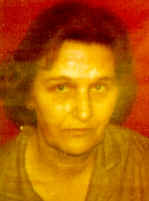
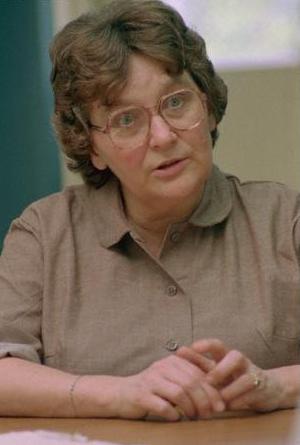
Velma Margie Barfield FEMALE W / F / 45 - 52 |
Stuart Taylor W / M / 56 |
Summary:
After two marraiges ended with the death of her husbands, by 1977 Barfield was in a relationship with Stuart Taylor, who was a widower and tobacco farmer. As she had been doing for years, she forged checks on Taylor's account to pay for her addiction to prescription drugs. Fearing that she had been found out, she mixed an arsenic based rat poison into his beer and tea. Taylor became very ill and Velma volunteered to nurse him. As his condition worsened she took him to hospital where he died a few days later. Unfortunately for her there was an autopsy which found that the cause of Taylor's death was arsenic poisoning and Velma was arrested and charged with his murder. At the trial her defense pleaded insanity but this was not accepted and she was convicted. The jury recommended the death sentence. Velma appeared cold and uncaring on the stand and actually gave the District Attorney a round of applause when he made his closing speech.
Barfield later confessed to the 1974 murder of her own mother (in whose name she had taken out a loan) and of two elderly people, John Henry Lee (by whom she was being paid as a housekeeper/caregiver) and Dollie Edwards (a relative of Stuart Taylor). Velma always attended the funerals of her victims and appeared to grieve genuinely for them. The body of her late husband, Thomas Barfield, was later exhumed and also found to contain traces of arsenic. Velma denied that she had killed him. Her motives for these four murders were the same. She had misappropriated money from her victims and then according to her, tried to make them ill so she could nurse them whilst finding another job to enable her to repay the money. Needless to say, the jury was less than impressed by this defense.
Barfield gained notoriety as the "Death Row Granny," becoming the first woman to be executed in the U.S. since 1962, and the first since the reinstatement of the death penalty in 1976.
Citations:
State v. Barfield, 259 S.E.2d 510 (N.C. 1979) (Direct Appeal).
Barfield v. Woodard, 748 F.2d 844 (5th Cir. 1984) (Habeas).
Internet Sources:
North Carolina Department of Correction - Executions
Velma Barfield
From Wikipedia, the free encyclopedia
Margie Velma Barfield (née Margie Velma Bullard) (October 29, 1932 – November 2, 1984) was the first woman in the United States to be executed after the 1977 resumption of capital punishment and the first since 1962. She was also the first woman to be executed by lethal injection.
History
Velma Barfield was born in rural South Carolina, but grew up near Fayetteville, North Carolina. Her father reportedly was abusive and she resented her mother who did not stop the beatings.[3] She escaped by marrying Thomas Burke in 1949.[4] The couple had two children and was reportedly happy until Barfield had a hysterectomy and developed back pain.[3] These events led to a behavioral change in Barfield and an eventual drug addiction.[3]
Thomas Burke began to drink and Barfield's complaints turned into bitter arguments.[3] In April 1969, after Burke had passed out, Barfield and the children left the house, returning to find the home burned and Burke dead.[3][5] Only a few months later, her home burned once again, this time with a reward of insurance money.
In 1970, Barfield married a widower, Jennings Barfield. Less than a year after their marriage, Jennings died from heart complications, leaving Velma a widow once again.
In 1974, Barfield's mother, Lillian Bullard showed symptoms of intense diarrhea, vomiting and nausea, only to fully recover a few days later. Approximately two months afterward, a man whom Velma had been dating was involved in a fatal car accident. During the Christmas season of the same year, Lillian experienced the same illness as earlier that year, resulting in her death only hours after arriving at the hospital.[1]
In 1976, Barfield began caring for the elderly, working for Montgomery and Dollie Edwards. In the winter of that year, Montgomery fell ill and died. A little over a month after the death of her husband, Dollie experienced identical symptoms to that of Velma's mother and she too died, a death to which Barfield later confessed.[1]
The following year, 1977, Barfield took another caretaking job, this time for 76-year old Record Lee, who had broken her leg. On June 4, 1977, Lee's husband, John Henry, began experiencing racking pains in his stomach and chest along with vomiting and diarrhea. He died soon afterward and Barfield later confessed to his murder.[1]
Another victim was Stuart Taylor, Barfield's boyfriend and a relative of Dollie Edwards.[1] Fearing he discovered she had been forging checks on his account, she mixed an arsenic-based rat poison into his beer and tea.[1] He died on February 3, 1978, while she was trying to "nurse" him back to health; an autopsy found arsenic in Taylor's system.[1] After her arrest, the body of Jennings Barfield was exhumed and found to have traces of arsenic, a murder that Barfield denied having committed.[1] She subsequently confessed to the murder of Lillian Bullard.[1]
Prison and execution
During her stay on death row, Barfield became a devout born again Christian.[6] While she had been a devout churchgoer all of her life and had often attended revivals held by Rex Humbard and other evangelists, she later said she'd only been playing at being a Christian.
Her last few years were spent ministering to prisoners, for which she received praise from Billy Graham.[7] Barfield's involvement in Christian ministry was extensive to the point that an effort was made to obtain a commutation to life imprisonment.[3] After a Federal court appeal was denied, Barfield instructed her attorneys to abandon plans to appeal to the Supreme Court.[2] Barfield was executed on November 2, 1984 at the Central Prison in Raleigh, North Carolina.[8] She released a statement before the execution, stating "I know that everybody has gone through a lot of pain, all the families connected, and I am sorry, and I want to thank everybody who have been supporting me all these six years."[2] Barfield declined a Last meal, having instead a bag of Cheez Doodles and a cup of coffee.
Barfield's execution raised some political controversies when Governor Jim Hunt, who faced a bout with incumbent Jesse Helms for his Senate seat (which Hunt lost), rejected Barfield's request for clemency.[9][10]
Barfield was buried in a small rural North Carolina cemetery, near her first husband, Thomas Burke.[4]
VELMA BARFIELD
By Denise Noe
Stuart Taylor's Agony
Big, hulking, Stuart Taylor was happy as he drove his girlfriend, plump and bosomy 46-year-old Velma Barfield, to a revival meeting of the famous preacher Rex Humbard. Although Stuart was not extremely religious, he knew that his girlfriend was a devoutly pious Christian and she would love hearing the respected evangelist in person. Stuart was aware that there were contradictory aspects of Velmas personality. She was living out of wedlock with him, a move that had shocked her children. She also had a criminal record for forgery, a fact that Taylor had discovered by accident and led him to decide he did not want to legally marry her. However, as Christians say, its a Fallen World and many people do not live up to their own ideals.
Both Stuart and Velma were crisply attired in their Sunday best as they settled into chairs at the Cumberland County Civic Center in Fayetteville, North Carolina. The service had just begun when a wave of nausea rolled over Stuart. Im feeling sick, he whispered to Velma. Maybe its something I ate. As Humbard preached, Stuart began feeling worse. Fierce pains gripped his stomach. Ive got to go to the truck and lie down, he told his sweetheart in a weak voice.
The 56-year-old farmer rushed out of the packed room and into the coolness of the evening air. He opened up his truck and lay down on a seat. The feelings inside him grew worse. He could hardly think as words were pushed out of his mind by sheer awful physical pain. Still miserable with nausea when the meeting was finished and Velma got into the car with him, Stuart lay back and writhed in pain as she drove them home. Stop, he said at one point, his skin clammy with sweat. She pulled over to the side of the road. A pale and sweaty Stuart stumbled out of the vehicle and vomited on the dirt.
At home, he was in too much pain to sleep. In the wee hours of the morning, Velma phoned his pregnant daughter, Alice Storms, to tell her of her fathers disturbing condition. It was Alices husband, Bill, who answered the phone. Velma apologized for waking him up but said she thought it important that Stuarts daughter know that he was frighteningly sick. Later, Alice phoned to ask Velma about Taylors illness. They both concurred that it was probably just the flu.
Still later, Velma visited one of her boyfriends best friends, a man named Sonny Johnson. Stuarts sick and he wants to see you, an obviously distressed Velma told him. Johnson rushed over to see his friends. He found an ashen-faced, weakened Stuart Taylor, lying in bed with a washbasin beside it to throw up in. Could you take care of the pigs for me until Im over the flu? Stuart requested. His friend assured him that he would.
Stuarts condition got worse. His chest, stomach and arms were all racked by pain and he vomited incessantly. He felt like he was on fire from inside. The next day, Velma drove her terribly sick lover to the hospital. While the doctors examined and tried to treat the man, she discussed what she knew of his medical history. She was not well-informed about it but she knew he was a heavy drinker.
After answering the physicians questions, Velma called Alice. She in turn phoned her brother Billy who went to the hospital. Together with Velma, he heard a doctor say his fathers dreadful condition was gastritis. The doctor prescribed medicine and told Velma she could take Stuart home that night, which she did.
Stuart Taylors residence
Sonny Johnson again visited his friend at the latters large, white, steeple-topped farmhouse that afternoon. Stuart had finally improved. He still looked wan but was sitting up in bed, chatting and smoking. He asked Johnson to talk to him from the doorway because he didnt want to transmit his flu.
The next day was a Friday. At around 8 p.m., Stuart had taken a drastic turn for the worse. Velma phoned John McPherson, a neighbor and friend. Stuart needs an ambulance! she told him in a voice that sounded full of fear. McPherson called an ambulance, then drove to the house himself.
He found Stuart Taylor looking terrible. The room had a nauseating odor because the sick man had suffered an attack of diarrhea in his bed. The arms and legs of the sweaty and chalk-faced man thrashed around and he made incoherent moaning noises. From time to time, he screamed. Velma had surrounded the bed with chairs, their backs to the bed, to prevent him from falling out of it.
The rescue squad worked quickly and efficiently to bundle him into the ambulance. Its siren wailed as it raced to the hospital. His concerned lover followed in Stuarts truck. Doctors rushed to his side but Taylor died an hour after arriving at the hospital. In the waiting room were Stuarts children, Alice and Billy, and the girlfriend who had nursed him through the illness, Velma Barfield. The doctor said he was puzzled by the mans sudden death and suggested an autopsy.
Both Alice and Billy asked Velma what she thought. If you dont do it, she said, youll always wonder. Stuart Taylors adult kids told the physician to perform an autopsy.
"You've Gotta Stop Her!"
Velma Barfield and her adult son Ronnie Burke sat with Stuarts grieving family at his funeral. Velma placed a comforting arm around Alice and said the words so commonly repeated under such circumstances by believers in an afterlife: Hes in a far better place. As Ronnie left the service, he looked at another person there and observed, You know, its the saddest thing but it seems like everybody my mother ever gets close to dies. How could the good Lord allow this to happen to a faithful Christian like Velma Barfield?
Earlier that same Sunday, a phone call had awakened Lumberton Police Detective Benson Phillips. The caller was weeping and babbling. The detective could not easily make out her slurred, shrill words. He was able to gather from some of the sounds: Murder! . . . I know who did it! . . . Youve got to stop her! Youve got to stop her! The sleepy police officer sighed. A crank call, he thought. Just what he needed to start the day. He had heard of no murder in the small town of Lumberton and he would have if one had been committed since he investigated all homicides. However, he suggested she call him at the station before he hung up the phone. When he got there, he found, as he expected to, no homicide reports. The nutty morning caller faded from his thoughts as he got on with his days work. Then she phoned. According to Jerry Bledsoes Death Sentence, This time she was calmer, more coherent. She still didnt want to give details, but Phillips gradually coaxed them from her. She revealed that she was calling from South Carolina, but she couldnt give her name. She didnt want anybody to know that she had called. The man who had been murdered, she said, was the boyfriend of Velma Barfield, who had killed him just as she had killed her own mother. The caller admitted that she could offer no proof, but she was sure, too, that Velmas boyfriend and mother werent the only ones. Too many other people close to Velma had died, she said, including two elderly people Velma had worked for, but she didnt know their names. When Phillips pressed for evidence, she could offer none.
How did she know about all of this? Phillips asked. Because, she said, Velma is my sister.
****
Phillips was utterly baffled by this strange caller. He did not trust her but then again, he could not quite dismiss her out of hand. He had to do some checking to make sure. He called the Lumberton hospital and inquired if anyone had died over the weekend. Yes, he was told, Stuart Taylor. It seemed to be a death by natural causes. Was an autopsy being performed? Phillips asked. Regional medical examiner Dr. Bob Andrews had performed an autopsy but did not yet have all the results back.
Phillips was intrigued and disturbed but also in an awkward position. As Bledsoe, wrote, He had discovered that Taylor had been brought to the hospital from the countryside near St. Pauls. That would put any investigation under the jurisdiction of the sheriff. He had no responsibility. Still, he made a note to call his old friend Wilbur Lovett at the sheriffs department on Monday to tell him about it.
In the meantime, Dr. Andrews, who knew nothing of the detectives suspicions or those nagging doubts that Phillips related to Sheriff Lovett, was puzzling over the results of his autopsy. Stuart Taylor had seemingly died of gastroenteritis. It was odd for a man as healthy as Taylor to be killed by that alone and Dr. Andrews determined to look further. Finding an inexplicable abnormality in some liver tissue, he put some of Taylors tissue samples into plastic bags. Then he mailed it to North Carolinas chief medical examiner and asked for more tests.
Dr. Andrews was still waiting for the results of those tests when he spoke with a distraught Alice Storms. Her father had been so hale and hardy. What was it that had killed him? She had a right to know! So Dr. Andrews phoned North Carolinas chief medical examiner, Page Hudson. Hudson did not know about the tissues Andrews had sent for examination. However, he asked Andrews for details about the death. Andrews told him about the girlfriend, Velma Barfield, who had brought Stuart Taylor to the hospital and described Taylors symptoms.
Hudson instantly grasped the situation. Whered she get the arsenic, Bob? he asked.
Serial Prisoner?
Soon authorities took a second look at the death certificates of the several people close to Velma Barfield who had died. Even when an autopsy had been performed, no special test had been done for poison. Rather, with stunning regularity, those she knew expired of gastroenteritis. The investigators were pretty certain they were dealing not only with a murderer but a serial murderer.
The police always do best if they can get a confession. What would be the best way to obtain one from Velma? They decided to surprise her. They would pick her up for questioning on one of the multitude of bad checks she had written, then confront her with Stuart Taylors death. Since the checks had been written in Lumberton, Benson Phillips would question her. Sheriff Lovett and homicide investigator Al Parnell were present as well. They went over the checks. This was well-ploughed territory for Barfield and she appeared nonplussed.
Then Phillips began discussing her poor boyfriend, Stuart Taylor, who had so recently and tragically died. Do you know he was killed by arsenic? the detective asked. The plump grandmother appeared stunned by this news. Phillips pressed on, asking for details about their relationship. He was especially interested in knowing if Barfield had reason to be angry with Taylor.
Yall think I poisoned Stuart, dont you? she gasped in outrage. The two of them were in love, she maintained, and planning to wed. She had nothing to gain by killing him. It was dreadful for them to suggest such a thing. Why, she was the one who had nursed the poor man through his illness! She was the one who had rushed him to the hospital! Now they were trying to throw dirt on all her good work. They ought to be ashamed of themselves.
His mother sounded overwrought. The police had taken her to the station, she told him.
Oh no, he thought. She was back to writing bad checks to cover drug bills.
Then a shock went through him.
They wanted to talk about Stuart, Mom informed him. They said he was poisoned. They seem to think I had something to do with it.
Some cop had really goofed this time, Burke thought. Burke knew that Taylor had died five weeks previously. His Mom had been devastated. He did not know who might have poisoned the man but he knew it could not possibly be his mother.
He told his Mom that he would be going home soon and she should meet him there. This was a frightful mistake but Burke was certain it could be straightened out. The cops would learn they were barking up the wrong tree. He was anxious to comfort his mother and let her know things would work out as they should in the end.
Burke, his wife, and toddler dwelled in a modest duplex on the outskirts of Lumberton, North Carolina. When Velma arrived there, he comforted her just like he had intended to. He did not believe she would need a lawyer. Attorneys are terribly expensive, after all, and he and his mother were people of very limited means. The police would realize soon that she could not have had anything to do with Stuarts death and just drop it. There was no need to worry, he assured her.
That Monday, Burke was at work when a woman phoned. She would not say who she was but told him, Im a friend of your mothers.
What did she want to tell him?
Ive heard shes going to be arrested today, she said. I thought you ought to know.
Are you sure?
Yes, theyre going to charge her with Stuarts death. . . . I know someone who works in the sheriffs department.
It did not seem possible that the police could go so wrong, Burke thought. Yet, Mom had told him that they suspected her. Could the cops be about to arrest an innocent woman for murder? That sort of thing happens in the movies but not in real life.
Burke told his supervisor he had to leave to attend to a family emergency. He drove to the Lumberton Police Department and talked to Wilbur Lovett. They were not planning to arrest her that day, the sheriff told him, but they did consider her a suspect. He could not disclose why and Burke left Lovetts office even more outraged and upset than he had been when he walked in.
From there he drove to the home in which his mother was living. Velma Barfield resided with Mamie Warwick, a senior citizen who allowed Velma to live rent-free in exchange for her doing some household chores. Burke found his Mom taking a nap. She was in bed as he spoke to her, telling her that the cops still suspected her in Stuart Taylors death. Velma said she could not possibly do anything like that. Then she started sobbing. Finally, she stopped crying and told her son something he had never expected to hear. Her words were soft, almost a whisper, yet unmistakably clear.
I only meant to make him sick, she said.
With that, Burke felt like the floor had been cut out from under him.
So it had been an accident. But his mother had caused it. She would have to go to the police and explain.
Velma wept quietly as she sat in the passenger seat of her sons car, being driven to the sheriffs department. Burke could not be present while she was questioned. She said she did not want a lawyer.
Dejected but certain he had done the right thing, Burke phoned his sister to break the sad news to her. They agreed to meet at her home. In times of crisis, families need to be together and Velmas sisters, Arlene and Faye, would eventually drive in to join their niece and nephew.
The phone rang and Burke spoke to investigator Al Parnell.
Its worse than we thought, Parnell said.
Burke was dumbstruck, wondering how could it possibly be any worse?
There are other people. . . . Other people shes killed, Parnell told a stunned Ronnie Burke. Parnell went on to relate that Velma Barfield had confessed to killing two people to whom she had been a paid, live-in caregiver and her own mother, Burkes grandmother, Lillie Bullard.
When Burke repeated what he had been told to his sister and aunts, a pandemonium of tears and screaming broke out in the little house.
Burke recalled the loving mother who had fed and clothed him, bandaged his cuts and wiped his runny nose, been a conscientious grade mother for him and his sister, taken him to church and taught him right from wrong, disciplined him and encouraged him always to do his very best. That image was impossible to reconcile with the poisoner of four people.
Just what kind of person was Velma Barfield?
Daddy's Little Girl
On October 29, 1932, Margie Velma Bullard was born. Her parents, siblings, and friends would always call her Velma. She was the second child and first daughter of farmer Murphy Bullard and his homemaker wife, Lillie. They would have nine children all together.
When Velma was born, the Bullards lived in an unpainted wooden house in rural South Carolina. The home had neither electricity nor running water. Unlike many farm families, they did not even have an outhouse. Rather, the necessary was taken care of with chamber pots and trips to the woods. Murphys parents lived in the home and so did his sister, Susan Ella, who was disabled because an arm and leg had been shriveled by polio.
As the Great Depression worsened, Murphy Bullard found it impossible to eke out a living from the sale of the cotton and tobacco he grew. He sought and found work as a logger in a sawmill owned by Clarence Bunch. Through Bunch, Murphy was able to move his family into a tiny house closer to town. Here his third child would be born.
Then Murphy got a job in a Fayetteville textile mill and moved his family back into his parents home. His father died shortly thereafter and his mother followed her husband to the graveyard in less than a years time.
The Bullard family was organized along traditional, patriarchal lines. Murphy Bullard was the undisputed king of whatever shabby castle his family occupied and Lillie was the submissive wife. He was an easily angered and hard-drinking man when he did not get his way and a strict, unbending disciplinarian with his many children. He did not spare the rod or, in this case, the strap and the Bullard youngsters often had smarting backsides.
One thing that especially galled him was a kid with a smart mouth and both his oldest child, his son Olive, and the daughter who had been born next, Velma, were known in the family for their tendency to give Dad back-talk. However, Olive believed that Velma did not get punished nearly as often or as severely as he did which led to a lot of conflict between the two youngsters. He was convinced that their father favored Velma. She was just as convinced that their mother favored Olive.
Velma disliked her mothers submissive attitude toward their father. Decades later, she wrote in her memoirs, Woman on Death Row, I seemed to accept Daddys high-tempered ways because I thought thats the way men are. Mamas should love their children and stand up for them, and Mama never stood up for me, or for any of us. Every time Velma got a beating from her dad, she was at least as upset with the passive Mom who saw and did nothing as she was with the aggressive dad who actually inflicted it.
Lillie Bullard believed she had to step carefully in her own household to deal with her husbands temper. She herself was frequently in danger of being on the receiving end of Murphys fists because he was a hysterically jealous man. He was also himself flagrantly unfaithful which inevitably added to family tensions.
A 7-year-old Velma started school in the fall of 1939. At first, she loved it. A smart girl, she got good grades and teachers compliments. School also offered a respite from her crowded home life, her fathers strap, and her often-ill mothers gripes and demands.
However, the child soon began having difficulty with her schoolmates. Velma did not wear the new, store-bought, pretty dresses that so many other girls did. Her shoes were sturdy and worn. Other children sometimes made fun of her garments and of the plain lunches of cornbread with a side of meat that she brought. Velma began sneaking out of the sight of the other kids to eat. Then she began pilfering coins from her fathers pants pockets to buy candies from a little store that was across the street from the school.
The child stole $80 from an elderly neighbor. Murphy Bullard laid the strap on long and hard, apparently curing her of the desire to steal at least during her childhood since there are no other reports of such youthful indiscretions.
As Velma grew, she was assigned more and more chores. She had to help out on the farm and care for her younger brothers and sisters. She resented the amount of work she had to do but did not openly rebel for fear of angering her stern dad. I really never felt like my Mama or Daddy ever wanted me except for the work I did, she would say later . I always felt that they just really wanted me to be a slave.
Not everything was bad in the youngsters life, however. Her father could be loving with his kids and lead them in ventures that were lots of fun. Murphy Bullard often organized baseball games with his children and others. Velma was often the only girl in the game and enjoyed playing shortstop. She also liked swimming when her dad led the kids on excursions to a local pond.
Despite his harsh discipline, Velma was often happy to be a daddys girl. A 10-year-old Velma was walking through the business district of Fayetteville with her father. She admired a dress in a department store window. It was covered with pink flowers and had a wide ruffle at the hem. She told her dad how much she loved that dress and, to her very pleasant surprise, he marched straight in and bought it for her!
Sadly, later in her life, Velma may have become a daddys girl in the most negative possible way. She told a reporter from The Village Voice that her father had entered her bedroom and raped her. Prior to that, there had been confusing episodes when he felt her up and she was not sure if it was sexual or not.
Several of Velmas brothers and sisters furiously disputed her claim that she was an incest victim. While her family had many of the traits characteristic of incestuous families such as a severe power imbalance between husband and wife and a father who drank heavily, it is not possible to say with certainty if her accusation was true or false. Velma certainly could lie and was a champion manipulator throughout much of her life. A claim of sexual abuse can be an easy way to play upon peoples sympathies.
In 1945, Murphy Bullard decided he was tired of working in the mill and wanted to go back to full-time farming. He bought more acres and, with that purchase, a small but far more modern home for his family. After only a year, he realized he could not support his large brood on what he could make from his crops. He returned to supplementing farm income with work in a mill.
Later, he got a job at a textile plant in the town of Red Springs and moved his family there. The house they moved into lacked the modern conveniences of the one they had lived in for the last couple of years.
Velma was now in high school. She no longer got the good grades she had achieved in elementary school. However, she found one activity that she enjoyed at Parkton Public School and that, surprisingly, was basketball. Although it was not standard in that era, Parkton had a girls team and Velma found the fast-moving sport a good way to work off energy. Then her mother insisted that Velma quit the team. Lillie had recently given birth to twins and needed her eldest daughters help with housework more than she ever had. Velma was terribly disappointed and saddened by her Moms demand.
Meanwhile, Velma and a high school boy named Thomas Burke had developed a mutual crush. A year older than she, Thomas was a thin-faced, jug-eared, dark-haired and lanky youth with a tender streak and a good sense of humor. The two found each other regularly at school to make friends and flirt.
No dating would be allowed until Velma was 16, her father told her when she expressed a wish to begin seeing Thomas outside of school. Then her 16th birthday rolled around but her father seemed to have changed his mind. He still did not want his daughter going out. After much pleading, Velma got Murphy to agree to her dating. He placed firm restrictions on her, saying she usually had to double date and always had to be home by 10 p.m. on the dot. Although she chafed under these restrictions, Velma went along with them. She did not have much choice if she was to avoid her fathers wrath.
Battling Over Booze
When she was 17, Thomas proposed marriage and Velma accepted. She had a tremendous row with her father, at the end of which Murphy Bullard broke down in tears. Velma had never seen her father, so steadfastly and traditionally masculine, cry before. But she still wanted to be with Thomas.
Both Thomas and Velma quit school shortly after marrying. Thomas Burke held different jobs, in a cotton mill, as a farm laborer, and then driving a delivery truck. Velma worked for a while in a drugstore but Thomas disliked having her work outside the home so she quit.
The newlywed Burkes were residing in a small Parkton home where Velmas family had once lived when the young wife got pregnant in 1951. On December 15 of that year, she gave birth to Ronald Thomas. His sister, Kim, was born on September 3, 1953.
Velma Burke adored taking care of her babies. She was an indulgent and protective mother who frequently read to her youngsters and could not stand to be separated from them even for brief periods. She wanted both children to grow up to be ardent Christians and regularly took them to a Baptist church.
Velmas children, Kim and Ronnie
When her children started school, Velma Burke quickly became known as one of the most involved mothers. She was grade mother for the classes of both her youngsters and always available for class field trips and the like. She and her children joked that they had automatic arms because whenever a teacher asked the class if someones mother would be willing to assist with a project, their arms instantly shot into the air. Velma Burke could always be counted on. She often drove children in the classes her kids attended on field trips and the youngsters would fight to ride with her because she was so much fun.
Around this time, Velma got another paying job. Apparently Thomas did not object. The family needed some extra cash. She took the midnight to 8 a.m. shift at a textile plant. Thomas began a job as delivery driver for Pepsi-Cola. The family now had enough funds to move into a more comfortable house in Parkton. The Burkes enjoyed several good years.
In 1963, Velma began having medical problems and had to undergo a hysterectomy. They were not as distraught as some couples might have been because both Velma and Thomas agreed that the two children were all they wanted.
The surgery appeared to have a drastic, and negative, affect on Velma. She was alternately nervous or depressed and often snappish. She began worrying that the fact that she could no longer get pregnant made her seem less womanly and, therefore, less attractive to her husband. She started to have more physical problems and was especially troubled by lower back pain.
Thomas Burke decided to join the Jaycees. He went off to their weekly meetings while Velma sat at home with the kids. She began to resent his evening absences.
Even more, she resented his drinking. Velma was a firm teetotaler who agreed with her church that alcoholic beverages were the devils drinks. Thus, she was deeply upset when she found out that Thomas was regularly going out with his male friends for a few beers.
In 1965, Thomas had an accident as he was driving his three-year-old Ford Galaxy. As described in Death Sentence, The car left the highway, hit a culvert, sailed into the air and landed on its wheels in the driveway of a house. Thomas head banged the steering wheel and he was knocked unconscious.
He had a concussion and would ever after suffer severe headaches. He always maintained that he had not been drinking but had only been tired and had fallen asleep at the wheel. His wife would not buy it. She was certain he had been drunk and redoubled her nagging on the subject.
Thomas resented her noisy attempts to talk him into abstaining from booze. He drank no more than most of the guys he hung around with. Why was his wife trying to run his life?
Their battles over booze became an almost daily affair. Usually, Velma started them, upset because Thomas had liquor on his breath. A shouting, name-calling match would follow and the children were inevitably frightened and disturbed by their argumentative parents. Ronnie was especially concerned because he feared his dad would eventually settle the disputes the way so many other men did-- with his fists.
To his credit, however, Thomas never employed brute strength in his many and furious arguments with his wife.
Thomas was arrested for drunken driving in 1967. As a result he lost his drivers license and, with it, his job at Pepsi-Cola. He was devastated. The shame and despair plunged him into a depression and he drank more than ever to dull a pain that was caused by his drinking. The Burke kids no longer invited friends over to their home because they did not want the other kids to hear their parents fight or see their dad wiped out from booze.
A mill hired Thomas and he was able to ride to work in a carpool (even if the word was not in common use at the time).
The household tension was taking a great toll on Velma. She was ever more worried and frantic and had been drastically losing weight. One day, Ronnie came home to find his mother lying on the kitchen floor in a dead faint.
He was able to help her back to consciousness but insisted on a trip to the hospital. Doctors there recommended she remain hospitalized for a week. She was given vitamins and sedatives before being released with a prescription for a mild tranquilizer, Librium.
When she got home, she eventually began taking more Librium than was prescribed. She also went to another physician and got a prescription for Valium. Velma Barfield had begun the avocation of doctor shopping that she would pursue up until her arrest for murder. It was a pattern of going to doctors and getting prescriptions without telling one doctor that she was seeing another. Thus, she took medicines that were not supposed to be taken in conjunction with each other.
Even as she constantly and loudly fretted about her husbands alcohol use, Thomas and her teenaged kids worried about her use of prescription medicines. She was taking too much, sometimes leaving her as groggy as a drunkard.
One day in April, the Burke house caught on fire. The only person home was Thomas Burke. Both youngsters were at school. Velma said she had been at the laundromat when she came home to see the house in flames.
Thomas Burke died of smoke inhalation.
At the hospital, Velma collapsed when she was told of her husbands death. Ronnie and her sister caught her before she could fall to the floor.
Jennings Barfield
A few months after this loss, Velma Burke experienced great joy and triumph through the achievement of her son. Ronnie was graduating from high school as salutatorian. His mother sat proudly among the spectators as he spoke at the commencement. He chose the subject nearest to his heart: his mother. In his speech, he paid tribute to her as the reason for all of the good qualities he possessed. Velma cried as she listened to his public praise. What a joy to be so appreciated by ones grateful son and to have everyone know it.
However, the Burke family continued to have bad luck. There was another fire at their home. This time, no one was inside and no one was hurt. But the house was gutted. While they waited for the insurance to pay for the damage, the Burkes moved back in with Velmas parents, Murphy and Lillie Bullard.
Soon after Thomas death, Velma began dating a widower named Jennings Barfield. Barfield was a man who had taken early retirement due to numerous health problems. He suffered from diabetes, emphysema, and heart disease. He had lost his wife close to the time Velma had lost her husband and the two were probably initially brought together by a mutual desire to comfort each other in grief. Then a romance grew and deepened and wedding bells were in the air.
They were married on August 23, 1970. It was a church wedding, something Velma felt she had missed out on in her youthful elopement to Thomas Burke. Velma moved into the small home in Fayetteville that her groom shared with his teenaged daughter, Nancy.
The newlyweds were soon having troubles, partly because of Velmas penchant for overdoing it with prescription medications. Jennings found his wife in a semi-conscious state and took her to the hospital. The doctor on duty said she had overdosed. They separated, then reconciled when she promised to quit taking so many pills. She broke her word and went back to the emergency room with another overdose. Both Velma and Jennings confided to others that they believed the marriage had been a mistake. Divorce seemed in the offing with it just a question of who would leave first.
It never actually came to that, however. Jennings Barfield died on March 21, 1971, apparently of the heart failure that had troubled him for years.
Widowed again, Velma did not appear to be coping well. She was despondent and listless, often medicating herself into oblivion and spending much of her time in bed. After Jenningss death, she would recall, I felt emptier and more depressed than ever. I kept going to my doctors. I had prescriptions from at least two, and usually three, doctors at a time. . . . No matter how many pills any one doctor prescribed, they never lasted until time for the next refill.
She worked at Belks department store but her performance there was being badly affected by her mood swings and evident drug dependency. Her boss was a sympathetic man so, instead of firing her, he put her in the stockroom where she could not alienate customers with a snippy or brusque manner.
Adding to Velmas despair was a separation from her son. The Vietnam War was raging and Ronnie felt it was only a matter of time before he was drafted so he decided to sign up. He had second thoughts after Jennings Barfields death and his mother begged him to attempt to persuade the military that he needed to be allowed to stay with his sick mom. He made a sincere effort in that direction. Doctors wrote to the Army telling of Velma Barfields precarious health and asking that Ronnie be permitted to honorably opt out of his contract. It did not work and he was ordered to report to Fort Jackson in South Carolina.
When it seemed like things could not get worse, they did. Velmas house once again caught fire! Velma went into hysterics. She was simply inconsolable. Why did such things keep happening to her?
She and her daughter once again moved back in with Murphy and Lillie Bullard. It was just in time-- for Velma was fired from Belks. She had been coming in late and unable to perform her duties when she was there. Unemployment led Velmas chronic depression to deepen. It got even blacker when she learned that Murphy Bullard had lung cancer. His death at 61 plunged her into a horrible grief. Life hardly seemed worth living. Her father was dead and her son could be sent to Vietnam and be killed.
It seemed that she would lose Ronnie even if he did not die because he told her he was planning to marry. She did not give her son and his prospective bride her blessing. Instead, she was crushed. She told her son, Ive always been the most important woman in your life and now youre going to have her and you wont even want me to come around at all!
Ronnie tried to reassure her that his love for his future wife did not take away from his love for his mother. His earnest reassurance did nothing to ease her jealousy of the young woman who was to share his life. But neither did moms jealousy dissuade Ronnie from going ahead with the plans for his wedding.
In March 1972, Velma Barfield was arrested for forging a prescription. She pleaded guilty in April and got off with a suspended sentence and a fine. Then, finally, she got some genuinely welcome news: Ronnie was discharged from the Army!
Grandma and Dottie
Despite the bright spot of Ronnies return, Velma was still having a great deal of trouble. After her fathers death, she and her mother fell into a pattern of frequent quarreling. Velma claimed that Lillie was constantly ordering her about. The older woman expected to be waited on hand and foot and the grown-up Velma was not going to be treated like a slave by anyone. Lillie, for her part, was dismayed by Velmas frequent use of pills and her tendency to sometimes simply pass out from taking too many.
Lillie got dreadfully sick during the summer of 1974. Her stomach was racked by painful cramps. She began throwing up uncontrollably and suffering a violent diarrhea. It got so bad that Velma drove her mother to the hospital. The doctors could not determine the cause of the sudden illness. However, Lillie was better after a few days and went home.
On August 23, a man Velma had been dating was killed in a traffic accident. (Velma was not present so this death, at least, was probably just a melancholy coincidence.) He had made Velma Barfield the beneficiary of his life insurance policy and she received a check for $5,000.
That Christmas appeared, as that holiday so often does, to be a time of sharing, forgiveness and reconciliation. Both Lillie and Velma enjoyed bustling about in the kitchen, making a big turkey dinner along with a variety of rich desserts for their big extended family. Everybody at Grandma Bullards house kidded around and laughed, then opened presents.
However, Lillie pulled one of her sons aside to talk to him about something odd that troubled her. She had gotten a letter from a finance company telling her that a loan was overdue on her car and it would be repossessed if she failed to promptly pay it. Lillie had not taken out any loan on the car and she owned it free and clear! Her son saw no problem. It was probably just one of those paperwork snafus, nothing to fret about.
A couple of days later, Lillie got terribly sick. She was nauseous, then vomiting. That was followed by an awful attack of diarrhea. Her insides felt like they were burning up. She told Velma that she had hideous pains in her belly and upper back. Her arms and legs flailed about her. She threw up again and threw up blood.
Velma phoned her brother Olive who immediately drove over. He was appalled to see their mother so sick and called an ambulance. The rescue squad allowed Velma to ride in the ambulance with her mother. Lillie Bullard died two hours after arriving at the hospital.
Early in 1975, Velma was once again in hot water with the law. She had written another string of bad checks. She was convicted on seven counts of writing bad checks. The judge sent her to prison for six months. She was released after serving three.
Awhile after obtaining her freedom, Velma started to look for jobs as a caregiver for elderly, sick people. In 1976, she was living with and working for Montgomery and Dollie Edwards. Montgomery was 94, bedridden and incontinent. He was a diabetic and had lost his vision to that disease as well as both legs that had been amputated. He could not feed himself. Eighty-four year-old Dollie was in somewhat better shape but she was a cancer survivor who had had a colostomy. At first, Velma seemed pleased to be able to move into their comfortable brick ranch house. She got along well with both Edwardses and found a church she liked attending, the First Pentecostal Church in Lumberton.
As time wore on, tensions surfaced between the caregiver and her employers. Dollie often thought Velma was falling down on the job and told her so in no uncertain terms. Velma complained that Dollie was a demanding nitpicker. Their quarrels got more frequent and more heated. Montgomery died in January 1977. Velma stayed on to aid Dollie. The two continued to bicker.
It was February 26, a Saturday, when Dollie got sick. She told her visiting stepson, Preston Edwards, that she believed she must have the flu. Vomiting and diarrhea plagued her. He came to see her the next night and was horrified by how weak and pale she looked. She had to go to the hospital, he said. An obliging Velma Barfield called an ambulance. Dollie was treated by doctors in the emergency room and sent back home without having spent the night there. She took a turn for the worse the next day and was back in the hospital by Tuesday. She died that evening.
Now Velma had no livelihood. That did not last long. She was soon caring for another ailing and elderly couple, 80-year-old farmer John Henry Lee and his 76-year-old wife, Record. Record was the one needing special assistance for she had recently broken her leg and was hobbling around on crutches when she could manage to get around at all.
The position seemed quite suitable to Velma. The Lees lived in a brick house in a rural area on the outskirts of Lumberton. They were willing to let Velma have Sundays and Wednesdays evenings off so she could attend church services.
Problems started surfacing. Record Lee loved to gab and the incessant chitchat got on Velmas nerves. She and her husband often argued and Velma disliked being present during their fights.
Then there was a check that puzzled Record. She knew she had not signed it. John Henry called the cops but the case stalled because no one could think of anyone who might have forged Records name.
On April 27, John Henry got sick. His stomach was upset and he developed diarrhea. His condition worsened and Velma called an ambulance. The medics rushed the sweaty, gray-faced man to the hospital. He gradually recovered and was released on May 2, after he had spent four days there. Doctors were mystified about the source of the sickness but thought it was probably a virus.
Throughout May, John Henry continued to be sick, according to Death Sentence. For a few days he would be perfectly okay, then the vomiting, the diarrhea, the cramps, the cold sweats, would start again. His weight continued to drop drastically. His daughters were very grateful for the attentiveness that Velma showed him. She was so sweet to him, so caring. They felt themselves lucky that she was there.
He took a turn for the worse and Velma called another ambulance for him. There was little the hospital could do for the dehydrated, terribly sick man. He died on June 4.
Some time after the funeral of John Henry Lee Velma Barfield moved into the home of Stuart Taylor. Before Taylor became ill at the Rex Humbard revival meeting, Velma had visited his daughter, Alice, and asked to see a picture of her father that she had taken as a joke. It was his dead picture. Stuart Taylor had stretched out on a couch, closed his eyes and folded his hands across his chest to simulate the image of a man in a coffin. Velma laughed along with Alice and Stuart when Alice brought the photograph to her.
Later, the memory of that shared laughter would cause Alice to shudder.
Velma's Trial
The prosecutor in Velma Barfields case was a large, blustery man named Joe Freeman Britt. He was an ardent advocate of capital punishment who had been called the worlds deadliest prosecutor. During one period of seventeen months, Britt had prosecuted thirteen first-degree murder trials and won convictions in all of them. That was a record and got him a mention in a Newsweek article.
Defending the accused serial poisoner was Bob Jacobson. He was a short, freckled lawyer and one of the few in Lumberton who would accept court-appointed cases. He had never previously tried a death penalty case.
Velma was being tried for one count of first-degree murder, that of Stuart Taylor. Her defense was that she did not mean to kill, only to render her victim ill while she attempted to cover up thefts by returning money she had pilfered from him. If true, she was guilty only of second-degree murder and the death sentence would not even be at issue.
Because the question of intent was so crucial, Britt argued that the jury was entitled to hear of other poisonings she had committed and their results. Jacobson argued that that would be prejudicial since she was only being tried for the death of Taylor.
The judge in the case was Henry McKinnon. He ruled that the evidence linking Velma to the deaths of John Henry Lee, Dottie Edwards, and her own mother, Lillie Bullard, be admitted.
First, the prosecutor put on both medical personnel and family who testified to the horror of Stuart Taylors death. Britt also brought out the fact that his life could have been saved had the antidote for arsenic poisoning British antilewisite, or BAL, been administered. However, to do that, the doctors would have had to have been informed that Taylor had been poisoned with arsenic -- and the one person who knew that, Velma Barfield, did not tell them.
Defense attorney Jacobson asked doctors about the effects of the various drugs Velma had been taking and their possible interactions with each other. Some of the physicians who testified about treating Stuart had also treated Velma and prescribed medications for her. Their testimony showed that she was on drugs that could have badly impaired her judgment and were addictive.
Jacobson put Velma on the stand in her own defense. He knew he was taking an enormous risk in doing so but felt he had to let her explain her own confused thinking to the jury. She did well on direct examination, saying that she had given her boyfriend poison to make him sick but not to kill him. She said she did not tell doctors what she had done because she feared being returned to prison. He also brought out her extensive use of various medications, her combining a wide variety of drugs, and her dependency on them. She admitted forging checks because she was addicted to drugs and could not pay for them out of her own limited resources.
In the opinion of Britt, Velma Barfield was a cold-blooded and cunning murderer who hid behind a sweet little old lady and pious Christian masks. He would tear those masks off and show the jury who she really was. When he cross-examined her, he began with no pretense of being amiable or friendly. In his stance, manner, and voice, he bristled with hostility.
She bristled right back and that was precisely what he wanted. At one point, she seemed to be trying to argue that she had not killed her victims. Rather, people coincidentally happened to die after she poisoned them! After all, the first autopsies all indicated natural deaths.
What I would like, your Honor, Velma began during this astonishing statement, to say to the jury and all, these autopsies let me say first of all, when a person dies . . . and they ask for an autopsy to be performed, is it not true that we have an autopsy performed to find out the reason of the death? . . . So I dont believe it killed them really. That is exactly the way I feel about it.
A stunned Britt asked, Beg your pardon?
I dont think it killed them.
At another point, Velma seemed oddly arrogant and snippy.
You made Mrs. Edwards sick with Singletarys rat poison, did you not?
No, I thought it was roach and ant poison.
So you knew these compounds would certainly make people sick?
I knew it would make them sick, the witness replied.
You knew it would kill them, too, didnt you?
No, I did not.
The defense put on several medical witnesses to testify to Velmas lengthy history of chronic and overlapping drug use. None of them could say that she had been rendered insane in the legal sense by drugs but they testified that her judgment could have been terribly clouded.
Right after the prosecutor gave his summation to the jury, Velma made a gesture of silent applause, repeatedly putting her hands together without actually clapping. Her attorney and family were crestfallen. Britt was elated. With that single, uncalled for sarcasm, he was certain that Velma Barfield had as good as signed her own death warrant.
The jury came back with a verdict of guilty of first-degree murder. Then it found the aggravating circumstances to recommend the death penalty. Judge McKinnon fixed her punishment at death.
Death Row for One
Like most states, North Carolina had no row of women waiting to be executed. When she was sentenced, Velma Barfield was the only female in the state doomed by the law. She was housed in the Central Prisons section for mental cases, especially assaultive inmates, and prisoners considered prone to escape.
Early in her prison stay, Velma went through drug withdrawal. She had been supplied with many of her accustomed medications during her trial. Her first days as a condemned prisoner were spent without them and she showed the classic symptoms of cold turkey: lack of appetite, insomnia, nausea, cold sweats, and splitting headaches. The doctor who treated her gave her anti-depressants and anti-anxiety medications. Then gradually, over a period of over a year, she was weaned off of them.
To the extent possible, Velma made her cell into a home. She put up photographs of her children and grandchildren along with knick-knacks she crocheted and inspirational religious slogans. Velma did not usually smoke but she usually had a pack of Salems so that she could light one up while having a bowel movement on her cell toilet. Velma, whose victims had usually suffered a horrendous diarrhea before death, did not want to offend her guards with the odor of her own excrement.
****
Velmas radio was usually tuned into a Christian program. Velma claimed that she had become a born-again Christian while in jail. Although she had been a churchgoer and professed to love Jesus all her life, Velma said that she recognized that she had never been a true Christian. Her Christianity had been a matter of form and gesture. Then, while at her lowest ebb and awaiting trial for her life, she had finally, genuinely, opened her heart to Jesus and received forgiveness and salvation. She was listening to a sermon by J. K. Kinkle when the message of Gods love hit home for the first time. All my life I was weighted down by my sins because I couldnt do better, she wrote in her autobiography. It never occurred to me that Jesus really did pay the price, that Jesus alone bore the extreme punishment death for my sins, not just for my good neighbors. And, even more glorious, Jesus is willing to be my friend even now. I can talk to Him, and He will listen.
Her conversion was greeted with skepticism by many, including the families of her victims. After all, she had spoken of Jesus and salvation when they knew her and when she was poisoning their loved ones. Her Christian faith had always been a fraud, they believed, and it continued to be one. It was just a ploy to try to save her life.
However, many people were favorably impressed by Velmas claim to be, for the first time in her life, filled with the Holy Spirit. Tommy Fuquay, a Pentecostal Holiness minister, believed that she was a true Christian. I dont think I had ever seen anybody who had the repentant spirit she had, he commented. I could see her growing and her attitude changing. The faith in her just grew and grew each time I would see her.
The famous evangelist Billy Graham and his wife Ruth would come to believe Velma Barfield was their sister in Christ. Ruth Graham kept in frequent touch with Velma by mail.
Velma found meaning in her limited life by helping other prisoners. She was dismayed to discover how many inmates were functionally illiterate. She often wrote letters for them.
Special rules applied to Velma because of the death sentence and included no contact with the other inmates. However, the prison authorities frequently broke this rule because they found that she could be a positive influence on other prisoners. Assistant superintendent for treatment and programs at the prison, Jennie Lancaster, put a 15-year-old named Beth into the cell next to Velmas. Lancaster asked Velma to try to help the girl who had been convicted as an accessory to murder.
Velma put her hand through the bars of her own cell and toward the next one so that Beth could hold hands with her. Beth took Velma into her confidence, pouring out her fears, while Velma prayed aloud for her and tried to comfort. For the first time in her life, Velma was known by her first name and Beth was the first prisoner to call her Mama Margie. She would not be the last. Other inmates often came to Velma for advice and words of reassurance.
Letter writing for herself and others consumed much of Velmas time. She wrote to her family and to supporters she had never met. She also kept up with her crocheting. Velma prayed and read the Bible on a daily basis. Her son and daughter visited and sometimes brought her grandchildren with them. Together with a pastor, she worked on her memoirs, Woman on Death Row.
"Gateway to Heaven"
Any death sentence is automatically appealed. In June 1990, the Supreme Court turned down her appeal because it found no unconstitutional element in the way North Carolinas death penalty statutes read.
A new attorney was handling Velmas case. He six foot tall, 200 pound, longhaired and thickly bearded 30-year-old Richard Burr. He was the lawyer for the Southern Prisoners Defense Committee and dedicated to aiding prisoners under a death sentence. Velma was the first doomed prisoner he would defend. Two hundred other condemned would follow.
On September 17, the Supreme Court turned down another appeal filed by Burr on Velma Barfields behalf. Her best shot would be in North Carolinas state courts, Burr concluded, but he had no license to practice in North Carolina.
Thus, a short and slender 36-year-old named Jimmie Little became her lawyer of record with Burr assisting him. Little had once been a public defender. He also had a reputation for being willing to stick his neck out. He had fought for his interpretation of free speech when he was a student at the University of North Carolina by opposing the ban on communist speakers at state campuses. As an Army officer during the Vietnam War, he had vocally opposed Americas being in that conflict.
Little went to the Bladen County Superior Court. He filed a motion asking for a hearing to determine whether or not his client was entitled to a new trial. There were several complaints behind this motion but the chief one was ineffective assistance of counsel. Thus, Velma was pitted against Bob Jacobson, her previous attorney. Little argued that Jacobson had failed in his duty to make appropriate motions and to put on helpful psychiatric witnesses.
The judge ruled against Velma and set another execution date. Her lawyers soon got a stay and filed more appeals. Over the next six years, several appeals were filed and turned down, several execution dates were set and avoided.
Both Ronnie and Kim continued to visit. As mother and son realized time was running out, Ronnie Burke brought up the painful subject of his fathers death in one of their conversations. He was palpably terrified of the answer but had to ask the question.
Did you kill him? Ronnie asked.
Im sure I probably did, she sadly replied. Slowly, the story spilled out. Her memory was fuzzy but she believed that he had been drunk and asleep and she lay either a cigarette or a match at the foot of the bed, then shut the door.
She also admitted to the minister who helped her write Woman on Death Row, that she had murdered Jennings Barfield.
Once the appeals had been exhausted, Velma and her supporters had a thin ray of hope in the form of clemency from North Carolinas governor. That governor was James Hunt who was running against famous incumbent Jesse Helms for the U.S. Senate. The governor refused Velmas request for clemency saying her victims had been literally tortured to death. Hunt tersely denied that the senate race had played any part in his decision.
As she prepared for death, Velma was able to speak over the phone with Billy Graham. Velma, in a way I envy you, the famous pastor told her, because youre going to get to heaven before I do.
Later she spoke to the Grahams daughter, Anne Graham Lotz, who comforted Velma by saying, Dont think of it as the execution chamber. Think of it as the gateway to heaven.
As they do at all American executions, demonstrators both for and against capital punishment gathered outside the prison before Velmas death. Opponents held lit candles and hummed Amazing Grace, Velmas favorite hymn. A festive mood prevailed among the capital punishment supporters. They held signs saying, Velmas going to have a hell of a time and Bye-Bye Velma and chanted Die, bitch, die!
In her cell, Velma took a final communion. They put on an adult diaper underneath the cotton pajamas in which she had chosen to die. Velma, its time, she was told.
Velma requested and got permission to put a robe on. Then she checked her hair in the mirror and stepped into the hallway. She was taken to a preparation room and asked if she had any last words. She did. I want to say that I am sorry for all the hurt that I have caused, she began in a firm voice. I know that everybody has gone through a lot of pain all the families connected and I am sorry, and I want to thank everybody who has been supporting me all these six years. I want to thank my family for standing with me through all this and my attorneys and all the support to me, everybody, the people with the prison department. I appreciate everything their kindness and everything that they have shown me during these six years.
Then the condemned prisoner was escorted to her gateway to heaven. That gateway was a tiny, sterile room with a gurney in it. Velma got up on that gurney, then lay flat down on it. Needles connected to IV leads were inserted into her arms. She would receive something to make her sleep, then a poison to stop her heart.
There were two lines into Velma but three executioners. One of their thumbs would press upon a plunger that was connected to a dummy so no one would know for certain that he or she had taken a life. Velma, she was told, Please start counting backward from one hundred.
Obediently, Velma began, One hundred, ninety-nine, ninety-eight . . . Her voice slurred into silence and she started to snore. Her breathing got lighter and lighter with each breath. Then her skin turned an ashen gray. The monitor connected to her heart showed a flat line. At 2:15 a.m., on November 2, 1984, Velma Barfield, serial murderer and born again Christian, loving mother and killer of her childrens father and grandmother, was dead.
Bibliography
Barfield, Velma, Woman on Death Row, World Wide Publications, Minneapolis, Minnesota, 1985.
Capital Punishment USA - Women Executed
Velma Margie Barfield.
Velma Barfield made international headlines when she became the first woman to be executed in America since 1962 and first since the re-introduction of the death penalty in 1976. She was also the first woman to be executed by lethal injection.
She was put to death at 2.00 a.m. on the 2nd of November 1984 at the Central Prison in Raleigh, North Carolina, a somewhat plump, 52 year old, grandmother, who had murdered four people. Velma was addicted to drugs, not the hard drugs like heroin or cocaine, but rather prescription drugs such as tranquilizers, sleeping pills, anti-depressants and barbiturates. Her addiction stemmed from a nervous breakdown and she had a history of overdosing and subsequent hospital treatment, with four admissions between 1972 and 1975.
Background.
She was born on the 23rd October 1932 in North Carolina, the oldest girl and second of a large family of nine children. She claimed her father beat and raped her and her sisters although this was disputed by other relatives. She dropped out of school and by nineteen had two children, a son, Ron and a daughter, Kim by her first husband, Thomas. To begin with the marriage was happy and they seemed like a normal family unit. All began to deteriorate when Thomas suffered head injuries in a car crash in 1966 and became unable to work. Velma got a job in a store to make ends meet and support the family. Thomas rapidly become an alcoholic and Velma began to take anti-depressants and tranquilizers to get her through the daily stress of what had become a miserable life. Ultimately she had a breakdown and became addicted to the various drugs. Thomas died in 1969 in a house fire, which may not have been an accident and Velma re-married in 1970 to Jennings Barfield who was dead within 6 months - the cause - arsenic poisoning. Her limited employment opportunities could not support her drug habit so she took to forging cheques and then killing the people she had defrauded.
The crimes.
By 1977 she was in a relationship with Stuart Taylor who was a widower and tobacco farmer. As usual she forged checks on Taylor's account to pay for her addiction. Presumably Taylor began to get suspicious, because fearing that she had been found out, she mixed an arsenic based rat poison into his beer and tea. Taylor became very ill and Velma volunteered to nurse him. As his condition worsened she took him to hospital where he died a few days later. Unfortunately for her there was an autopsy which found that the cause of Taylor's death was arsenic poisoning and Velma was arrested and charged with his murder.
At the trial her defense pleaded insanity but this was not accepted and she was convicted. The jury recommended the death sentence. Velma appeared cold and uncaring on the stand and actually gave the District Attorney a round of applause when he made his closing speech.
She subsequently confessed to the murders of her mother in 1974 (in whose name she had taken out a loan) and of two elderly people, John Henry Lee by whom she was being paid as a housekeeper/carer and Dollie Edwards through whom she met Stuart Taylor (he was related to Dollie). Velma always attended the funerals of her victims and appeared to grieve genuinely for them.
Her late husband, Thomas's body was later exhumed and also found to contain traces of arsenic but Velma denied that she had killed him.
Her motives for these four murders were the same. She had misappropriated money from her victims and then according to her, tried to make them ill so she could nurse them whilst finding another job to enable her to repay the money. Needless to say, the jury was less than impressed by this defense.
Death row.
On death row at Raleigh Velma, now off the drugs, she expressed remorse for the years that the pills had blurred her judgment and destroyed her moral compass. However she could not really explain why she had killed.
She became a "born again" Christian whilst awaiting trial and during the next six years that she spent on death row did a lot to help and counsel other female inmates.
Appeals to save her dragged on through various courts and there were many representations on her behalf by religious leaders. Her final appeal was filed on October 30th 1984 in the North Carolina Supreme Court on the grounds that she was incompetent at her original trial by virtue of her drug addiction. This was rejected by the court. There had been many appeals on her behalf, the Supreme Court having rejected them on three occasions. The Governor of North Carolina, James B. Hunt, declined to grant clemency and was unimpressed by her religious conversion and good behavior on death row. (The same argument for commutation was trotted out in the case of Karla Faye Tucker in Texas in 1998)
It is claimed by some, that Hunt could not reprieve her without looking "soft" on crime during the run up to the state elections in 1984.
She began to accept her death and instructed her attorney, Jimmy Little, to drop all appeals the day before she was due to be executed saying that she wanted to "die with dignity". She clearly had little fear of what lay ahead and is quoted as saying "When I go into that chamber at 2.00 a.m. it's my gateway to heaven"
Execution.
Under North Carolina law she was allowed the choice of execution by lethal gas or lethal injection and, not surprisingly, she chose the latter. She could not face her last meal and asked a guard to get her Coca-Cola and Cheeze Doodles instead.
She dressed in her own pink pajamas for the execution and was made to wear a diaper. A stethoscope and heart monitor were taped to her chest. The wheeled gurney (see below) was taken to her cell and she was secured to it with straps over her body and legs. Catheters were inserted into her arms and a saline drip started before she was wheeled into the execution chamber a few minutes before 2.00 a.m.
Three syringes were attached to each of the IV lines and these were operated by three volunteers. One of the IV lines was, in fact, a dummy so that none of the three volunteers could be sure if he had actually killed her or not.
She was pronounced dead at 2.15 a.m., the execution having gone without any hitches. At 2.25 a.m. her body was whisked away by a waiting ambulance, past the crowds of pro and anti capital punishment demonstrators who had assembled outside the prison. She had requested that her organs be used for transplant purposes. In fact this was not possible as heart had not been beating for 10 minutes and could not be restarted, although attempts were made to, by the transplant team. Her corneas and some skin tissue were able to be used.
Conclusion.
So was Velma Barfield a monster and serial killer or just a poor demented soul who's brain was befuddled by drugs and who always needed more money to pay for them? My own answer is somewhere in between. As many before her she, no doubt, found that murder came quite easily once she had committed the first one and it offered a simple and permanent solution to the problem of being found out by those she was defrauding.
Death Penalty News (Rick Halperin)
For clues about how the coming weeks might play in Texas, rewind to North Carolina, 1984. It was there that "Death Row Granny" Margie Velma Barfield, a born-again Christian who was posthumously praised by Billy Graham for her impact on other prisoners, became the 1st woman to be put to death in the modern era of the capital punishment. The portly, bespectacled 52-year-old private nurse and former Sunday school teacher was convicted of lacing her boyfriend's food with rat poison. She later admitted to poisoning 3 others, including her mother.
Her case also became a last-minute political issue in a tough U.S. Senate election in which liberal Democrat Gov. Jim Hunt challenged Republican incumbent Sen. Jesse Helms. Political analysts said Hunt was doomed to be hurt politically regardless of what he did. Had he commuted Barfield's sentence, he risked alienating his conservative pro-death penalty constituency. Some analysts said at the time that his refusal to show compassion toward the woman may have persuaded liberal, anti-death penalty voters to stay away from the polls. Joe Freeman Britt, the former prosecutor who sent Barfield to death row, remembers the pressure that mounted in North Carolina. "There were all these Velma Barfield support groups that grew up all around the nation, all over North Carolina, European countries -- England, France, Finland," Britt recalled. "Everybody involved in the case got tons of letters every day about it from all over the world. That then generated a certain political pressure in the case." But unlike Tucker's jailhouse conversion, Britt said, Barfield had always professed to being a God-fearing, church-going woman. He said Barfield bolstered her image as a devout Christian by asking her employers -- the families who hired her to care for ailing, elderly relatives whom she later poisoned -- for Wednesday nights and Sundays off so she could go to church.
Once imprisoned she, too, began leading Bible studies and counseling troubled female felons. She also uttered a deathbed apology. The image the media portrayed most often was that of a grandmother kneeling in prayer in prison, Britt added, and some of the victims' relatives had a difficult time believing she was capable of the crimes. Britt, however, said he was unfazed by arguments that Barfield should not be executed because of her Christianity -- a claim of which he was skeptical. "I probably brought more people to the Lord than Billy Graham," he said of his work as a prosecutor. "I mean when they go to prison, they all find the Lord...I hope it's true. I hope they do that. And if (Tucker has) had this experience, that's wonderful. It prepares her better for the judgment under the law." Although death penalty opponents had predicted a public outrage if North Carolina proceeded with the execution of Barfield, Britt said that never materialized. "I think the biggest flap came from other parts of the country and particularly overseas...," he said.
"Death Sentence : The True Story of Velma Barfield's Life, Crimes and Execution," by Jerry Bledsoe & Velma Barfield.
Book Reviews
Amazon.com - In 1984, Velma Barfield became the first woman since 1962 to be executed in the United States. Her crimes were unusual: Barfield was convicted of the 1978 arsenic poisoning of her fiancé, Stuart Taylor, and she admitted killing three other people with poison, including her own mother. But her path to execution was circuitous, involving appeal after appeal to various high courts, a grassroots movement to prevent her death, a jailhouse spiritual epiphany, and subsequent "recollections" of childhood abuse and torment that she claimed eventually led to her abuse of prescription tranquilizers, which in turn clouded her judgment and enabled her to perform murderous crimes. Death Sentence, however, is as much about the people she left behind as it is about her fate.
Jerry Bledsoe chooses Barfield's son, Ronnie Burke, as his protagonist. Burke is a greatly sympathetic character whose sense of horror and shame leaps from the pages. Burke watches his own life fall apart as his mother undergoes a transformation in prison, while he uses every last ounce of his strength to try to save her life. He feels duty bound to help her, but nearing the end of the appeals process, he begs her to just quit and accept her ultimate penalty. Yet at her funeral, divorced and in the beginning stages of alcoholism, he cries and begs her forgiveness, apologizing for not doing more to save her. Openly critical of the death penalty, Bledsoe focuses a surgically precise camera on the process of state-sponsored execution and its effects, and the result is a grim but gripping and suspenseful tale. --Tjames Madison
From Booklist , October 1, 1998 - Poisoning fianceStuart Taylor only began Velma Barfield's last round of troubles. "I only meant to make him sick," she told son Ronnie Burke. Imagine his chagrin when he turned his mom in and then found she was in the crosshairs of county attorney (and minion of justice extraordinaire) Joe Freeman Britt's prosecutorial sights. Thus a woman with lots of problems was pitted against a crusading, highly successful death penalty proponent. Barfield had a history of polite drug dependency and mild-to-moderate financial indiscretion when her propensity for poisoning came to light. Her conviction for murdering Taylor (she also murdered her mother in what amounts to a subplot here) comes about halfway through the book, the rest of which concerns her and her family's travails in dealing with her crimes and the imprisonment, appeal processes, and execution plans that followed her conviction. This may not be instructive reading, but it is certainly taut and engrossing on the nature of justice and the death penalty as well as on guilt and responsibility. [Mike Tribby
Copyright© 1998, American Library Association. All rights reserved ]
Book Description - In February 1978, Stuart Taylor was rushed to the hospital. He died the following day, while his distraught fiance, Velma Barfield, held vigil at his bedside. When an autopsy revealed the true cause of his death--arsenic poisoning--Velma became the prime suspect. Confronted by her trusting son, she shocked him and her family by saying, "I only meant to make him sick." But more horrifying revelations were to come. Velma had killed before--and among her victims was her own mother! Thus began her family' s long nightmare. Velma Barfield' s name would become known around the world in the debate about women and capital punishment. But nobody would know the agonies her family suffered, especially her son, who harbored secrets that only he knew--until now. Deeply moving, unfolds with the page-turning suspense of a psychological thriller, while raising questions that still tear at America's conscience.
Synopsis - "New York Times" bestselling author Jerry Bledsoe's newest true-crime masterpiece tells the inside story of an infamous case that raises questions about the death penalty. 8-pages of photos.
"No Reprieve: Jerry Bledsoe's 'Death Sentence' traces the trials and tribulations of Velma Barfield," by Laura Argiri.
Why read Jerry Bledsoe's Death Sentence (Dutton, $24.95), which is substantial and no cordial of cheer and reassurance? Because it's genuinely instructive; if you're like most of us, it'll tell you things you don't already know. And because it's timely: In our current social climate, amidst the freshest expressions of our violent, pragmatic American group-soul, it's very timely.
In the glare of recent events - barbaric praise addressed to the murderer of a doctor who did abortions, the heckling of mourners at Matthew Shepard's funeral - the execution of Velma Barfield is easy to remember. November 2, 1984, is memorable firstly because of the media-flogged anticipation that built like a migraine prodrome throughout this state all that autumn. Secondly, because of the demonstrators on one side, with signs scrawled, "Bye-bye, Velma!" and carrying on in their out-of-hand Halloween party glee, and because of the demonstrators on the other side, mourning this multiple murderer like the last martyr.
The execution night demonstrators were oddly assorted, perhaps not as formulaically as one might think. There were Christian groups in both ranks. Some people who might ordinarily find the death penalty unobjectionable in itself were keenly sympathetic with Velma Barfield for any number of reasons: because she was a woman, because she was an elderly woman, because of the misery she had suffered. Sharp polarization was what she consistently inspired after her conviction: tearful empathy, angry revulsion. The outcome of her clemency appeals became an issue in the Hunt-Helms campaign, with the Helms contingent stongly in favor of her death, much of the Hunt following for leniency and Hunt himself declining clemency in opposition to the Helms side's expectations.
Some events just lend themselves to a polarization of passion in which facts, even unequivocal ones, are less important than their impact, and Right and Left may be equally hysterical and repulsive in their reactions. And after the fact, after the trials and appeals and execution, many were haunted by a queasy, scab-picking How could she? And Why, why did she, really?
In Death Sentence, Jerry Bledsoe illumines many issues that had emerged only partially at the time of the execution. One is the ferocity of Barfield's multi-drug addiction. "In the nine years between Thomas' death and her arrest," writes Bledsoe, "she would get prescriptions from more than two dozen doctors, not only for Valium but for nearly two dozen other drugs, most of them also addictive, including barbiturates, narcotics, sleeping pills, stimulants and antidepressants, all of them prescribed by doctors trying to be helpful, and all of them dangerous and unpredictable when combined with Valium."
It was her misfortune that she could stay vertical after a dose that would render most of us comatose. It was also an expensive habit, with only a fragile economy to support it. Velma, born poor, had achieved a comfortable life in her marriage to Thomas Burke. The life and the marriage destabilized abruptly when Thomas discovered alcohol. Velma became upset when Thomas started attending Jaycee meetings and having a beer or two with the guys afterward. Her anxiety was not misplaced, for Thomas took very little time to become a full-time drunk. He died after a fire which she later admitted setting.
With her addictions gaining ground, her employment as a live-in caregiver was probably the worst she could have had. Unwell, needy, she was saddled with the needs of aged and ill people. This was hard and depressing work, worse for a depressive. Unstable, she now endured an extra dimension of instability, a nervous existence at the mercy of employers whose satisfaction was the only thing between her and the street. When Velma's overdoses and lapses did not elicit dissatisfaction, her habit of getting hold of their checkbooks and writing herself checks without their consent did. Not wanting to be fired, not feeling free to quit these jobs, usually having nowhere of her own to go, Velma resorted to arsenic. Arsenic was the instrument of the end for her second husband, Jennings Barfield, when he was about to divorce her, and for Stuart Taylor, the last person she dated. She dosed her mother to keep her from discovering a check she'd written on her. As methods go, hers was desperate, unclever and clearly marked: Velma needing drugs, Velma needing money for them, Velma doing what was expedient to get it. Then discovery and endangerment and their fallout in the form of death after nasty death by "gastroenteritis."
What kind of tragedy was hers? A tragedy of ignorance, Bledsoe clarifies: the pharmaceutical industry's naivete about addiction and idiosyncratic reactions. A tragedy of class, of a poor woman's indenture to slightly-better-off members of the rural bourgeoisie. A tragedy of thwarting: a nervous, fragile soul blundering through a world of bad luck; a woman who just wanted a nice house and nice husband, not an outrageous demand to make on life, and lost the things she wanted. A tragedy of capacity: We do not come into the world with equal resilience, and some of us are quicker than others to proceed to desperate remedies.
And perhaps a tragedy of individual temperament. Bledsoe's very keen and full account of Barfield's trials demonstrates that any murder can be seen as a crime of passion by someone who, however mistakenly or momentarily, believed that there was no alternative. Velma Barfield was someone who came to that point rather early and rather often, and had a body count to show for it. Arsenic poisoning, too, is a murder method of such cruelty and built-in premeditation that it is hard to find the execution of an arsenic poisoner unconscionable. Yet Bledsoe's description of the pink pajamas this woman wore to her death is affecting. I remember how the mental image of those pajamas, described in the news after the execution in a violation of the last privacies, troubled me in dreams long after the demonstrators retired and the nation's eye turned elsewhere: an effective emblem of the woman's common humanity, her reasonable desire for a comfortable life.
Bledsoe's treatment of Velma Barfield's history and family are focused and intensive. Since the Barfield poisonings hit the news and well through the trials, I had wondered what went on in the bosom of that family. Bledsoe makes that clear: much worthy striving, much that was not ideal. Read this book, and you will meet the whole clan and respect some of them. Though depicted with great particularity, they are all EverySoutherner, whom many of us also are or know very well: hard-bitten, hard-working, a full range of courtesies and brutalities ready for use as needed. Bledsoe also makes it clear that Barfield's fall did not go unregarded. Her son, Ronnie Burke, had been conscious of her problems from early adolescence. He and his sister Pam watched their mother with anguished concern, with continuous attempts to intervene. The fact that the interventions did not succeed does not diminish their efforts. The teenaged Pam advising Jennings Barfield not to marry Velma, the teenaged Ronnie visiting Velma's doctors to urge them to stop prescribing - both are important parts of this picture. This book may do what the true crime genre rarely attempts if it provides them with deserved validation and some measure of healing.
What in this book is least absorbing? Probably the energy spent on Velma's spiritual awakening in prison - almost predictable on the part of convicted murderers. One who vocally maintained his or her atheism... now, would be interesting. What would have been a worthwhile addition? A little diversion into arsenic poisoning as a topic unto itself - its striking popularity as a murder method in North Carolina, its incidence as a female crime and its frequency as a crime against kin or lovers. And much could have been made of the remarkable similarities between Barfield and her fellow Tarheel and arsenic poisoner Blanche Taylor Moore. Moore, a sharper and tougher customer in many respects, had no drug involvement but did to death a father, a mother-in-law, a lover and two husbands: all people connected with intimacy and dependency and, apparently, resentment of no minor caliber. Someday Bledsoe might find that particular thorny outback of Love & Death worth exploring as well.
North Carolina Department of Correction News (November 1998)
Death Sentence, the new book from best-selling true crime novelist and former Greensboro News and Record reporter Jerry Bledsoe, recounts the life of Velma Barfield who was executed in North Carolina in 1984.
Death Sentence begins by introducing District Attorney Joe Freeman Britt, already famous for his death penalty prosecutions, and Ronnie Burke, Barfield’s son who receives two phone calls. In the first, Burke learns his mother has been arrested in the death of her fiancé, Stuart Taylor. Hours later he receives the news that she has confessed to the murders of Taylor, her own mother and two elderly people she nursed.
After this introduction, Bledsoe retraces Barfield's life, turning to her childhood in Robeson County where she suffered at the hands of an abusive father and resented her mother who did not stop the beatings. She escaped the brutality by marrying Thomas Burke. Their marriage produced two children and much happiness until Barfield had a hysterectomy and developed back pain – events that resulted in behavior changes and drug addiction.
The marriage soured as her husband began to drink and Barfield began to complain. Complaining turned into bitter arguments. Then in April 1965, Barfield and the children left the house where Thomas had passed out drunk and later returned to find Thomas dead and their home burned. From this initial suspicious death, Bledsoe traces the series of deaths that followed Barfield, the pain suffered by the families of the victims and the suffering of her own children.
The story then turns from Barfield to District Attorney Britt. The trial unfolds with Britt piecing together the case against Barfield for the murder of Taylor and presenting evidence that she killed her mother, her second husband Jennings Barfield, John Henry Lee and Dollie Edwards. The trial concludes with a dramatic cross-examination by Britt of Barfield that helps seal her fate.
While the first half of the book paints a picture of Barfield the killer, the second half tells a story of Barfield the victim. Barfield enters the North Carolina Correctional Institution for Women in chapter 17 and spends the next 16 months becoming drug free and undergoing an alleged religious conversion.
As the book traces the defense attorneys’ efforts to halt the execution, it describes the suffering of Ronnie Burke. It also recounts the suffering of the victims’ families as they read news accounts arguing against Barfield’s execution.
In the closing chapters, Bledsoe helps people see the complexity of concerns correction staff confront in carrying out an execution. The book mentions a number of correction employees including Nathan Rice (now retired), Jenny Lancaster, Skip Pike, Carol Oliver and Patty McQuillan.
The book presents two very different views of Barfield, with the first half of the book portraying the prosecution of the case and the second half describing the appeals by her attorneys. It also documents the complexities of the execution process and the impact it can have on those who are a part of it.
"Celebrating Our Judgment," by Fylvia Fowler Kline.
In 1978 Velma Barfield was arrested for murdering four people, including her mother and fiance. She was on death row, confined in a cell by herself. One night a prison guard tuned into a 24-hour Christian radio station. Down the gray hall, desperate and alone in her cell, Velma listened to the gospel message and accepted Jesus as her Saviour. The outside world began to hear about Velma Barfield and how she had changed.
During the six years she was on death row she ministered to many of her cellmates. Many were touched by the sadness of her story and the sincerity of her love for Christ as well as the beauty of her Christian witness in that prison. Just before her execution, Velma wrote “I know the Lord will give me dying grace, just as He gave me saving grace, and has given me living grace.”
Romans 6:23 says, “For the wages of sin is death, but the gift of God is eternal life.” On earth Velma Barfield paid the price for her crimes. The hideous nature of sin is that while we can be forgiven them and freed from them, we, like Velma Barfield, must still face the consequences of our sins. At least until Christ returns, sin is here to stay. Sin cannot be eradicated. And for being born into this world, each of us has a price to pay. This does not mean that we receive a death sentence the moment we are born. Although we cannot avoid the consequences of our sins, in Jesus we can overcome them. At the judgment hall, Jesus’ blood washes away our sins and clothes us in His righteousness.
[Fylvia Fowler Kline is assistant director of the Stewardship Department for the General Conference of Seventh-day Adventists]
Female Serial Killers - True Crimes
Margie Velma Barfield (1969-1978) a 53-year old grandmother, killed 7 husbands, fiances, and her own mother in Lumberton, North Carolina. She burned some victims to death while they slept (made to look like smoking in bed), arranged prescription drug overdoses for others, and resorted to arsenic made to look like gastroenteritis for others. She was executed by lethal injection in 1984, the first woman to be executed in the U.S. since 1976.
State v. Barfield, 259 S.E.2d 510 (N.C. 1979). (Direct Appeal)
Bledsoe, Jerry, Death Sentence, Penguin Putnam, New York, NY 1998.
Jones, Ann, Women Who Kill, Beacon Press, Boston, 1996.
Kelleher, Michael D. and Kelleher, C. L., Murder Most Rare: The Female Serial Killer, Praeger Publishers, Westport, CT, 1998.
Schoen, Elin, Village Voice, Does This Woman Deserve to Die? June 5, 1984.